Iceland covers a lot of ground in a small country. Glaciers, volcanoes, geothermal areas, black sand beaches, remote fjords, and one of the world's oldest parliaments are all within reach of a single road trip. This guide covers 20 of the best places to visit, organised by region, with practical notes on how to reach each one.
- Explore these sights on a self-drive tour of Iceland.
Southwest Iceland
1. Reykjavík
Kicking off this list of top places to visit in Iceland is Reykjavík, the country’s lively capital. As a common arrival point for travelers, it’s a handy place to get your bearings. However, this city is also much more than just a convenient hub.
Reykjavík is the center of Icelandic cultural life, with the broader Capital Region home to two-thirds of the country’s population. As such, you’ll find plenty of things to do in Iceland’s capital to keep you wowed and entertained. It’s also a convenient base for Ring Road tours and road trips to different parts of the country.
Soak up the atmosphere of the world’s northernmost capital by strolling along its buzzing streets and visiting the Old Harbor. Here, you can enjoy dazzling views across Faxaflói Bay. If time allows, head out to sea on a whale watching tour.
Don’t miss Icelandic architectural masterpieces when visiting Reykjavík, including the Hallgrímskirkja church. Its shape is inspired by the hexagonal basalt pillars found across Iceland’s volcano-born landscape. From the top of the church tower, you’ll be treated to panoramic views over the city.
Notable landmarks in Iceland’s capital include: the sea-facing Sun Voyager sculpture, Harpa Music Hall, Laugavegur Shopping Street, and Perlan Museum.
- Stay in Reykjavík and explore nearby attractions on a multi-day tour.
- Related: Most famous landmarks in Iceland – Must-sees.
2. Sky Lagoon
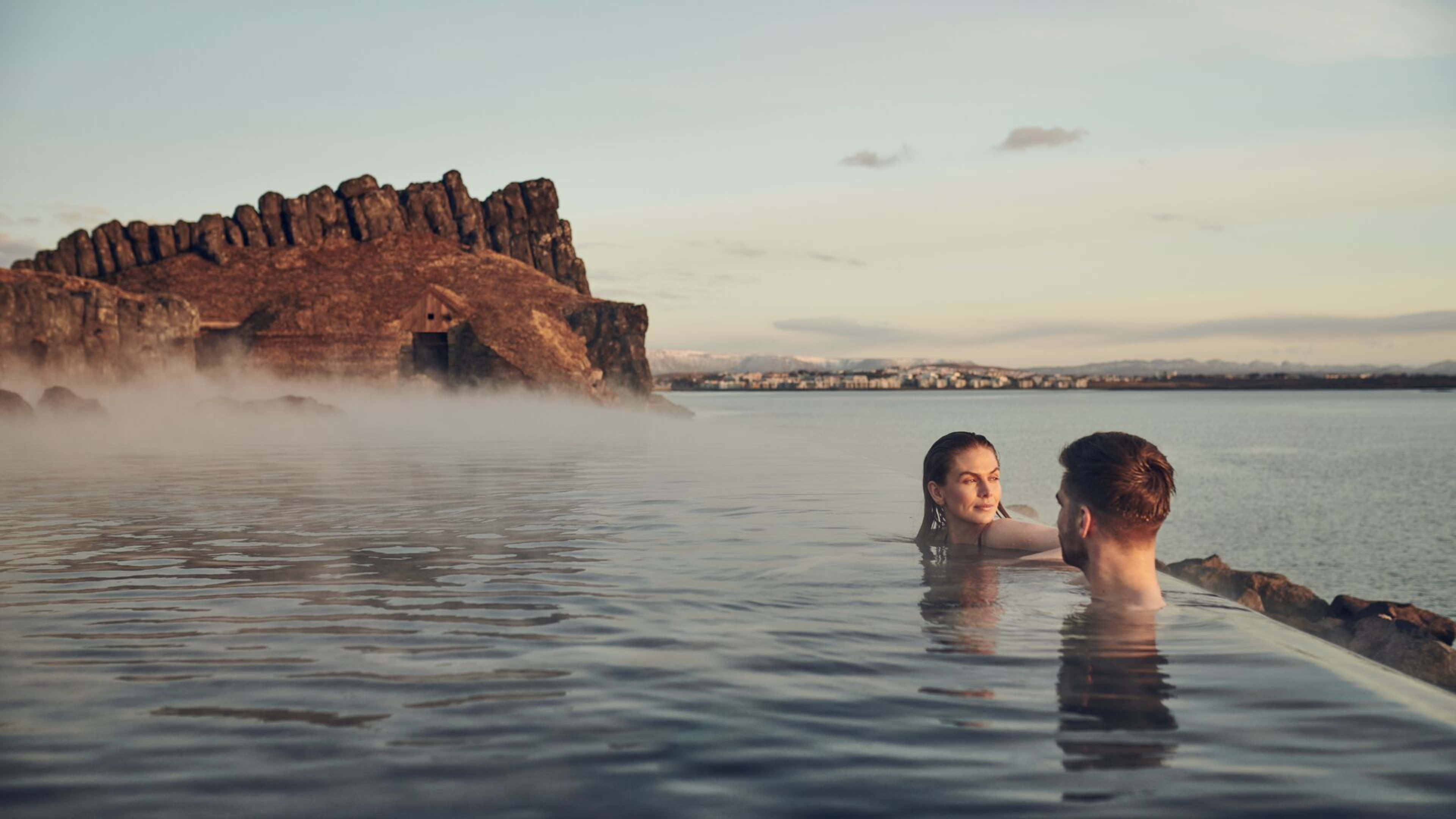
Located just outside the capital in Kópavogur, Sky Lagoon is quickly becoming a favorite with locals and visitors alike. As one of Iceland’s newer geothermal spas, it’s making a name for itself as a modern wellness destination. In between rugged adventures in the wild, this is one of the best places in Iceland to relax with a view.
The Sky Lagoon is an easy 10- to 15-minute drive from Reykjavík, making it extremely accessible to most travelers. But what truly sets it apart is the scenery. The spa sits in a striking coastal location with infinity-edge pools overlooking the Atlantic waters, giving bathers sweeping ocean views.
Relax in the infinity pool, swim up to the bar, and be sure to try the spa’s signature seven-step ritual. Based on traditional Icelandic wellbeing practices, the seven-step Skjól ritual moves between the warm lagoon, cold plunge, sauna, cold mist, sky body scrub, steam room, and a warm shower.
3. Blue Lagoon

Iceland is known across the world for its hot springs and geothermal pools, all powered by volcanic energy. Relaxing in their warm waters is an essential local experience, regardless of the rest of your Iceland itinerary.
This tradition of geothermal relaxation is best experienced in the world-famous Blue Lagoon. Just a 45-minute drive from Reykjavík on the Reykjanes Peninsula, it’s the perfect setting for a spot of pampering.
Among the famous places to visit Iceland, the Blue Lagoon is arguably the most iconic, taking its name from its milky-blue waters. The pool's stunning color and therapeutic, skin-soothing qualities are thanks to its high silica content, along with salts and algae.
The warm waters are perfect for unwinding after whirlwind tours and long hikes. Plus, the Blue Lagoon’s setting is unrivaled, with the dark lava fields a striking contrast against the ethereal blue pool.
Tip: Booking in advance is a must when planning a visit to the Blue Lagoon.
- Visit the Blue Lagoon and other top attractions on an Iceland bus tour.
- Related: Your ultimate guide to the Blue Lagoon in Iceland.
4. Reykjanes Peninsula
Home to the Blue Lagoon and Keflavik International Airport, the Reykjanes Peninsula is an area most travelers end up visiting. However, that’s not all that the region can offer. In fact, this compact peninsula is among the best places in Iceland to witness raw volcanic landscapes and geothermal features.
Reykjanes Peninsula is a geological marvel, one of the locations in Iceland where the Mid-Atlantic Ridge surfaces above the sea. A must-see highlight is the Krýsuvík‑Seltún geothermal area. Here, bubbling mud pots, colorful mineral deposits, and steaming vents offer a sensory experience of the Earth’s inner heat.
Recent volcanic activity adds to the appeal. A flurry of recent eruptions at Fagradalsfjall has created fresh lava fields and new terrain to explore.
For a different kind of natural beauty, visit the scenic Lake Kleifarvatn. You can also wander to the tip of the peninsula at Reykjanestá, where basalt cliffs loom over the Atlantic.
Witness the raw power of the Earth on Iceland’s volcano tours.
5. Golden Circle
The Golden Circle is probably the country’s most famous road trip. If you’re wondering where to go in Iceland for tumbling waterfalls and spouting geysers, this route is the answer.
Most visitors tour the Golden Circle from Reykjavík. Travel about 230–250 km (143–155 mi) around South Iceland, visiting three of the most breathtaking natural attractions in Iceland.

First, head to Þingvellir National Park, one of the most significant historical and geological locations in Iceland. This UNESCO World Heritage Site was home to the country’s first parliament. Here, Viking leaders met beneath the open sky over 1,000 years ago.
Today, you can explore that history alongside the park’s picturesque landscapes. Most famously, you can walk on the Mid-Atlantic Ridge, where the North American and Eurasian tectonic plates are pulling apart.
Then, visit Gullfoss, one of Iceland's most famous and photogenic waterfalls. This thundering torrent creates mesmerizing rainbows in the mist as it drops into a rugged canyon.
The final main stop on the trip is the Geysir geothermal area. Here, you’ll see Strokkur, an active geyser that throws up a towering plume of water and steam every couple of minutes. The Golden Circle is one of the best places to visit in Iceland for first-time travelers.
- See three of the best places to go in Iceland on a Golden Circle tour.
- Related: Your complete guide to the Golden Circle route.
South Coast
6. Skógafoss and Seljalandsfoss
These waterfalls are among the best places to visit in Iceland if you love dramatic landscapes. If waterfalls are your thing, Iceland is the ultimate destination. There are thought to be thousands of waterfalls of all sizes in the country, each with its own character and charm.
Two of the most striking are an easy 90-minute to two-hour drive from Reykjavík: Skógafoss and Seljalandsfoss. While these two are often mentioned in the same breath, they offer distinctly different experiences.
Seljalandsfoss is a beautiful waterfall that flows over a cliff and into a pool below. Its one-of-a-kind appeal lies in the trail that lets you walk behind the curtain of water. Just remember to bring a raincoat!
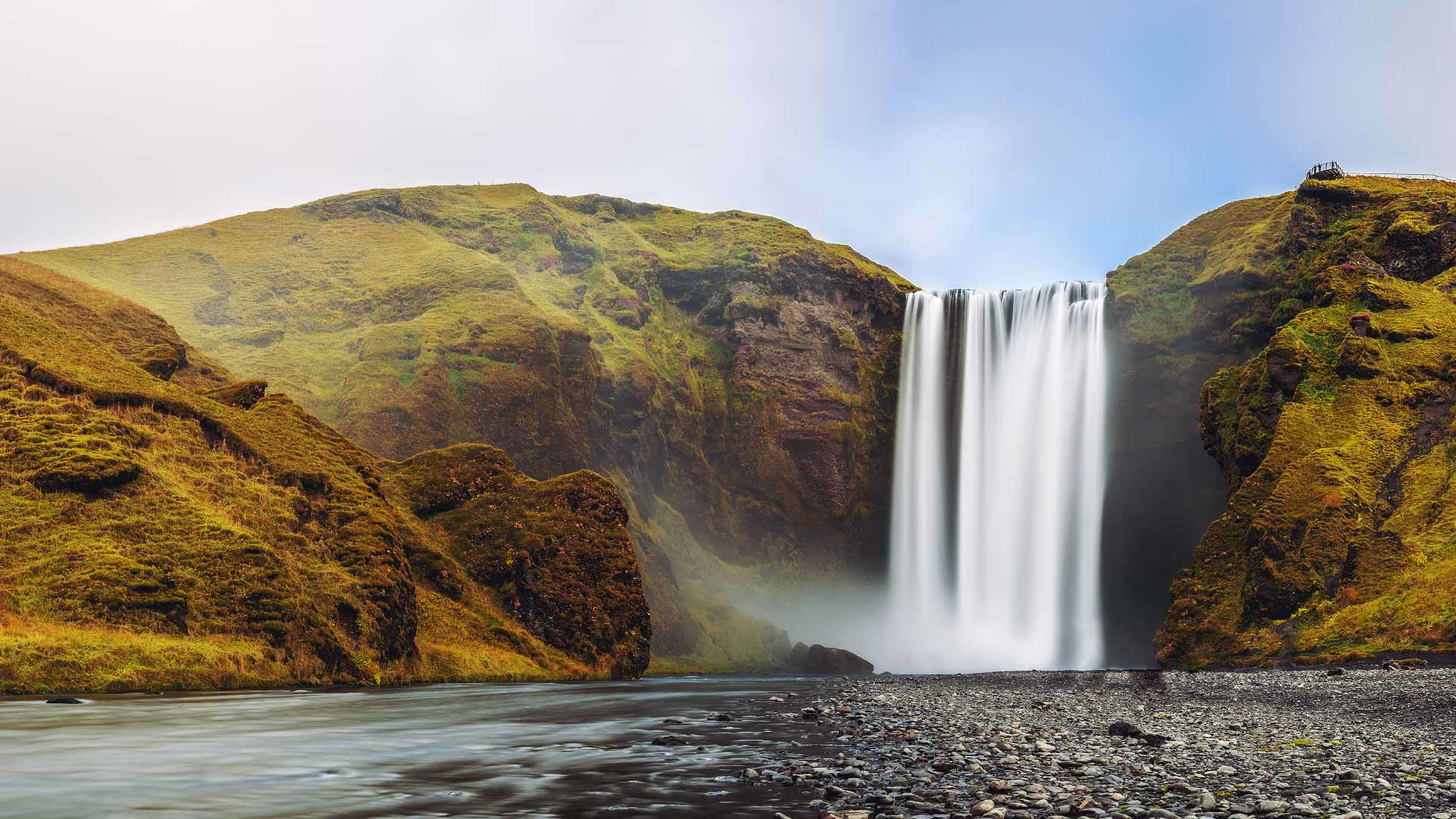
Discover Skógafoss just a short distance down the road. This thundering waterfall presents an unforgettable curtain of water. Legend says a Viking settler hid a secret stash of treasure behind its plume.
- See these natural wonders and more on a tour of South Iceland.
- Related: Best waterfalls in Iceland and where to find them.
7. Reynisfjara black sand beach

No list of essential places to visit in Iceland is complete without mentioning the country’s pretty black sand beaches. The most iconic of them all? The Reynisfjara black sand beach on the South Coast.
Located near the charming coastal village of Vík í Mýrdal, this beach is a geological spectacle. Facing the dark, volcanic sands are the massive sea stacks, known as Reynisdrangar, jutting out of the frigid Atlantic Ocean.
Along the shore, you’ll also find towering hexagonal basalt columns, a natural formation that looks like a gigantic pipe organ.
As beautiful as Reynisfjara is, it’s important to stay safe. The waves here are extremely powerful and unpredictable. Dangerous “sneaker waves” can suddenly sweep in and carry unsuspecting people out to sea. Visitors must always heed safety warnings and never turn their backs on the ocean.
8. Sólheimajökull glacier tongue
For travelers seeking adventurous things to do in Iceland, the Sólheimajökull glacier tongue is a must-visit. An outlet glacier of the Mýrdalsjökull ice cap, it’s one of the top places in Iceland for glacier walks and ice climbing.
Its location is convenient, just off the South Coast’s Ring Road, making it easy to reach from Reykjavík.
The glacier is a rugged, otherworldly landscape perfect for explorers of all skill levels. Here, you’ll be walking across ancient ice often streaked with dramatic black volcanic ash from the nearby Katla and Eyjafjallajökull volcanoes. The unusual feature truly lives up to Iceland’s identity as the Land of Fire and Ice.
Glacier hikes are definitely one to tick off the bucket list. Guided tours are mandatory for safety and provide the necessary equipment.
Southeast Iceland
9. Jökulsárlón glacier lagoon and Diamond Beach
Among the most jaw-dropping places to visit in Iceland is Jökulsárlón glacier lagoon. The shimmering glacial lagoon is filled with immense floating icebergs, the deep blue water contrasting with the gleaming ice. It’s definitely not something you’ll see every day.
Jökulsárlón is a deep lake created by meltwater from Breiðamerkurjökull, part of Iceland’s largest glacier, Vatnajökull. As global temperatures rise and the glacier melts, Jökulsárlón has grown rapidly and is now one of Iceland’s deepest lakes.

Soak up the otherworldly atmosphere of this dazzling lagoon from a boat tour between the icebergs. If you’re visiting during Northern Lights season, it’s possible to spot the dancing lights from the shore.
For another extra-special experience, cross the Ring Road from the lagoon to walk along Fellsfjara (Diamond Beach). This stretch of black sand is where pieces of ice from the lagoon wash ashore, sparkling like crystals in the sunlight.
- See the Aurora Borealis for yourself on a Northern Lights trip to Iceland.
- Related: Jökulsárlón glacier lagoon in Iceland – Ultimate guide.
10. Vatnajökull National Park
More than 10% of Iceland’s land area is covered in glaciers. Much of that lies within the mighty Vatnajökull, the country’s largest ice cap. This magnificent glacier is the centerpiece of the national park that shares its name.
Nature lovers will find plenty of things to do in Iceland’s Vatnajökull National Park. At the popular hiking area Skaftafell, you can follow marked trails to viewpoints, glacier tongues, and the basalt-framed waterfall Svartifoss. Guided snowmobiling and ice-cap tours are fun activities that let you experience Vatnajökull’s immense scale from above.
Alternatively, visit the adorable fishing town of Höfn í Hornafirði nearby, with its traditional architecture and sea views. It’s the ideal base to explore the park from.
- Discover another side of the glacier on a tour of Iceland’s ice caves.
- Related: Best things to see and do on Iceland's south coast.
East Iceland
11. The Eastfjords
For a slice of tranquility and isolation, the Eastfjords is one of the best regions of Iceland to visit. This remote, windswept region is defined by its deep, twisting fjords and imposing mountain peaks that plunge into the sea.
Life here moves at a slower pace. Towns like Seyðisfjörður and Fáskrúðsfjörður offer colorful houses, maritime history, and cultural traditions, all set against a spectacular natural backdrop.
The landscape of the Eastfjords consists of older, more rugged terrain than most places in Iceland. From geothermal soaks in the Vök Baths to hiking and birdwatching at Borgarfjörður Eystri, the Eastfjords absolutely stand out.
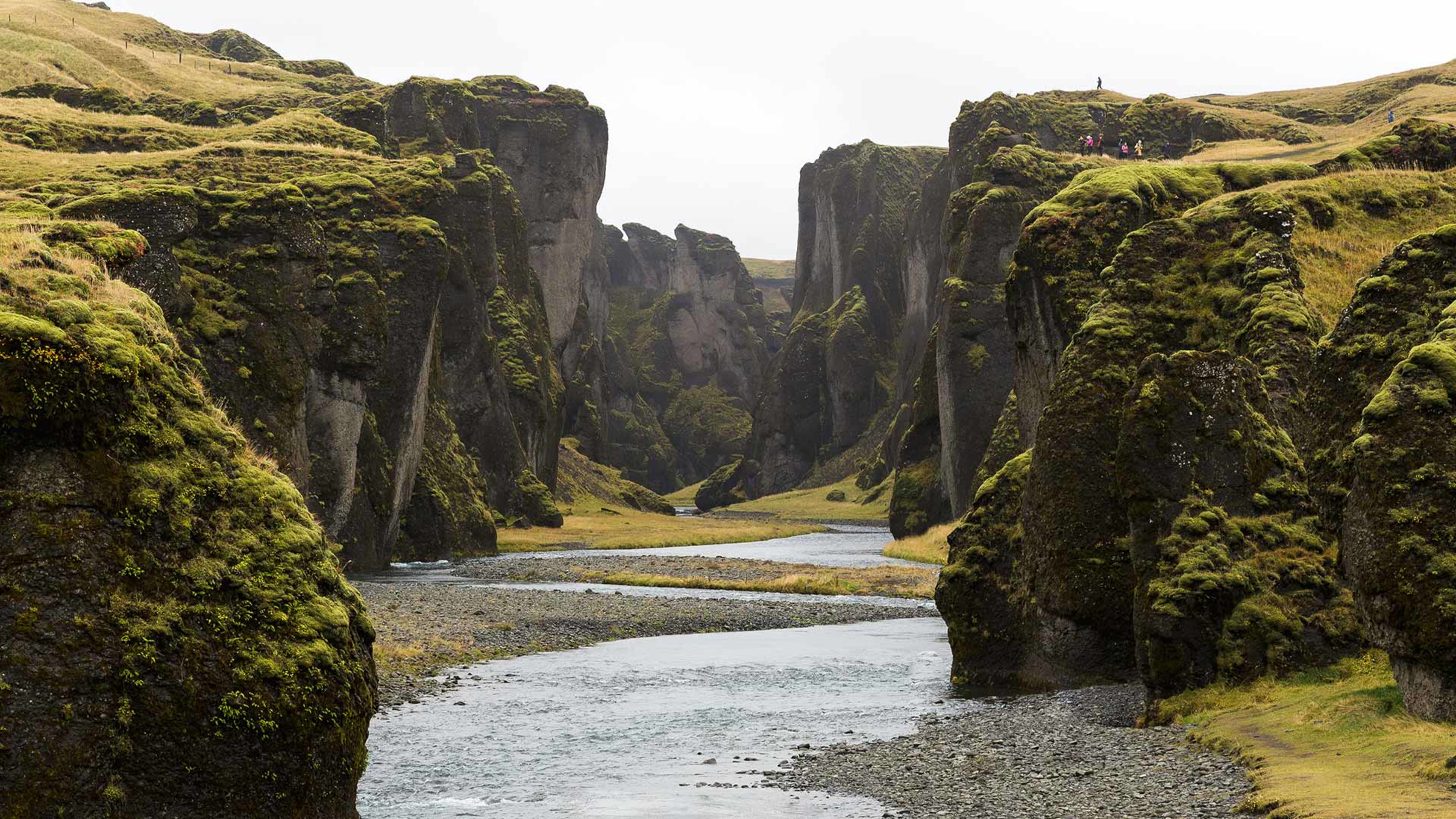
If you love peaceful coastal drives with dramatic scenery, the Eastfjords will stay with you long after you leave. And beyond the fjords themselves, you can also venture inland to East Iceland attractions such as the Stuðlagil canyon in Jökuldalur.
North Iceland
12. Lake Mývatn
If you’re traveling around the Ring Road, you’ll pass Lake Mývatn, one of Iceland’s largest lakes. Travelers choosing where to go in Iceland next will love this stunning lake in North Iceland, surrounded by massive lava fields. Lake Mývatn showcases Iceland’s geothermal activity firsthand, including hot springs, mud pots, and steam vents.
What makes the area special is the captivating mix of volcanic drama and colorful wildlife. In summer, the region is covered in lush vegetation and becomes home to an impressive variety of birds. For a relaxing break, there’s the nearby spa, Mývatn Nature Baths, where you can stop to unwind.
Don’t miss the Dimmuborgir lava formations while you’re here either. Wander through this ancient lava field, and you’ll see unusual rock formations famously featured on Game of Thrones.
- See all of these sights and more on an Iceland Ring Road tour.
13. Akureyri
While Reykjavík is Iceland’s biggest city, Akureyri is known as the Capital of the North. Nestled on the shores of the sheltered Eyjafjörður, this picturesque town is one you won’t want to leave.
Thanks to its relatively mild climate, Akureyri is surrounded by some of the lushest scenery in Iceland. The city’s botanical garden shows off this surprisingly abundant greenery, featuring many beautiful plant species in summer. During the winter months, Akureyri is a winter wonderland, with its northern position giving it a snowier disposition than Reykjavík.
Check out the city’s relaxed and charming historical center, with its wooden buildings from the beginning of the 20th century. The culture-rich Akureyri is also home to all sorts of museums and galleries.
If you’re up for an adventure, visit Grímsey Island on the edge of the Arctic Circle. Ferries to Grímsey depart from nearby Dalvík, and flights leave from Akureyri Airport, making it an easy excursion from the city. Akureyri is also one of the best places to visit in Iceland for touring the bays and peninsulas of the Arctic Coast Way.
- Related: Top things to do in Akureyri.
- Explore the North's capital and its surroundings on one of these North Iceland and Akureyri tours.
14. Húsavík
For many travelers, Húsavík is high on the list of must-see places in Iceland. And for good reason; this harbor town on the shores of Skjálfandi Bay teems with scenic charm and incredible wildlife.
Húsavík is widely hailed as the site for the best whale watching in Iceland, arguably even in all entire Europe. Thanks to Skjálfandi’s nutrient-rich waters, the town provides exceptionally reliable sightings of humpback, minke, and blue whales.
Beyond its whale watching tours, Húsavík is a delightful destination in its own right. It features the beautiful Húsavíkurkirkja church and a harbor lined with brightly painted boats and seafood restaurants.
Travelers may also enjoy visiting the town’s GeoSea Baths, a geothermal spa overlooking the North Atlantic. A warm, relaxing soak is a wonderful indulgence before continuing on your journey across Iceland.
Enjoy wildlife encounters at sea on a whale watching day trip from Húsavík.
West Iceland
15. Westfjords
The Westfjords are the least inhabited region of Iceland, a remote, rugged peninsula famous for its dramatic scenery.
Deep, glistening fjords sit carved into ancient rock. Mountains tower over towns, rounded and smoothed by millions of years of erosion. If you’re looking to get off the beaten track, this is one of the most striking places to visit in Iceland.
A great place to start exploring is Hólmavík, a small village known for the Museum of Icelandic Sorcery and Witchcraft. Here, you’ll learn about Iceland’s folk history and hear stories about local witchcraft. Travelers can also join a whale watching tour to see these graceful animals swimming in the fjords.
Keep an eye out for the elusive Arctic fox, Iceland’s only native land mammal. The Westfjords, especially the Hornstrandir Nature Reserve, are among the best places in Iceland to spot these curious creatures.
Other popular attractions in Iceland’s Westfjords include Dynjandi waterfall, Látrabjarg cliffs, and Ísafjörður.
- Experience the Westfjords and sleep under the stars on an Icelandic camping trip.
16. Snæfellsnes peninsula
You might have heard the Snæfellsnes peninsula referred to as ‘Iceland in miniature’. The nickname is earned because the compact area features many of the unique landscapes that make the Land of Fire and Ice so special.
Here you’ll find lava fields, rugged coastlines, black-sand beaches, waterfalls, fishing villages, and even a glacier-topped volcano.
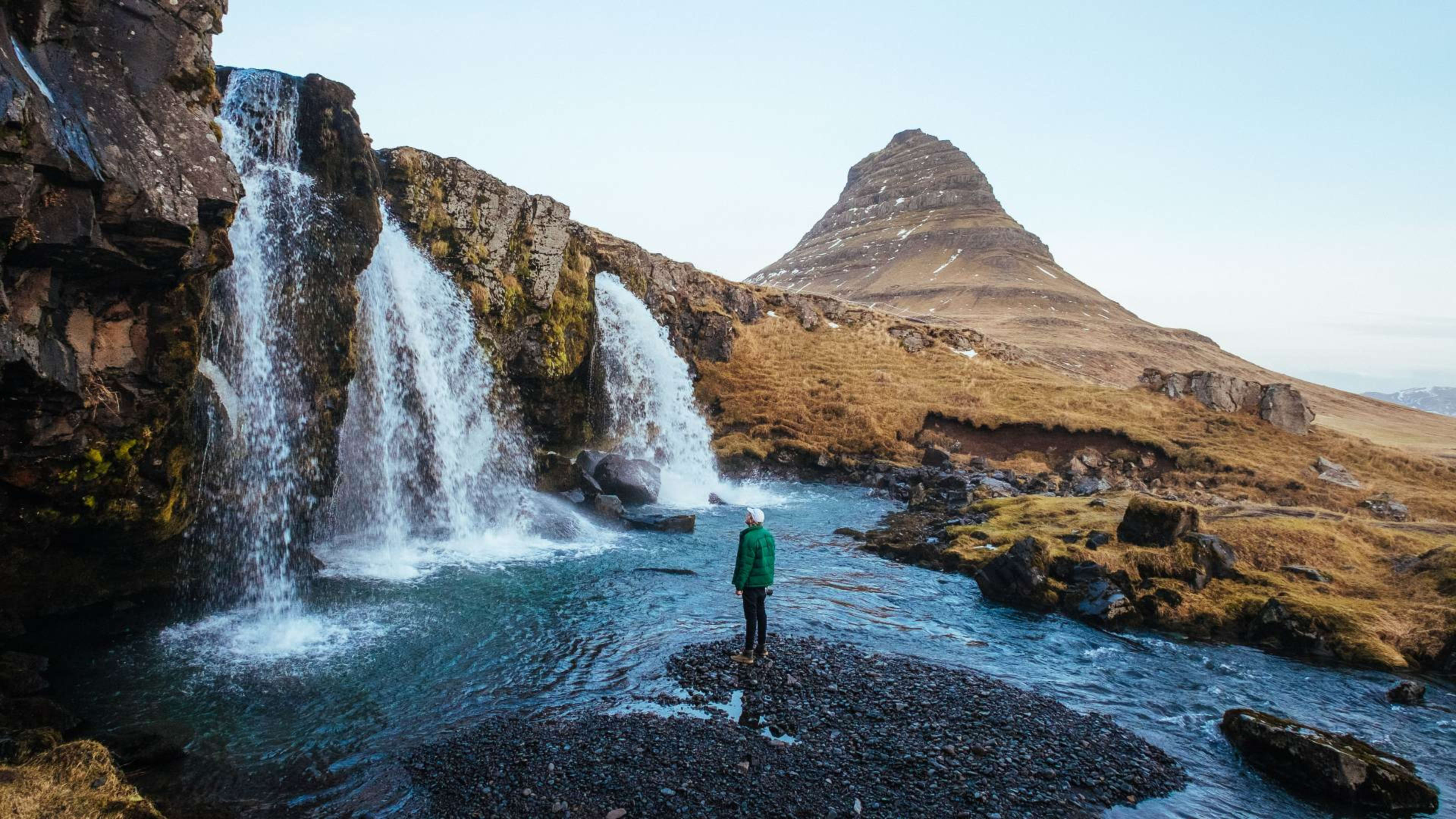
Among the famous landmarks on this Iceland peninsula is Kirkjufell (Church Mountain), whose iconic shape rises above the seaside village of Grundarfjörður. There’s also Snæfellsjökull, the glacier-topped volcano which features in Jules Verne's classic novel, Journey to the Centre of the Earth.
Don’t leave the peninsula without seeing its coastal sights. Head to the sleepy village of Arnarstapi and explore the nearby sea cliffs and black-sand beaches.
- Related: Snæfellsnes peninsula — Ultimate guide.
17. Silver Circle
The Silver Circle is an excellent detour for visitors eager to explore the history and less-traveled geothermal wonders of West Iceland. Focusing on the beautiful Borgarfjörður region, this route takes you on some of the best places to visit in Iceland in summer. It’s perfect for the warmer months, when the inland roads are more easily accessible.
The Silver Circle’s main highlights include the Hraunfossar and Barnafoss waterfalls, which each offer completely contrasting spectacles. The gentle cascades of Hraunfossar flow serenely out of a lava field, while the powerful Barnafoss thunders through a narrow canyon.
Travelers can also visit Deildartunguhver, Europe's most powerful hot spring, which provides heating for several towns in West Iceland.
The route’s historic and cultural stops also deserve some love. For instance, the Reykholt village, home to the medieval writer Snorri Sturluson, provides a fascinating look into Iceland’s literary past.
Highlands
18. Landmannalaugar
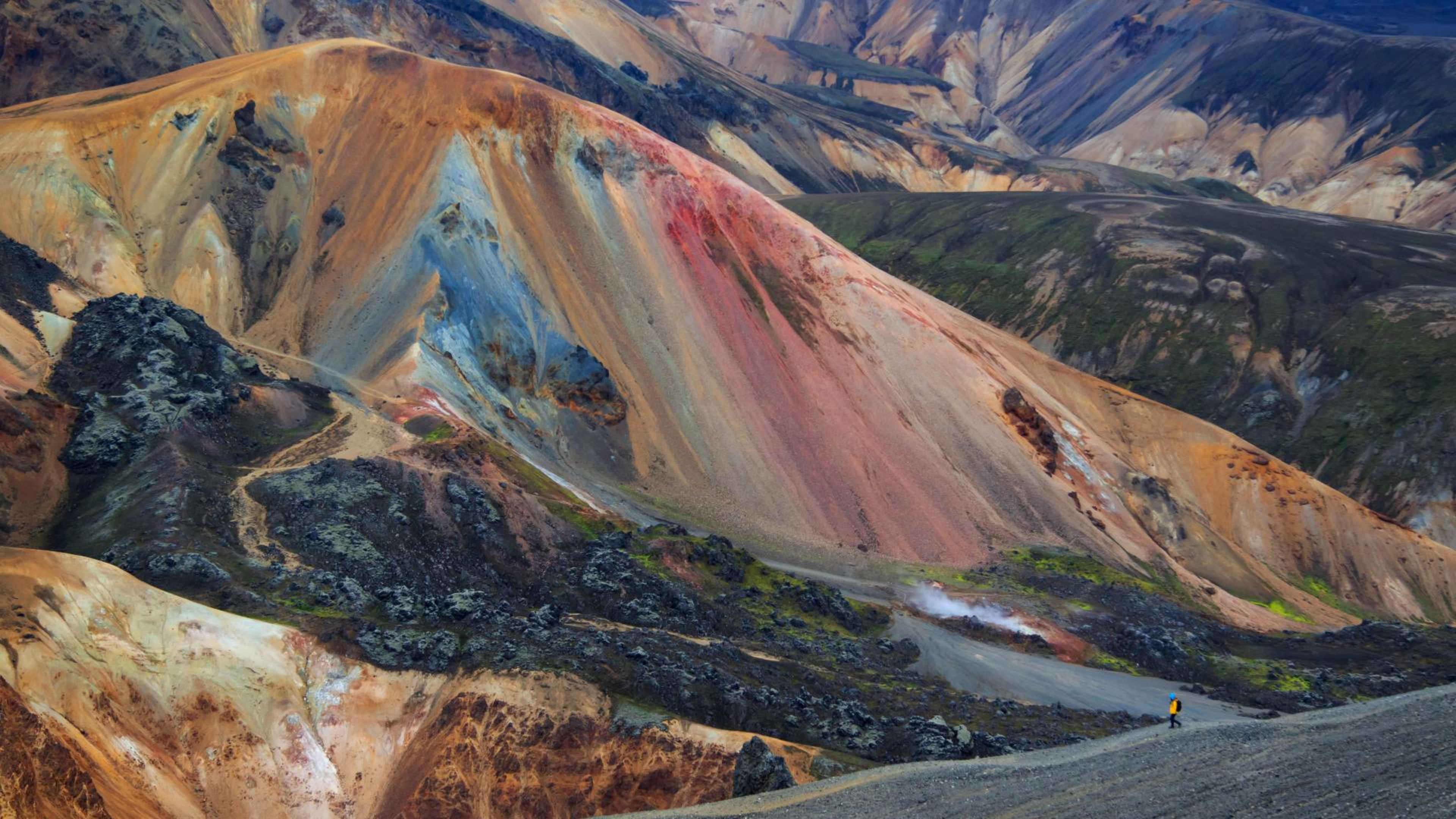
Iceland’s Highlands are a vast, wild, and uninhabited area at the center of the country. It’s a magical place defined by multicolored mountains, sweeping lava fields, and deep river-carved valleys.
At the heart of this region is Landmannalaugar, a hiker's paradise. The name means “People’s Pools,” thanks to the hot springs that make this otherwise stark landscape feel like an oasis. Landmannalaugar is the main base for exploring the surrounding rhyolite mountains and is accessible in summer via Highland F-roads.
A worthy addition to any list of places to visit in Iceland, the area offers incredibly unusual scenery. For instance, you can climb Bláhnjúkur volcano (“Blue Peak”) for panoramic views of multicolored hills. Hike Mount Brennisteinsalda, known for its sulfur-streaked slopes and geothermal activity.
If you’re feeling adventurous, you might want to tackle the entire Laugavegur trail. Running from Landmannalaugar to Þórsmörk, the 54 km (34 mi) route typically takes 4 or 5 days to complete. Otherwise, there are plenty of day hikes that’ll still give you a thrilling taste of the Icelandic outdoors.
- Experience the outdoors on an active tour of Iceland.
- Related: Best day hikes in Iceland.
19. The Highlands (Kerlingarfjöll and Þórsmörk)
While Landmannalaugar is the region's main attraction, the rest of the Highlands offers equally spectacular experiences for further exploration. This massive interior remains wild and accessible only during the short summer window.
A spectacular alternative is Kerlingarfjöll, a geothermal area often overlooked by the crowds. Here, hikers are rewarded with bubbling hot springs, smoking vents, and hillsides painted with orange and red mineral deposits.
For those finishing the Laugavegur trail mentioned above, Þórsmörk (Thórsmörk or “Thor's Valley”) is a spectacular reward. Sheltered between three glaciers, this green valley is an oasis with birch forests, deep river crossings, and lush natural beauty. It serves as an excellent base for further hiking and camping.
Discover Iceland’s uninhibited center with a self-drive tour of Highlands and the South Coast.
Offshore Islands
20. Westman Islands (Vestmannaeyjar)
Off the coast of South Iceland, there’s a tiny archipelago created by ancient (and not so ancient) volcanic eruptions. This is the Westman Islands, a cluster of 15 islands and numerous sea stacks.
It’s one of the top places to visit in Iceland to learn about the country’s geological history. Tour the islands by boat, and you’ll find out how volcanoes built these enormous basalt cliffs. This is far from ancient history. The youngest island, Surtsey, was created only in 1963!
Come here in summer to see one of Iceland’s largest puffin colonies. Spotting these bright-billed birds in their natural habitat is truly unforgettable.
- Related: Best places to see puffins in Iceland.
Uncover the Best Places to Visit in Iceland with Iceland Tours
Now that you know the top places to see in Iceland, it’s time to start planning your trip. At Iceland Tours, we make that easy.
Book a vacation with us, and we’ll take care of all the details. Our Reykjavík-based travel team will give you their recommendations for what to do and where to go in Iceland. They’ll also handle your accommodation and local transport.
How you travel around when you get here is up to you. If you want insider insights into Iceland, why not join a guided group tour? Or if you prefer the freedom to explore at your own pace, choose a self-drive package instead.
Alternatively, you might prefer to base yourself in Reykjavík and visit top sights in the surrounding area. If that’s you, check out these multi-day tours by bus.
Whatever trip you choose, you can customize your itinerary with extra nights and activities.
Discover the best of Iceland with Iceland Tours. Secure your booking with just a 5% deposit.
How to visit these places
The best way to see Iceland's top destinations is at your own pace, with the freedom to stop where you want and spend as long as you like. A self-drive tour takes care of the logistics: rental car, accommodation, breakfast, and a detailed itinerary, so you can focus on the exploring. Browse our Iceland self-drive tours to find the right fit.
Our 8-day Ring Road self-drive covers the south coast, Jökulsárlón, VatnaJökull, the Eastfjords, Lake Mývatn, and Akureyri in one trip. To add Snæfellsnes, our 10-day Ring Road and Snæfellsnes tour gives you a full circuit of the country. Prefer to leave the driving to someone else? Browse our guided group tours and multi-day tours from Reykjavík.
FAQs about the best places to visit in Iceland
Planning a trip to Iceland and not sure where to start? Here are answers to the most common questions about where to go and what to see.
For a first trip, the south and west cover the most ground efficiently: Reykjavík, the Golden Circle, and the South Coast. If you have more time, the Ring Road takes you through the north and east as well, adding Lake Mývatn, Akureyri, the Eastfjords, and Jökulsárlón along the way.
It depends on your priorities. June to August offers the longest days, the best hiking conditions, and access to the Highlands. October to March gives you the best chance of seeing the Northern Lights and access to ice cave tours. April, May, September, and October are quieter with lower prices.
The Blue Lagoon on the Reykjanes peninsula is Iceland's most visited attraction. The Golden Circle, which includes Þingvellir, Gullfoss, and the Geysir area, is the most visited route.
A full Ring Road circuit covers the main regions and takes around 8 to 14 days depending on pace. Some areas, including the Westfjords and the Highlands, require extra time and are only fully accessible in summer. Most visitors focus on one or two regions per trip and return for the rest.
The eight official regions are: Capital Region, Southern Peninsula, West, Westfjords, North, East, South, and the Highlands.