Vatnajökull Glacier & National Park

Witness glaciers and wild landscapes up close with a visit to Iceland’s largest national park.

South Iceland

About Vatnajökull National Park

Vatnajökull National Park covers roughly 14% of Iceland, making it one of the largest national parks in Europe. It was established in 2008, bringing together the former Skaftafell and Jökulsárgljúfur national parks under a single protected area centred on the Vatnajökull ice cap -- the largest glacier in Europe by volume.

The park stretches across southeast and northeast Iceland, taking in a landscape of glaciers, outlet glacier tongues, glacier lagoons, river canyons, waterfalls, and active volcanic systems. The name Vatnajökull translates roughly as "glacier of lakes," reflecting the many rivers, pools, and glacier lagoons that feed from the ice.

The glacier

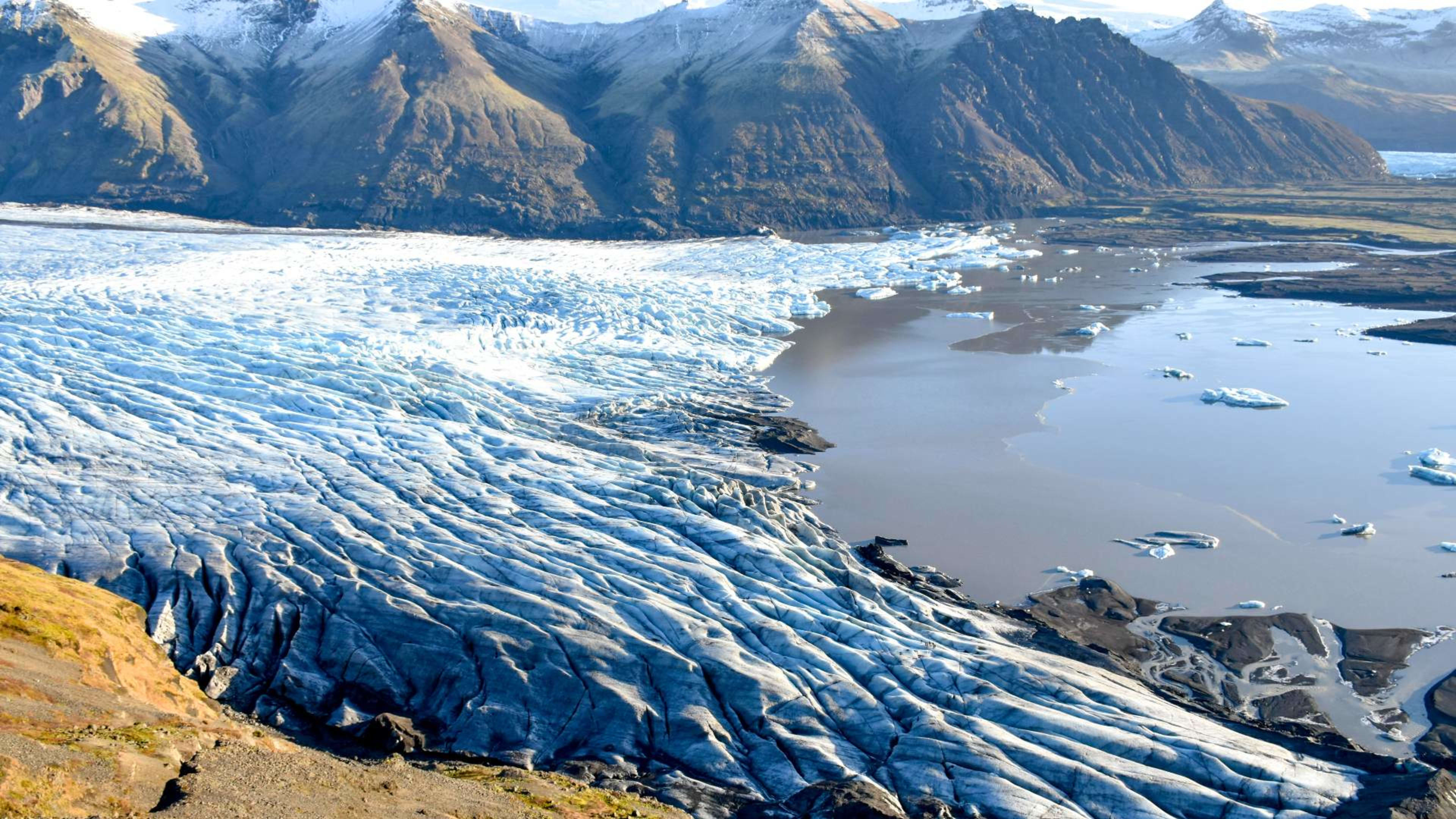
The Vatnajökull ice cap covers around 7,900 square kilometres -- about 8% of Iceland's total land area. The ice averages 380 metres thick and reaches almost 1,000 metres in places. More than 30 outlet glaciers flow down from the main ice cap into the surrounding valleys, and it is these outlets -- Breiðamerkurjökull, Svínafellsjökull, Skaftafellsjökull and others -- that most visitors encounter on glacier hikes and ice cave tours.

Beneath the ice sit several active volcanic systems, including Grímsvötn, which erupts periodically under the glacier, and Öræfajökull, whose summit rim at 2,110 metres is Iceland's highest point. When subglacial volcanic activity melts large volumes of ice rapidly, it can trigger glacial outburst floods -- jökulhlaups -- which have historically reshaped the landscape of the south coast.

What to do in the park

Glacier hiking and ice caves

Guided glacier hikes operate year-round from the Skaftafell area, most commonly on Svínafellsjökull. These are the most accessible way to step onto the ice, and guides provide crampons, ice axes, and safety instruction. Trips range from a couple of hours to a full day. No experience is necessary for the introductory hikes.

In winter, natural ice caves form within the outlet glaciers near Jökulsárlón. These caves are carved by meltwater flowing under the ice during summer, and they are only safe to enter once temperatures drop and the ice stabilises -- typically November through March. The caves are different every year; some years produce large, stable chambers of deep blue ice, others less so. All ice cave tours require a licensed local guide who assesses conditions daily and may cancel if the cave is unsafe.

Hiking at Skaftafell

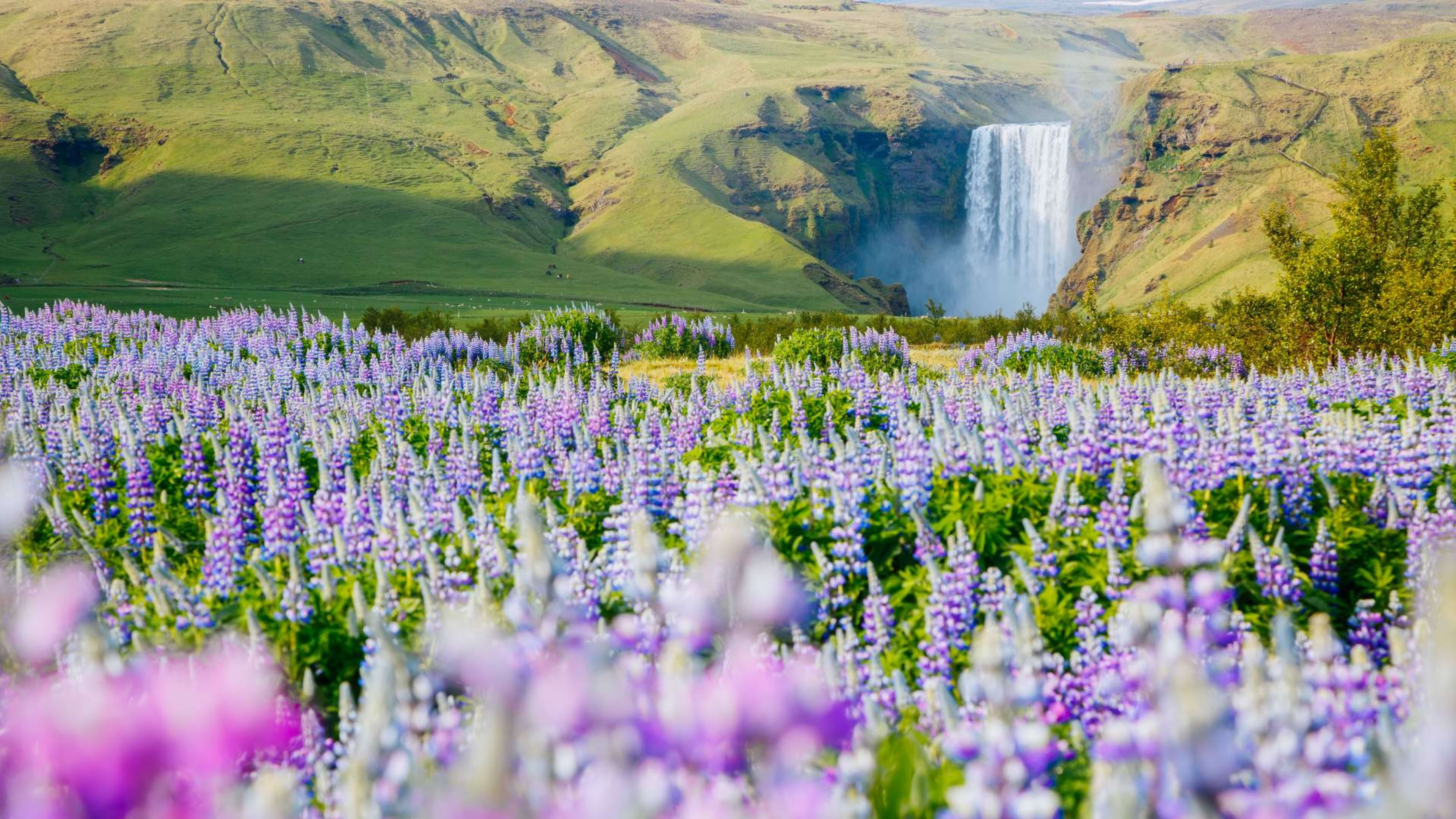
The Skaftafell area has some of Iceland's best day hiking. The most popular trail leads to Svartifoss, a waterfall framed by hexagonal basalt columns -- a 5 to 6 km round trip that's straightforward for most walkers. From the same trailhead, longer routes head up toward Kristínartindar for panoramic views over the glacier. The visitor centre at Skaftafell has trail maps, current conditions, and ranger advice.

Jökulsárlón glacier lagoon

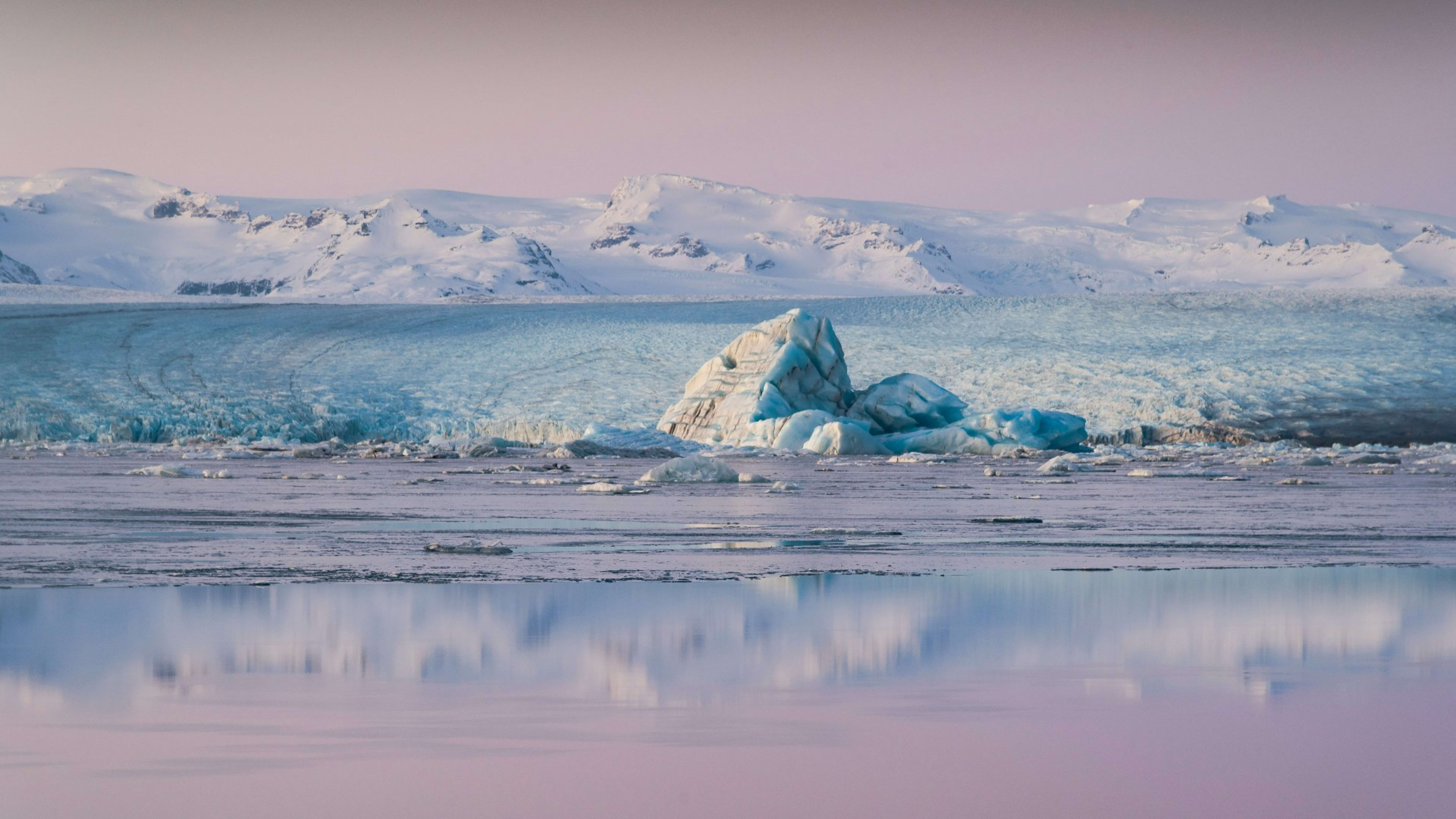
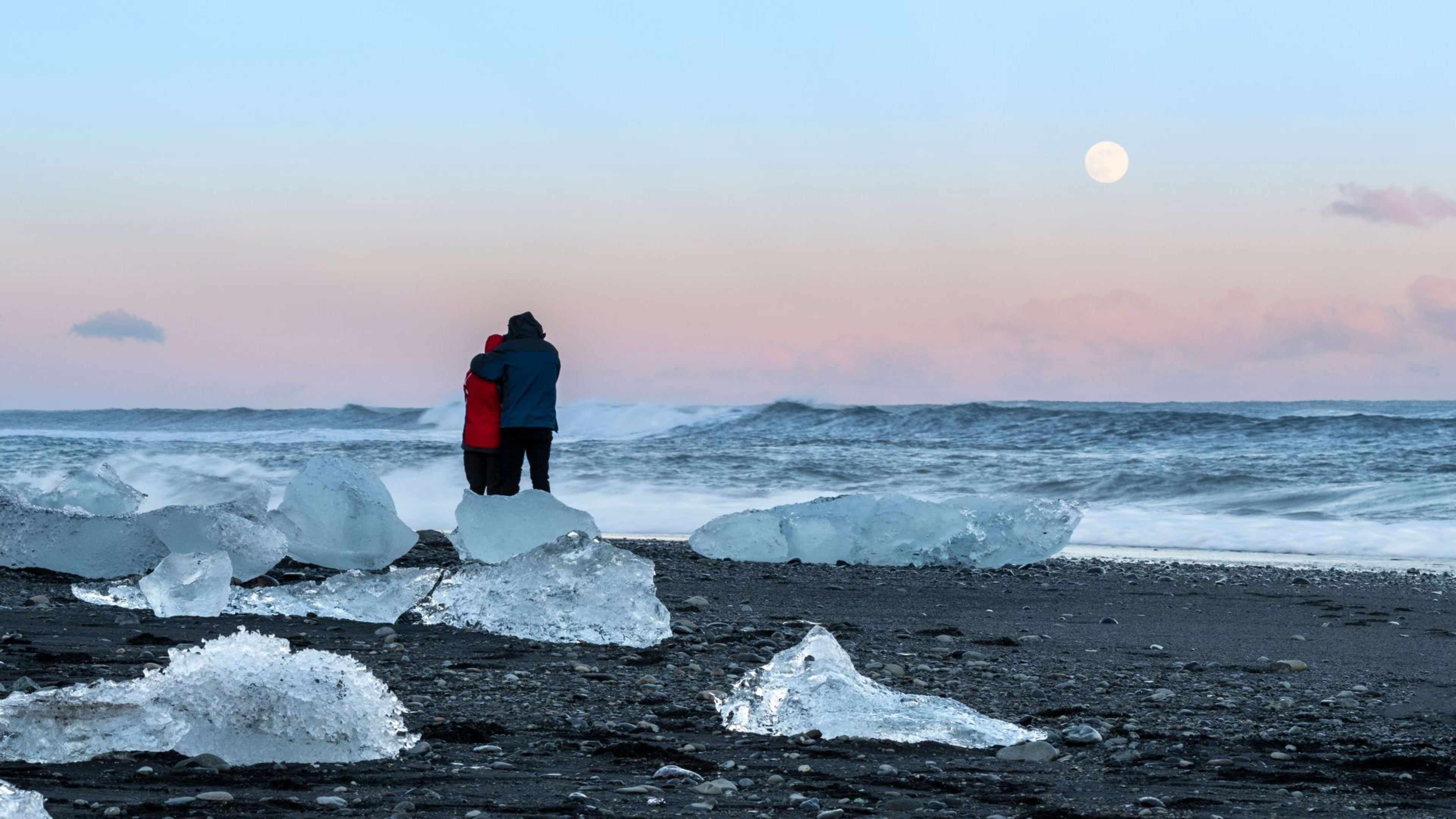
On the southern edge of the park, Jökulsárlón is one of Iceland's most visited sites. Icebergs calved from Breiðamerkurjökull drift across the lagoon before reaching the sea, and boat tours operate on the water from May through October. Directly across Route 1, Diamond Beach (Breiðamerkursandur) collects ice washed in from the lagoon on a stretch of black volcanic sand.

Dettifoss

In the northern section of the park, Dettifoss is the second most powerful waterfall in Europe by volume, dropping 44 metres across a width of around 100 metres. It sits in the Jökulsárgljúfur canyon, which is accessible from Route 862 or 864 off the Ring Road. The drive from Reykjavík to this part of the park takes around seven hours, so most visitors who come specifically for Dettifoss base themselves in Akureyri or the Mývatn area.

Getting there

The park is accessible from Route 1 at multiple points. The Skaftafell area is about 327 km from Reykjavík -- roughly 4 to 4.5 hours. Jökulsárlón is around 380 km, or 5 hours. Both are straightforward self-drive destinations, and the Ring Road passes directly through the southern section of the park. For those who prefer not to drive, guided group tours and privately guided trips include transport from Reykjavík.
Other attractions near Vatnajökull National Park

Skaftafellsjökull glacier in Vatnajökull National Park

Skaftafell

Skaftafell occupies the south-western edge of Vatnajökull National Park, roughly 327 kilometres east of Reykjavík along the Ring Road. The area combines a well-developed trail network with year-round glacier access and a distinctive microclimate that supports birch woodland unusual for this part of Iceland. It is one of the most visited natural areas in the country, and one of the most varied.
Jökulsárlón glacier lagoon at sunrise with a pink sky

Jökulsárlón Glacier Lagoon

Visit Jökulsárlón to see one of Iceland's largest glacier lagoons, where icebergs calve from the Breiðamerkurjökull glacier and drift toward the Atlantic
The harbor at Höfn í Hornafirði

Höfn í Hornafirði

Höfn í Hornafirði is a small fishing town on Iceland's southeast coast, sitting at the edge of Vatnajökull National Park with Jökulsárlón glacier lagoon 45 minutes to the west and the Eastfjords beginning to the east. With a population of around 2,500, it is one of the larger service stops on the Ring Road between the South Coast and Akureyri, and one of the few towns in Iceland where the glacier is visible directly from the streets.
The village of Kirkjubæjarklaustur on a sunny day

Kirkjubæjarklaustur

Kirkjubæjarklaustur, commonly shortened to Klaustur, is a small village on Iceland's south coast along the Ring Road, roughly 250 kilometres east of Reykjavík. It sits within Katla Geopark and serves as a practical base for exploring the surrounding volcanic landscape.

FAQs about Vatnajökull National Park & glacier

Vatnajökull glacier is in southeast Iceland, within the national park that shares its name. The glacier covers around 7,900 square kilometres, making it the largest in Europe by volume. It sits across a large portion of the country's interior, with outlet glaciers flowing down toward the south and east coasts.

Icelandic spellings are much easier to pronounce than they look at first! Vatnajökull is one of the easier ones you can start with too.

  • Vat – Pronounced with an open ‘a’ sound (like in van), and a very soft ‘t’ (almost like ‘vah’).
  • Na – Another open ‘a’ sound, like the sound of disapproval ‘nah’.
  • – This is a closed ‘o’ sound and the J sound is more like a Y. Try saying ‘yo’ and putting a little bit of an ‘e’ sound on the O.
  • Kull – Use a hard K sound and rather than an ‘ull’ like ‘hull’, it’s more of an ‘ool’ sound, like in ‘cool’.

Many Icelandic words are compound words, meaning they are two words together that make a new one. Vatnajökull is one of these!

Vatn is the Icelandic word for water or lake. Jökull is a common suffix you will see on signs around Iceland. It means ‘glacier’ or ‘piece of ice’ in Icelandic.

Together, you get the word Vatnajökull, which can be translated into ‘glacier of lakes’ in English. The glacier has many smaller outlet glaciers, rivers, and pools, so you can see how it got the name.

The park covers a wide range of landscapes and there are activities suited to most levels of fitness and experience. Guided glacier hikes operate year-round from the Skaftafell area, most commonly on Svínafellsjökull, with no prior experience required for introductory trips. In winter, natural ice cave tours run within the outlet glaciers near Jökulsárlón, led by licensed local guides who assess conditions daily. Snowmobiling is also available on the glacier in both summer and winter.

Jökulsárlón glacier lagoon sits on the southern edge of the park, where icebergs calved from Breiðamerkurjökull drift toward the sea. Boat tours operate on the lagoon from May through October. Directly across Route 1, Diamond Beach collects ice washed in from the lagoon on black volcanic sand.

In the northeast section of the park, Dettifoss is the second most powerful waterfall in Europe by volume, dropping 44 metres across a width of around 100 metres. Closer to Skaftafell, Svartifoss is a shorter but distinctive waterfall framed by hexagonal basalt columns.

The western edge of the park at Skaftafell is around 327 km from Reykjavík, approximately 4 to 4.5 hours by car along Route 1. Jökulsárlón glacier lagoon is around 380 km, or closer to 5 hours. The northeast section of the park near Dettifoss is significantly further, around 6 to 7 hours from Reykjavík, and is best visited from a base in Akureyri or the Mývatn area.

The Vatnajökull glacier covers around 7,900 square kilometres, or about 8% of Iceland's total land area. The ice averages 380 metres in thickness and reaches close to 1,000 metres in places. The national park surrounding the glacier covers around 14,000 square kilometres in total, making it one of the largest national parks in Europe.

Iceland is around 103,000 square kilometers (39,600 square miles) in area. Vatnajökull National Park covers 14% total of the country, with the glacier accounting for 8% of that total.

The most practical way to reach the park is by car via Route 1, the Ring Road, which passes directly through the southern section. Skaftafell and Jökulsárlón are both well signposted from the Ring Road and have free parking on site. For those who prefer not to drive, guided group tours and privately guided trips include transport from Reykjavík to the main sites within the park.

#icelandmyway

See what travelers like you have been up to lately on Instagram.