


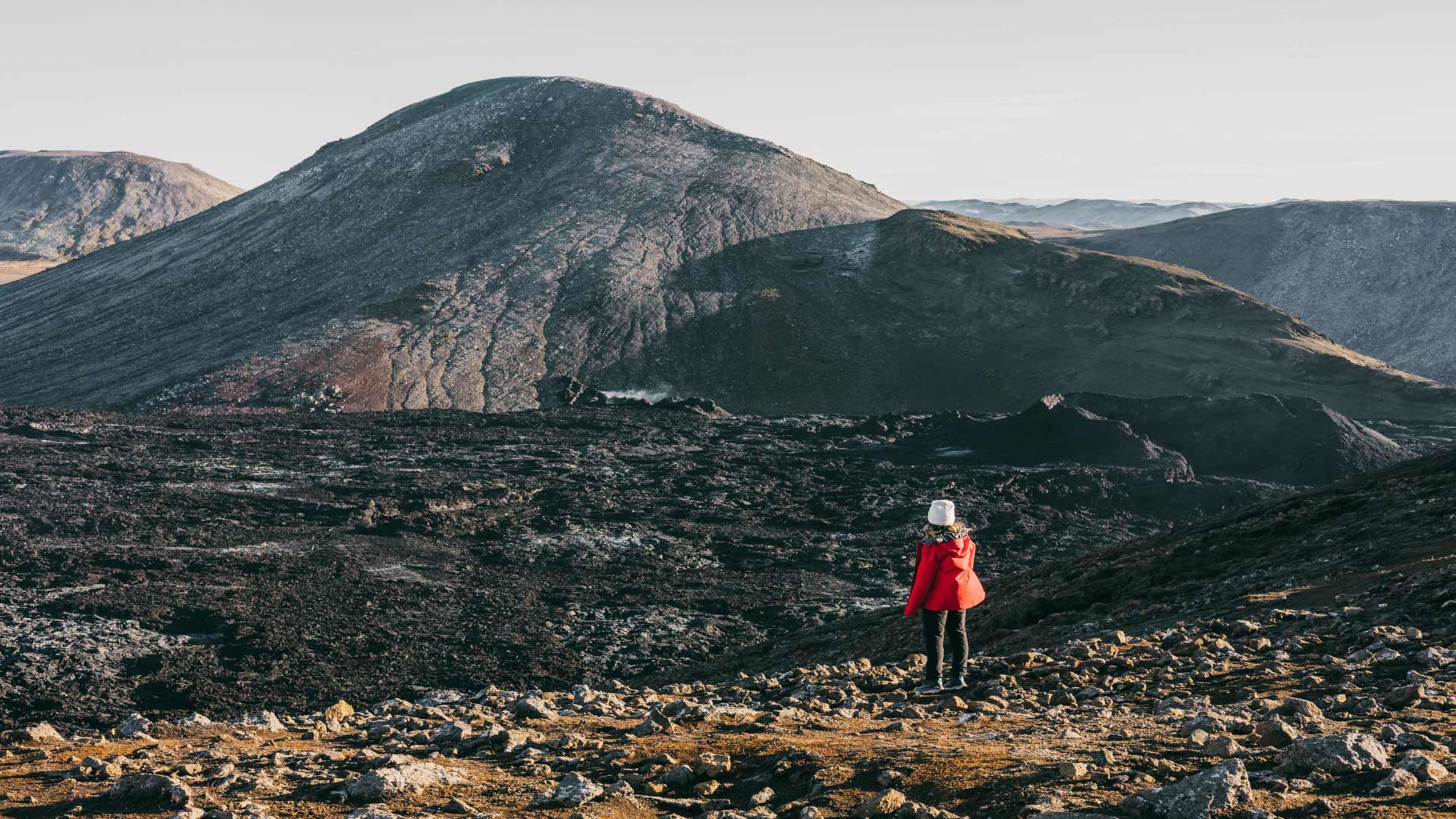
Iceland sits on the Mid-Atlantic Ridge, where the North American and Eurasian tectonic plates are pulling apart. This makes it one of the most volcanically active countries in the world, with around 130 volcanoes, over 30 of which are currently active. This guide covers where Iceland's active volcanoes are, which have erupted recently, and how to visit them.
- Kickstart your adventure on an Iceland volcano tour.
How many active volcanoes are there in Iceland?

Iceland has about 130 volcanoes, and over 30 are currently active. An active volcano is one that's had a historically recent eruption or could erupt in the future. An active volcano is one that has erupted in recent geological history or is considered capable of erupting in the future. Not all active volcanoes are currently erupting.
Volcano eruptions occur most often at the boundaries between tectonic plates. Iceland sits on top of the Mid-Atlantic Ridge, where the North American and Eurasian plates are pulling apart. This is why the country has so many volcanoes.
Þingvellir National Park is where the rift between the two plates is visible and walkable on marked trails. Snorkelling in the Silfra fissure gives a direct view of the gap between the plates.
Eruptions on the Reykjanes peninsula
Since 2021, the Reykjanes peninsula in southwest Iceland has seen a massive increase in volcanic activity, starting with the Fagradalsfjall volcano eruption.
Increased seismic activity preceded the eruption, as is typical before volcanic events in Iceland.
The lava flow was effusive rather than explosive and continued until September 2021.
Fagradalsfjall erupted again in August 2022, just 1 km (0.6 mi) from the previous eruption site. This second volcanic event lasted 3 weeks.
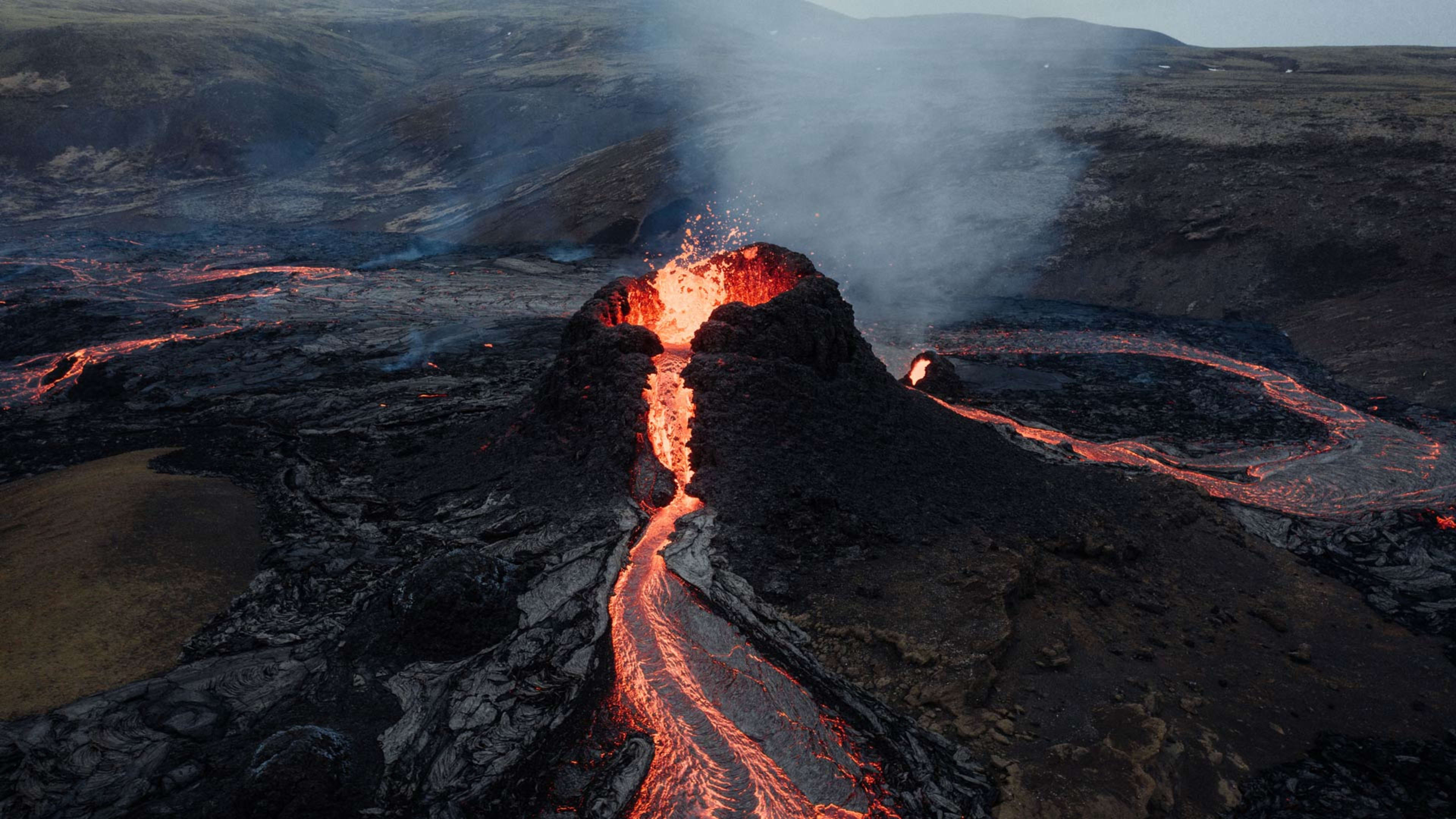
In July 2023, Litli-Hrútur erupted as part of the same volcanic system. This site is part of the same volcanic system as Fagradalsfjall, and the eruption was connected to the previous ones.
A few months later, another eruption took place nearby, this time in Sundhnúkagígar.
Between March 2021 and November 2024, the Reykjanes peninsula experienced a total of 10 eruptions. While they made for some dramatic sights, they didn’t cause major disruptions.
As a precaution, the Icelandic government temporarily evacuated the nearby town of Grindavík. The Blue Lagoon also closed down a few times when lava flows reached nearby roads, making it unsafe to visit.
These eruptions have also dramatically changed the peninsula’s landscape. You can visit the Reykjanes Geopark on a day tour to learn more about how volcanoes have shaped Iceland and see the lava fields up close.
- Soak up some of the country’s highlights on a multi-day tour from Reykjavik.
- Related: Iceland volcano eruption –Your guide to Fagradalsfjall.
Other active volcanoes
Although the southwestern peninsula has seen the most action during the last few years, Iceland is home to several other active volcanoes. Some of these have also erupted in recent history.

One example is the Eyjafjallajökull eruption of 2010. The enormous ash clouds famously disrupted European flights for a month, leaving hundreds of air travelers stranded.
Nearby Katla has also been very active throughout Iceland’s history. Katla's last major eruption in 1918 was one of the largest of the 20th century. It triggered a huge glacial flood (‘jökulhlaup’), which extended the south coast by about 4 km (2.5 mi).
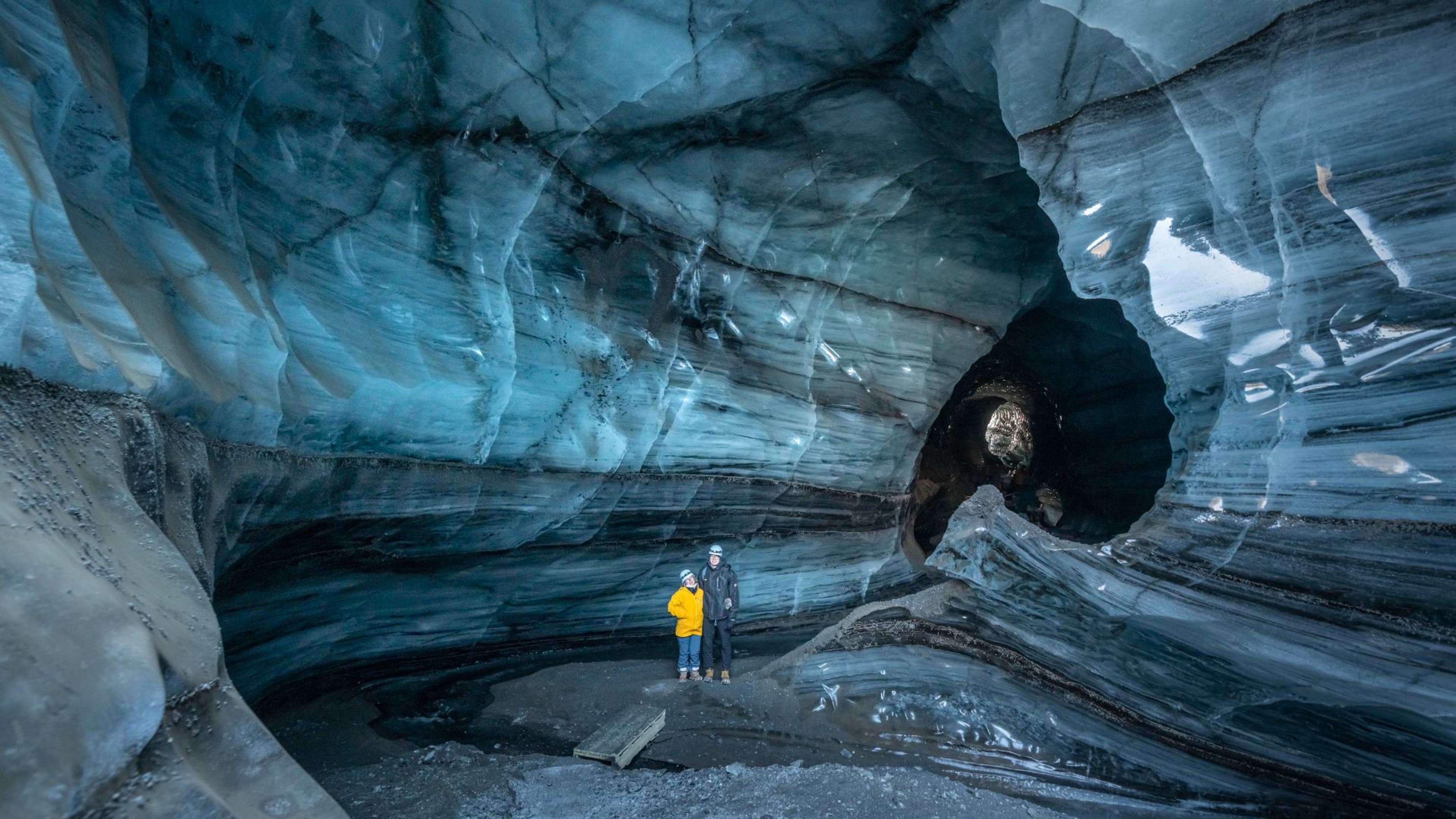
The Katla ice cave, accessible on a guided tour, sits within the glacier above the volcano. You’ll see a mix of crystal-clear blue ice and streaks of black volcanic ash from past eruptions.
Another well-known active volcano you might have heard of is Hekla. It was nicknamed the Gateway to Hell in medieval times due to the frequency of its eruptions. It’s less active these days and hasn’t erupted since 2000.
It is now a popular hiking destination with trails across lava fields and volcanic terrain.
- Explore Iceland’s volcanic landscapes on a self-drive tour.
- Learn more about the latest eruptions with our volcanic activity update.
Where to see active volcanoes in Iceland

So, where are the volcanoes in Iceland?
You can find active volcanoes in all regions of Iceland apart from the Westfjords. They run from southwest to northeast, right along the boundaries of the tectonic plates below the Earth’s surface.
Recent eruptions in Iceland have mostly been on the Reykjanes peninsula. This area is only 65 km (40 mi) from Reykjavík, so you can easily explore it on a day trip from the capital.
The Volcanic Way is a 700-kilometre self-drive route through Iceland's most significant volcanic systems, running from the Reykjanes peninsula through the south coast and into the north. Many of them are clustered around the south coast.
On your journey, you can also see landscapes unique to volcanic areas, like steaming geysers and enormous lava fields.

Most visitors take at least eight days to complete the route in one direction, allowing time for stops and day hikes along the way.
- Complete the Volcanic Way on a summer tour of Iceland.
- Check out this in-depth guide to Iceland’s volcanoes and geothermal activity.
How to visit active volcanoes in Iceland
Iceland's volcanic landscapes are accessible on most self-drive and guided itineraries.
You can take trips to the volcanoes themselves or visit other volcanic features. Relax in geothermal spas and hot springs, explore ancient lava caves, or stroll along famous black sand beaches like Reynisfjara.

Guided group tours cover the main volcanic sites with a local driver-guide who provides context on the geology and history of each location.
For more flexibility, a self-drive tour could be the perfect choice. We’ll arrange your trip for you, including car hire, accommodation, and an exciting sightseeing route. You’ll then be free to explore Iceland and stop at different volcanic sites along the way.
Short on time? No problem. On a multi-day tour, you’ll stay in downtown Reykjavík and take day trips to nearby volcanic hotspots, including the Reykjanes peninsula. You’ll get a crash course in local geology and see recent eruption sites without having to organize taxis or use public transport.

If you’re looking for something more intimate, a privately guided tour is for you. Private trips give you a really personal experience, and your expert guide will share their knowledge of Iceland’s hidden gems with you.
Camping tours are also available for those who want to stay close to the landscape throughout the trip.
Browse all volcano and adventure tours to find the right option.
- Get inspo for your next trip with these Iceland vacation ideas.
- Related: How to get around Iceland.
Explore Iceland's volcanoes with Iceland Tours
Visit Iceland and discover the fiery wonders of its explosive volcanoes. Marvel at recent eruption sites, check out ancient craters, or hike through dramatic volcanic areas.
Ready to see some active Iceland volcanoes for yourself? We can help! Our local travel team is based in Reykjavík and knows the country inside out.
We'll organize your vacation from start to finish, including places to stay, local transport, and an action-packed itinerary.
Explore Iceland's volcanic landscapes on a self-drive tour
Even without an active eruption, Iceland's volcanic landscapes are extraordinary. The Reykjanes Peninsula lava fields, Fagradalsfjall eruption sites, and the craters and lava formations along the Ring Road are all accessible on a self-drive tour.
Our Iceland volcano tours include guided visits to the most significant eruption sites, with local experts who can explain the geology and history of each location. For those who prefer to explore independently, our self-drive tours pass through the key volcanic regions of the Reykjanes Peninsula, the south coast, and the north. Browse all volcano and adventure tours.
Iceland's volcanic landscapes are accessible year-round. The Reykjanes peninsula lava fields and Fagradalsfjall eruption sites are within an hour of Reykjavík and can be visited on a day trip or as part of a self-drive itinerary. The south coast and Ring Road pass through several other significant volcanic areas including Eyjafjallajökull, Katla, and Hekla.
A 5% deposit secures your booking on all Iceland Tours packages.
Iceland Volcanoes: Frequently Asked Questions
Common questions about Iceland's volcanic activity, where to see eruption sites, and what to do if a volcano erupts during your visit.
Iceland has around 130 volcanoes in total, of which more than 30 are considered active. On average, an eruption occurs somewhere in the country every four to five years, though activity on the Reykjanes peninsula has been considerably more frequent since 2021.
Volcanic activity in Iceland changes from month to month. The Reykjanes peninsula has been the most active zone in recent years, with ten eruptions recorded between 2021 and 2024. For current status, the Icelandic Meteorological Office at en.vedur.is publishes up-to-date information before you travel.
The lava fields created by the recent Fagradalsfjall eruptions on the Reykjanes peninsula are accessible and give a clear sense of the geological forces that have shaped Iceland's landscape. Access depends on current conditions, so check locally before visiting and stay on marked paths.
The Reykjanes peninsula has been the most active area in recent decades following centuries of quiet. Katla, beneath the Mýrdalsjökull glacier on the south coast, is considered overdue for an eruption and is closely monitored. Hekla, Grímsvötn, and Bárðarbunga are also among the most active systems and are watched continuously by the Icelandic Meteorological Office.
Iceland sits directly on the Mid-Atlantic Ridge, where the North American and Eurasian tectonic plates are pulling apart. Combined with a volcanic hotspot beneath the island, this makes Iceland one of the most volcanically active places on Earth.
In most cases a volcanic eruption will not affect your trip at all. Unless an eruption produces a significant ash cloud, which is relatively rare, flights operate normally and the rest of the country remains unaffected. Iceland Tours monitors volcanic activity closely and our local team in Reykjavík will keep you informed of any developments that might affect your itinerary. Our cancellation policy includes provisions for significant natural events.