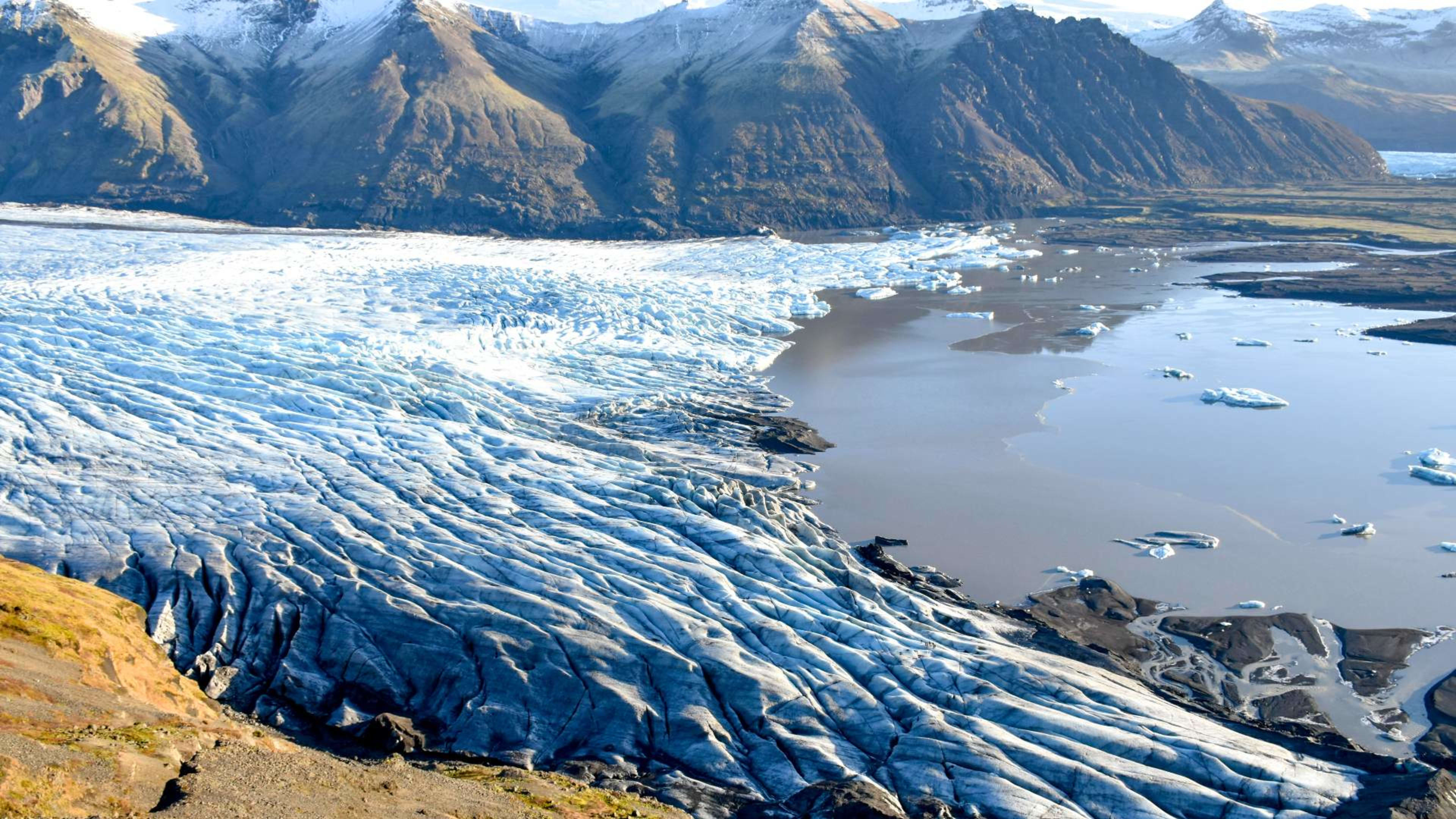
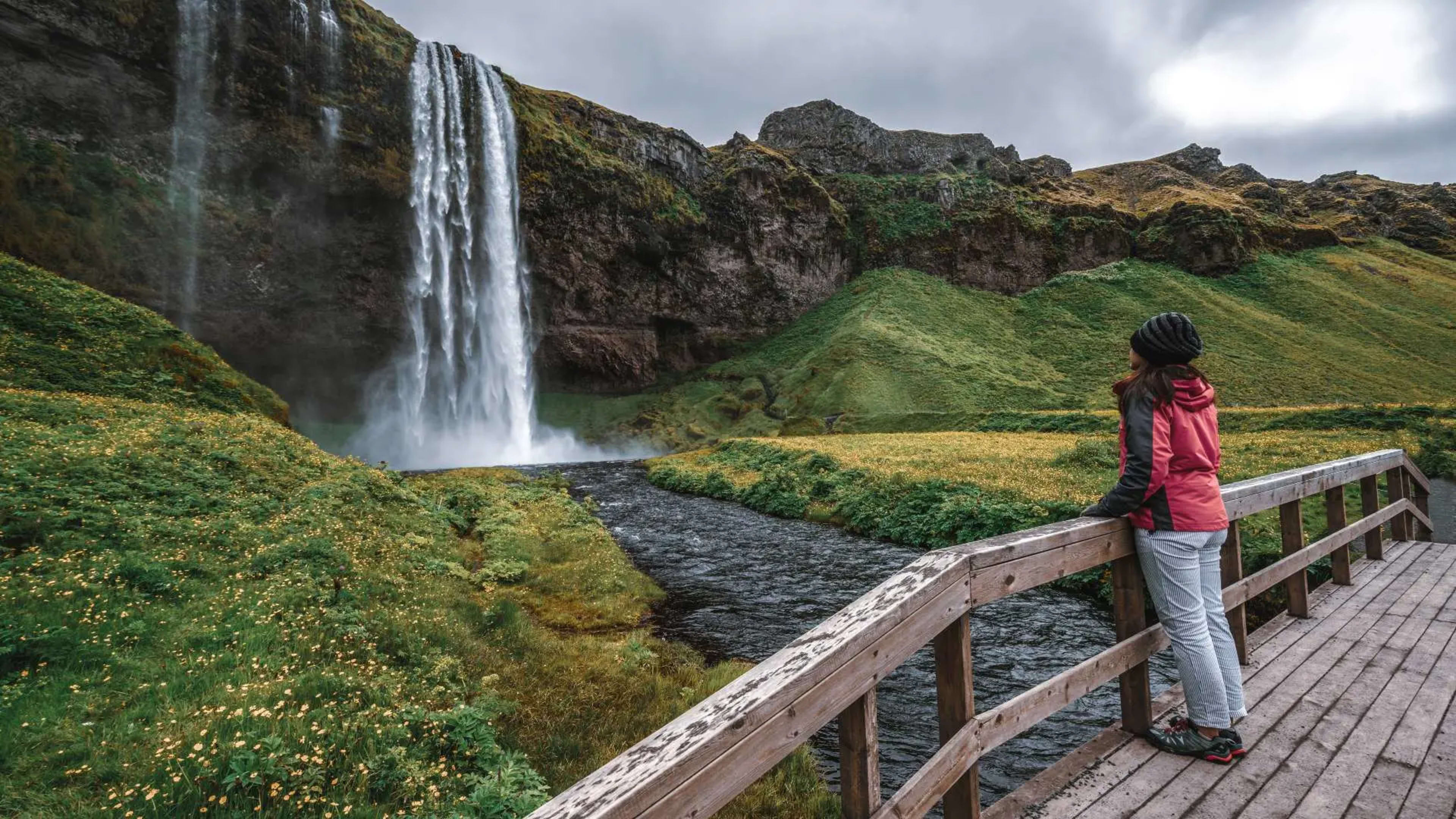
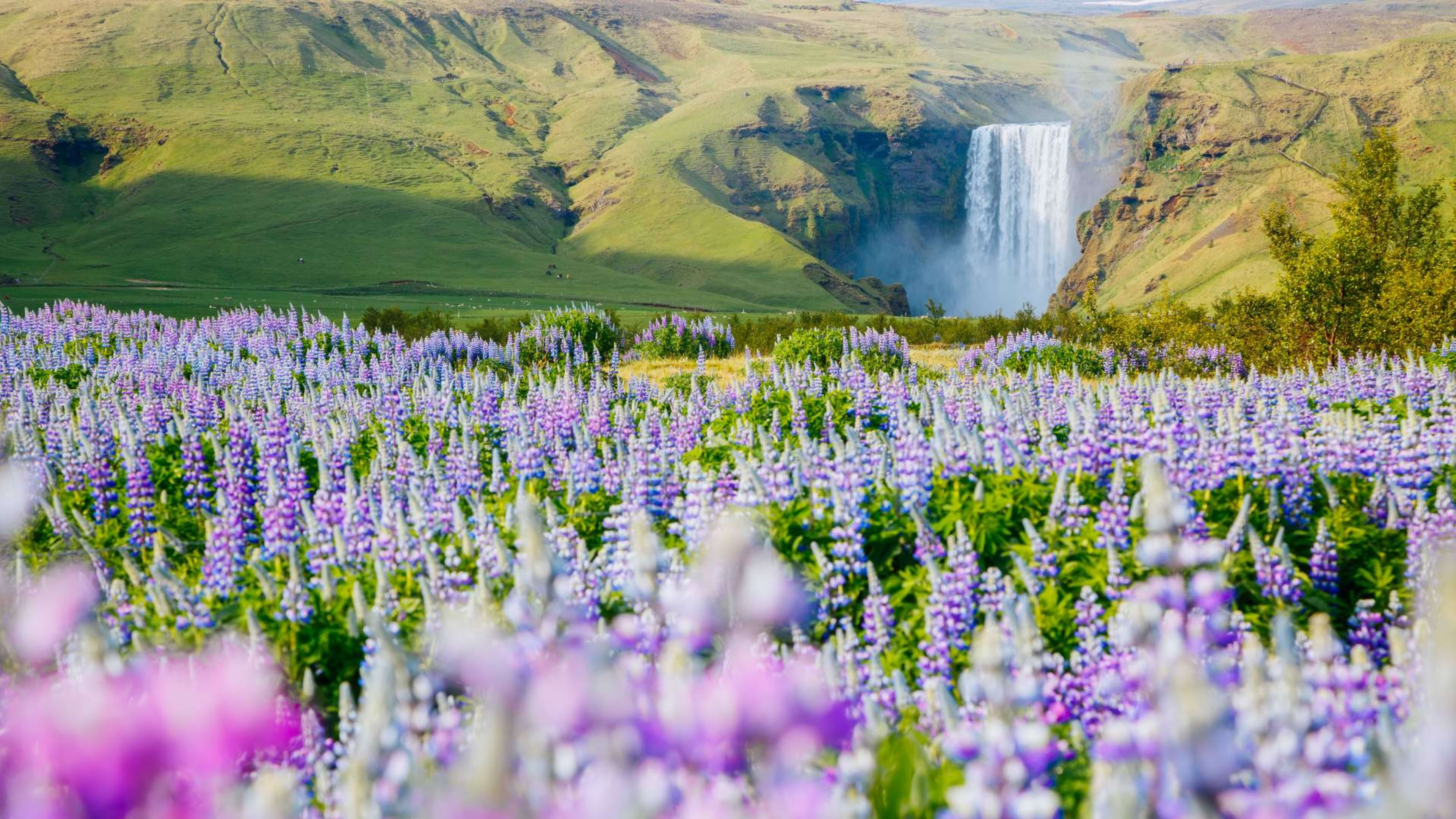
The Iceland Highlands are a land of extremes. It’s where glaciers meet volcanic deserts, colorful rhyolite mountains rise above steaming valleys, and hidden waterfalls tumble through canyons. Remote and only open for a few months each year, this vast wilderness shows Iceland at its most raw and untamed.
In this guide, you’ll discover the top sights, iconic hikes, seasonal tips, and practical advice for planning your Highlands adventure.
Want the best experience? Check out the summer tours in Iceland!
Why the Iceland Highlands Are a Must-See
The Icelandic Highlands cover nearly 40% of the country’s interior, sitting 400-500 m (1312-1640 ft) above sea level and framed by glaciers on almost every side. There’s Vatnajökull to the east, Langjökull to the west, Hofsjökull in the center, and Mýrdalsjökull to the south. Unlike the coastal regions, there are no towns, paved roads, or year-round access here—just vast wilderness.
Getting in takes effort, with rough F-roads, river crossings, and unpredictable weather, but that challenge is part of the adventure. Once you’re here, the reward is solitude and landscapes that feel otherworldly: lava fields, colorful rhyolite mountains, steaming geothermal valleys, and scenic waterfalls. For travelers seeking Iceland at its rawest and most unforgettable, the Highlands are the place to go.
Top 9 Natural Attractions in the Highlands
The Iceland Highlands are filled with landscapes that feel both otherworldly and untouched. Below are the top natural attractions that showcase the true spirit of the Highlands.
1. Landmannalaugar
The jewel of the Highlands, Landmannalaugar, is famous for its colorful rhyolite mountains, steaming hot springs, and lava fields. It’s also the starting point of the famous Laugavegur Trail. To reach the campsite, you’ll need to cross a short river or park your car behind and walk along the trail.
- Highlights: Colorful rhyolite peaks, natural hot springs, day hikes
- Access: F208 via F26 or F225, unpaved with river crossing; 4x4 required
2. Þórsmörk
In the southern Highlands, Þórsmörk is a sheltered valley between the glaciers Eyjafjallajökull, Mýrdalsjökull, and Tindfjallajökull. Its birch forests, braided rivers, and mountain ridges make it a favorite for hikers. Þórsmörk marks the end of the Laugavegur Trail and the start of Fimmvörðuháls Pass.
- Highlights: Birch forests, glacier views, canyon hikes, panoramic ridges
- Access: From Route 1 at Seljalandsfoss via F249; rough gravel with river crossings—best visited via a super jeep tour or Highland bus
3. Langjökull Glacier
Langjökull is the second-largest glacier in the country, stretching across the western Highlands. It’s one of the most accessible for adventure activities, offering snowmobile tours, guided hikes, and even a man-made ice tunnel known as “Into the Glacier.” From its slopes, you’ll see ice valleys and the flat-topped Eiríksjökull mountain.
- Highlights: Snowmobiling, ice tunnel, glacier hikes, views of Eiríksjökull
- Access: Off the F35; tours available from downtown Reykjavík, Húsafell, or Golden Circle stops
4. Askja Caldera
Deep in the central Highlands within Vatnajökull National Park, Askja is a vast volcanic caldera surrounded by black lava deserts. At its center lies Öskjuvatn, one of Iceland’s deepest lakes, and right beside it the Víti crater, filled with striking milky-blue geothermal water from the 1875 eruption.
- Highlights: Crater lakes, stark lava landscapes
- Access: Long drive via F88 or F910; rough tracks with river crossings—super jeep or guided tour recommended
5. Hveravellir Nature Reserve
Between Langjökull and Hofsjökull glaciers lies Hveravellir, a geothermal oasis known as “hot spring fields.” The area is filled with steaming fumaroles, bubbling hot pools, and vividly colored mineral springs in blue, red, and green. Visitors can soak in a naturally heated pool while admiring the wilderness, though the more active springs are best viewed from a safe distance.
- Highlights: Natural hot pool, colorful geothermal springs, fumaroles, lava field walks
- Access: Directly on the F35; 4x4 required
6. Kerlingarfjöll and Hveradalir
Just south of Hveravellir, Kerlingarfjöll is a rhyolite mountain range famous for its steaming geothermal valleys. The most dramatic area is Hveradalir, where trails wind past bubbling mud pools, fumaroles, and vividly colored slopes of red, orange, and yellow.
- Highlights: Rhyolite mountains, geothermal area, bubbling mud pools, ridge hikes
- Access: Off the F35; final stretch to Hveradalir is rocky—4x4 recommended
7. Háifoss Waterfall
At 122 m (400 ft), Háifoss is one of Iceland’s tallest waterfalls, plunging into a dramatic canyon alongside the smaller Granni waterfall. Just outside the central Highlands, it’s often considered a gateway stop before heading inland. From the parking lot, it’s a five-minute walk to the viewpoint, or a one-hour hike down into the canyon for a closer look.
- Highlights: One of Iceland’s tallest waterfalls, canyon views
- Access: Turn off Route 32 in Þjórsárdalur; the final Highland road is rough—4x4 recommended
8. Aldeyjarfoss Waterfall
Aldeyjarfoss is a powerful 20-m (66 ft) waterfall that plunges into a circular basin framed by hexagonal basalt columns. Located at the northern edge of the Sprengisandur route, it combines raw Highland scenery with striking geology.
- Highlights: Basalt-column amphitheater, powerful cascade, canyon views
- Access: Via F26 from the north; gravel track suitable for 4x4s
9. Lakagígar (Laki Craters)
Created during the catastrophic eruption of 1783-1784, the Lakagígar crater row stretches for 25 km (15.5 mi) across the southern Highlands. Today, moss-covered craters and lava fields form a surreal hiking landscape, with sweeping views from Mount Laki.
- Highlights: Historic crater row, mossy lava fields, panoramic hikes
- Access: Via F206 or F207 near Kirkjubæjarklaustur; 4x4 required with river crossings
Hiking and Adventure Trails in Icelandic Highlands
The Highlands are a hiker’s paradise, offering everything from short scenic walks to legendary multi-day treks. Below are the most popular routes, organized by scale.
Iceland Highlands Multi-Day Treks
- Laugavegur Trail (55 km/34 mi, 4 days): The country’s most famous trek, linking Landmannalaugar to Þórsmörk through rhyolite mountains, lava fields, and black sand deserts.
- Fimmvörðuháls Pass (25 km/15.5 mi, 10-12 hrs or 2 days): Crosses between Eyjafjallajökull and Mýrdalsjökull glaciers, with craters from the 2010 eruption and waterfalls along the descent to Skógar.
- Old Kjalvegur Trail (40-50 km/25-31 mi, 3-4 days): Historic route across the Kjölur plateau, with views of Langjökull and Hofsjökull glaciers, ending at Hveravellir hot springs.
- Strútsstígur Trail (45 km/28 mi, 3-4 days): Remote trek connecting Álftavötn near Landmannalaugar to Eldgjá canyon, through volcanic deserts and geothermal valleys.
Iceland Highlands Day Hikes
- Landmannalaugar Trails: Colorful rhyolite landscapes with options like Bláhnjúkur (2-3 hrs), Brennisteinsalda (2-3 hrs), and Ljótipollur crater (1-1.5 hrs).
- Þórsmörk Trails: Short but rewarding routes, including Valahnúkur (1 hr panoramic climb) and Stakkholtsgjá canyon (1 hr walk).
- Kerlingarfjöll Trails: Loops through Hveradalir geothermal valley (1-4 hrs), with fumaroles, steaming vents, and orange-red ridges.
- Hveravellir Hikes: Easy trails (30 min-2 hrs) around hot springs and lava fields.
- Lakagígar Hikes: Trails to craters and Mount Laki summit (1.5-4 hrs) with views of the 1783 eruption site.
For more, check out the best day hikes in Iceland!
Driving and Access: How to Reach the Highlands
Getting into the Highlands is unlike driving anywhere else in Iceland. The interior is crossed only by F-roads. These are rough gravel tracks, often with unbridged rivers, that are open for only a few summer months (late June to early September).
To drive on F-roads, you must have a 4x4 vehicle; standard cars and campervans are not permitted. Even with the right vehicle, expect to encounter steep, rocky stretches and unpredictable river crossings that can be hazardous after rain or snowmelt. Rental companies specify which vehicles are Highland-approved and may offer special insurance.
Iceland Highlands Main Access Routes
- F35 (Kjölur): The easiest interior route, connecting Gullfoss with Blönduós, passing Hveravellir and Kerlingarfjöll.
- F26 (Sprengisandur): A remote, barren track between the south (near Hekla) and the north (near Aldeyjarfoss). Long, exposed, and best for experienced drivers.
- F208 and F225: Scenic approaches to Landmannalaugar; both are rough, with river crossings that challenge even confident drivers.
- F88 and F910: Tracks to Askja and Herðubreið. Extremely remote, with deep rivers; not recommended for first-time Highland drivers.
Pro-tip: Consider self-drive tours for a well-curated trip in Iceland. And check out our guide on getting around Iceland.
Seasonal Considerations for Visiting the Highlands
The Highlands are unlike the rest of Iceland when it comes to travel seasons. Because of their high elevation and extreme weather, this vast interior is only accessible for a short part of the year. Knowing when to go and what conditions to expect is crucial for planning your trip.
- Summer (late June-early September): The main season. Roads open once the snow melts, trails are clear, and huts are operational. Extended daylight hours (up to 20 hours in June and July) also make it the best time for hiking and witnessing the midnight sun.
- Shoulder Seasons (early June and mid-September): Conditions are unpredictable. Some roads remain snowed in or close early due to the weather. Those who go are rewarded with fewer crowds, wildflowers in June, or autumn colors in September.
- Winter (October-May): The Highlands are essentially closed to regular travelers. Deep snow, closed F-roads, and extreme weather make access impossible, except for specialized super jeep expeditions or guided tours, such as the Northern Lights tours in Þórsmörk.
Recommended Highlands Group Tour
If driving F-roads and fording rivers feels daunting, a guided tour is a safe way to see Iceland’s landscapes while still getting a taste of the Highlands. One option is the 7-Day Summer Ring Road Small Group Tour. This itinerary circles Iceland’s Ring Road with an expert guide, covering waterfalls, glaciers, volcanic areas, and geothermal sites. While it focuses on the Ring Road, you’ll also stop at Highland-adjacent areas, giving you a glimpse of the interior without long F-road drives.
For those who want to explore without the challenges of self-driving, group tours are a practical way to experience Iceland. It’s also a good first step before planning a more in-depth adventure in the Icelandic Highlands.
Practical Travel Tips for Exploring the Highlands
Traveling in the Highlands is unforgettable, but it requires careful preparation. Here are key tips to keep safe and comfortable:
Packing Essentials
- Clothing: Dress in layers — a base layer, insulating mid-layer, and waterproof shell.
- Footwear: Waterproof hiking boots with ankle support for trails and river crossings.
- Gear: Trekking poles, gaiters, and quick-dry clothing. Pack a swimsuit for hot springs.
- Insects: Small flies (especially midges) can be a nuisance in the north. Bring DEET and consider a head net.
Food, Fuel, and Supplies
- Bring supplies: There are no shops inside the Highlands. Stock up on food, snacks, and water before leaving towns.
- Fuel up early: Gas stations are rare. Fill up before entering and carry extra for long F-roads.
Safety and Navigation
- Check weather and road conditions: Updates are posted on vedur.is, road.is, and safetravel.is.
- River crossings: Never attempt them without a proper 4x4 and experience. If unsure, wait for another car or turn back.
- Navigation: Cell service is limited. Download offline maps and consider a GPS device or paper map.
Accommodation and Facilities
- Mountain huts: Popular on trails like Laugavegur. Book well in advance through the Iceland Touring Association (Ferðafélag Íslands).
- Camping: Allowed at designated Highland campsites, with minimal facilities available.
- Toilets and waste: Facilities are scarce. Pack out your trash and follow Leave No Trace principles.
Embracing Iceland’s Wild Heart
Exploring the Highlands means stepping into Iceland at its most untamed. It surprises you with steaming valleys, lava fields, glacier rivers, and towering waterfalls. It takes preparation, a 4x4, and a willingness to adapt, but the rewards are landscapes and experiences unlike anywhere else in the country.
Whether you trek the Laugavegur Trail, soak in a hidden hot spring, or stand at the edge of a volcanic canyon, the Iceland Highlands will leave you with a sense of the country’s wild heart that lasts long after you’ve left.
Now that you’ve learned about the Iceland Highlands, why not check out one of our camping tours in Iceland? Or connect with our travel experts to plan a trip just for you.