Planning a summer trip to Iceland means packing for a place where sunshine and rain can share the same afternoon. Iceland summer temperature averages stay mild rather than hot, with most days sitting between 50°F and 59°F (10°C and 15°C).
In June and July, the sun stays up past midnight, giving you up to 22 hours of daylight to work with. But conditions can change within the hour, so knowing what to expect helps you pack the right layers and plan each day with a backup in mind.
What Is the Average Iceland Summer Temperature?
Iceland’s main summer season runs from June through August, with May and September acting as milder shoulder months. The country sits just below the Arctic Circle, which is why July averages only 59°F (15°C) while cities like London average 73°F (23°C) that same month. Reykjavík, in the southwest, is the warmest part of the island. Even in July, temperatures rarely climb above 68°F (20°C).
Related: Iceland in July: Things to See & Do
How Daylight Hours Shape Your Summer Trip
In Iceland, summer means the sun barely sets. This period is called the Midnight Sun. Around the summer solstice on 21 June, Reykjavík gets nearly 22 hours of daylight, with only a short twilight period at night. Even by mid-August, the sun sets around 10 pm and rises again before 5 am.
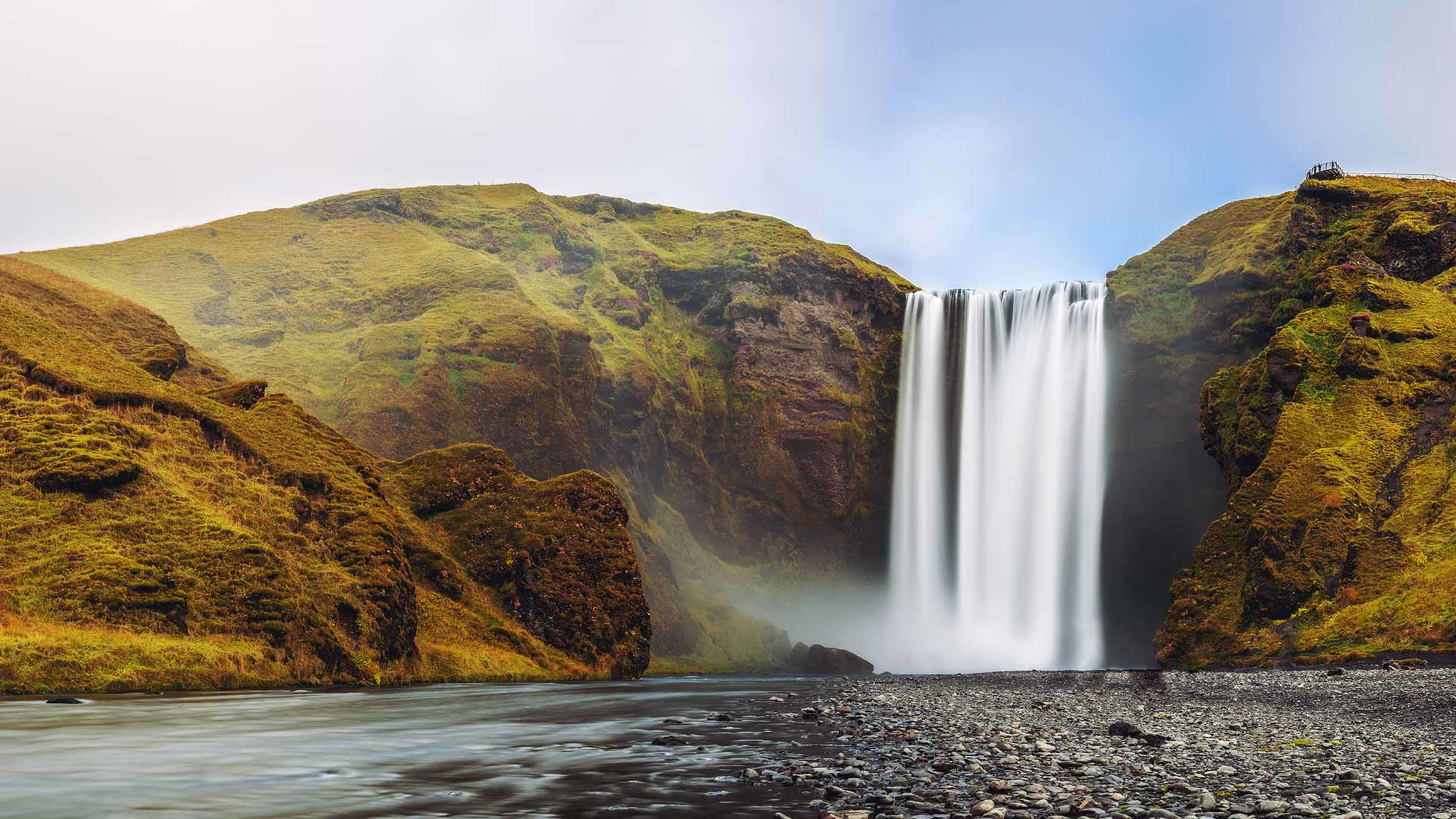
The long daylight hours let you cover more ground without rushing. You can stand at the base of Skógafoss at 11 pm with full visibility, or drive the Ring Road's South Coast stretch without headlights. The trade-off is that hotel rooms stay bright through the night, which makes falling asleep harder than most travelers expect. A sleep mask solves that quickly.
From late May through mid-August, the sun stays low on the horizon rather than climbing directly overhead. That low angle sends glare straight at eye level, which strains your eyes more than a high midday sun does.
Month-by-Month Summer Highlights in Iceland
Each summer month in Iceland has its own character. Knowing the differences helps you choose the right time for your travel style and the activities on your list.
May: Shoulder Season in Iceland
May brings shorter queues, lower accommodation rates, and cooler temperatures ranging from 39°F to 50°F (4°C to 10°C). The F-roads begin to open in late May, giving access to Landmannalaugar and Þórsmörk for the first time since winter. Trails around Þingvellir and the South Coast see a fraction of the visitors they get in July.
June: Midnight Sun Peak in Iceland
June is when the Midnight Sun peaks, with temperatures climbing to between 48°F and 57°F (9°C and 14°C). Moss fields and lupine slopes across the South Coast and highlands reach their greenest point of the year.
Humpback and minke whale sightings from Húsavík peak this month, when feeding activity in Icelandic waters is at its highest. Atlantic puffins are fully settled into their nesting colonies on the Westman Islands by early June. The Fimmvörðuháls trail between Eyjafjallajökull and Mýrdalsjökull glaciers is snow-clear and walkable by mid-June.
July: Peak Summer in Iceland
July brings the warmest Iceland summer temperature of any month, with readings sitting between 50°F and 59°F (10°C and 15°C). It brings calmer conditions and slightly drier weather than the early summer months. The wind speeds are lower, making it the most reliable month for glacier hikes and coastal walks.
Accommodation along the Ring Road and in Reykjavík fills up months ahead. Popular guided tours in Iceland, such as glacier walks on Sólheimajökull, sell out weeks in advance. Book both three to six months before your trip.
August: Early Autumn in Iceland
August temperatures range from 46°F to 55°F (8°C to 13°C), cooler than July but warmer than September. Mossy hillsides around Landmannalaugar and Þórsmörk shift from summer green to amber and rust by mid-month. Tour group numbers drop after the first week of August.
Accommodation along the Ring Road becomes easier to book, often without months of lead time. After mid-August, darkness returns to Iceland's nights. The Northern Lights become visible on clear nights, and aurora activity builds steadily through September and October.
Top Summer Activities in Iceland to Plan Around the Weather
Summer is the best season for outdoor exploration in Iceland. The weather is mild, the days are long, and most roads and trails are fully open. Most of these activities are weather-dependent, so build flexibility into your itinerary.
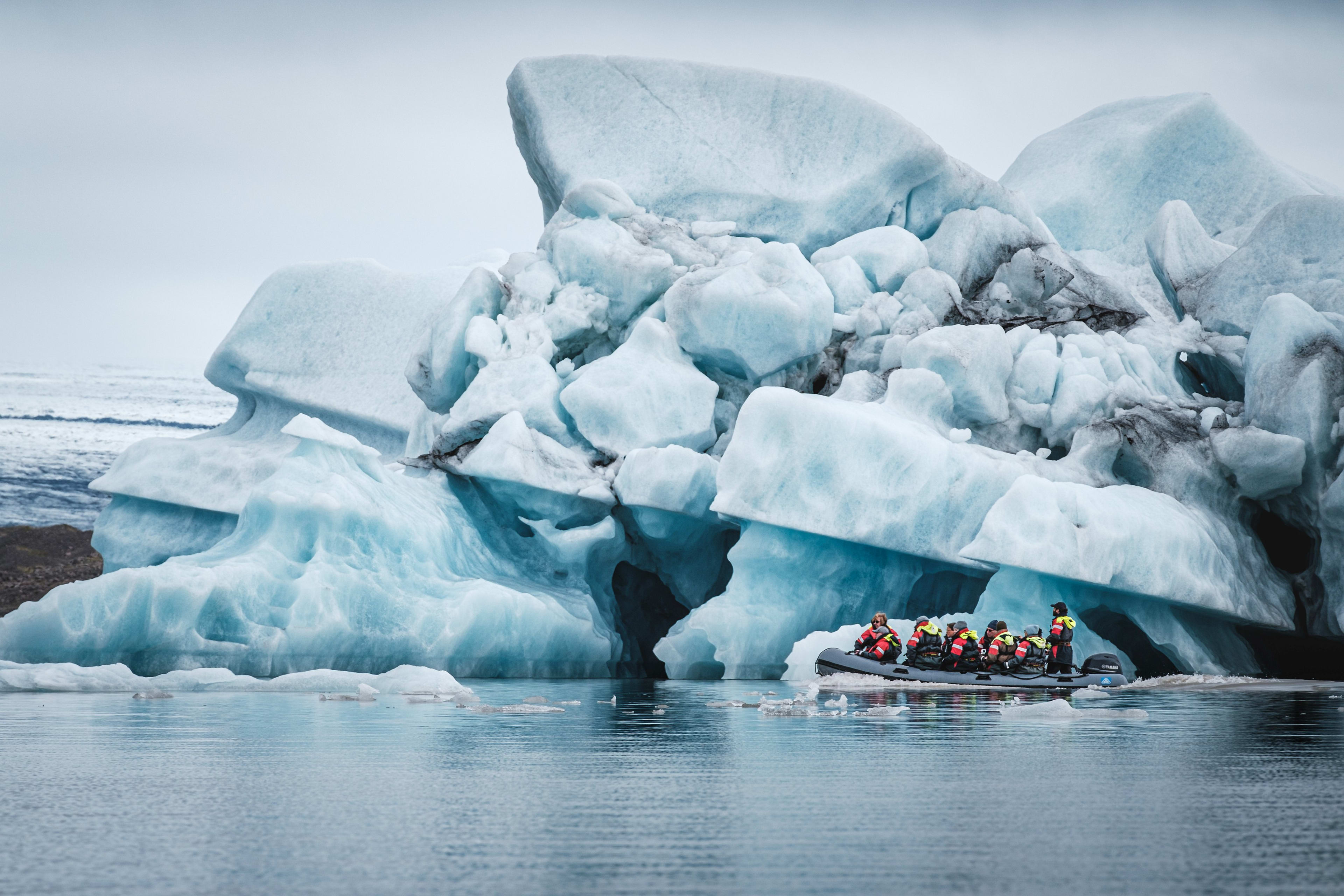
1. Glacier hiking
Vatnajökull and Sólheimajökull are the two most accessible glaciers for guided walks. Both run daily departures from June through August, with no prior experience required.
2. Whale watching
Húsavík and Reykjavík are the main departure points for whale watching tours in Iceland. June and July offer the highest sighting rates, when humpback and minke whales are most active in Icelandic waters.
3. Puffin spotting
Atlantic puffins nest on the Westman Islands and at Látrabjarg cliffs from May through August. The colonies are at their most active in June and July before the birds leave for the open ocean in late summer.
4. Snorkeling at Silfra
Silfra fissure in Þingvellir National Park sits between the North American and Eurasian tectonic plates. Water temperature stays around 35–39°F (2–4°C) year-round, so a dry suit is provided on all guided tours.
5. Ring Road road trip
Driving the Ring Road clockwise in summer puts the South Coast waterfalls in the best morning light. Most of the 1,332 km (828-mile) route is fully accessible from May through September without a 4x4.
6. Highland trekking
Trails like Landmannalaugar and Þórsmörk open from late June through early September, depending on snow conditions. Both are accessible only via F-roads, so a 4x4 vehicle or a highland bus is required.
What to Wear in Iceland During Summer
Packing for Iceland is less about how much you bring and more about choosing the right combination of items. The wind can turn a mild afternoon into a cold one within minutes, so layering is the core rule for every summer trip. Here is a practical layering system that works well for most summer days:
- Base layer: A merino wool or synthetic thermal top. Merino regulates temperature well and resists odor on multi-day trips.
- Mid-layer: A fleece jacket or insulating sweater for when the wind picks up or temperatures drop after sunset.
- Outer layer: A waterproof and windproof shell jacket. Non-negotiable for Iceland's exposed trails and coastal stops.
- Bottoms: Water-resistant hiking trousers. Jeans work on dry city days, but take too long to dry once wet.
- Footwear: Waterproof hiking boots with a solid grip. Most outdoor sites involve uneven terrain, wet ground, or river crossings.
- Extras: A warm hat, lightweight gloves, and a buff. Small items that make a real difference on windy days.
What Makes Summer Travel in Iceland Special?
Among all seasons in Iceland, summer is the easiest to travel in. Roads are open, tours run daily, and the weather, while unpredictable, rarely stops you from getting where you want to go. That accessibility suits a wide range of travel styles.
Guided group tours work well for first-time visitors who want local expertise built in. Self-drive trips in Iceland suit travelers who prefer setting their own pace. Families find summer the easiest season for managing logistics, and photographers come specifically for the low-angle light produced by the Midnight Sun.
Plan Your Iceland Summer Trip with Confidence
Understanding Iceland's summer temperature patterns is the first step to a trip that goes smoothly. The weather stays mild but can be unpredictable. The right clothing layers make a real difference once you are on the road. July brings the warmest conditions and the widest access to trails, glaciers, and highland routes. June and August each have their own strengths.
Summer offers the easiest travel conditions. Whether you are hiking a glacier, watching whales, or driving the Ring Road under the Midnight Sun, good preparation keeps you ready for whatever Iceland's skies bring. Browse our Iceland summer tour packages to find the right trip for your travel style and timeline.
FAQ's about Iceland's Summer Weather
July is Iceland’s warmest month, with average highs around 59°F (15°C). It also has some of the longest daylight hours.
In July, the warmest month, average temperatures range from 50°F to 59°F (10°C to 15°C). May and September are cooler, sitting closer to 39–50°F (4–10°C).
Iceland does not get hot by most travelers' standards. Temperatures stay mild all summer, and days above 68°F (20°C) are rare even in peak July.
Around the summer solstice on 21 June, Reykjavík gets up to 22 hours of daylight. By mid-August, daylight hours drop to roughly 16 to 18 hours per day.
Layering works best. Pack a moisture-wicking base layer, a warm mid-layer, and a waterproof outer shell, plus waterproof hiking shoes.
Yes. A waterproof jacket and windproof layer are essential, since rain can happen in any summer month.
Yes. Summer offers the easiest driving conditions, long daylight hours, and better access to the Highlands and Ring Road routes.