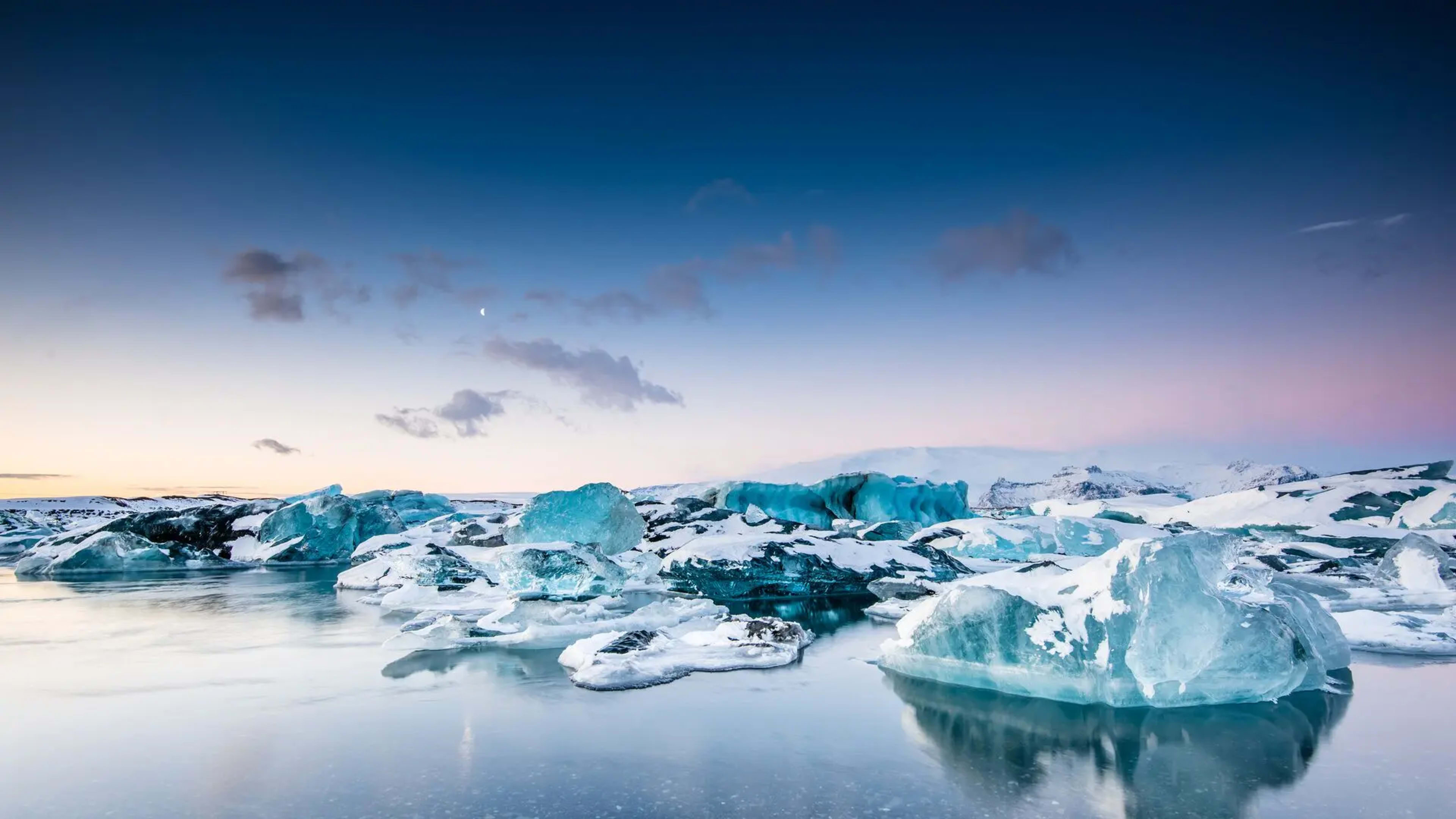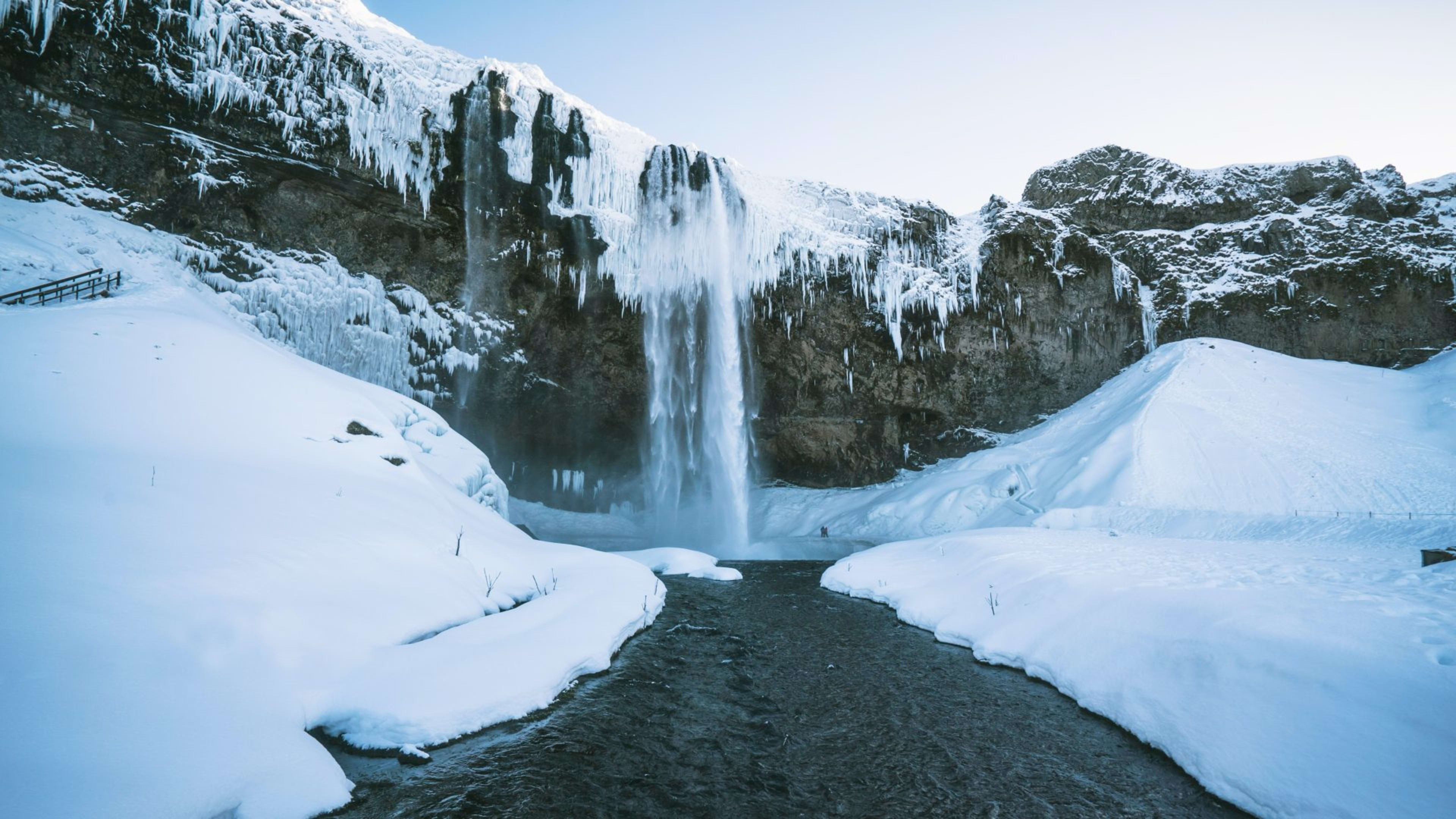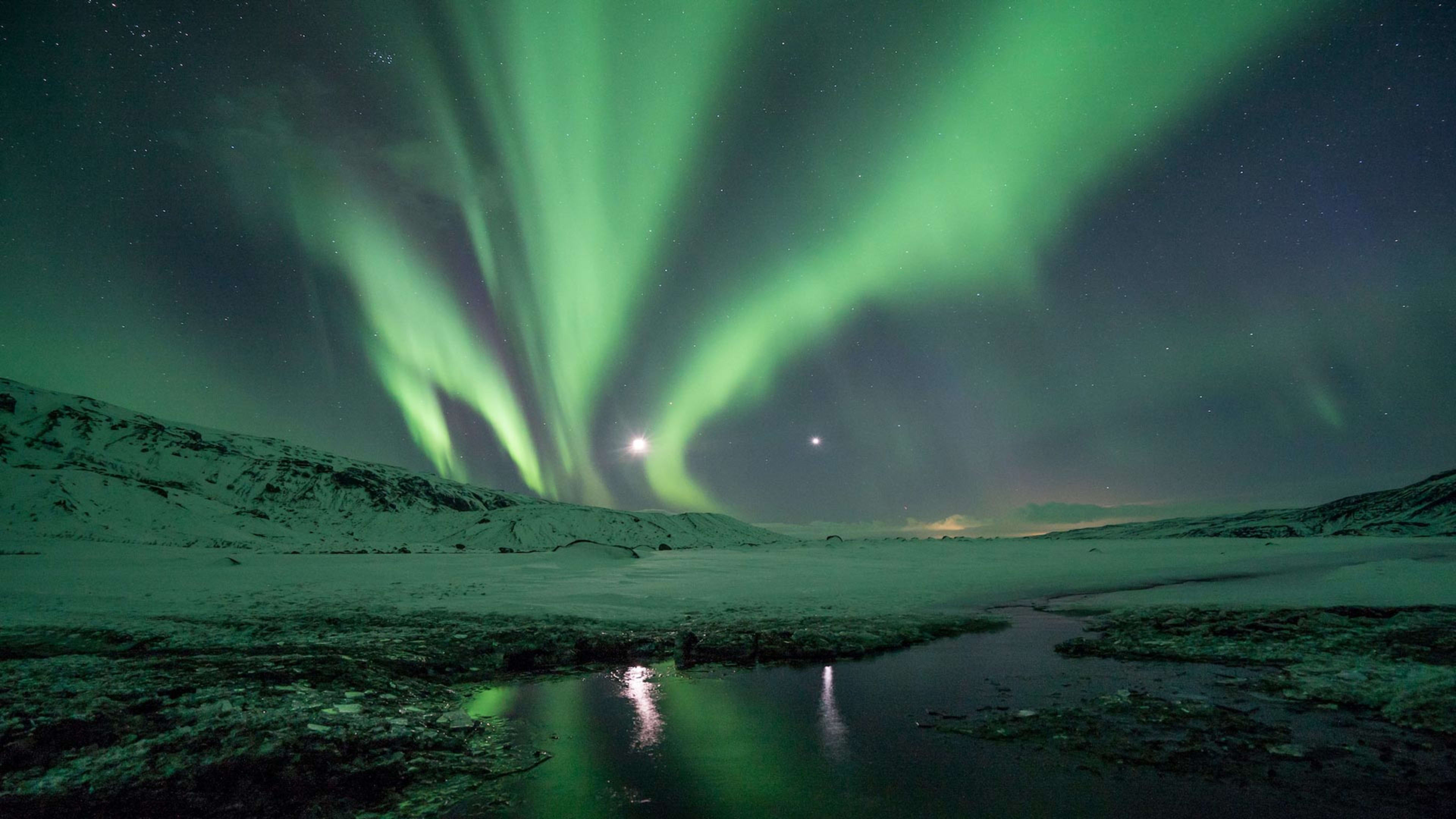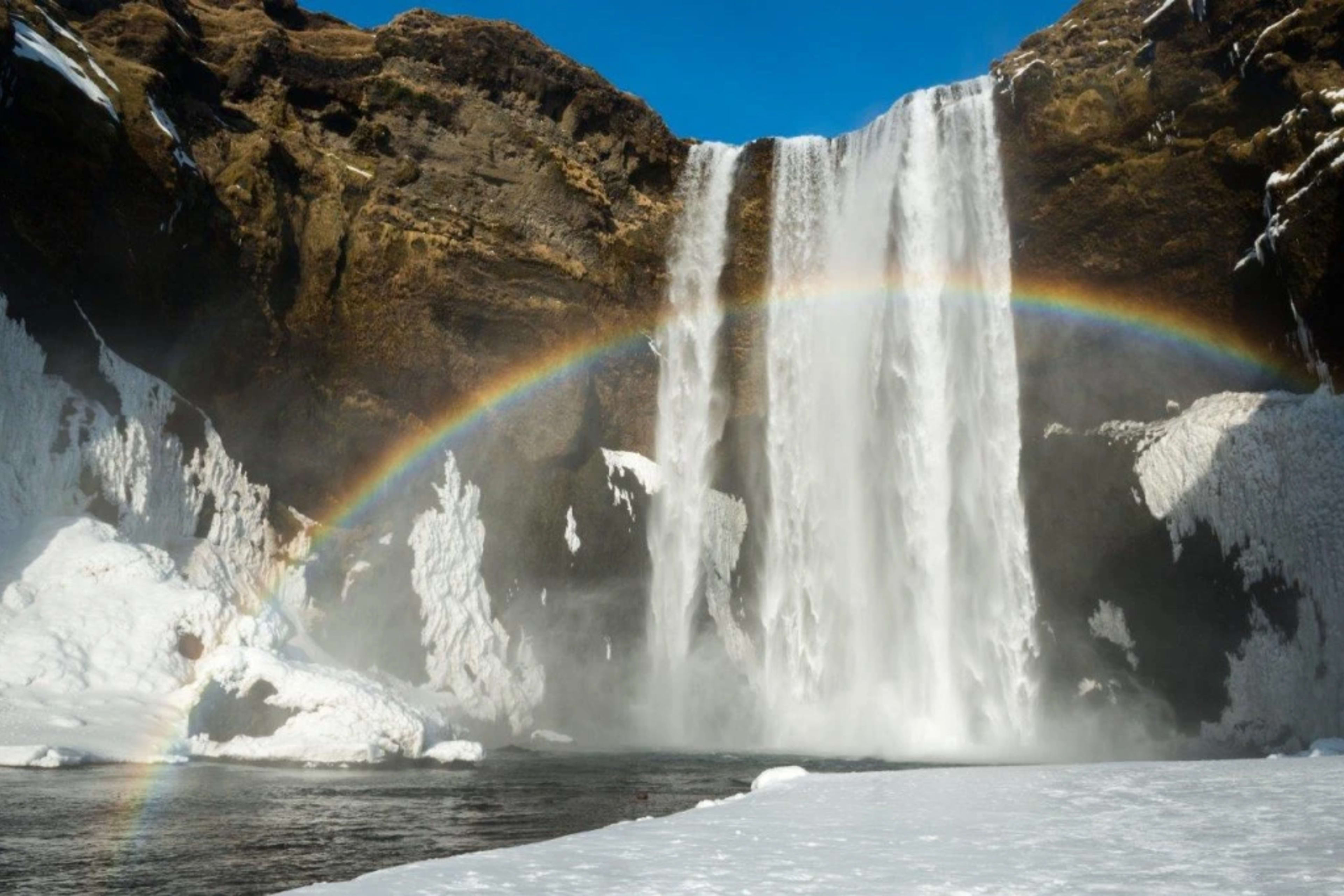
Have you ever dreamed of standing before a frozen waterfall, its spray turned to ice while Northern Lights dance above? Or hearing the roar of a cascade echo through a snow-covered canyon? That’s the magic of visiting waterfalls in the winter in Iceland.
From roaring giants to hidden falls framed in snow, each reveals a different side of Iceland’s winter landscapes. With fewer crowds and the thrill of icy adventures, it’s an experience you won’t forget.
Ready to plan your trip to Iceland? Here are the top waterfalls to see this winter.
While you’re here, check out our Iceland adventure tours for a more unforgettable experience!
Why Iceland’s Waterfalls Are Magical in Winter
Iceland is a land of waterfalls, with thousands scattered across its volcanic landscapes. While they impress year-round, winter turns them into something extraordinary. Snow-dusted cliffs, glittering icicles, and frozen spray transform the scenery into a frozen wonderland. Some waterfalls partly freeze, forming surreal ice sculptures, while others thunder on, more dramatic against the stillness. Moreover, trails are quieter, pastel sunrises linger over icy cliffs, and the Northern Lights may shimmer above the falls.
8 Best Icelandic Waterfalls to Visit in the Winter
In winter, Iceland’s waterfalls become icy wonders, and each shows a different side of the country’s frozen beauty. Here are the top waterfalls to see this season.
1. Gullfoss
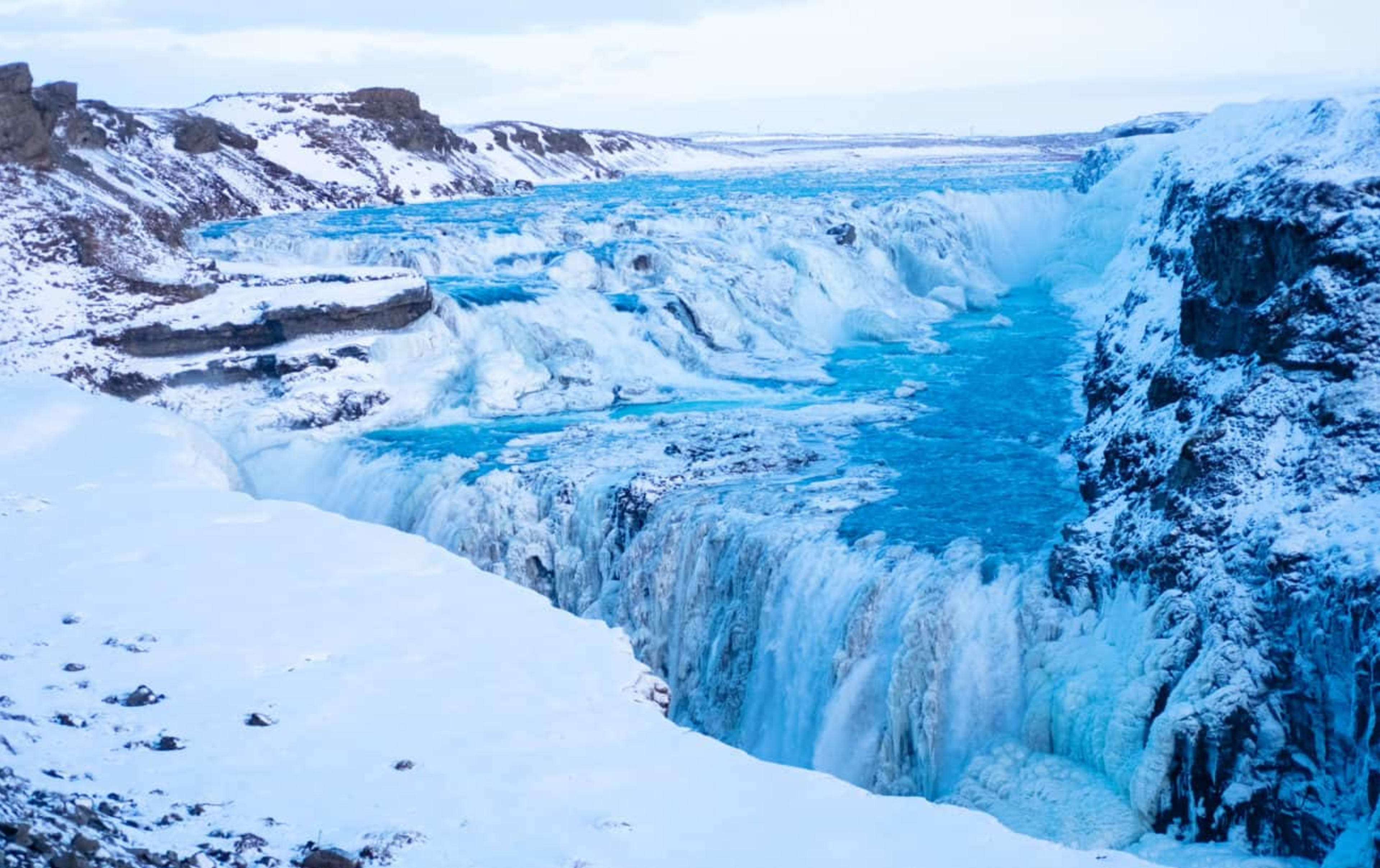
Gullfoss is one of Iceland’s most famous waterfalls and the crown jewel of the Golden Circle. In winter, its two-tiered cascade plunges between snow-covered cliffs, while frozen spray forms glittering ice along the canyon walls. On clear nights, it can be a magical spot to watch the Northern Lights over the frozen landscape.
- Location: Golden Circle
- Frozen in winter? Partially – edges and spray freeze
- Winter access: Easy – On paved Route 35; roads cleared year-round, though paths may be icy

2. Skógafoss
Skógafoss is one of Iceland’s most powerful and photogenic waterfalls, dropping 60 m (197 ft) in a perfect curtain. In winter, snowy cliffs and icy spray transform the scene into a sparkling wonder. Its wide-open setting makes it especially striking under a pastel sky.
- Location: South Coast
- Frozen in winter? Partially – edges and spray freeze
- Winter access: Easy – Right off the Ring Road; parking is plowed, though stairs to the top can be icy
3. Seljalandsfoss and Gljúfrabúi
Seljalandsfoss Waterfall is famous for the path that leads behind its curtain of water. In winter, that route is usually closed, but the front view framed by snow and icicles is breathtaking. Just a few minutes’ walk away, Gljúfrabúi hides in a narrow canyon, where light filtering through the gap creates a magical icy scene.
- Location: South Coast
- Frozen in winter? Partially – with icicles and frozen spray
- Winter access: Easy – Right off the Ring Road; parking is maintained, though the canyon path can be very slippery
4. Goðafoss
Goðafoss, or “Waterfall of the Gods,” is one of North Iceland’s most beautiful and historic sites. Legend has it that pagan idols were thrown into the falls when Iceland converted to Christianity. In winter, its horseshoe-shaped cascade is edged with ice, while turquoise water flowing through the frozen surroundings creates a striking scene.
- Location: North Iceland
- Frozen in winter? Partially – edges and pools freeze
- Winter access: Easy – Just off the Ring Road, with parking and viewpoints usually clear year-round
5. Hraunfossar and Barnafoss
Hraunfossar is unlike any other waterfall in Iceland: dozens of streams seep through lava fields into the Hvítá River. In winter, snowy lava rocks frame the bright blue water in a striking contrast. A short walk away, Barnafoss rushes through a rocky channel, its icy current adding a sense of force to the gentler lava falls.
- Location: West Iceland
- Frozen in winter? Partially – with ice and snow along the lava fields
- Winter access: Easy – On the Silver Circle route; roads and walking paths are maintained year-round, though often icy
6. Kirkjufellsfoss
Kirkjufellsfoss is one of Iceland’s most photographed waterfalls, set beneath the triangular Kirkjufell mountain. In winter, the snowy peak and partly frozen falls create a postcard-perfect scene. On clear nights, the Northern Lights often dance overhead, making it a favorite spot for winter photographers.
- Location: Snæfellsnes Peninsula
- Frozen in winter? Nearly frozen during the height of winter
- Winter access: Moderate – Just off Route 54; roads are paved but can be icy after snowstorms
7. Svartifoss
Svartifoss, in Skaftafell Nature Reserve, is framed by striking black basalt columns that give it its name, “Black Falls.” In winter, snow and icicles transform the cliffs into a frozen cathedral, with the dark lava contrasting against the white ice and flowing water.
- Location: South Coast
- Frozen in winter? Partially – cliffs and spray often freeze over
- Winter access: Moderate – A 1.5 km (30-45 min) hike from the visitor center; trail is open year-round, but snowy and icy
8. Dettifoss and Selfoss
Dettifoss is Europe’s most powerful waterfall, plunging 45 m (148 ft) into a rugged canyon. In winter, the mist freezes on the cliffs, creating a surreal, icy landscape. Just upstream, Selfoss (not to be confused with the town in South Iceland) offers a softer contrast with its wide horseshoe of cascades, combining raw force and quiet beauty in one stop.
- Location: North Iceland
- Frozen in winter? Partially – mist and spray freeze on the surrounding rocks
- Winter access: Moderate to Difficult – Part of the Diamond Circle; best reached via Route 862 (west side); trails can be icy or snow-covered
Recommended Winter Tour Featuring Iceland’s Waterfalls
For a stress-free way to see Iceland’s frozen wonders, join the 9-Day Iceland Ring Road Winter Group Adventure. This guided itinerary combines the country’s top waterfalls with glacier landscapes, black-sand beaches, geothermal sites, and opportunities to see the Northern Lights. The journey includes the Golden Circle with Gullfoss, the South Coast with Seljalandsfoss and Skógafoss, and North Iceland’s Dettifoss on the Diamond Circle.
Want fewer or more days? Explore our extensive range of Ring Road tours.
Practical Tips for Visiting Waterfalls in the Winter
Exploring Iceland’s waterfalls in winter is unforgettable, but conditions can be challenging. Keep these tips in mind:
- Footwear: Wear waterproof boots; add microspikes or crampons on icy trails.
- Clothing: Dress in warm layers with windproof, waterproof outerwear.
- Driving: Rent a 4x4; check road.is and SafeTravel.is for closures and alerts.
- Daylight: Expect 4-6 hours of light; carry a headlamp if out late.
- Safety: Obey closures and avoid walking on icy paths behind waterfalls.
- Tours: Consider privately guided tours if you’re unsure about winter driving.
For more tips, read our guides on packing for winter and getting around Iceland.
Explore Icelandic Waterfalls in Winter
Iceland’s waterfalls in the winter offer a new kind of beauty, from snow-framed icons on the Golden Circle and South Coast to the icy power of northern cascades. Visiting them in the colder months means fewer crowds, dramatic frozen scenery, and even the chance of seeing the winter northern lights above the falls. Whether on a guided tour or self-drive, bundle up, plan wisely, and prepare for one of Iceland’s most unforgettable winter adventures.
Don’t let your Iceland adventure end here—explore our winter tours and Northern Lights tour packages for even more unforgettable experiences.
FAQ: Waterfalls in the Winter in Iceland
Can you see waterfalls in Iceland in winter?
Yes. Most major waterfalls are easily accessible year-round, though trails may be icy.
Are the waterfalls in Iceland frozen?
Partly. Smaller falls may freeze, but larger ones usually continue to flow with icy edges.
What season are the waterfalls in Iceland?
All year. Winter brings snow and ice; summer offers green landscapes and stronger glacial flow.
Does Gullfoss freeze in winter?
Partly. The edges freeze, but the main cascade stays powerful.
Can you walk behind Seljalandsfoss in winter?
No. The path to this beautiful waterfall is usually closed due to ice and slippery conditions.