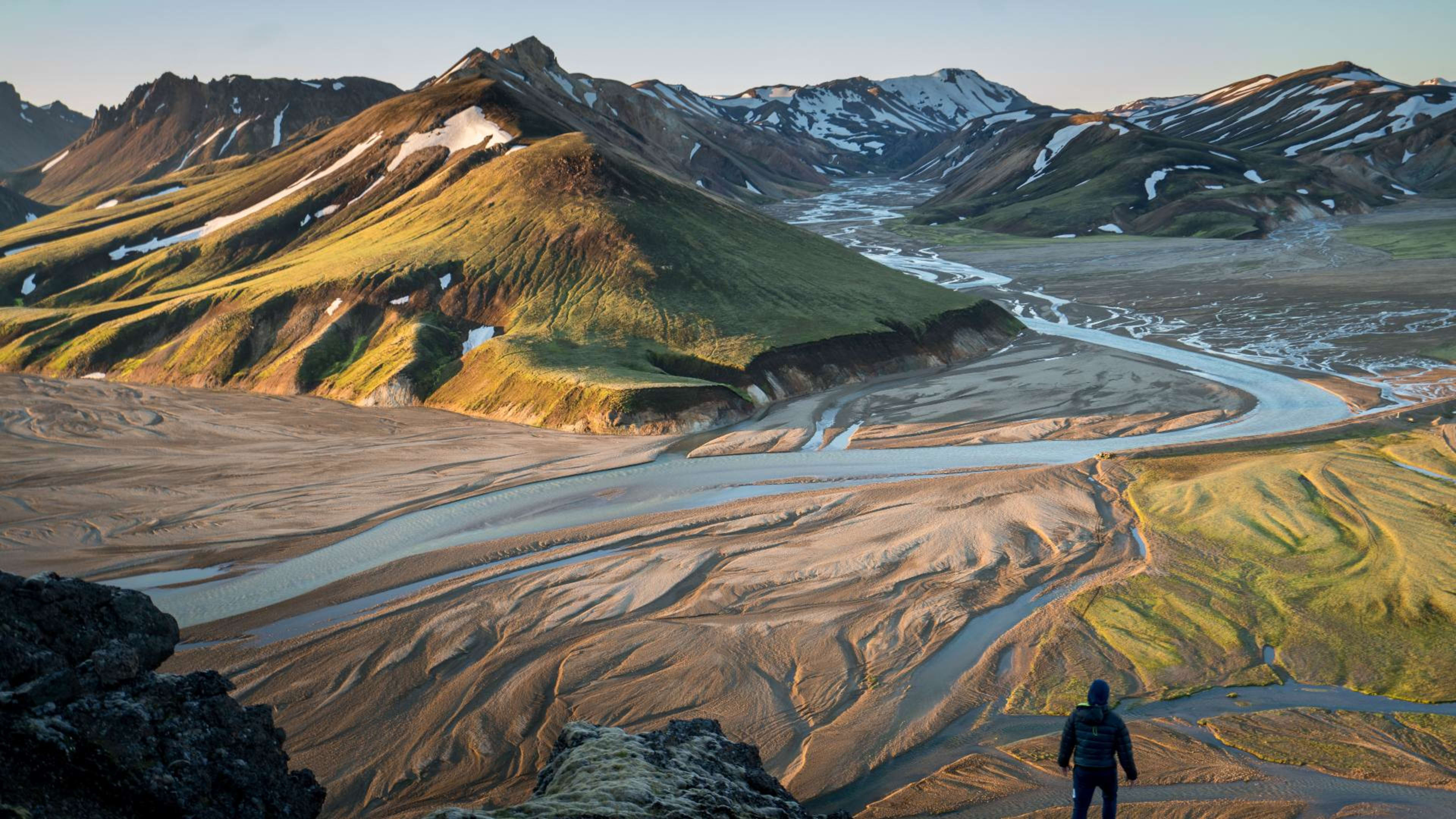
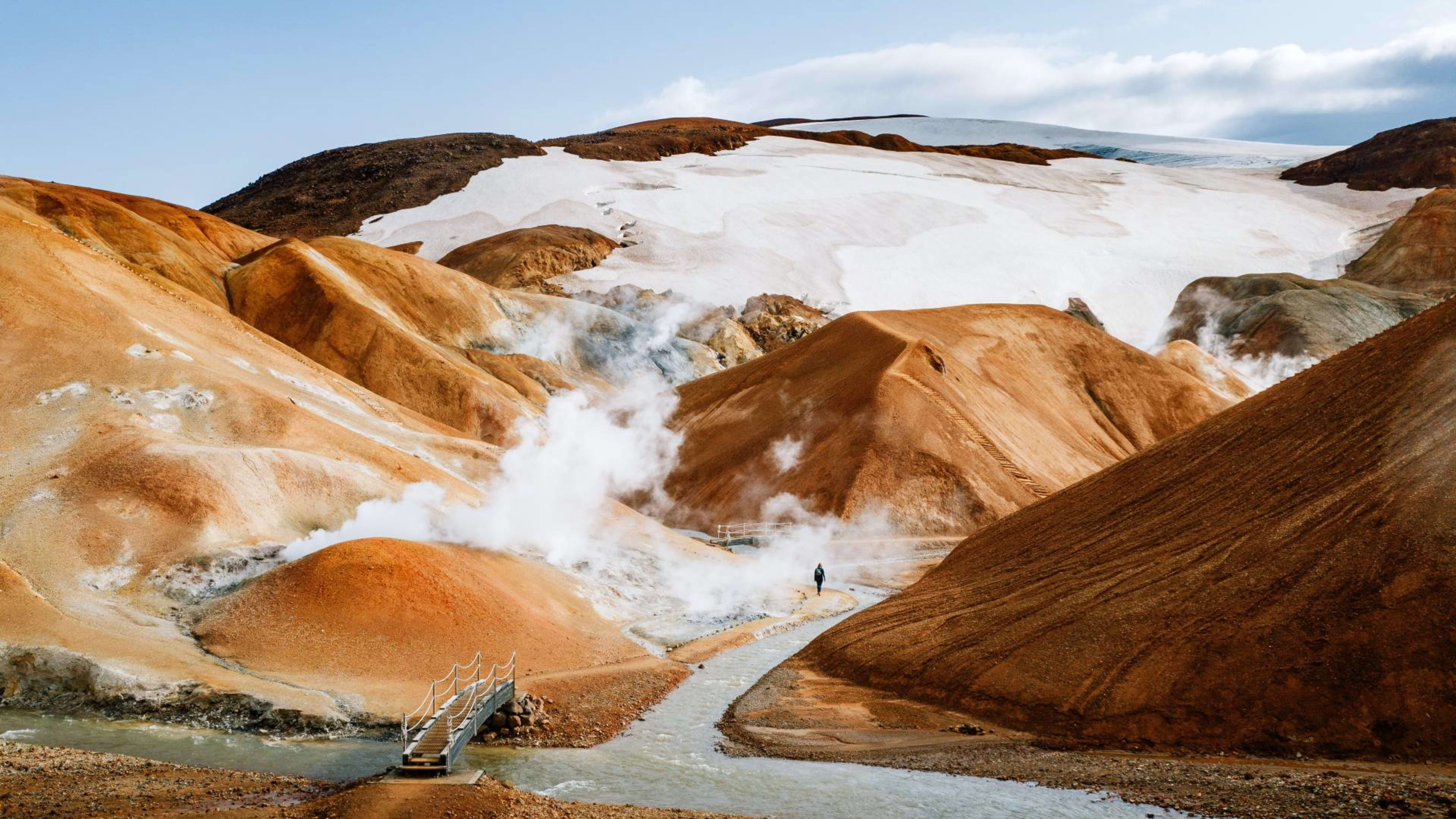
Over 2 million tourists visit Iceland each year, but only a small fraction ever reach the central highlands. This 40,000 sq km (15,440 sq miles) interior sits beyond the Ring Road, covering volcanic desert, lava fields, geothermal vents, and rhyolite mountains. No paved roads lead to it, and most highland routes are open only between late June and early September.
If you want to see this part of Iceland, preparation matters. This guide covers the best destinations, the right seasons, and a suggested Iceland highlands itinerary. Plan ahead, and you have one of Iceland’s most rewarding adventures within reach.
Why Visit the Icelandic Highlands?
The Icelandic highlands are not an easy destination to reach. Roads are unpaved, most routes are closed for seven to eight months each year, and river crossings can be genuinely hazardous. But that difficulty keeps the highlands off the beaten path for most visitors. What you find in return is raw, unfiltered terrain that feels nothing like coastal Iceland.
What Makes the Highlands Special?
The highlands sit above 400 m (1,300 ft) and look nothing like the Iceland most tourists see. You will find black lava fields, steaming geothermal vents, mountains streaked with red, orange, and green, and crater lakes with unusually vivid colors. No other region in Iceland brings this many distinct landscapes together. The Fjallabak Nature Reserve, one of Iceland's most protected areas, sits entirely within this region.
Best Time to Visit the Icelandic Highlands
Most highland F-roads open in late June and close by early October, depending on snowfall. The accessible window is short, but each part of it offers a different experience. Knowing when to go will shape your trip from trail conditions and crowd levels to tour availability.
Summer: Best for Hiking and Tours
June, July, and August give you the best access when visiting the highlands, as daylight is longest and tour availability is at its peak. Daytime temperatures at Landmannalaugar average around 50°F (10°C) in July, with wind making it feel cooler. Daylight stretches to nearly 24 hours in June, giving hikers more time on the trail.
With F-roads open during these months, day tours run regularly from Reykjavik, and hot springs like those at Landmannalaugar are fully accessible. Summer is also the busiest season for guided hiking, and understanding Iceland's summer temperature can help you pack and plan more accurately. Book early if you are traveling in July or August.
Fall: Fewer Crowds and Early Snow
If you want to see the highlands without the summer crowds, September is your month. F-roads are still open, temperatures drop to around 32°F (0°C) at night, and autumn colors cover the valleys in shades of yellow and brown. Snow can arrive fast in the interior, so conditions change quickly.
September is also when the Réttir takes place, an Icelandic tradition where locals round up sheep and horses from the highlands. Hot springs are quieter this time of year, and some F-roads close earlier than expected after a cold spell. Always confirm road conditions and tour availability before booking.
Winter and Spring
Most highland routes become inaccessible to regular travel from October through mid-June, as snow covers the F-roads and river crossings become impassable. The season still has a lot to offer, though, since October through February is the best window for Northern Lights sightings across Iceland.
With longer and darker nights, your chances of seeing the aurora are significantly higher than in summer. Focus on Ring Road destinations and coastal attractions during this period, then plan your highland visit for the following summer.
Suggested 8-Day Iceland Highlands Itinerary
The central highlands deserve more than a single-day trip. This 8-day Iceland highlands itinerary takes you deep into the interior by bus and on foot, giving you time to adjust to trail conditions and explore at a pace that makes the trip worthwhile.
Day 1: Arrival in Reykjavik
Your first day is based in central Reykjavik, with time to explore before the hiking begins. Walk up to Hallgrímskirkja church for rooftop views over the city, browse shops along Laugavegur street for the best Iceland souvenirs, or try Icelandic food at one of the downtown cafes. Travelers arriving early can add an optional visit to the Blue Lagoon or Sky Lagoon before the trail starts the next morning.
Day 2: Reykjavik to Landmannalaugar and Hrafntinnusker
The journey from Reykjavik gives you your first look at Iceland's interior, passing Hekla volcano and the Dómadalur valley on the way to Landmannalaugar. Once there, you can walk between mountains streaked in red, green, and yellow, touch black obsidian rock formed by ancient lava flows, and soak in a natural hot spring before the afternoon hike begins.
The trail then climbs steadily through steaming geothermal vents and obsidian ridges before you reach Hrafntinnusker mountain hut for the night. Wear layered clothing, as temperatures drop quickly at higher elevations even in summer.
Day 3: Hrafntinnusker to Hvanngil
The route descends through Jökultungur, where steaming hot springs and bubbling mud pools line both sides of the trail. Álftavatn lake comes into view partway through, with the Mýrdalsjökull and Eyjafjallajökull glaciers stretching across the horizon. The ground gradually shifts from bare volcanic rock to patches of green as you near Hvanngil hut, a sheltered valley at the base of Stórasúla volcano.
Day 4: Hvanngil to Emstrur
Walking across Mælifellssandur feels like crossing a different planet, with black volcanic ash and sand stretching flat in every direction and mountain ridges rising on all sides. The trail passes Hattfell volcano before entering the Emstrur region, where Icelandic farmers once brought sheep for summer grazing each year.
Near Botnar hut, you can stand at the edge of Markarfljót canyon and look straight down into a gorge carved nearly 200 m (656 ft) into the volcanic rock. The day covers 12 km (7.5 miles).
Day 5: Emstrur to Þórsmörk
The trail drops steadily from the open highlands toward the Þórsmörk valley, and the landscape changes noticeably with every kilometer. Arctic birch trees and wildflowers appear along the path as the terrain turns greener, a sharp contrast to the black desert crossed the day before.
After crossing the glacial Krossá river, you pass through the Goðaland area, where three glaciers and steep peaks surround the valley on all sides. Þórsmörk feels like a completely different world from the bare terrain covered earlier in the week. The day covers 18 km (11 miles) with a 300 m (985 ft) descent to the Básar mountain hut.
Day 6: Fimmvörðuháls Pass Hike
This is the longest and steepest day, climbing 1,000 m (3,280 ft) along the Kattarhryggir ridges to the Fimmvörðuháls Pass. You walk across lava fields formed during the 2010 eruption and stop at the Magni and Móði craters, two volcanic cones named after the sons of Thor.
From the pass, both Eyjafjallajökull and Mýrdalsjökull glaciers are visible at the same time, with fresh craters at your feet and ice on both sides. Expect a full day of challenging hiking across volcanic ridges and glacier viewpoints.
Day 7: Þórsmörk Exploration and Return to Reykjavik
The final morning in the highlands is unhurried, with several short trail options to choose from. You can climb Valahnúkur mountain for open views across the valley and glaciers, or walk the narrow Stakkholtsgjá canyon to a hidden waterfall at its far end. For something different, visit Sönghellir cave to hear the sound echo off the rock walls inside.
The afternoon bus returns to Reykjavik. You spend the last night in the city before departure.
Day 8: Departure
A shared transfer takes you from your hotel to Keflavík International Airport. Travelers with later flights can upgrade their transfer to include a stop at the Blue Lagoon for a final soak before the journey home.
Packing List for Iceland Highlands Hiking
The weather and climate in Iceland's interior can change quickly, and being underprepared can make any hike uncomfortable. Here is what to bring:
- Waterproof jacket and trousers
- Insulated mid-layer (fleece or down jacket)
- Wool or moisture-wicking base layers (at least two sets)
- Sturdy waterproof hiking boots with ankle support
- Wool socks (three or more pairs)
- Trekking poles for steep or uneven terrain
- Sunscreen and UV sunglasses for long daylight days
- Portable battery bank
- Personal first-aid kit with blister treatment
If you are planning a summer visit, packing for Iceland's warmer months takes a few extra considerations. The Iceland summer packing list covers everything you need for the season in detail.
Travel Tips for Visiting the Highlands
The Icelandic highlands require a bit more preparation than the ring road. A few practical points will make your trip go more smoothly, whether you are going for one day or five.
Important Things to Know
- Most highland areas have no network coverage. Download offline maps before you leave Reykjavik.
- Always carry an extra layer and rain gear, even on clear mornings.
- Highland elevations run consistently cooler than the coast, often by 9°F (5°C) or more.
- Popular scenic summer trails fill weeks ahead, especially for the Laugavegur Trail.
- Stock up on snacks and any personal supplies before entering the highlands.
Family-Friendly Travel Advice
Families with children aged 10 and older can comfortably join guided day tours to Landmannalaugar or Kerlingarfjöll. These routes are well-managed and do not require extreme fitness. Multi-day treks are better suited to teens aged 14 and above with solid hiking experience. Always talk to your tour operator before booking to confirm which tours match your group's age range and fitness level.
Sustainable Travel in the Highlands
The highlands are a protected and fragile environment. Lava formations, geothermal soils, and highland vegetation take decades to recover from physical damage. Traveling responsibly is part of keeping these destinations accessible for future visitors.
Responsible Travel Tips
- Stay on marked trails: Walking off-trail damages fragile vegetation and lava surfaces.
- Carry out all waste: No bins exist in the highlands. Take everything back with you.
- Leave geothermal features untouched: These soils are delicate and can collapse without warning.
- Use designated camping areas: Wild camping outside approved zones is restricted across much of the highlands.
- Choose certified operators: Look for tour companies certified by Vakinn, Iceland's national quality and environmental system.
Making the Most of Your Iceland Highlands Itinerary
The Icelandic highlands reward every traveler who puts in the effort to reach them. Each stop feels genuinely distinct, from the colorful ridges above Landmannalaugar to the steaming valleys of Kerlingarfjöll. Planning your Iceland highlands itinerary around a guided tour is the most reliable way to experience it all safely and comfortably.
The highlands are open for only a few months each year, so book early. Iceland Tours runs guided highland departures throughout the summer, with local guides handling the logistics from start to finish.
FAQ's about the Iceland Highlands
June through August is the best window, when highland F-roads are open, and temperatures stay above freezing during the day. July offers the warmest conditions and the most tour departures from Reykjavik.
Yes, guided day tours to Landmannalaugar and Kerlingarfjöll are suitable for families with children aged 10 and older. Multi-day treks on the Laugavegur Trail are better suited to teens aged 14 and above.
A minimum of three days is required to cover the Laugavegur Trail from Landmannalaugar to Þórsmörk. A five-day itinerary adds Kerlingarfjöll and Askja for a fuller highland experience.
A guide is strongly recommended. Highland F-roads require a four-wheel-drive vehicle, and river crossings can be dangerous without experience and proper equipment.
Yes. It combines multicolored rhyolite mountains, a natural geothermal hot spring, and the start of the Laugavegur Trail in one location, making it one of the most rewarding stops in the highlands.
Yes. Mountain huts along the Laugavegur Trail offer basic bunk accommodation. The Kerlingarfjöll Mountain Lodge provides dormitory beds and private rooms with on-site meals included.