


In search of remote Icelandic landscapes, head northwest. From the capital, a Westfjords road trip covers deep fjords, steep mountain slopes, isolated fishing villages, and quiet wilderness. A Westfjords road trip is best for travelers who want remote scenery, small towns, and quieter roads.
To explore the Westfjords without rushing, plan to spend several days in the region. The route takes you along long coastal roads between small towns, beaches, waterfalls, and wildlife viewing areas, with significant driving time between stops. Iceland Tours can help you plan a Westfjords itinerary that gives you enough time to see the region properly.
Why Add the Westfjords to Your Iceland Road Trip?
The Westfjords offer a different experience from Iceland’s more compact sightseeing routes. Instead of moving quickly between major attractions, much of the appeal comes from the drive itself, with long coastal stretches, mountain passes, fishing villages, and viewpoints along the way.
That makes the region a strong choice for travelers who want more time outdoors and fewer heavily visited stops. Wildlife watching, coastal hiking, photography, and small-town stops can all be built naturally into the route.
It also feels very different from routes like the Golden Circle, where you can cover several major attractions in a single day. In the Westfjords, driving takes longer, and plans need more flexibility, but that slower pace is part of the experience.
Summer is the easiest season for self-drive tours, thanks to longer daylight hours and generally better road conditions. Even then, it is worth keeping daily driving distances realistic and leaving extra time for stops along the way.

How Many Days Do You Need for a Westfjords Road Trip?
Due to the region’s isolation and winding roads, an Iceland Westfjords road trip shouldn’t be treated as a quick weekend detour. Even when two places appear close on a map, traveling between them can involve long fjords and crossing mountain passes.
- 3 Days: A short trip is best focused on the southern or central Westfjords. You can cover a handful of major highlights, such as Dynjandi and scenic coastal drives, on a relatively fast-paced tour.
- 4–5 Days: This is a more comfortable timeframe for combining major sights such as Látrabjarg, Rauðisandur, Dynjandi, and Ísafjörður. At the same time, there is more breathing room in the itinerary for walks and unhurried stops.
- 6–7 Days: A week gives you more freedom to explore the region in depth. You can design a more complete itinerary, including the northern fjords, longer hikes, geothermal bathing, and potentially the remote Strandir Coast.
Travelers typically spend four nights in the region as part of Iceland Tours’ 11-Day South Iceland & Westfjords Self-Drive Tour. When deciding how long to stay, factor in sightseeing stops, road conditions, short hikes, birdwatching, geothermal soaks, and possible weather delays.

Westfjords Road Trip Route From South to North
A south-to-north route is one of the most practical ways to explore the Westfjords by car. Starting from Reykjavík, you can work your way through the southern peninsula before continuing north toward Dynjandi and Ísafjörður, with several worthwhile stops along the way.
1. Reykjavík to the Southern Westfjords
There are two main ways to reach the southern Westfjords from Reykjavík. You can drive north on Route 1 before continuing onto Route 60, or take the Baldur ferry from Stykkishólmur on the Snæfellsnes Peninsula to Brjánslækur.
The ferry cuts out some driving and brings you directly into the southern Westfjords. From Brjánslækur, you can continue toward Patreksfjörður, which is a practical place to stay before exploring Látrabjarg and Rauðisandur.
2. Látrabjarg Cliffs and Rauðisandur Beach
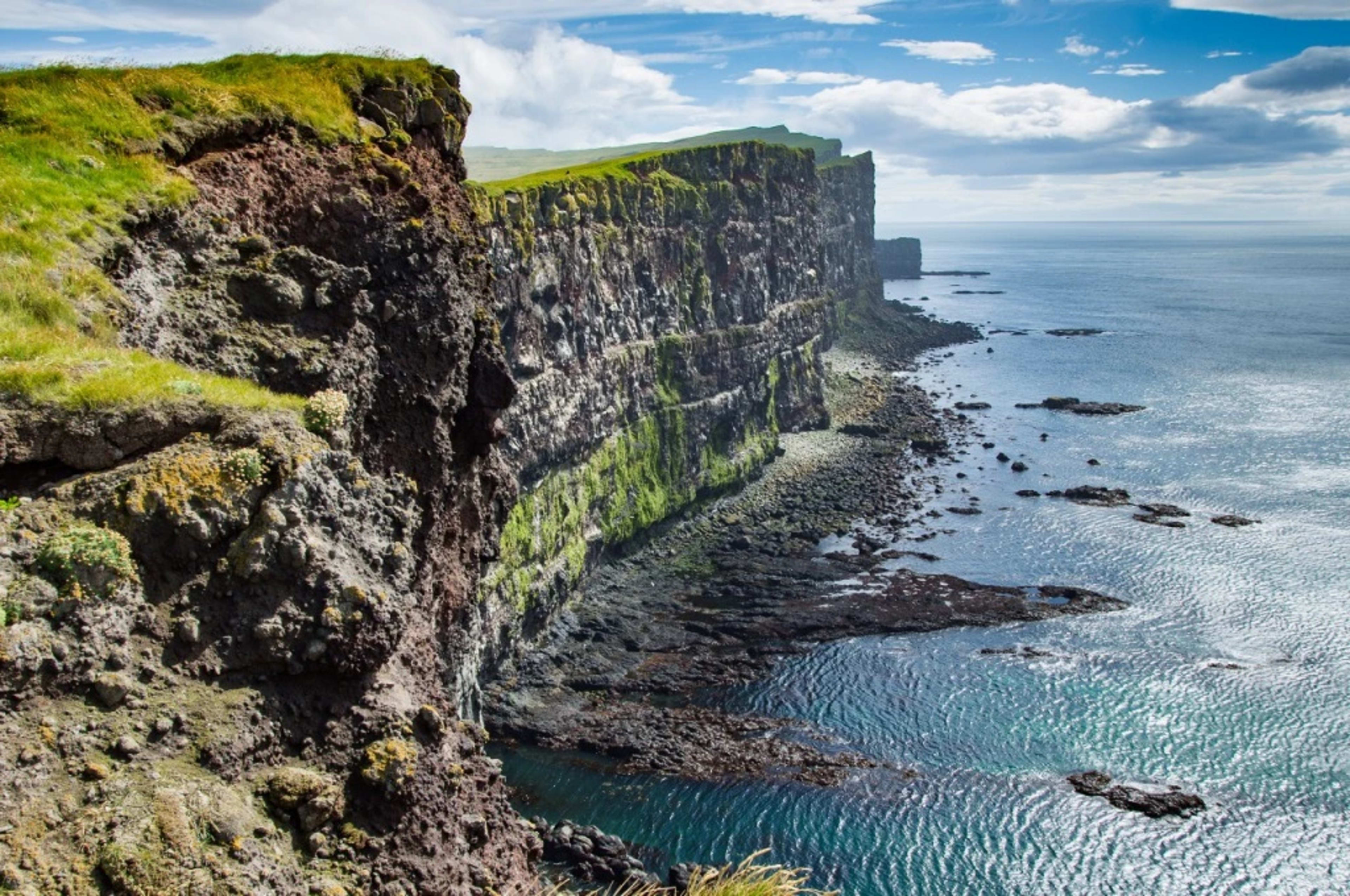
Látrabjarg and Rauðisandur are both in the southwestern Westfjords and can be combined on the same part of your road trip.
Látrabjarg Cliffs mark Iceland’s westernmost point, stretching roughly 14 kilometers (8.7 miles) and rising up to 441 meters (1,446 feet). It is one of Europe’s largest seabird cliffs, hosting millions of nesting birds during the summer breeding season. It’s an incredible spot to watch razorbills, guillemots, fulmars, and large numbers of Atlantic puffins. Drive carefully on the narrow gravel roads out to Látrabjarg, and always keep a safe distance from the fragile cliff edges once you arrive.
Rauðisandur is known for its reddish-golden sand, which is unusual compared with Iceland’s better-known black sand beaches. Reaching the beach involves a steep and winding road, so conditions should be checked before driving there.
3. Dynjandi Waterfall
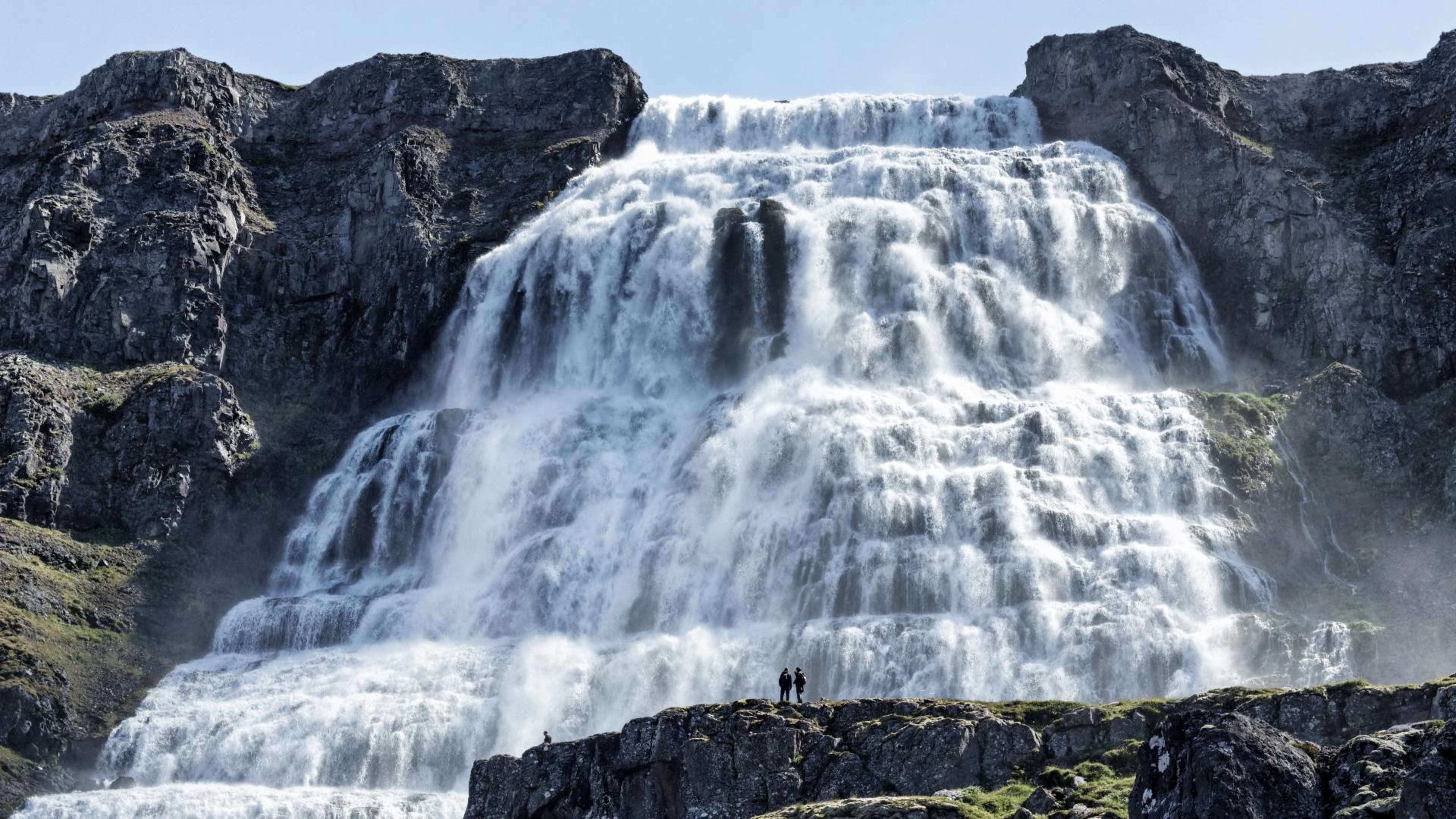
From the southern Westfjords, continue north on Route 60 toward Dynjandi. The waterfall drops around 100 meters (328 feet) through a series of cascades and is one of the main stops on a Westfjords road trip.
From the parking area, a short uphill walking trail passes several smaller waterfalls before reaching the main cascade. Allow extra time for the drive as well, since the route passes through mountainous terrain and includes several scenic sections where you may want to stop.
4. Ísafjörður and Northern Westfjords
Continue north toward Ísafjörður, the largest town in the Westfjords and a useful base for exploring the northern part of the region. The town has restaurants, grocery stores, gas stations, and a good range of accommodations.
From Ísafjörður, you can explore nearby fjords and villages or spend more time in town. Options include the Westfjords Heritage Museum, kayaking, and day trips farther into the northern Westfjords.

Optional Stops and Detours
If you are not quite ready to leave the region, consider extending your Iceland Westfjords road trip to these destinations:
- Strandir Coast: A relaxed stretch on the Westfjords’ eastern edge known for its rugged shoreline and historical ties to Icelandic sorcery. Farther north, Krossneslaug is a geothermally heated swimming pool overlooking the ocean.
- Bolungarvík: A short drive from Ísafjörður, this traditional fishing village offers mountain and coastal scenery. It’s also home to Ósvör Maritime Museum, a reconstruction of a 19th-century fishing station.
- Geothermal Pools: The Westfjords are dotted with hot spring spots and public swimming pools, making them a welcome break after a long drive. Highlights include Hellulaug beside Vatnsfjörður and the shoreline hot pots at Drangsnes.
- Hornstrandir Nature Reserve: An uninhabited wilderness reserve located at the northernmost tip of the peninsula. Accessible only by boat from Ísafjörður, it is a haven for wilderness hikers and wildlife enthusiasts.

Wildlife to Look Out for in the Westfjords
Thanks to its remote landscapes and rich coastal habitats, the Westfjords are one of Iceland’s best regions for wildlife watching. In the summer months, puffins, kittiwakes, fulmars, and other seabirds crowd the coastal cliffs. Harbor and grey seals can also be spotted lounging on beach rocks and sheltered bays.
In the Westfjords, you can also see Arctic foxes, Iceland’s only native land mammal. In most parts of the country, these animals can be difficult to spot. In Hornstrandir Nature Reserve, however, foxes are fully protected from hunting and are seen more frequently. Sightings are never guaranteed, but observant hikers may encounter them along the coast or in the mountains.

When Is the Best Time for a Westfjords Road Trip?
In the Westfjords, timing your travel well is crucial. High mountain routes and remote roads can be heavily affected by snow, ice, and changing weather.
- Summer (June–August): These months are the easiest for a Westfjords road trip. Long daylight hours give you more time to explore, and driving conditions are generally more favorable. Summer is also the main season for seabird watching at places like Látrabjarg.
- Late Spring (May): Daylight increases rapidly, but snow can linger on higher roads and some remote routes may still be restricted or difficult to access.
- Early Fall (September): Expect quieter roads and changing landscapes, but shorter daylight hours and the possibility of early snow can affect travel plans.
- Winter (October–April): Driving becomes far more challenging, with snow, ice, high winds, and rapidly changing conditions. Some mountain sections of Road 60 close seasonally, so always check current road and weather information before setting out.
For an easier first trip, scheduling your visit during the summer months is highly recommended.

Practical Tips for Driving in the Westfjords
An Iceland Westfjords road trip is an adventure that requires careful preparation and attentive driving. Keep these essential tips in mind:
- Check road conditions daily: Weather can change quickly. Check current road and weather reports each morning before setting off.
- Prepare for gravel roads: Although many main routes are paved, some smaller coastal roads and scenic detours are gravel. Reduce your speed, leave extra space behind other vehicles, and slow down when passing oncoming traffic. Loose stones can damage windshields and paintwork.
- Take mountain passes seriously: Conditions can differ significantly between the coast and higher roads, where fog, wind, snow, or ice may appear. Some mountain roads remain closed into early summer.
- Choose the right rental car: A standard car is generally sufficient for the main Westfjords routes in good summer conditions. A 4x4 may provide additional clearance and confidence on rougher roads or certain mountain routes, depending on your itinerary.
- Keep your fuel tank topped up: Services become less frequent in remote areas, so refuel when convenient rather than waiting until the tank is low.
- Never drive off-road: Off-road driving is illegal in Iceland and can cause long-lasting damage to fragile soil and vegetation.

Is a Westfjords Self-Drive Right for You?
Because of the distance from Reykjavík and the remote terrain, exploring the Westfjords works best as part of a multi-day itinerary. The right travel style depends on how much independence you want and how comfortable you are driving more remote routes.
- Self-Drive Tour: Best for travelers who value flexibility and exploring at their own pace. You’ll have to handle the driving, including winding coastal roads and occasional gravel sections. However, you can stop whenever the scenery catches your eye. For a longer journey combining the region with the Ring Road, explore this 14-day Iceland and Westfjords road trip. The itinerary includes the Westfjords, Snæfellsnes, North Iceland, the South Coast, and the Golden Circle.
- Guided Group Tour: A good choice if you prefer to leave the driving and daily logistics to someone else. An experienced driver-guide handles the route while you enjoy the scenery and learn more about the places you visit. This 14-day guided small-group tour combines the Westfjords with a wider journey around Iceland.
Before making a decision you can learn everything about the Westfjords to find what is right for you.

Plan Your Westfjords Road Trip
A Westfjords road trip works best when you give yourself enough time to account for long driving distances, changing road conditions, and stops along the way. For most travelers, that means planning several days rather than trying to cover the region too quickly.
If you want help building the route into a longer Iceland itinerary, Iceland Tours offers self-drive packages that include the Westfjords.
FAQ's on Westfjord road trips
Yes, the Westfjords offer dramatic mountain landscapes, coastal scenery, and wildlife-viewing opportunities, with fewer visitors than the busier southern routes. The region is especially rewarding for travelers who enjoy remote areas, scenic drives, hiking, and wildlife.
Four to five days is a comfortable timeframe for visiting several major sights without rushing. If you want to explore farther north, add the Strandir Coast, or include longer excursions, allow around six to seven days.
During summer, a standard 2WD vehicle can handle many of the main roads in good conditions. A 4x4 may be useful for rougher routes or certain mountain roads, particularly outside peak summer.
Many of the main connecting roads are paved, but some secondary roads and routes to remote attractions remain gravel. Drive cautiously on loose surfaces, especially on narrow roads and when passing other vehicles.
Highlights include watching seabirds at the Látrabjarg Cliffs and seeing the 100-meter (328-foot) Dynjandi Waterfall. Others include walking along Rauðisandur Beach, soaking in geothermal pools, and exploring Ísafjörður and the surrounding fjords.
Yes, you can! Whales occasionally swim surprisingly close to shore in the Westfjords, so keep an eye on the water as you drive along the fjords. Look for blows of mist rising above the surface or dark shapes breaking through the water. Sightings are never guaranteed, of course, but you might get lucky without even stepping onto a boat. Just make sure to pull over somewhere safe before stopping to watch.
Your best chance is in Hornstrandir Nature Reserve, one of Iceland's wildest and most remote regions. Arctic foxes are protected from hunting there and are generally less wary of people than elsewhere in Iceland. You might spot them wandering along hiking trails, searching for food along the coast, or resting on grassy hillsides. Remember that Hornstrandir is only accessible by boat, and even there, sightings aren't guaranteed. Keep your distance and never feed them.
You can explore some parts of the Westfjords in winter, but a full road trip around the region is generally only recommended for the most experienced travelers. Snow, ice, strong winds, and mountain road closures can make driving challenging, even for experienced drivers. Some remote roads become inaccessible for months. If you're visiting between October and April, it's better to focus on accessible towns and shorter routes, check road conditions daily, and leave plenty of flexibility in your plans.
Yes, but you'll need to plan a little more carefully than in other parts of Iceland. Larger towns like Ísafjörður and Patreksfjörður have supermarkets, restaurants, and fuel stations, while smaller villages may have only a café or a small shop. Opening hours can be limited, particularly outside summer. It's a good idea to stock up on snacks, water, and picnic supplies whenever you have the opportunity. And don't be surprised if some of your most memorable lunches happen at a scenic roadside stop overlooking a fjord!
No, you can't simply pull over at a scenic spot and spend the night in your car or campervan. Overnight stays outside designated campsites aren't allowed unless you have the landowner's permission. This applies to roadside parking areas, viewpoints, and other public spaces too. Luckily, the Westfjords have plenty of beautifully located campsites, and cute guesthouses and farm stays, so you can still wake up surrounded by spectacular fjord and mountain views!