


The Lagoon and Glacier
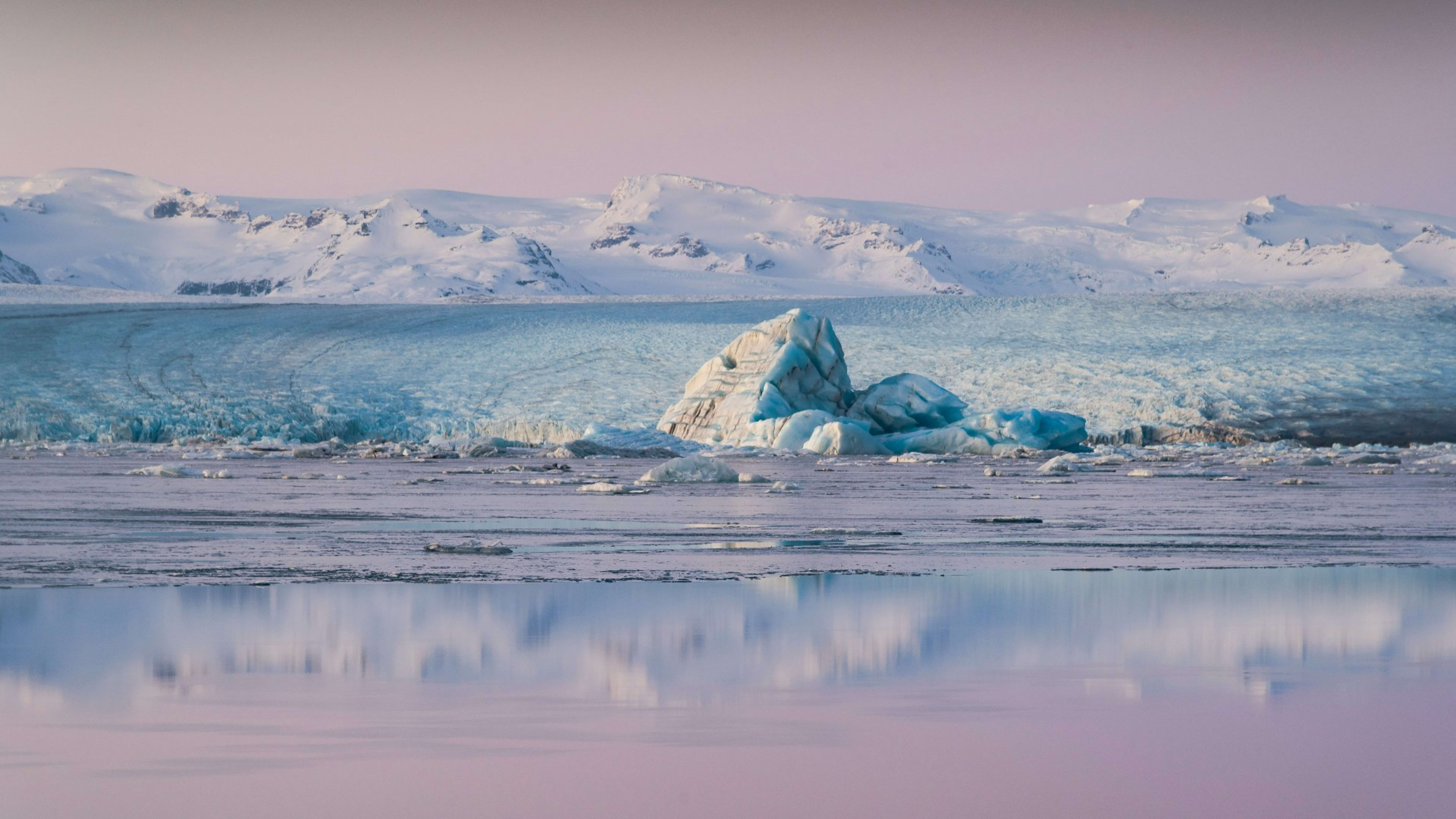
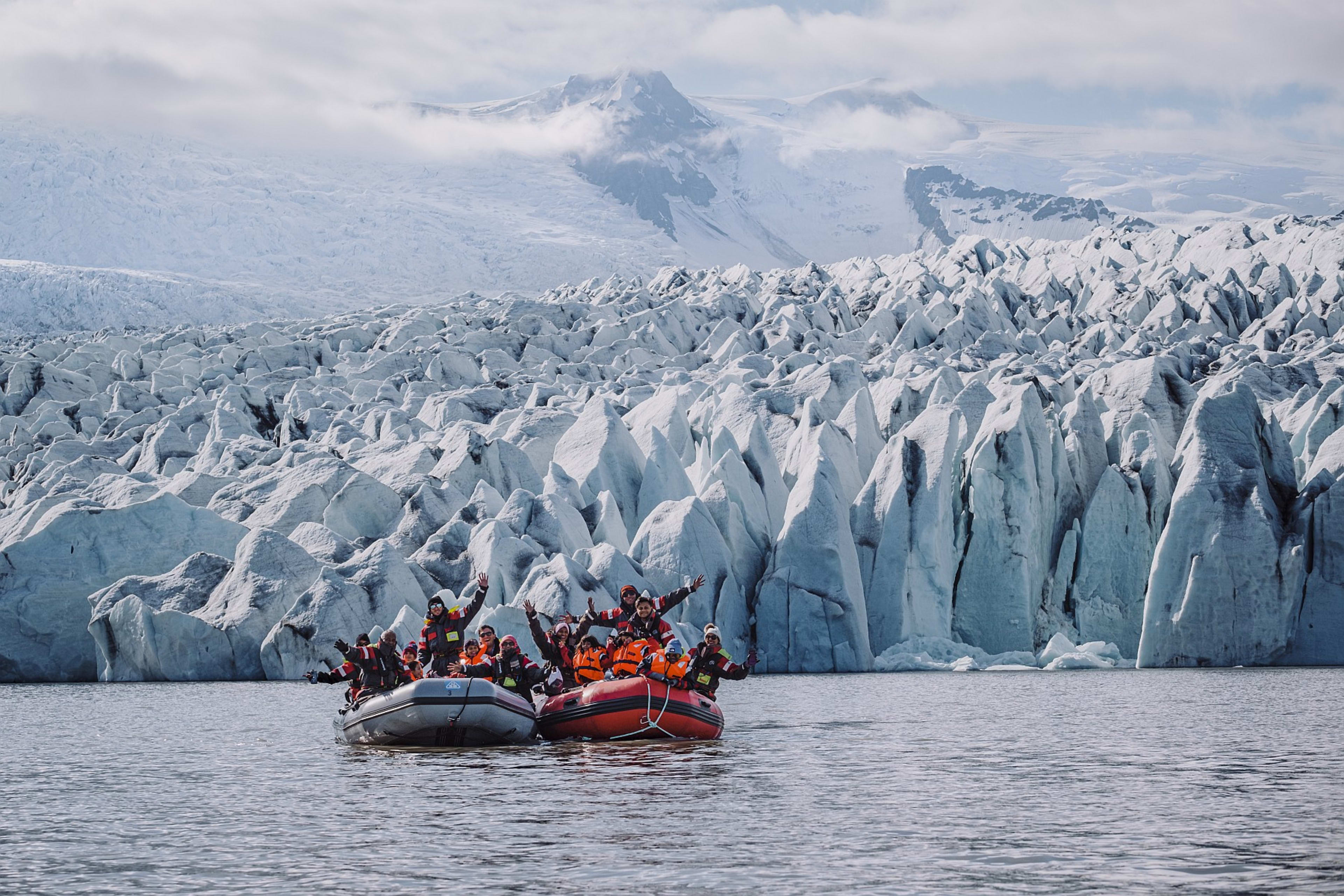
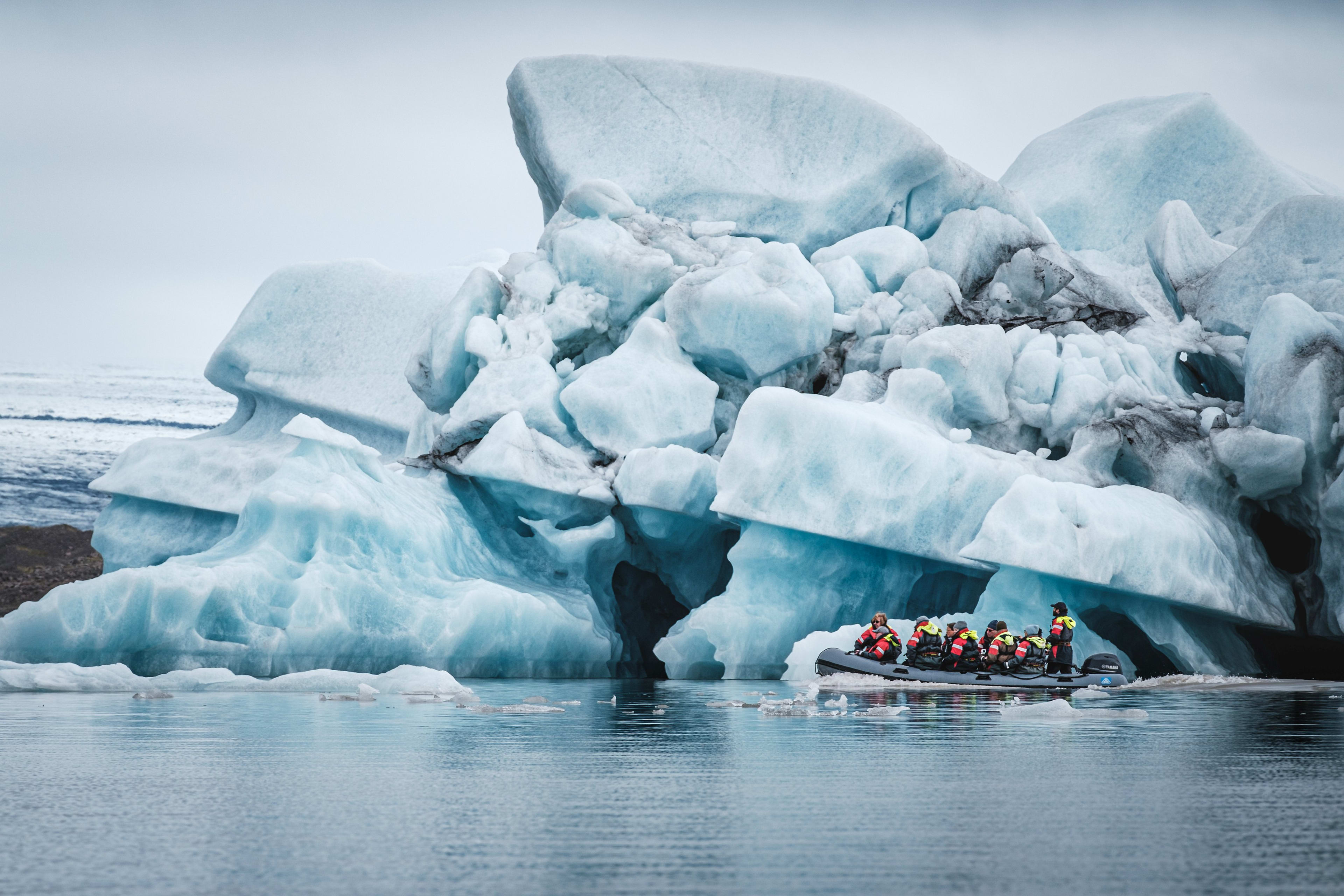
Fjallsárlón formed as Vatnajökull retreated over recent decades, leaving a lake at the base of the Fjallsjökull outlet glacier. Icebergs calve from the glacier face and drift slowly across the lagoon before eventually making their way to the sea. The ice ranges in colour from white and pale grey to blue, with darker streaks of volcanic ash visible in older ice that has been compressed over centuries. The glacier face itself is visible from the shore, which is one of the distinguishing features of Fjallsárlón compared to larger lagoons where the glacier terminus is more distant.
The lagoon sits within a broad glacial valley with mountains on three sides, which gives it a contained, sheltered character. The surrounding landscape is part of Vatnajökull National Park, one of the largest national parks in Europe.
Fjallsárlón and Jökulsárlón
The two lagoons are 10 kilometres apart along Route 1 and most visitors stop at both on the same day. Jökulsárlón is significantly larger, with bigger icebergs, higher visitor numbers, and the adjacent Diamond Beach where ice washes ashore on black sand. Fjallsárlón is smaller and consistently quieter, with the glacier face closer to the shore and a more immediate sense of the ice in movement. Neither is a substitute for the other and the contrast between them is part of what makes visiting both worthwhile.
Boat Tours
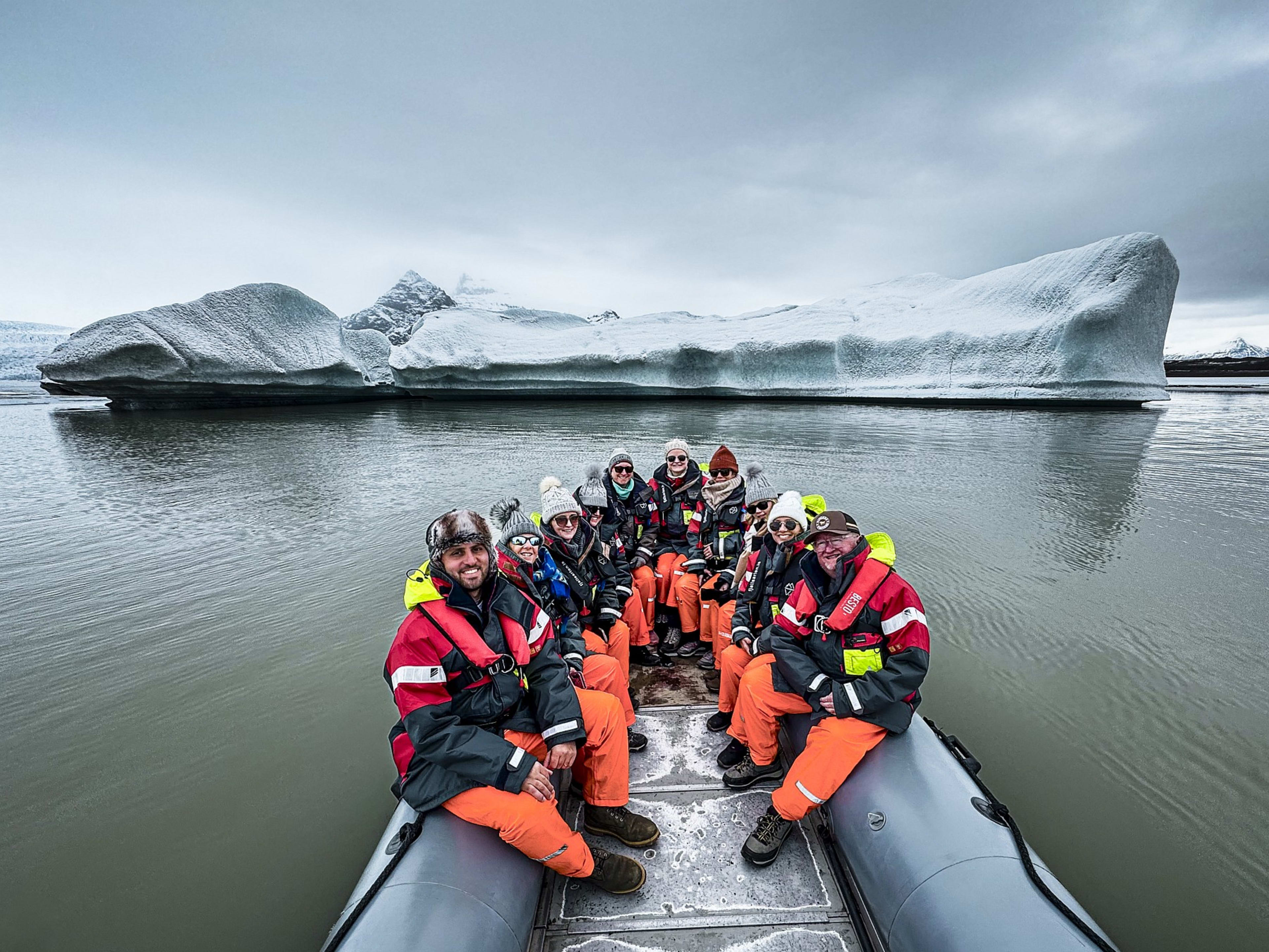
Zodiac boat tours operate at Fjallsárlón from May through October, weather permitting. The small inflatable vessels carry limited passengers and go close to the icebergs and glacier face. Tours last around 30 to 40 minutes. Booking in advance is advisable in June, July, and August when tours fill quickly. The tours are optional and the lagoon shore is accessible on foot at no charge, with walking paths providing good views along the waterline.
Wildlife
Seals visit the lagoon regularly throughout the year and are often seen swimming between icebergs or resting on ice at the water's edge. They are most frequently spotted in summer but can appear in any season. Great skuas nest along the shore during summer months and will defend nesting sites actively, so keeping distance from any birds showing agitated behaviour is sensible.
Getting There
Fjallsárlón is located off Route 1 on Iceland's South Coast, approximately 370 kilometres from Reykjavík and 90 kilometres west of Höfn. The drive from Reykjavík takes around four and a half hours heading east along the Ring Road. The turn-off from Route 1 is signposted. Free parking is available at the site, which also has a café and facilities. Road conditions in this part of the South Coast should be checked in winter before travelling.
When to Visit
Boat tours run from May to October, making that the most practical window for visitors who want to get out on the water. Summer brings long daylight hours and the most settled weather, though this is also when visitor numbers are highest across the South Coast generally. In winter the lagoon is accessible but boat tours do not operate, and shorter days mean less time for daylight exploration. The shoulder months of April to May and September to October can offer a reasonable balance of quieter conditions and operational tours.