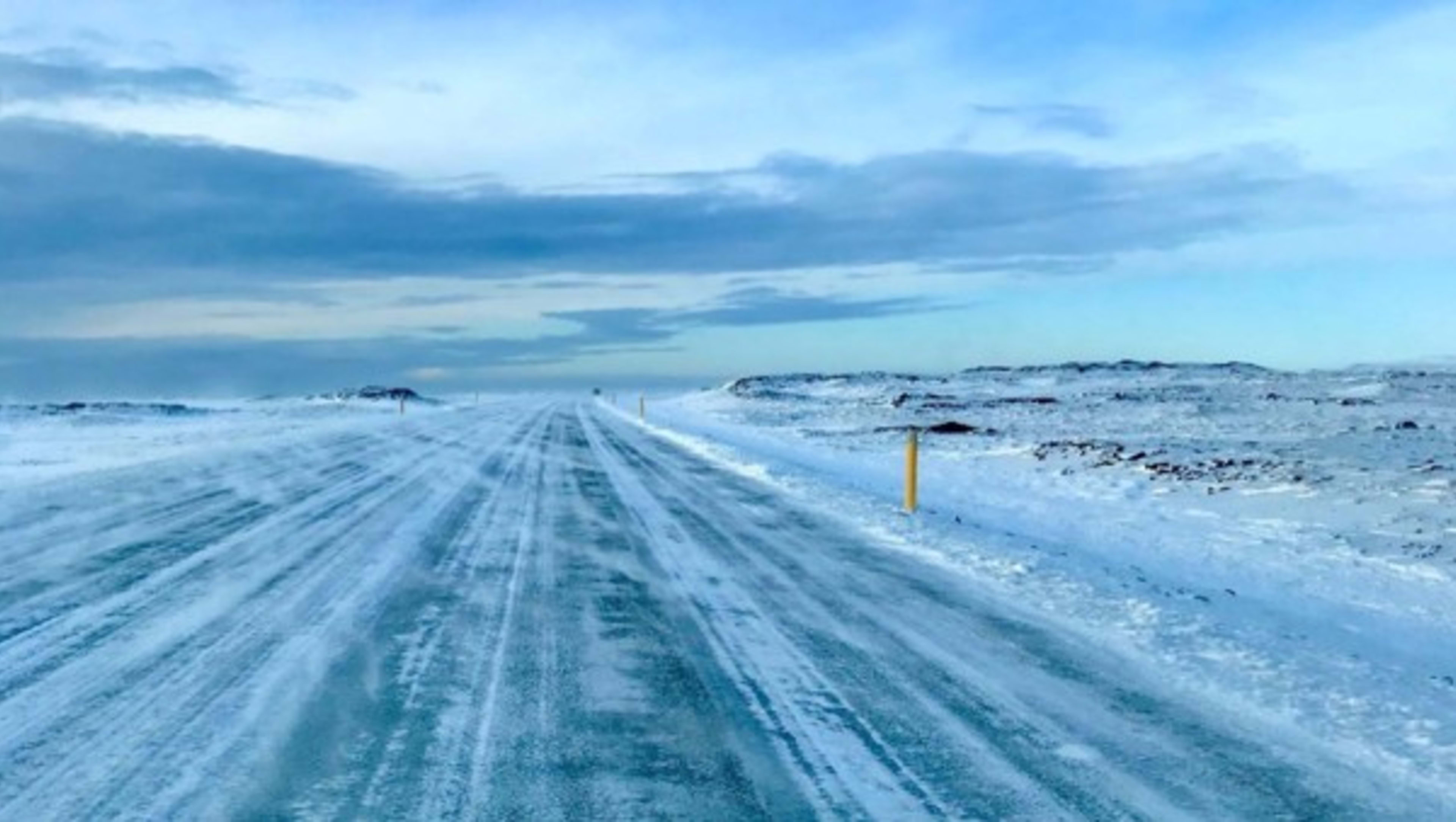
While self-driving offers maximum freedom and flexibility for your Iceland trip, driving here in winter requires extra planning and preparation to stay safe.
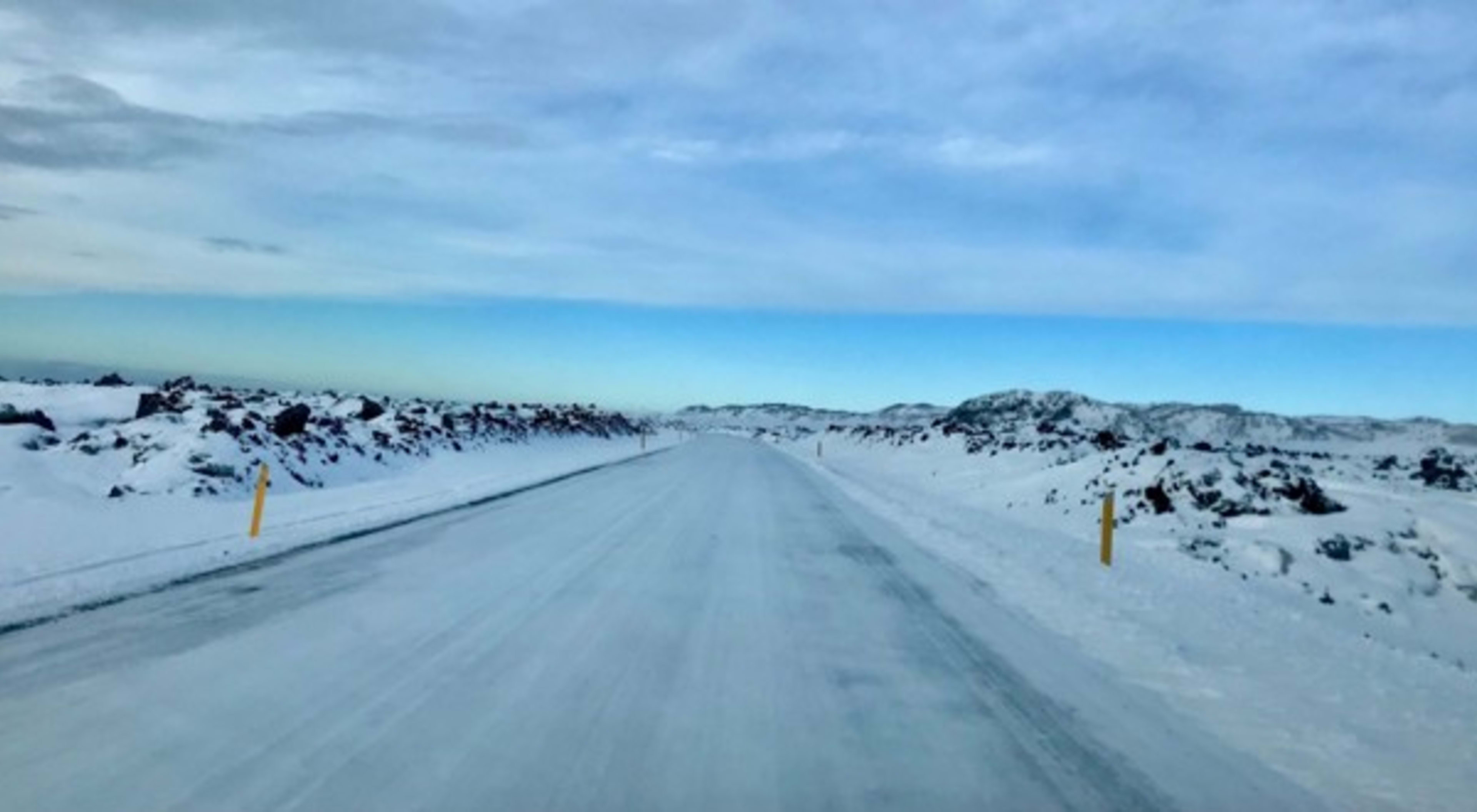
That means understanding road conditions on your planned route, preparing for Iceland’s famously unpredictable weather, being aware of your vehicle’s capabilities, and knowing how to call for assistance if needed.
Iceland is an ever-changing environment, so you need to stay flexible and prepare for all eventualities, ready to alter your plans whenever necessary.
There’s a saying in Iceland: “If you don’t like the weather, just wait five minutes”.
You can rent a car in Reykjavík in bright, sunny conditions, and then find yourself in a fierce storm as soon as you leave the city to explore the Golden Circle or the South Coast.
That works both ways, of course! A road trip across Iceland’s magical winter landscapes in good weather will live long in your memory.
Here’s everything you need to know about safe winter driving in Iceland!
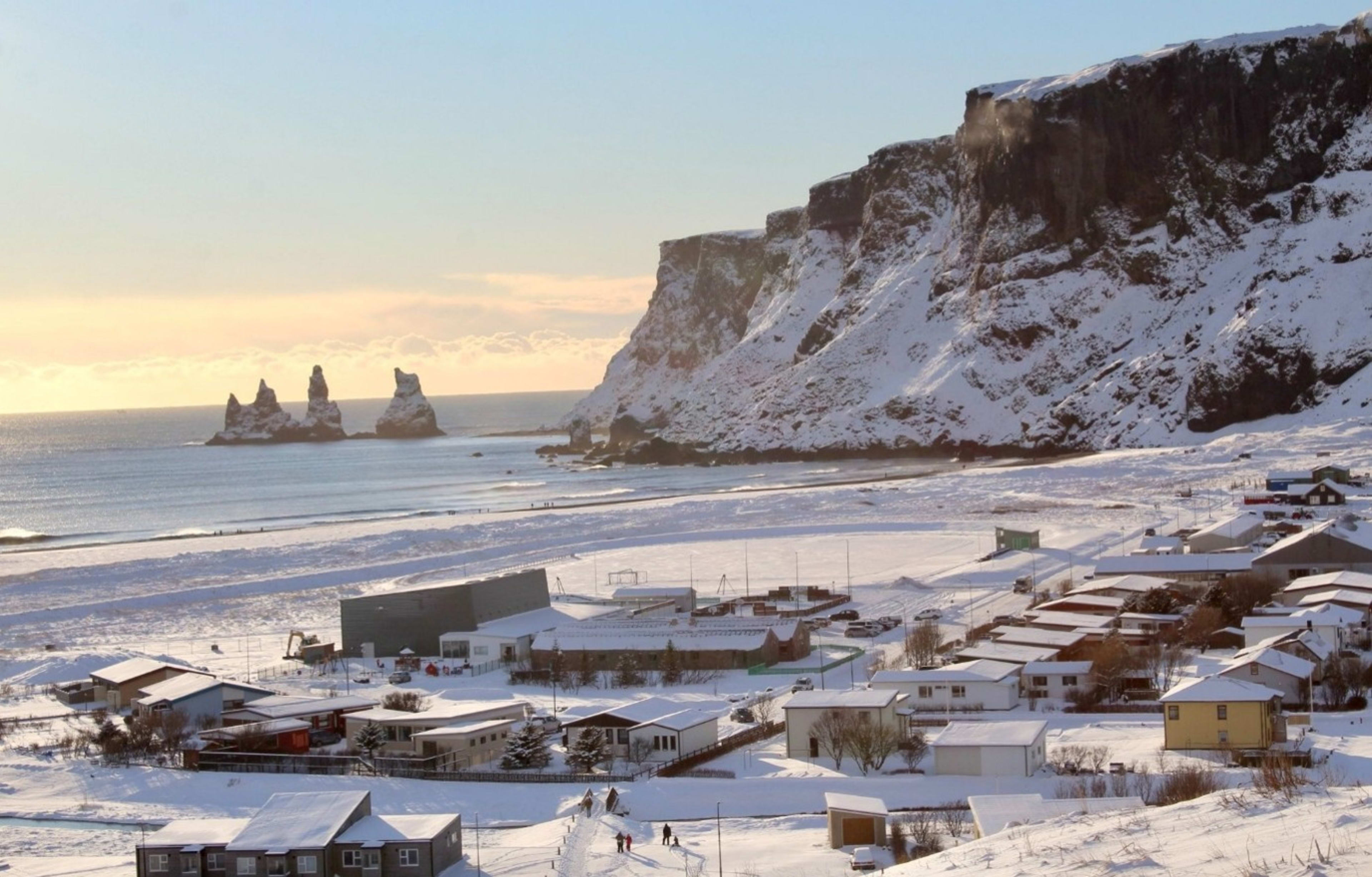
Before You Hit The Road
1. Pick The Right Vehicle
Renting a car is a great way to explore this waterfall-lined wonderland, so you can make the most of your time and see the sights on your own schedule.
When it comes to winter road trips, it’s essential to select an AWD (all-wheel drive) or 4WD (4-wheel drive) vehicle.
That’s because you’ll need more power and grip to handle strong winds, slippery or icy roads, snowfall, or stormy conditions.
SUVs with various traction modes are a wise choice, offering a selection of engine settings for changing conditions.
There are cheaper 2WD vehicles to rent, but if weather or road conditions are not favorable, you won’t enjoy driving in Iceland as much as you should.
Always check the tires for adequate tread depth before accepting a rental vehicle, and make sure there’s a spare tire, an ice scraper, a fire extinguisher, and a first-aid kit.
Studded tires are permitted on Iceland’s roads from November 1st to April 14th. Your vehicle rental company should ensure your vehicle is on the right tires - check that they have!
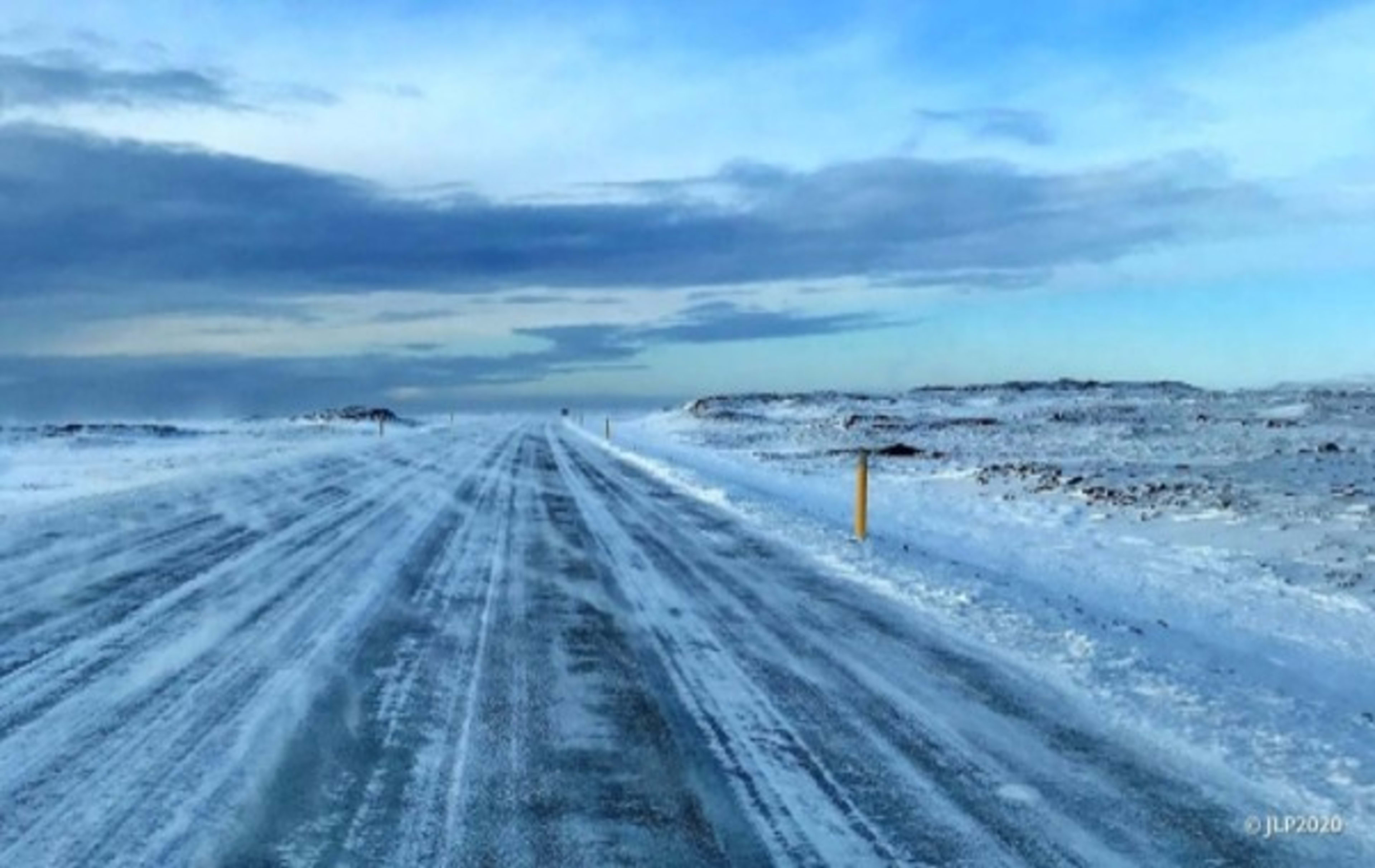
When it comes to winter driving, it’s always best to have a vehicle that can cope with the most challenging conditions, with good ground clearance and plenty of power.
2. Get Good Insurance
Make sure you understand your insurance coverage, so you know your exposure for any windshield, tire, or bodywork damage while you’re on the road in Iceland.
You might have excellent insurance for driving at home, but you may find these protections do not extend to driving in Iceland.
When high winds blow across Iceland, sand particles, gravel and volcanic ash can damage bodywork. At the same time, sharp stones can chip windshields or puncture tires.
Bear in mind that most insurance policies will not cover damage to the underside of the vehicle.
Make sure you drive carefully on bumpy tracks or along any snow-covered stretches where you can’t see the road surface very well.
For peace of mind, always choose the option that minimizes your insurance excess.
3. Download the SafeTravel app
There are lots of websites and apps to help you with your Icelandic road trip (more about these below), and SafeTravel is the place to start.
It’s the official source for safe travel here, managed by ICE-SAR, the Icelandic Association for Search and Rescue.
Available on a website and in an app, SafeTravel offers a range of helpful guides about driving and exploring around Iceland.
Read as many of these as you can before your trip to Iceland, and take the Driver’s Test to check your skills. (https://safetravel.is/drivers-test/)
And, remembering that weather and road conditions can change at short notice, keep checking the app during each day’s drive as well.
If the app displays any safety alerts, you should change your plans accordingly!
The app also allows you to check in at your current location or request help, using GPS to connect to 112, Iceland’s emergency number.
Register a travel plan (https://safetravel.is/travel-plans/travel-plan/) with SafeTravel to focus any potential search team on the area you’ll be exploring.
4. Plan for Daylight
The Icelandic winter sees as little as four hours of daylight by the winter solstice in late December.
With that in mind, it’s sensible to plan your winter driving between sunrise and sunset, timing your departure and return to make the most of the available daylight.
You can check sunrise and sunset times in Reykjavík at this website: https://www.timeanddate.com/sun/iceland/reykjavik
Try to avoid driving in darkness unless you’re used to the conditions and road layouts in Iceland.
5. Check The Weather
The Icelandic Met Office (https://en.vedur.is/) provides detailed forecasts for wind, temperature, precipitation, and the Northern Lights, as well as reports on seismic and volcanic activity.
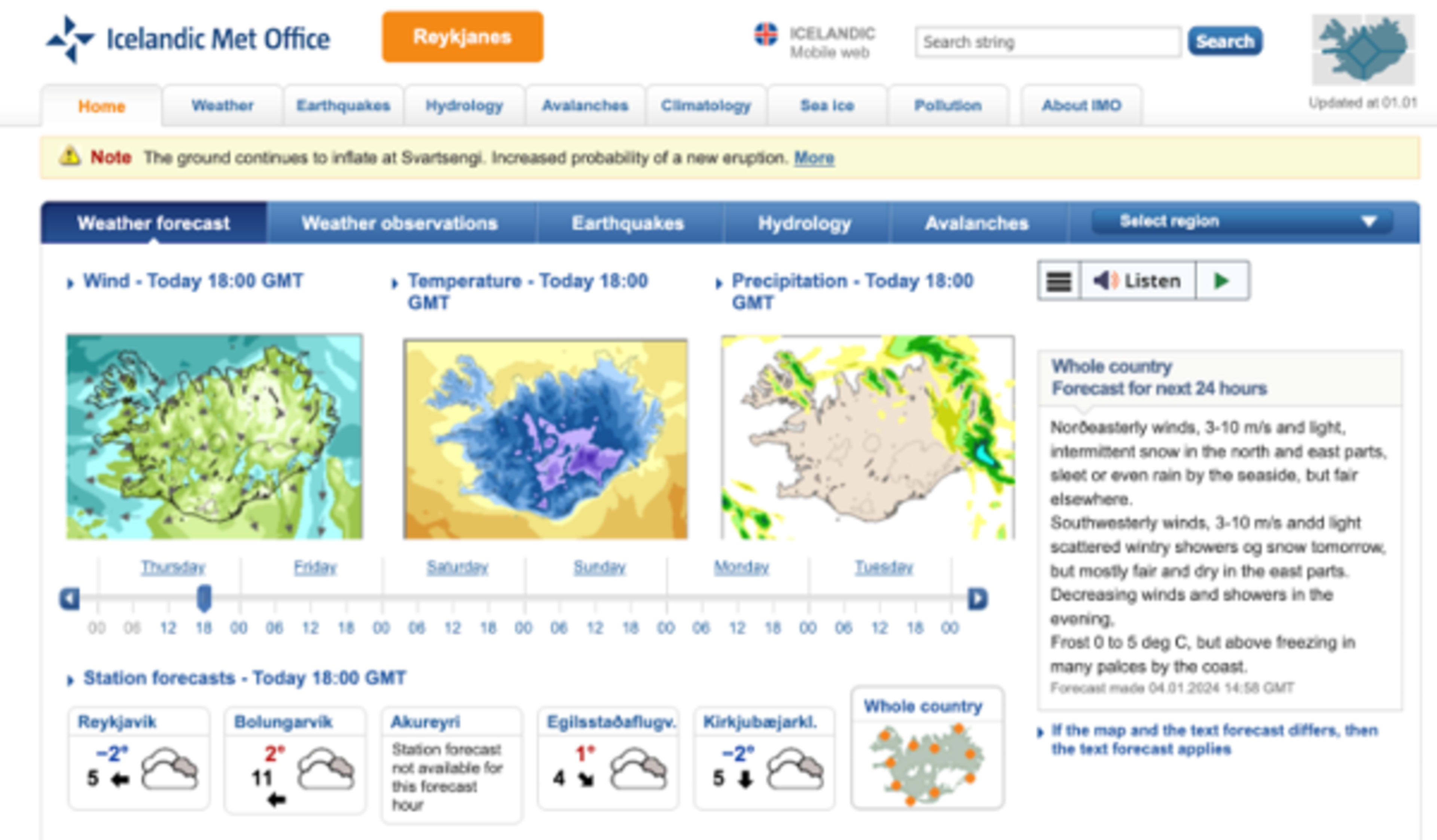
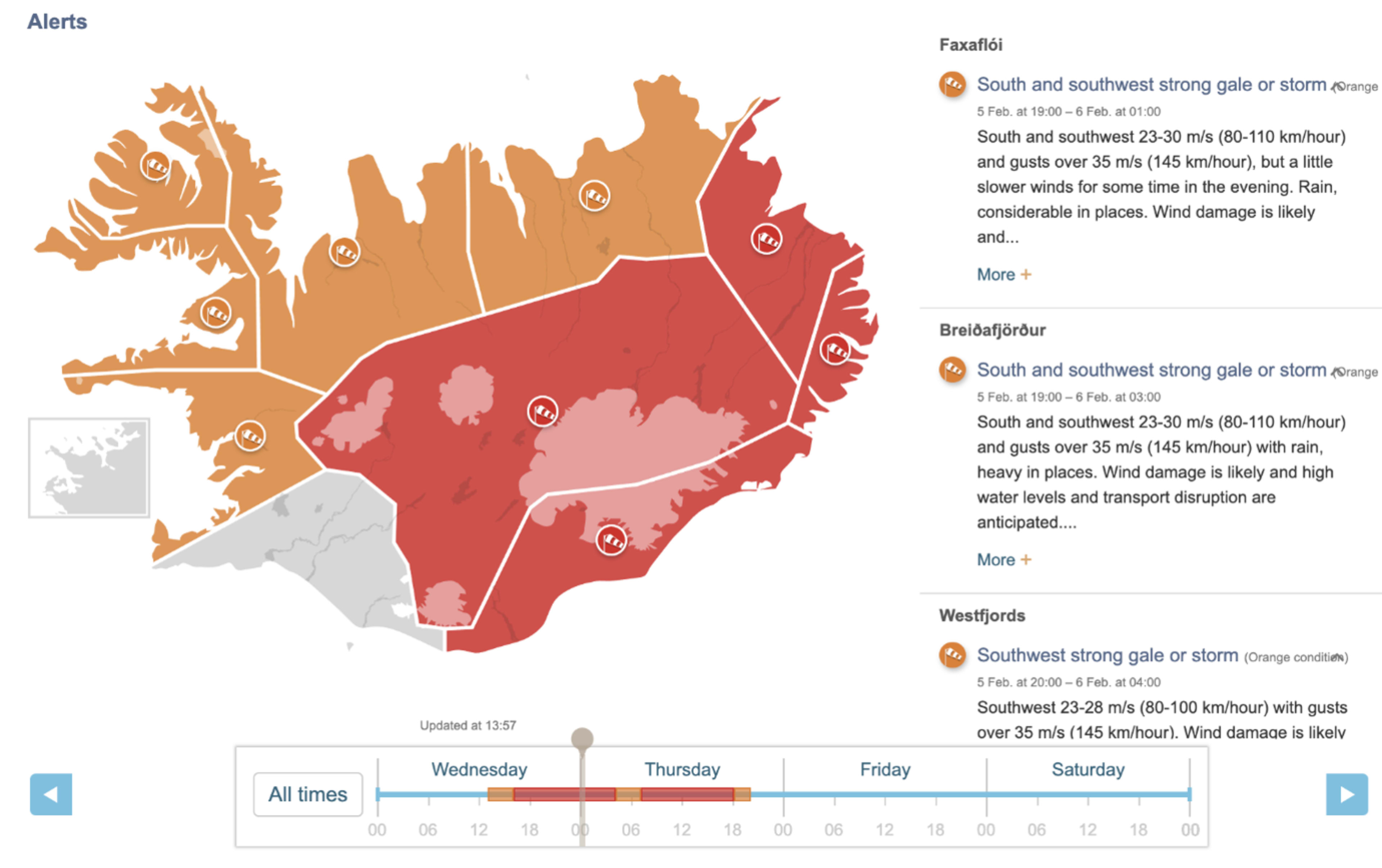
When weather conditions are expected to worsen, color-coded warnings will be issued, ranging from yellow, orange and red to indicate the storm’s severity,
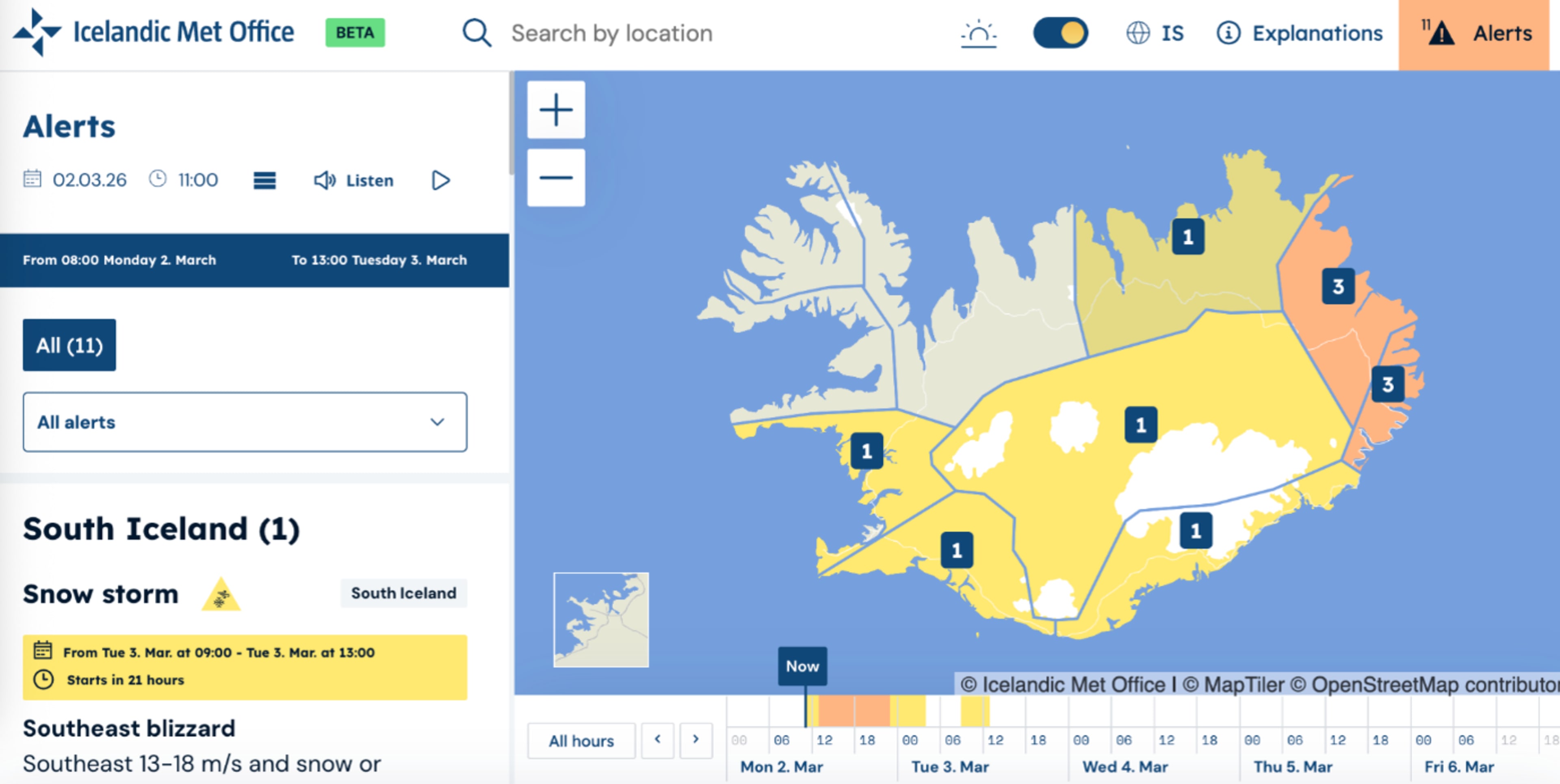
Weather reports from meteorological stations all around the country are displayed here, so you can check the region you’re visiting at any time.
There are two versions of the website to choose from, each with a different design: www.vedur.is and www.gottvedur.is.
Veður is the Icelandic word for “weather”, while Gottveður means “good weather”. Whichever site you choose, the forecasts remain the same!
You can cross-check with Belgingur (www.belgingur.is), which offers hyper-localized weather station reports and forecasts at 10-minute intervals.
6. Check Road Conditions
The Ring Road (Route 1) and other primary roads around Iceland are constantly checked and well maintained, with early-morning snow clearance when required.
However, even these roads are subject to closure during winter storms, so you must check Road.is before setting out on a self-drive trip.
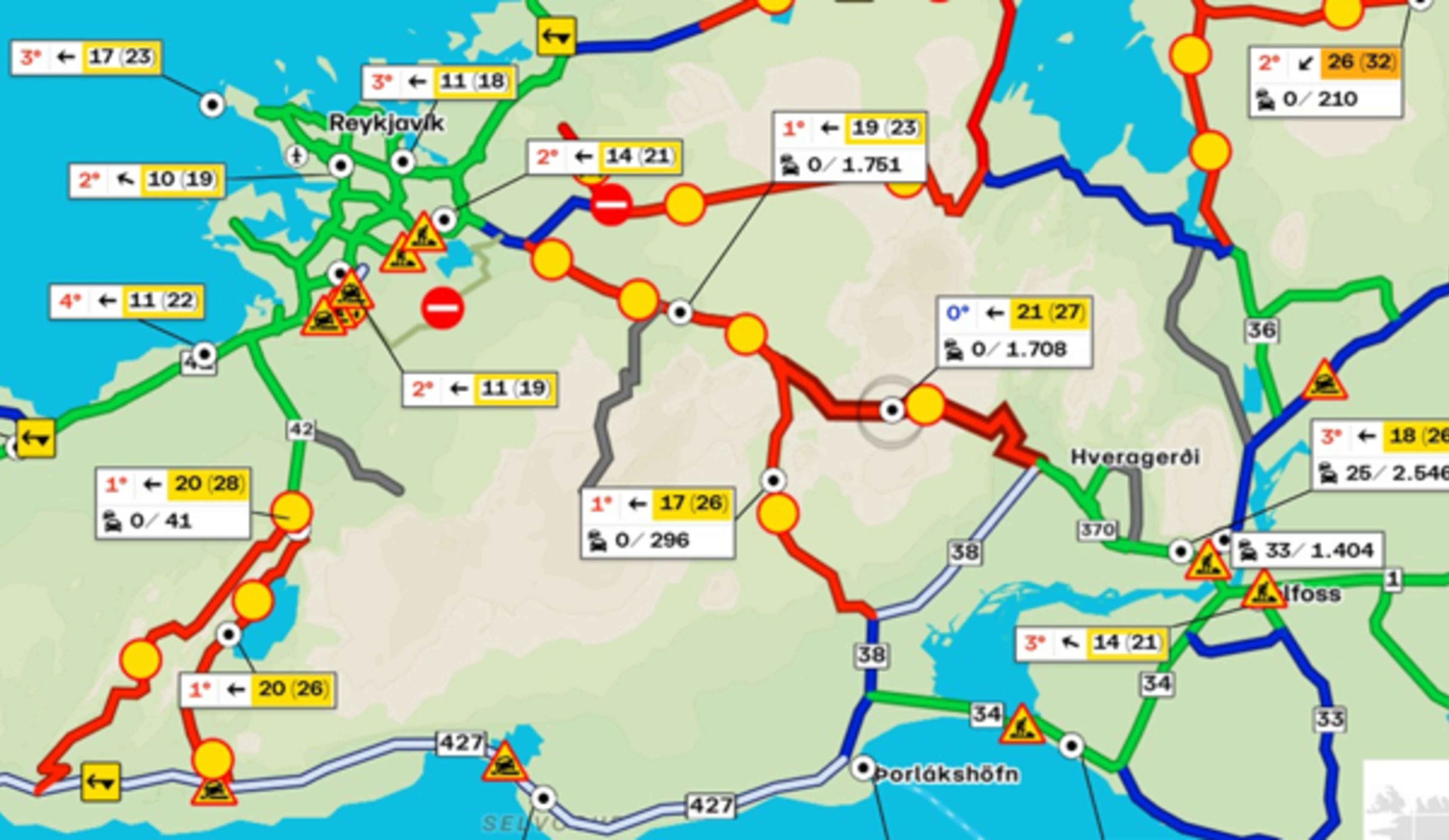
Known locally as Umferðin, this website displays the current status of the Icelandic road network, constantly updated as conditions change.
Take the time to understand the color-coding indicating road conditions along your proposed route.
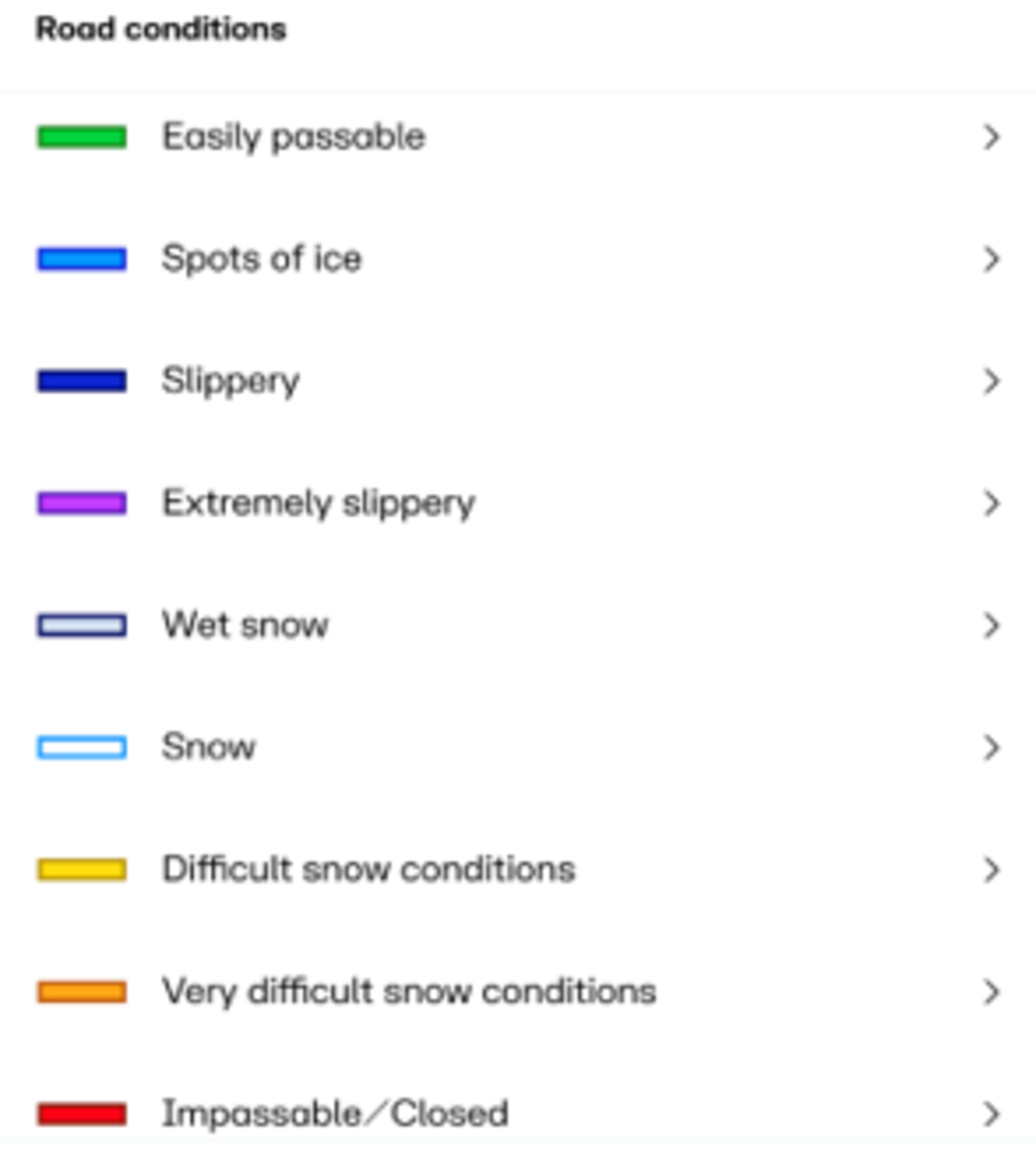
Black ice can form on bridges and in shaded areas, while a combination of snow and strong winds can create sudden white-out conditions.
The Icelandic Road and Coastal Administration also has a website (https://vegasja.vegagerdin.is/eng/) that shows road surfaces (black for paved, brown for gravel), webcams and wind speeds across the country.
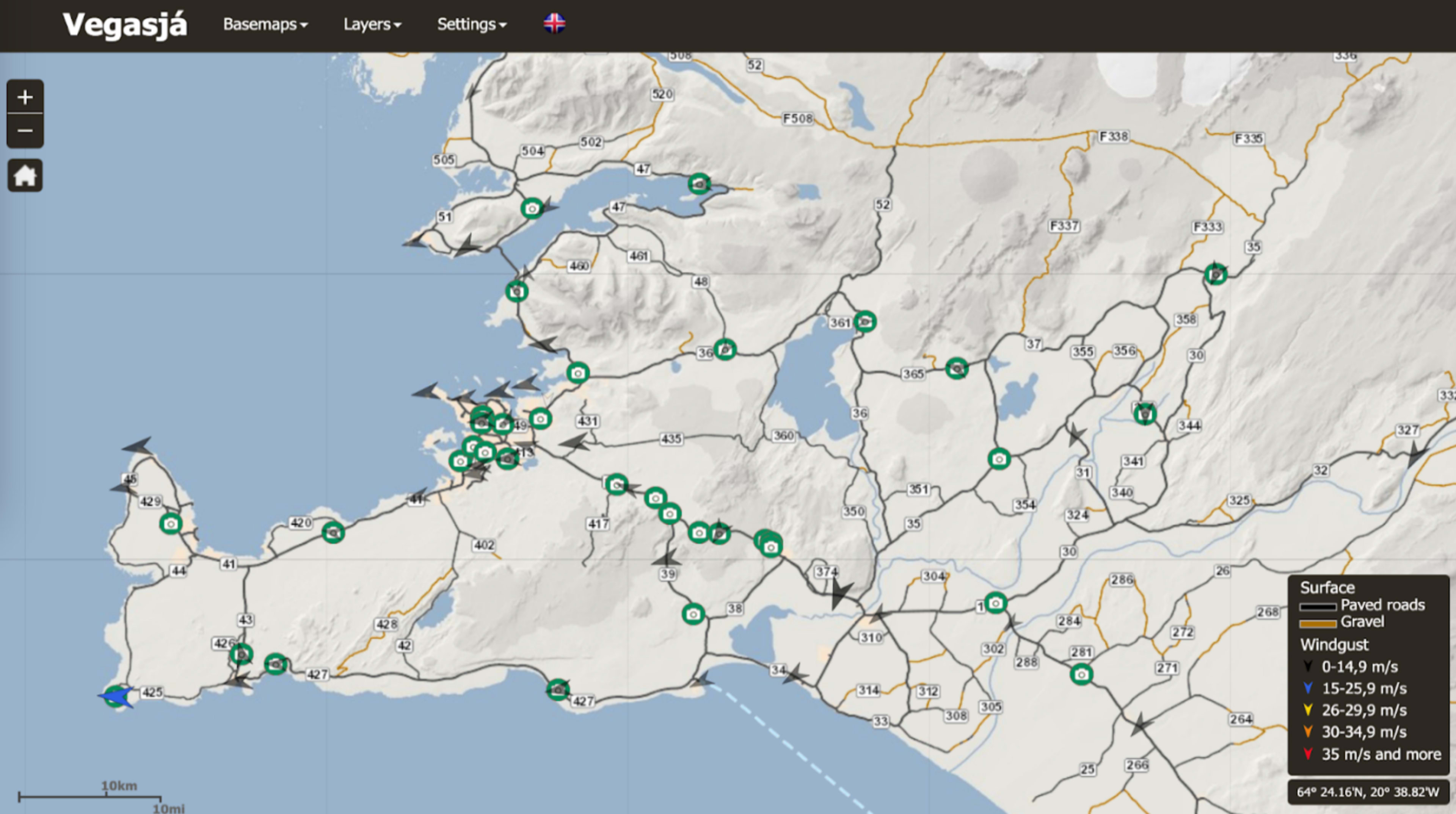
This is an excellent resource to ensure that your planned route won’t take you onto difficult or dangerous roads.
There is also an interactive app that combines the weather and road conditions, called Færð og Veður (Traffic and Weather), available for iPhone and Android users at https://www.faerdogvedur.is/
7. Don’t Rely On Google Maps
You may be used to relying on Google or Apple Maps at home, but it’s important to remember that they’re not updated as frequently as local resources like SafeTravel.is and Road.is.
Fast-changing conditions are a constant issue when self-driving in Iceland, so make sure you use Icelandic sources at all times.
You don’t want to discover that Google didn’t know that your chosen route is impassable and that you have to turn around or find alternative accommodation at short notice.
While mobile phone coverage is excellent in Iceland, it’s advisable to have a printed map of your planned route available, just in case!
Regional maps are available from Tourist Information Centers in every town and village in the country. You’ll also find these in gas stations, cafés, restaurants, museums, and many other places.
8. Bring Emergency Supplies
There are plenty of gas stations and shops along the Ring Road and other primary routes in Iceland, so you’ll never be very far from the next one.
However, winter storms can arrive quickly, forcing road closures that can last for some time.
So, it’s sensible to carry emergency supplies, including warm clothing, plenty of food and water, and power sources for your devices. Bring a torch if you can.
All Icelandic roads are constantly monitored, so you’ll always be safe, but it’s best to be comfortable as well.
On The Road in Winter
1. Switch On Your Lights
Before driving anywhere in Iceland, check that you understand your vehicle’s light settings.
Make sure that you’ve fully switched on the headlights and taillights, rather than relying on the automatic settings. This law applies all year round.
That’s because visibility can often be low, especially in wintry conditions, and you’ll want to see vehicles ahead and for others to see you too!
2. Drive Cautiously
While Iceland’s roads are well maintained, most of the primary routes are single-lane highways in each direction, often without much runoff.
With a limited margin for error, it’s sensible to drive more cautiously, particularly on inclines or curves, where it might be harder to detect ice.
Leave plenty of space between you and the vehicle ahead, even if you feel under pressure from a following vehicle.
Brake gently and early to prevent the risk of skidding, and use lower gears when descending hills.
Exercise caution when approaching single-lane bridges, remembering the rule that the first vehicle to arrive has priority.
Keep a watch for wildlife, particularly Icelandic horses and sheep, which may stray onto the road at times.
3. Follow The Road Signs
As you might expect, road signs are written in Icelandic, so it’s essential to understand the instructions to help keep you safe on the road.
For example, Lokað means “closed”. Icelandic roads will not be closed unless absolutely necessary - never go beyond a sign with this word.
SafeTravel has a simplified list of the most important road signs on this page: https://safetravel.is/driving/road-signs/
Other Icelandic road signs can be found on this Wikipedia page: https://en.wikipedia.org/wiki/Road_signs_in_Iceland
Don’t pull over on the roadside when you see something special - that’s dangerous and puts other road users at risk.
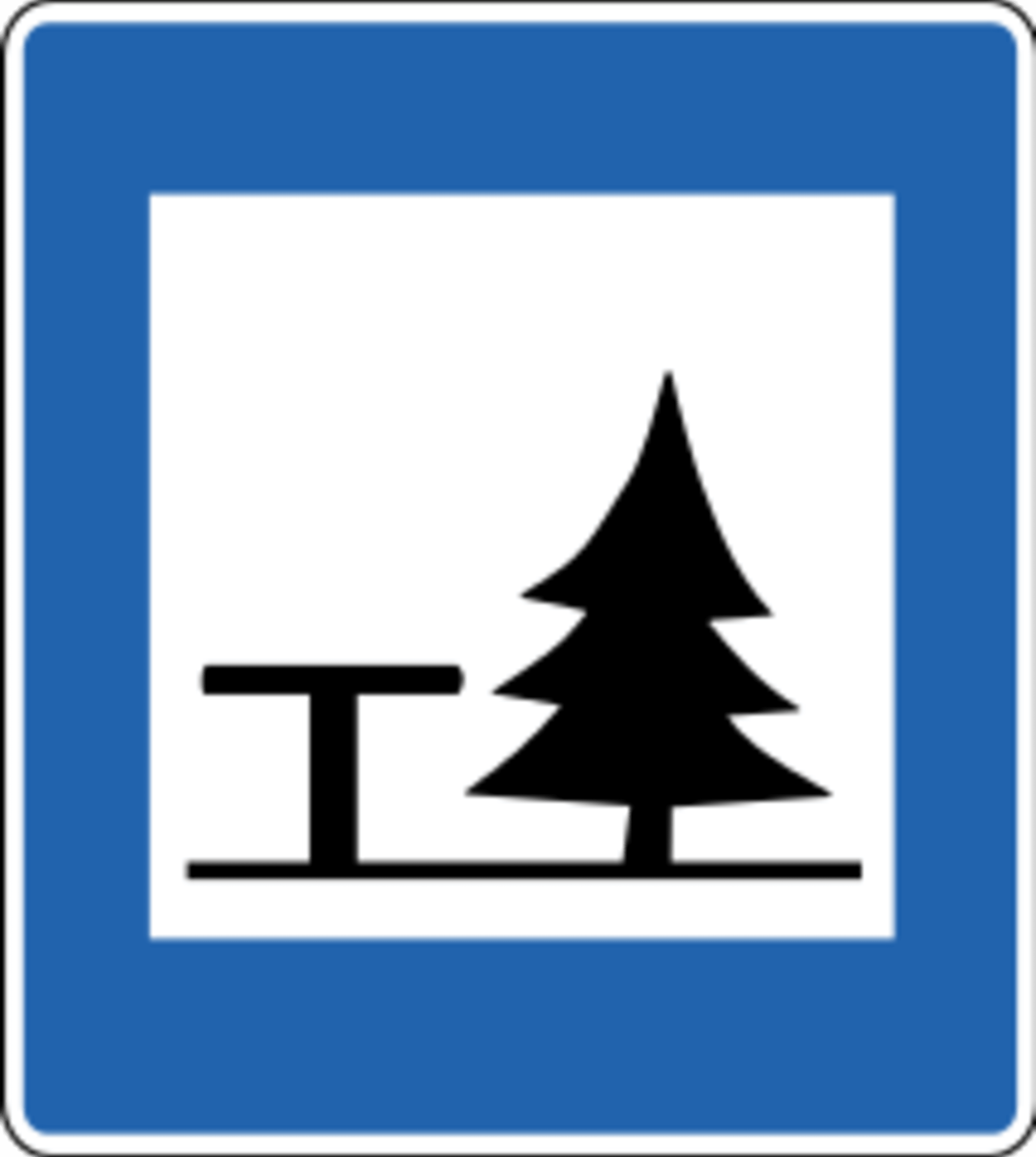
Instead, look for designated viewpoints and parking areas to stop and enjoy the scenery!
And be careful with the passing lanes at T-junctions - these are not places to park either.
4. Watch Your Speed
The speed limit varies between 30 and 50 km/h in residential areas, rising to 90 km/h on paved main roads and 80 km/h on gravel roads.
Some towns have unusual speed limits, such as 35 km/h, so pay attention to the signs as you approach each settlement.
These limits apply at all times, and significant fines will be imposed if you exceed them.
If you’re driving in the winter months, with reduced visibility and grip, it’s advisable to adjust your driving speed to suit the conditions.
5. Hold the steering wheel… and the doors!
Icelanders have more than a hundred words for wind, and that’s because it’s the most important factor in their weather.
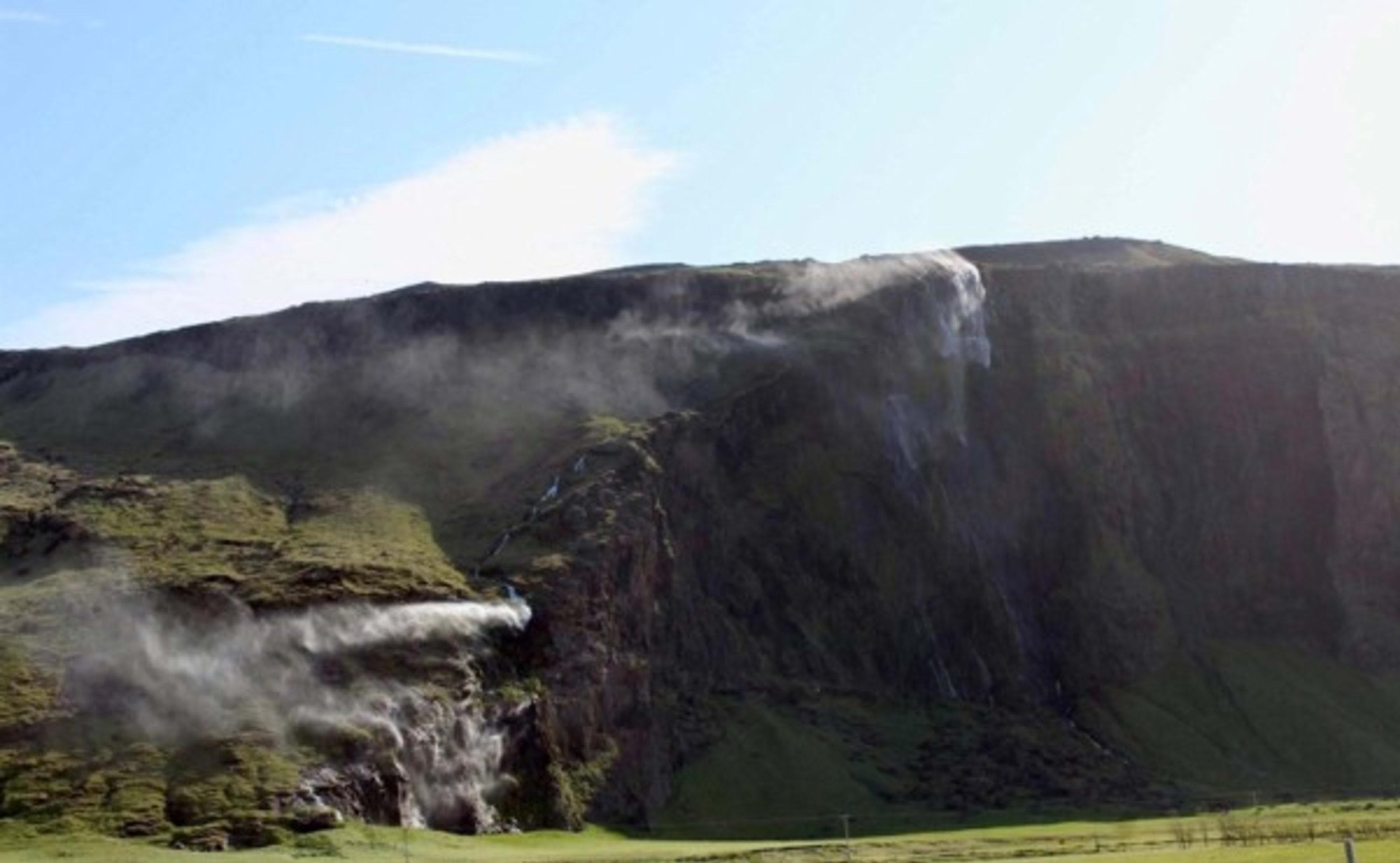
That’ll affect your driving experience too, with strong gusts capable of pushing your vehicle in one direction or another on exposed roads.
Keep a close eye on the digital road signs displaying predicted wind speeds, including gusts (shown in red).
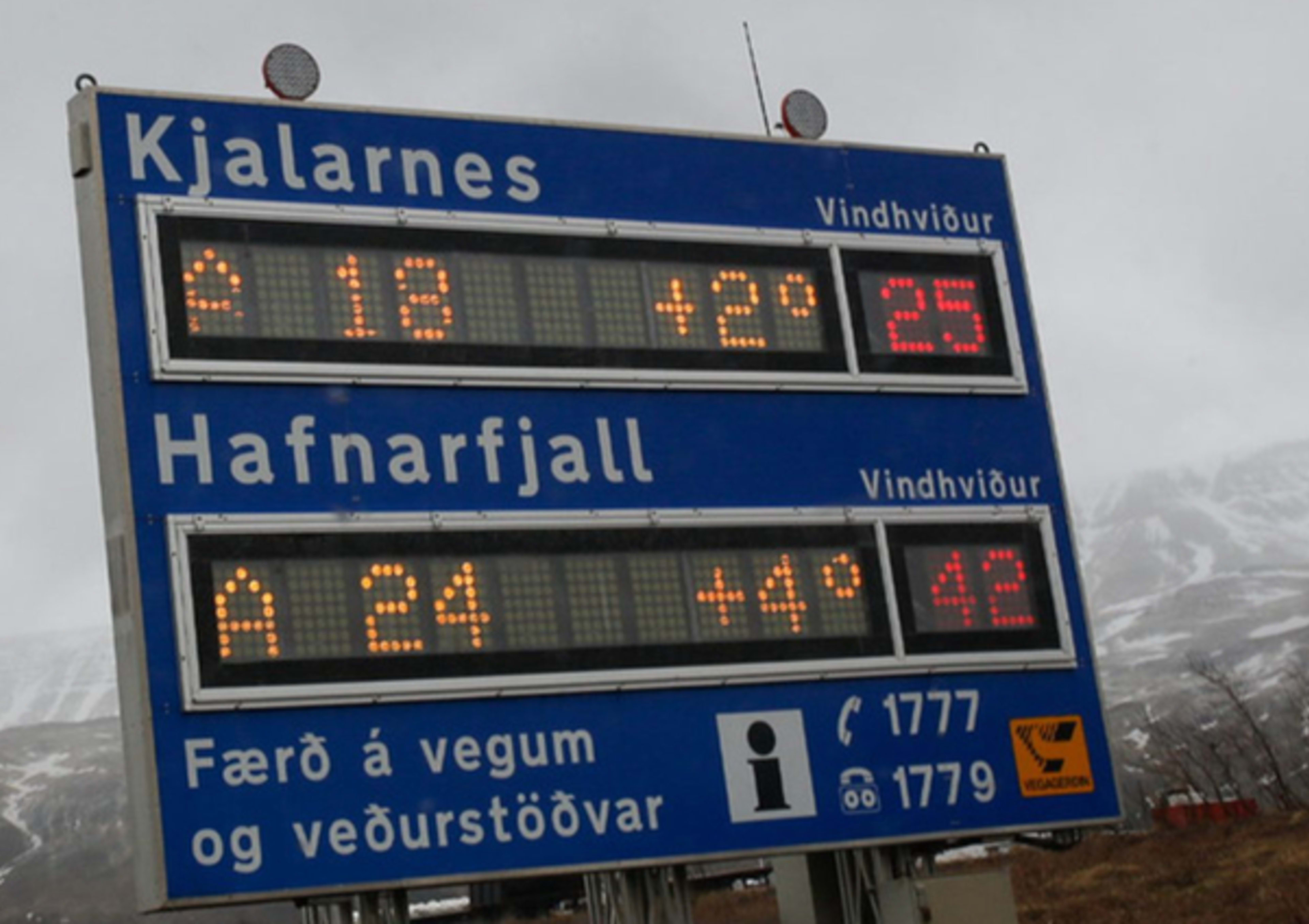
The first letter indicates the predicted wind direction.
A = East
V = West
N = North
S = South
Whenever wind speeds exceed 20 meters per second (72 kilometers per hour), driving will be much more difficult, and it’ll be safer to take cover until conditions improve.
It’s essential to keep both hands on the steering wheel at all times and adjust your speed if you sense crosswinds.
And when you get in and out of your vehicle, you must hold onto the doors, as sudden gusts can bend them back, leaving you with a hefty repair bill, and probably not covered by insurance.
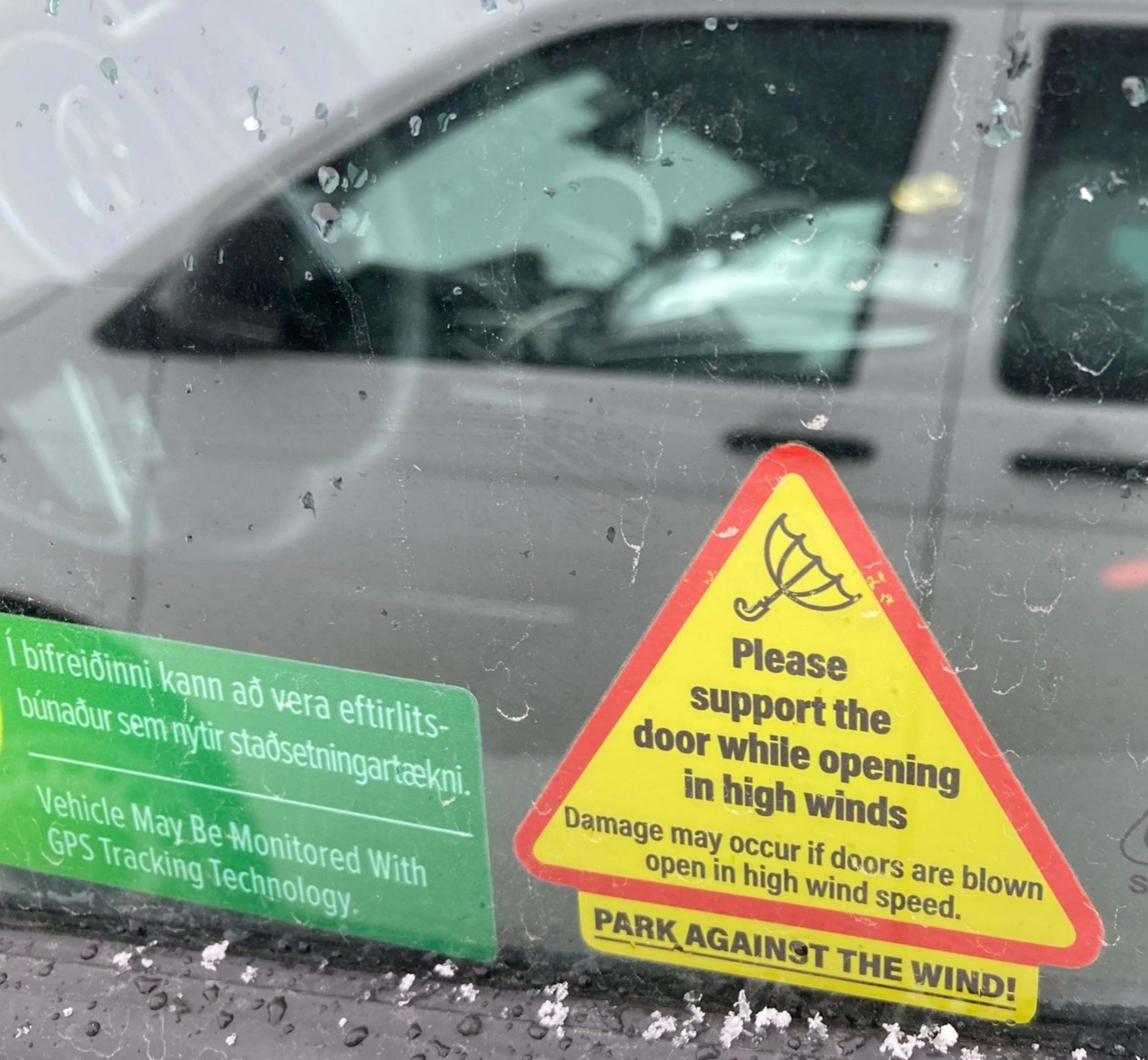
Try to park “into” the wind. Look at trees or flags to give you an idea of wind direction.
If you can, park well away from other vehicles, or leave a big gap on both sides in case other visitors have problems with their doors and dent yours!
Remember that snowbanks could conceal rocks, ditches or curbs.
6. Keep The Gas Tank Topped Up
Always keep the gas tank at least half full, even when you are traveling close to the capital.
If you are caught in a storm and have to sit still for a while, you will want enough fuel to keep the engine running to power the heater and the lights.
7. Keep Checking Conditions
Remember the saying about the weather changing every five minutes?
It’s important to remember that all weather forecasts are subject to frequent change and should not be relied on more than 48 hours ahead.
Iceland’s position in the middle of the Atlantic exposes it to fast-moving storms and high winds, often changing direction and strength.
Weather conditions can vary wildly within a 10-minute window, a 10-meter elevation change, or a 10-kilometer distance.
Iceland’s weather can and does change that quickly, so it’s really important to keep an eye on road and weather conditions throughout the day to ensure you’re prepared for all eventualities.
Patience is your friend when the weather worsens. It’s always better to pull over, stay still and keep safe than to carry on in unsafe conditions.
8. Don’t overdo it
It might be tempting to pack as much as possible into your winter road trip in Iceland, but staying safe on the road means staying alert at all times.
Snow-capped scenery will catch your eye, but you must keep watching the road, particularly when ice or snow covers the route.
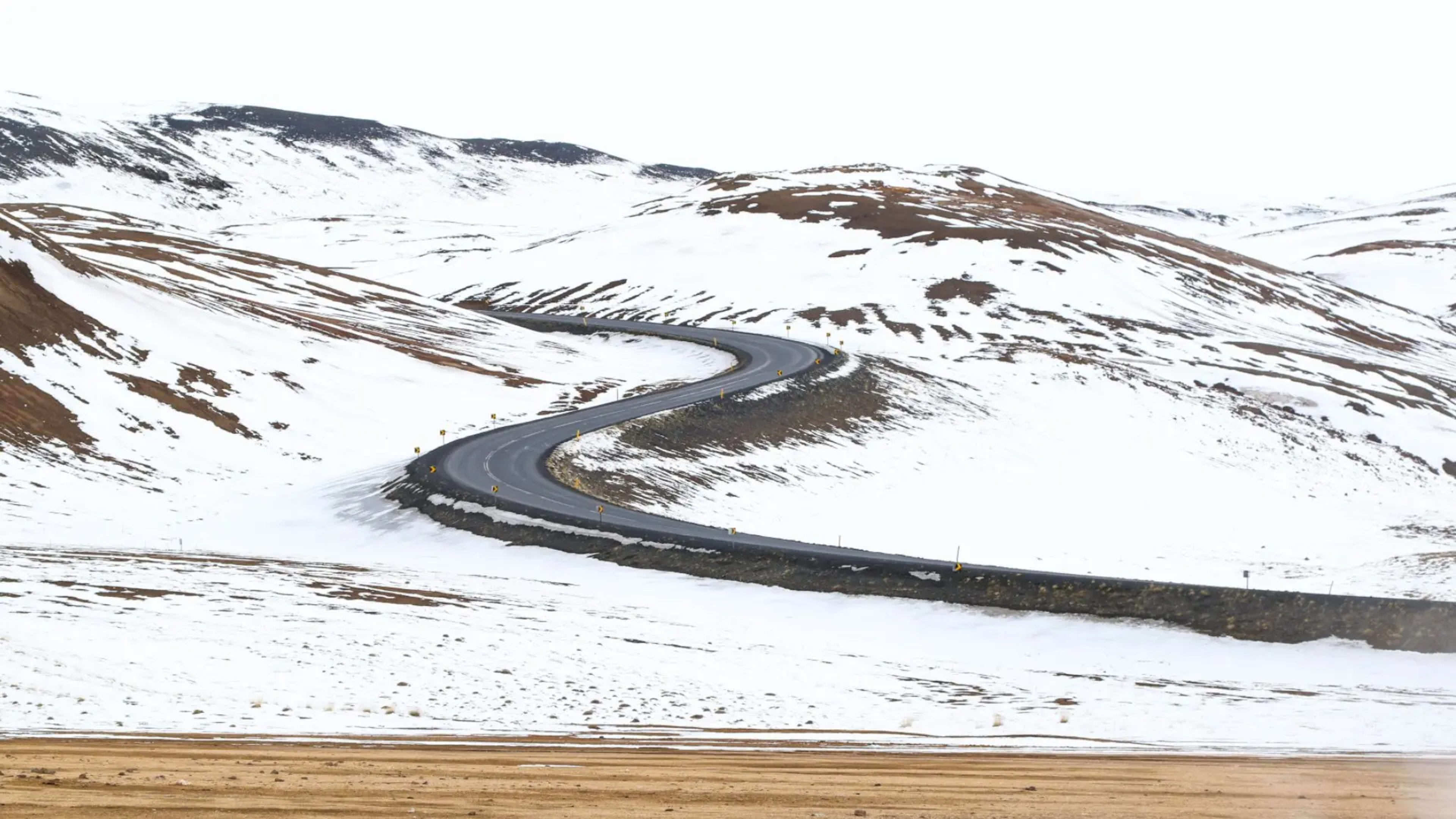
To help you, every Icelandic road features yellow poles set at regular intervals on either side. These markers show drivers the road edges.
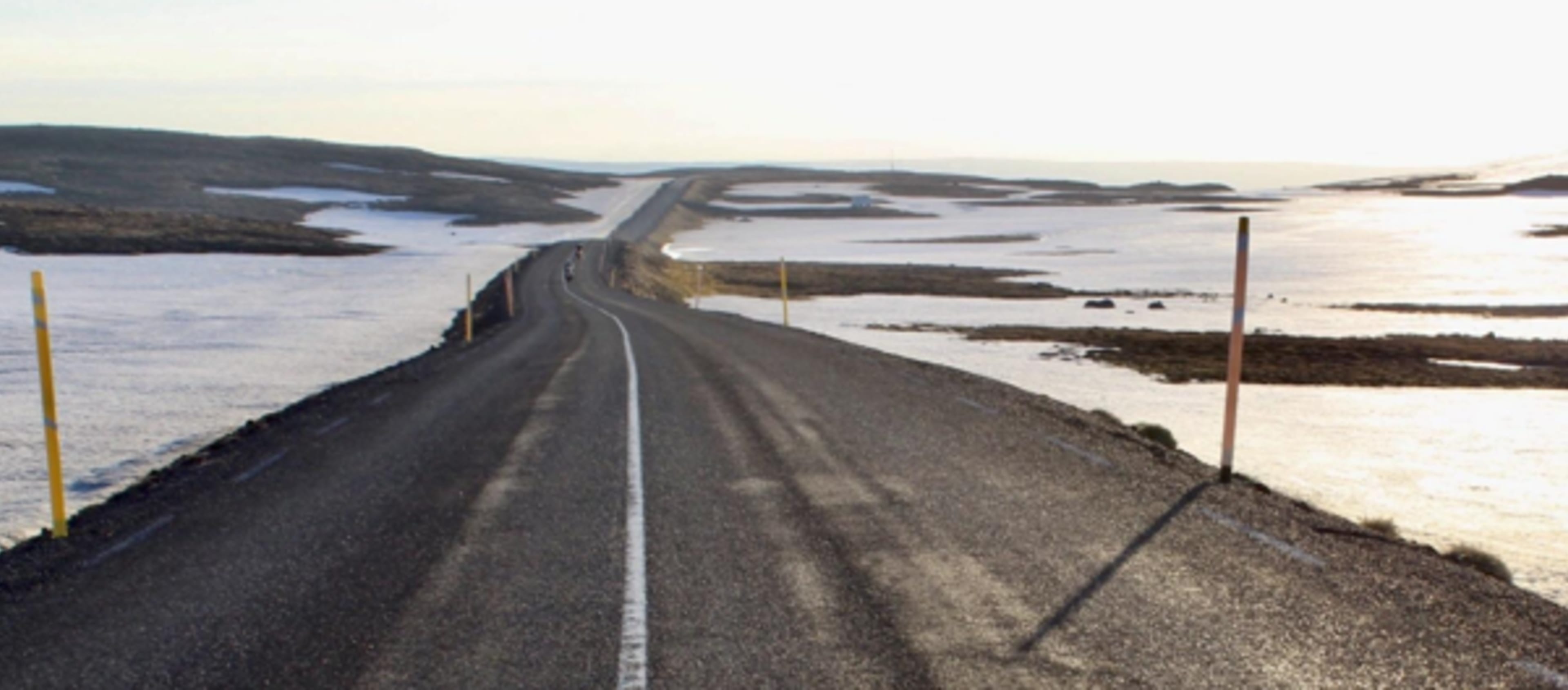
If you look closely, you’ll see that the yellow poles on the left of the road have two stripes, while single stripes indicate the right.
Concentrating on the road can be tiring, so make sure that the driver takes regular breaks to stay alert.
Don’t drive too far in one stint, and build in plenty of leeway in your travel plan to allow for changing weather or road conditions.
Useful Phone Numbers and Apps
You can also call 1777 for current road and weather reports or the local police at +354 444 1000.
Download the 112 Emergency Assistance app and learn how to use it to call for help.
If your vehicle gets stuck and you cannot contact your rental company, you can call +354 419 2400 for 24 Road Assistance. Costs will apply.
Consider adding the What3Words app to help pinpoint your location or pack a Personal Location Beacon.
If you’re unlucky enough to have a road traffic accident in Iceland, there is a website where you can log the details: https://carcrash.is
Remember this
Whatever month you choose for your visit, remember this Icelandic word: Gluggaveður.
That translates as “window weather” when the day looks bright and encouraging when you look out, but as soon as you go outside, you find it much less welcoming!
Conditions in Iceland can change from ideal to icy in minutes, and safe winter driving requires preparation, understanding, and respect for this wildly unpredictable environment.
Well-prepared travelers can look forward to an unforgettable road trip through Iceland’s fabulous landscapes, enjoying the Northern Lights, frozen waterfalls, incredible ice caves, snow-capped volcanoes, and glittering glaciers!
How long does winter last in Iceland?
The Old Icelandic calendar had only two seasons: winter (vetur) and summer (sumar), each lasting six months.
Even now, the Icelandic winter can last longer than you might expect, with storms, snow and strong winds arriving throughout the year.
Picking the right month for your winter visit to Iceland depends on your priorities.
For example, if you want to maximize your chances of seeing the Northern Lights, it’s best to pick the months with the shortest daylight hours: December and January.
But if you want more time to explore Iceland with self-driving trips from a Reykjavík base, aim for October, November, February and March, as the longer daylight hours will give you more scope to see its marvels.
Here’s a month-by-month breakdown of daylight hours, average temperatures and sunrise/sunset times.
October
The first day of winter (Fyrsti vetrardagur) is marked on the Saturday between October 21st and 27th.
The days are darkening quickly; temperatures and leaves are falling, and there will be more wind and rain.
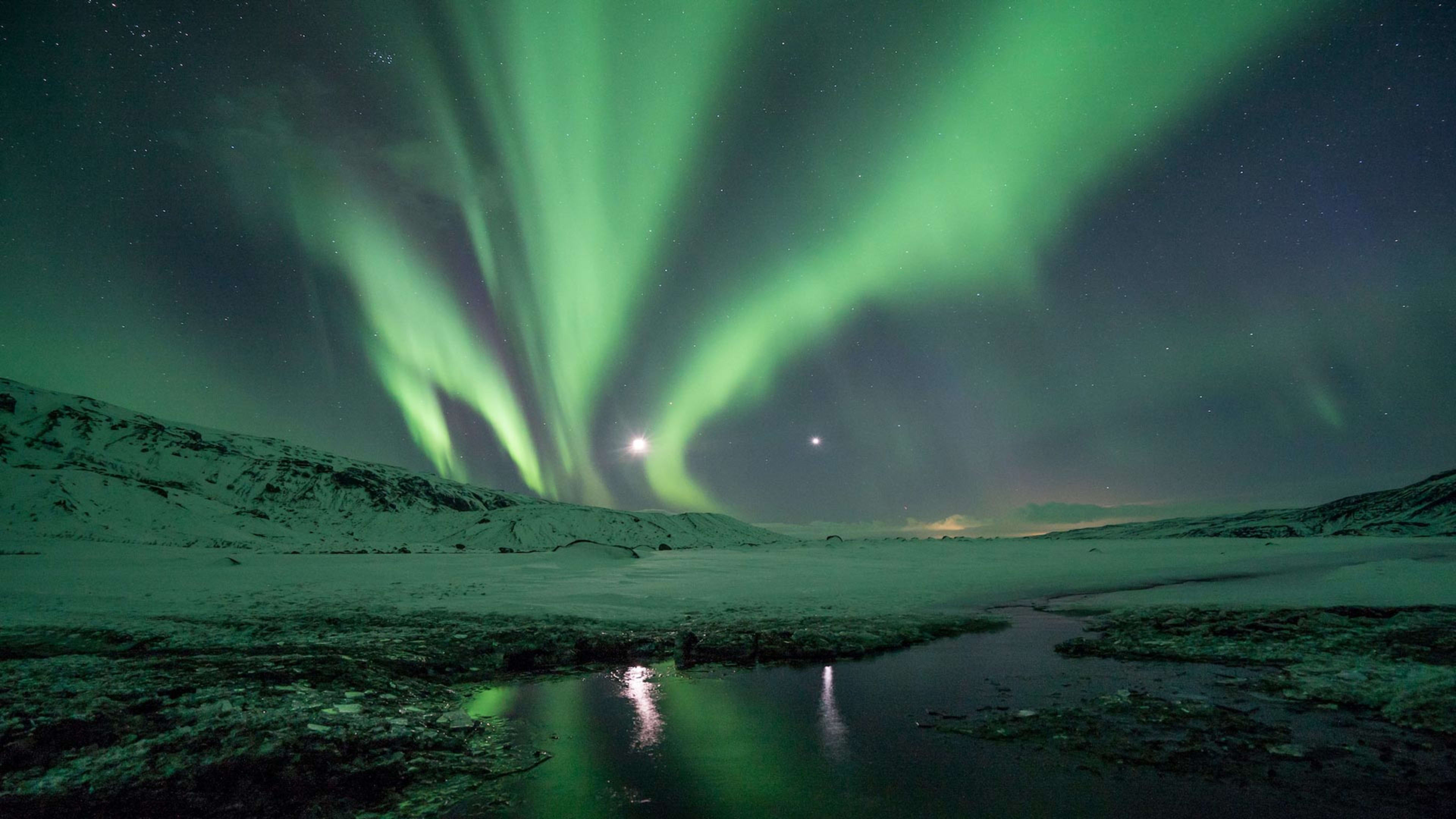
The Northern Lights are becoming more visible this time of year, rewarding short nighttime trips into the countryside to witness this magical sight whenever the skies are clear.
Expect weather warnings from SafeTravel. The first snows of winter will arrive, with North Iceland most likely to see snow clouds first, followed by the south.
Average temperatures: 37°F to 46°F (3°C to 8°C)
Daylight: 11 hours on October 1st, reducing to 8 hours
Sunrise: 0740 on October 1st, 0910 by month end
Sunset: 1855 on October 1st, 1710 by month end
November
By November, the temperatures are noticeably colder, and the winds are picking up, so you’ll need warm layers, hats, gloves, and scarves ready.
Snowfalls will increase in frequency, and roads will often be icy, so you’ll need to take extra care if you’re self-driving.
Average temperatures: 32°F to 41°F (0°C to 5°C)
Daylight: 8 hours on November 1st, reducing to 5 hours
Sunrise: 0915 on November 1st, 1045 by month end
Sunset: 1710 on the 1st, 1550 by month end
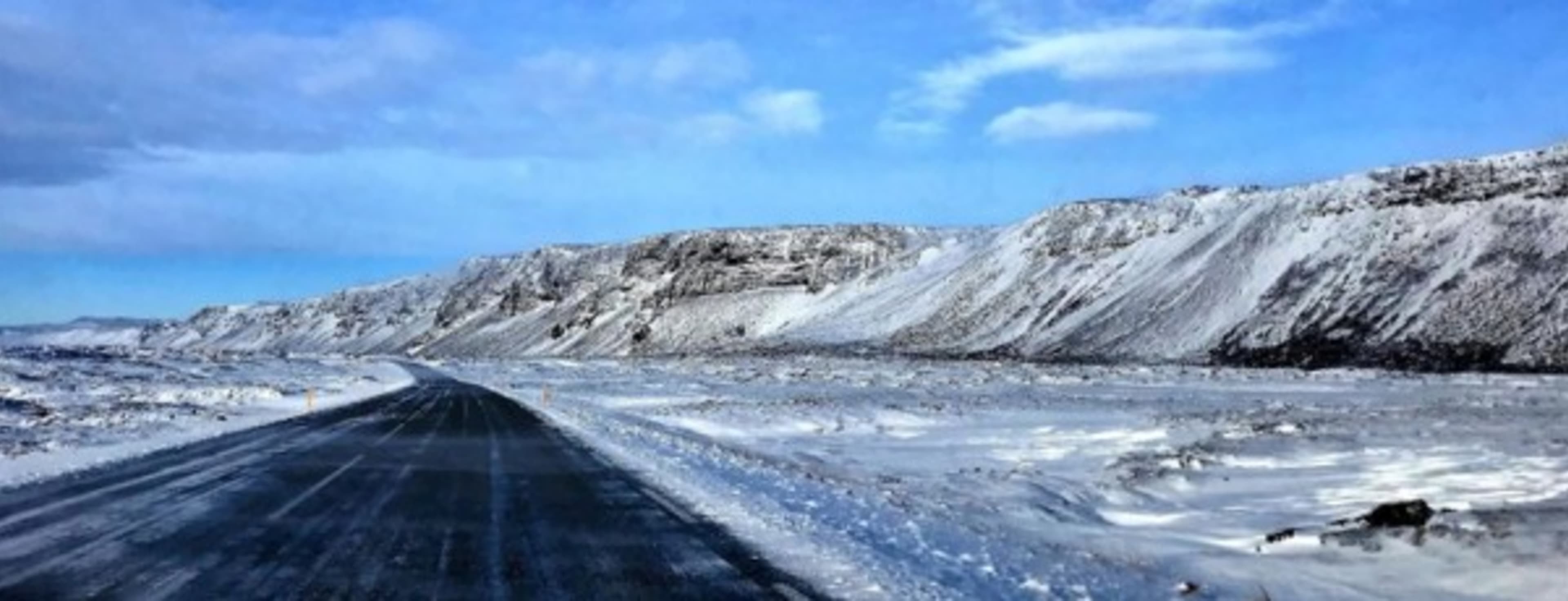
December
The days are at their shortest and darkest, with just 4 hours of daylight on the Winter Solstice (December 21st), reducing the time available to explore Iceland’s natural marvels to a minimum.
On the other hand, that means a much better chance of seeing the Northern Lights in the dark of Iceland’s long winter nights.
Snowfalls and frost will often make Iceland a glittering winter wonderland, offering incredible images under the hazy winter sun.
Winter storms can also bring high winds, and roads may be closed sometimes, while the low sun can make driving conditions difficult.
Average temperatures: 30°F to 38°F (-1°C to 3°C)
Daylight: 5 hours on December 1st, reducing to 4 hours on the solstice
Sunrise: 1045 on December 1st, 1120 by month end
Sunset: 1545 on December 1st, 1545 by month end
January
Prepare for long nights and short daylight hours, with lengthy “blue-hour” mornings and afternoons.
Expect windy days with snowfall and sharp frosts, so be sure to wrap up with warm layers whenever you’re outdoors.
There is always a strong possibility of dangerous storms in January, so if you’re exploring independently, keep your hikes and drives short.
When the sun is visible, it will be low in the sky, so don’t forget your sunglasses.
Average temperatures: 29°F to 38°F (-2°C to 3°C)
Daylight: 4.5 hours on January 1st, increasing to 7 hours
Sunrise: 1120 on January 1st, 1015 by month end
Sunset: 1540 on January 1st, 1710 by month end
February
Winter conditions remain in control in February, so heavy snow, ice, sleet, and rain showers are likely. Keep those waterproofs ready!
Daylight hours are quickly increasing, so you’ll have more time to self-drive outside the capital.
With 7-10 daylight hours to explore, it’s perfectly possible to self-drive around the Golden Circle or see the highlights of the South Coast.
Average temperatures: 29°F to 38°F (-2°C to 3°C)
Daylight: 7 hours on February 1st, increasing to 10 hours
Sunrise: 1010 on February 1st, 0840 by month end
Sunset: 1715 on February 1st, 1845 by month end
March
Daylight hours are quickly increasing as March progresses, triggering a slow thaw in Iceland’s winter landscapes.
If you’re hiking or self-driving, check SafeTravel for weather warnings, and don’t try to fit too much into each day.
Starting or ending your day in darkness can be hazardous.
There are still plenty of hours of darkness for aurora hunting, and it’s a good time to book excursions with ice cave tours and glacier hikes.
Average temperatures: 30°F to 40°F (-1°C to 4.5°C)
Daylight: 10.5 hours on March 1st, increasing to 13.5 hours
Sunrise: 0835 on March 1st, 0645 by month end
Sunset: 1845 on March 1st, 2015 by month end
FAQ: Winter Driving in Iceland
Yes, with the right preparation. Choose an AWD or 4WD vehicle, check road.is and vedur.is before every drive, and be ready to adjust your plans if conditions worsen. Most visitors who plan around the weather and drive to the conditions have a safe trip.
It’s strongly recommended. AWD and 4WD vehicles offer far better grip and stability on snow, ice and gravel roads than a 2WD rental. Rental companies also fit studded tires between November 1st and April 14th for extra traction.
Not on its own. Google and Apple Maps aren’t updated as frequently as Icelandic sources like SafeTravel.is and Road.is, so cross-check your route with these before setting out, and keep a printed map as backup in case of poor phone signal.
Pull over safely, stay in the vehicle and keep the gas tank at least half full so you can run the heater and lights. Check the SafeTravel app for updates and call 112 if you need assistance.