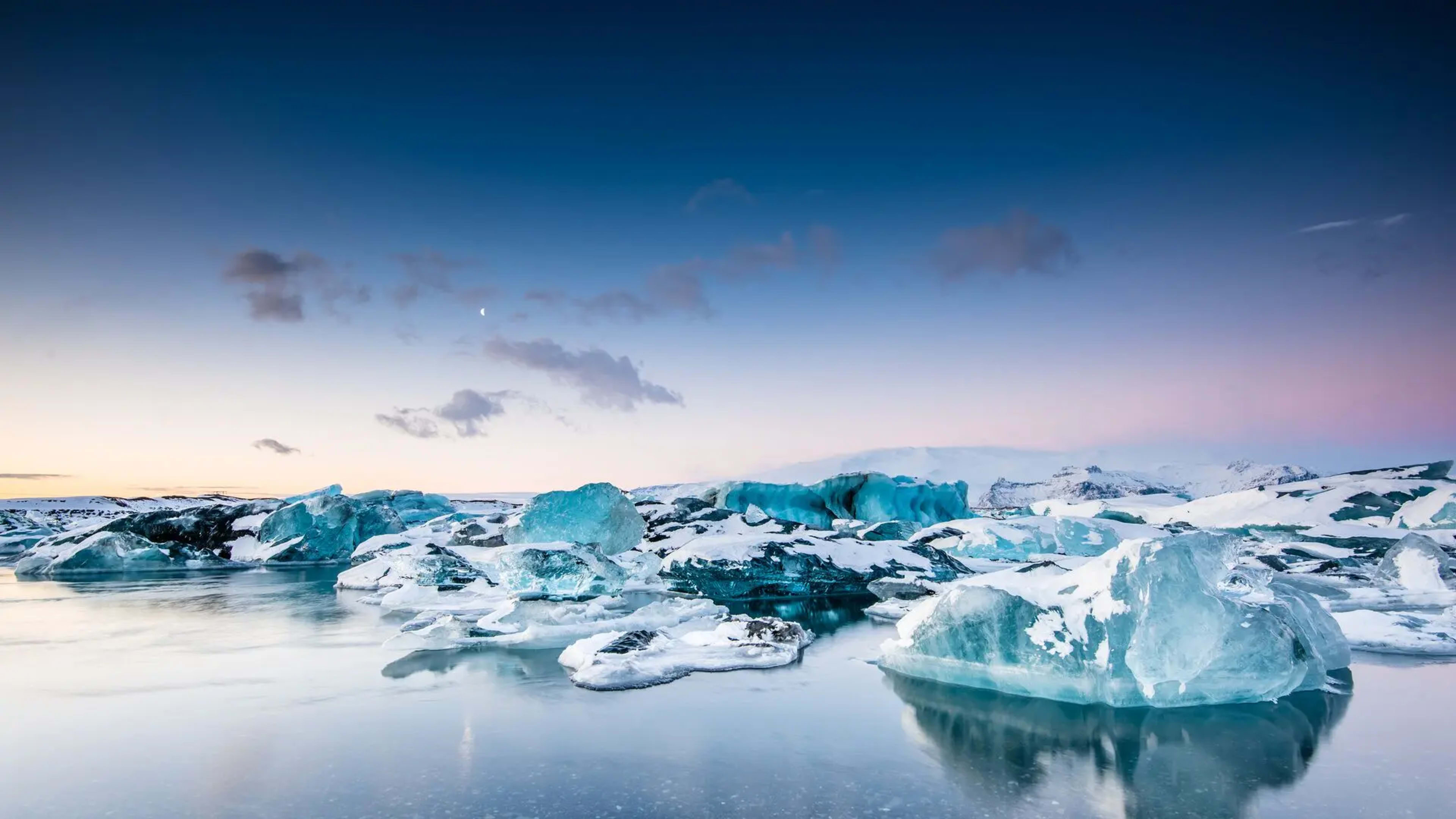
The moment you arrive in Iceland, you'll understand why: light travels differently here. In winter, the sun rises later than you might expect, hangs low, and hugs the horizon for hours. The effect is cinematic, a sunrise that never quite finishes and a sunset that stretches into a long twilight.
That means longer blue and golden hours for photography. In summer, by contrast, daylight runs almost around the clock, giving you far more time to explore Iceland for as long as you like.
Understanding how light changes across the year is the first step in planning your trip. Read on for a month-by-month guide to balancing daylight and darkness in Iceland, or explore our winter tours to start planning a cold-weather trip.
How Iceland's Latitude Affects Daylight
These daylight swings come down to Iceland's high latitude, close to the Arctic Circle, and the Earth's seasonal axial tilt.
When the Northern Hemisphere tilts toward the sun in summer, Iceland sits in near-constant light, with direct sunlight running to around 21 hours a day at the summer solstice. The extended twilight on either side means the sky rarely gets properly dark for a few weeks around midsummer.
In winter, Iceland tilts away from the sun, and daylight in Reykjavík drops to as little as four to five hours a day around the winter solstice in December.

Planning Your Trip: What Do You Want to See?
Choosing the best time to visit Iceland depends on daylight hours and what you want to see.
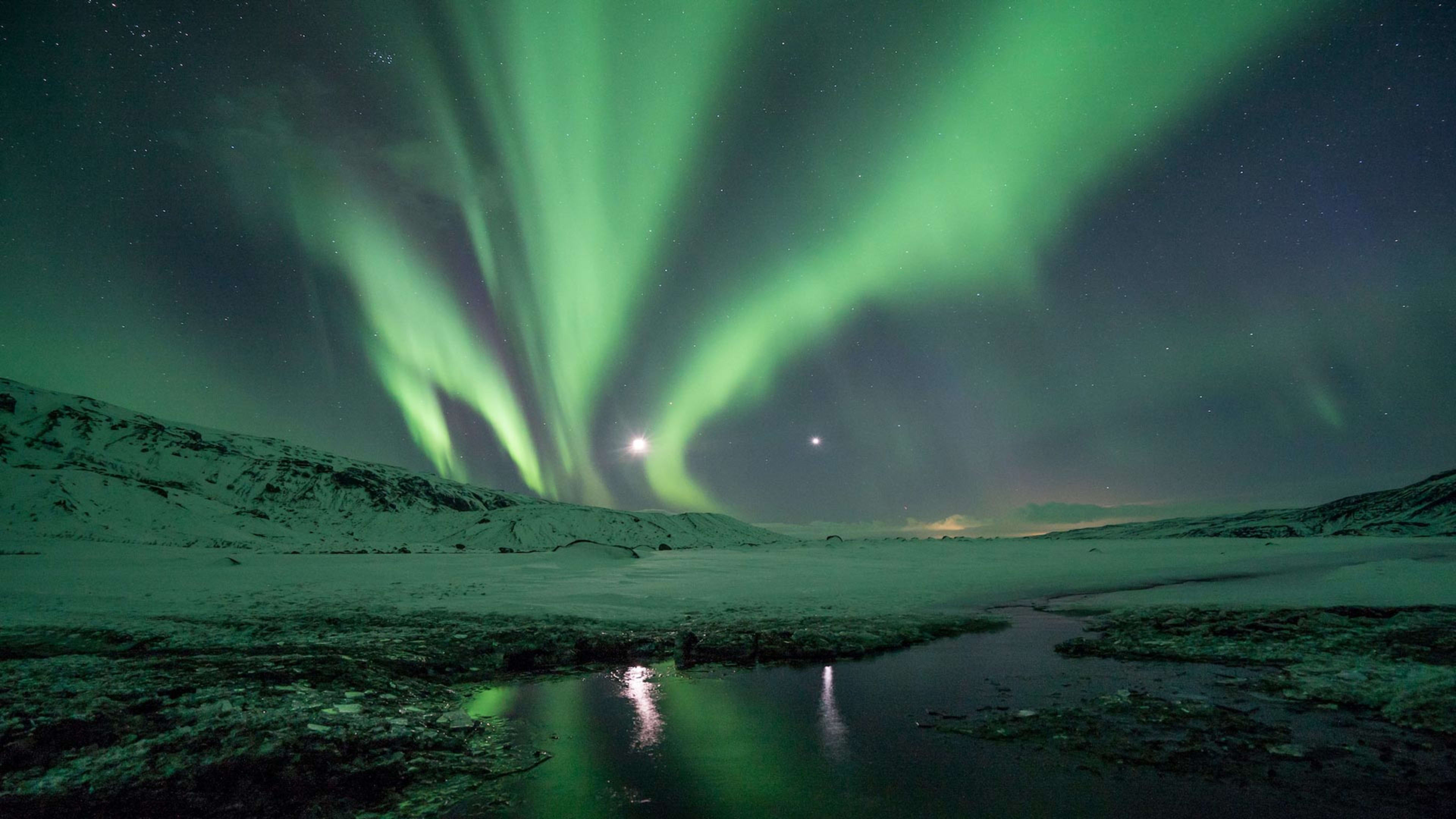
If seeing the Northern Lights against snow-capped scenery is on your list, December and January are the darkest months and give you the best odds. If you'd rather have more time to explore on a self-drive trip from a Reykjavík base, October, November, February, and March offer longer daylight while still leaving enough darkness for aurora hunting at night.
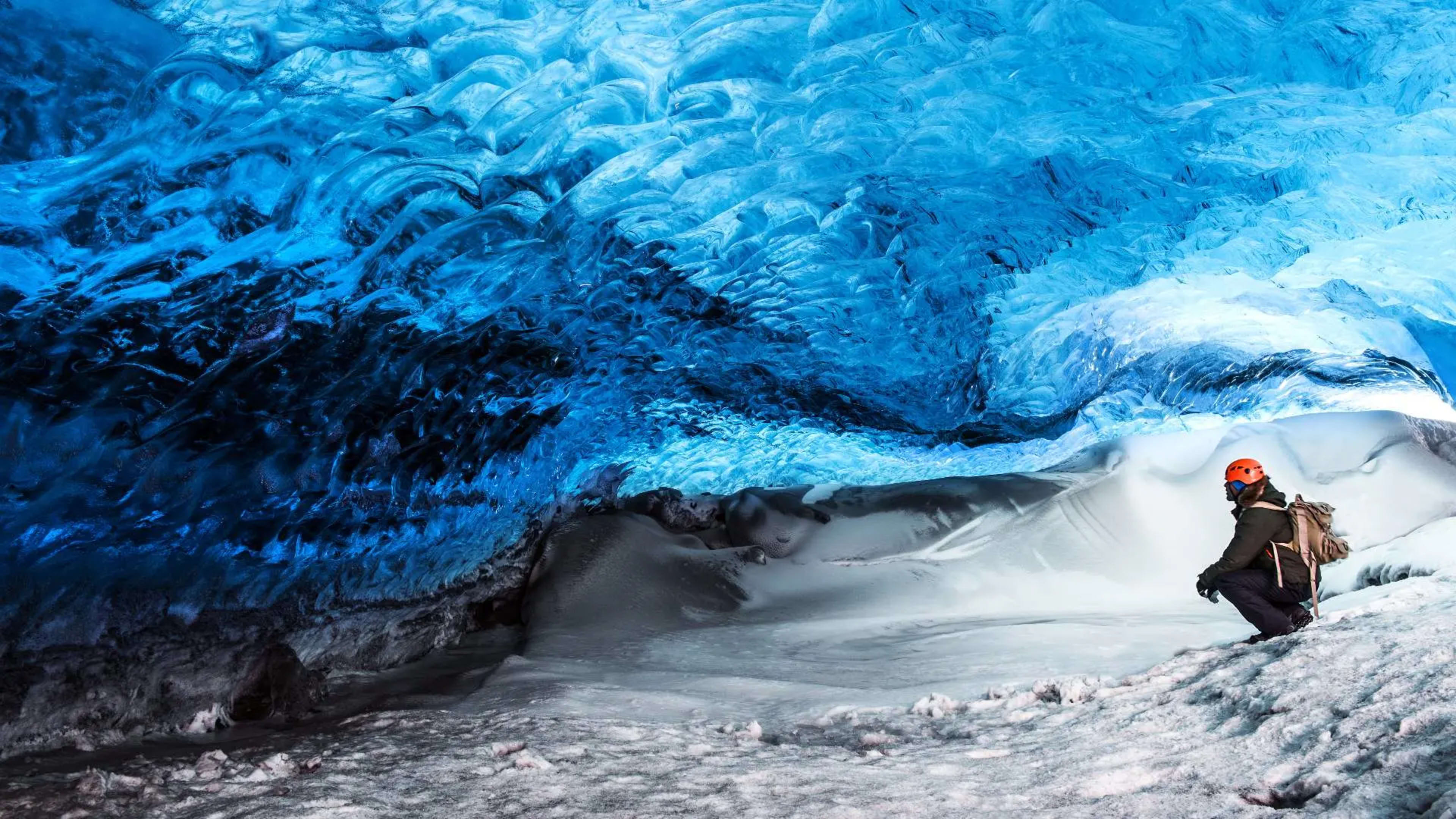
Winter is also the best time for natural ice caves and glacier hikes, and for a soak in one of Iceland's geothermal spas, including the Blue Lagoon, where warm water against a snowy landscape is one of the better winter contrasts in the country.
Summer visitors get long, easy days for exploring as the Midnight Sun (Nætursól) stays high well into the night. Between May and September, the extended evenings are well suited to hiking, kayaking, whale watching, and bird spotting. An eye mask is worth packing if you're not used to sleeping with light outside.

How Daylight Changes in Iceland, Month by Month
Daylight in Iceland doesn't move in a straight line month to month. Below is a start-of-month to end-of-month range for each one, along with sunrise and sunset times in Reykjavík. These are ranges across the month, not single daily averages, and they reflect direct sunlight between sunrise and sunset rather than the extended twilight on either side.
January
Long nights and short days, with lengthy blue-hour mornings and afternoons. Expect windy conditions, snowfall, and sharp frosts, so pack warm layers for anything outdoors. Storms are common in January, so keep hikes and drives short if you're exploring independently. When the sun is out, it sits low in the sky, so bring sunglasses. This is one of the best months for Northern Lights hunting; our
This is one of the strongest months for Northern Lights hunting. Our Northern Lights tours run throughout the season.
Daylight: 4.5 hours at the start of the month, increasing to 7 hours.
Sunrise: 11:20 am at the start of the month, 10:15 am by month's end.
Sunset: 3:40 pm at the start of the month, 5:10 pm by month's end.
February
Daylight is returning quickly. Longer days mean road trips can stretch further, making it a good time to explore the Golden Circle or the South Coast under snow-capped landscapes. There are still plenty of dark hours for Northern Lights viewing, and access to the season's ice caves continues. Heavy snow, ice, sleet, and rain showers are all still likely, so keep waterproofs on hand.
Longer daylight this month makes it a good window for a winter self-drive trip that still leaves dark enough nights for aurora hunting.
Daylight: 7 hours at the start of the month, increasing to 10 hours.
Sunrise: 10:10 am at the start of the month, 8:40 am by month's end.
Sunset: 5:15 pm at the start of the month, 6:45 pm by month's end.
March
Days and nights are close to equal length, with daylight increasing from about 10 to almost 13.5 hours. It's a good time for balancing sightseeing with aurora chasing, as the sun's return triggers a slow thaw. If you're hiking or self-driving, check SafeTravel for weather warnings and avoid packing too much into a single day, since starting or ending in darkness can be hazardous. It's also a good time to book ice cave tours and glacier hikes, and whale watching tours resume after their winter break.
Longer daylight this month makes it a good window for a winter self-drive trip that still leaves dark enough nights for aurora hunting.
Daylight: 10 hours at the start of the month, increasing to 13.5 hours.
Sunrise: 8:35 am at the start of the month, 6:45 am by month's end.
Sunset: 6:45 pm at the start of the month, 8:15 pm by month's end.
April
The Old Icelandic calendar only recognized two seasons, winter (vetur) and summer (sumar), each six months long. Even now, spring and fall are less defined in Iceland than elsewhere, with storms, snow, and strong winds still possible at any time. If Iceland has a spring, it happens in April, when daylight lengthens rapidly. Puffins, whales, and dolphins begin returning, making it a good time for wildlife tours, though the odds of seeing the Northern Lights drop as the nights get shorter.
Daylight: 13.5 hours at the start of the month, increasing to 17 hours.
Sunrise: 6:45 am at the start of the month, 5:00 am by month's end.
Sunset: 8:20 pm at the start of the month, 9:50 pm by month's end.
May
Approaching the Midnight Sun, with no true darkness left, only bright twilight at night. Summer has effectively arrived: the countryside turns green and puffins arrive in large numbers. May is a transitional month, so winter can still bring storms and cold snaps, and it's worth watching local forecasts. Only a few ice caves stay accessible, and the chances of seeing the Northern Lights are very low.
Daylight: 17 hours at the start of the month, increasing to 20 hours.
Sunrise: 5:00 am at the start of the month, 3:25 am by month's end.
Sunset: 9:55 pm at the start of the month, 11:30 pm by month's end.
June
The peak of the Midnight Sun, with the sun barely dipping below the horizon around the summer solstice. Direct sunlight runs to about 21 hours a day, and the extended twilight before and after keeps the sky from ever fully darkening. Iceland's hiking trails and F-roads begin to open, giving access to the Highlands. June to August also brings the most stable weather of the year, with the lowest rainfall, though it's still worth carrying waterproofs. This is peak season, so expect busier roads and popular sightseeing spots.
Daylight: 20 hours at the start of the month, increasing to 21 hours.
Sunrise: 3:20 am at the start of the month, 3:00 am by month's end.
Sunset: 11:30 pm at the start of the month, 11:55 pm by month's end.
July
The Midnight Sun effect continues, with slightly fewer daylight hours than June but the warmest average temperatures of the year, good for long hikes and extended outdoor time. It's a strong month for puffins, whale watching, kayaking, and horse riding, or a dip in one of Iceland's hot rivers. Even in midsummer, skies are often cloudy or overcast and temperatures stay mild.
Daylight: 21 hours at the start of the month, increasing to 18 hours.
Sunrise: 3:05 am at the start of the month, 4:30 am by month's end.
Sunset: 11:55 pm at the start of the month, 10:30 pm by month's end.
August
The start of daylight's retreat. Nights become dark enough again for Northern Lights viewing by late August, though there's still a good chance of sunny days. Cooler weather, rain, and even occasional snow become more likely, so pack warm layers. Puffins and some migratory whales begin leaving Iceland's shores this month.
Daylight: 18 hours at the start of the month, increasing to 14.5 hours.
Sunrise: 4:35 am at the start of the month, 6:10 am by month's end.
Sunset: 10:30 pm at the start of the month, 8:45 pm by month's end.
September
A balanced month, with daylight easing from about 14.5 down to 11.5 hours, making it a favorite for travelers as darker nights return for Northern Lights hunting. The countryside shifts from green to autumn color, whale watching continues, and a few puffins may still be around. Early snowfall and icy roads are possible, particularly in the north, and the lower sun means sunglasses are worth packing.
Daylight: 14.5 hours at the start of the month, increasing to 11.5 hours.
Sunrise: 6:10 am at the start of the month, 7:35 am by month's end.
Sunset: 8:40 pm at the start of the month, 7:00 pm by month's end.
October
Days are darkening quickly, with more wind and rain and the first snows of winter arriving, usually in the north before the south. The Northern Lights become more visible, rewarding short nighttime trips into the countryside whenever the skies clear. Expect weather warnings from SafeTravel as conditions shift.
Longer daylight this month makes it a good window for a winter self-drive trip that still leaves dark enough nights for aurora hunting.
Daylight: 11 hours at the start of the month, increasing to 8 hours.
Sunrise: 7:40 am at the start of the month, 9:10 am by month's end.
Sunset: 6:55 pm at the start of the month, 5:10 pm by month's end.
November
Iceland moves into winter darkness, so plan activities around a shorter daylight window. Temperatures drop noticeably and winds pick up, so warm layers, hats, gloves, and scarves are worth packing. Snowfall becomes more frequent and roads are often icy, so extra care is needed for self-driving.
Longer daylight this month makes it a good window for a winter self-drive trip that still leaves dark enough nights for aurora hunting.
Daylight: 8 hours at the start of the month, increasing to 5 hours.
Sunrise: 9:15 am at the start of the month, 10:45 am by month's end.
Sunset: 5:10 pm at the start of the month, 3:50 pm by month's end.
December
The shortest, darkest days of the year, which also means the best odds of seeing the Northern Lights during Iceland's long winter nights. Snow and frost often turn the landscape into a striking winter scene under the low winter sun. Winter storms can bring high winds and occasional road closures, and the low sun angle can make driving conditions difficult.
Daylight: 5 hours at the start of the month, down to about 4.5 hours (winter solstice, Dec 21).
Sunrise: 10:45 am at the start of the month, 11:20 am by month's end.
Sunset: 3:45 pm at the start of the month, 3:45 pm by month's end.
How Daylight Hours Vary Across Iceland
Daylight also depends on where in Iceland you are. The farther north you travel, the more extreme the seasonal shift becomes.
In summer, the Midnight Sun effect is strongest in the north, where Akureyri, Húsavík, and parts of the Westfjords get continuous light for driving and sightseeing.
In deep winter, Reykjavík, the South Coast, and the Eastfjords get slightly more daylight than the north. The difference across the country can be as much as an hour, and in some deep fjords, the surrounding mountains block the sun entirely for weeks at a time.
The fishing village of Siglufjörður in North Iceland marks the sun's return each year on Sun Day, around January 28th, with a communal coffee and pancake gathering in the town square. By contrast, Siglufjörður enjoys the Midnight Sun from around June 9th until July 1st each year.
Practical Tips for Planning Trips Around Daylight Hours
Adapt your schedule: the sun rises late in winter, so plan to be in the right place at the right time once daylight arrives.
Pick appropriate activities: in winter, Northern Lights tours, glacier hikes, ice cave trips, and long soaks in a geothermal spa under a starlit sky all suit the season well. Whale watching is possible but can be a cold experience.
Stay flexible: Iceland's weather is unpredictable, and road or weather conditions can affect your itinerary no matter which month you visit. Unusually warm weather at the end of May 2025 was followed by snowstorm warnings at the start of June, and Christmas Eve 2025 brought unusually warm winds to East Iceland. Travelers in December 2025 and early January 2026 saw milder-than-usual conditions, and Reykjavík had no recorded snow in January 2026 for the first time since 1940.
Whatever the weather, and however much daylight you have to work with, there's always something worth seeing in Iceland.
FAQs about daylight hours in Iceland
Daylight hours in Iceland vary dramatically by season. In December, Reykjavík sees around four hours of daylight, while in June the sun barely sets at all, leaving the sky bright throughout the night.
December is the darkest month, with the shortest day falling around the winter solstice on 21 December. In Reykjavík, sunrise and sunset are roughly four hours apart on that date.
No. Iceland experiences extreme variation in daylight due to its high latitude, but the sun rises every day of the year. Even in midwinter, there are several hours of daylight, and the period of complete darkness around the solstice lasts only a few weeks at the most northern points of the country.
During the height of summer, roughly late May through mid-July, the sun dips only briefly below the horizon in Iceland, producing bright twilight rather than true darkness. This period is known as the Midnight Sun and is most pronounced in the north of the country.
That depends on what you want from your trip. June and July offer the longest days and the best conditions for hiking, road trips, and wildlife watching. November through February gives you the longest nights and the best chance of seeing the Northern Lights, along with access to ice cave tours and winter glacier activities.