Iceland is home to around 60% of the world's Atlantic puffins, with approximately two million breeding pairs arriving each spring to nest along sea cliffs and rocky headlands. They are present from late April through August, after which they return to the open ocean for the rest of the year.
Puffins nest in colonies along the coast, so knowing where to look makes a significant difference. The locations below cover the best spots around the country, from the remote Westfjords to sites accessible from Reykjavík.
- Take one of these self-drive tours of Iceland and spot puffins all around the country.
About puffins in Iceland
There are three species of puffin, but by far the most famous is the Atlantic puffin (also called the ‘common puffin’).
As its name suggests, this type of puffin is found all around the North Atlantic Ocean, including in the British Isles, Faroe Islands, Greenland, Norway, and of course, Iceland.
In fact, Iceland is thought to be home to 60% of the world’s Atlantic puffins. Around 2 million pairs of puffins call the country home. And Icelanders call them lundar.
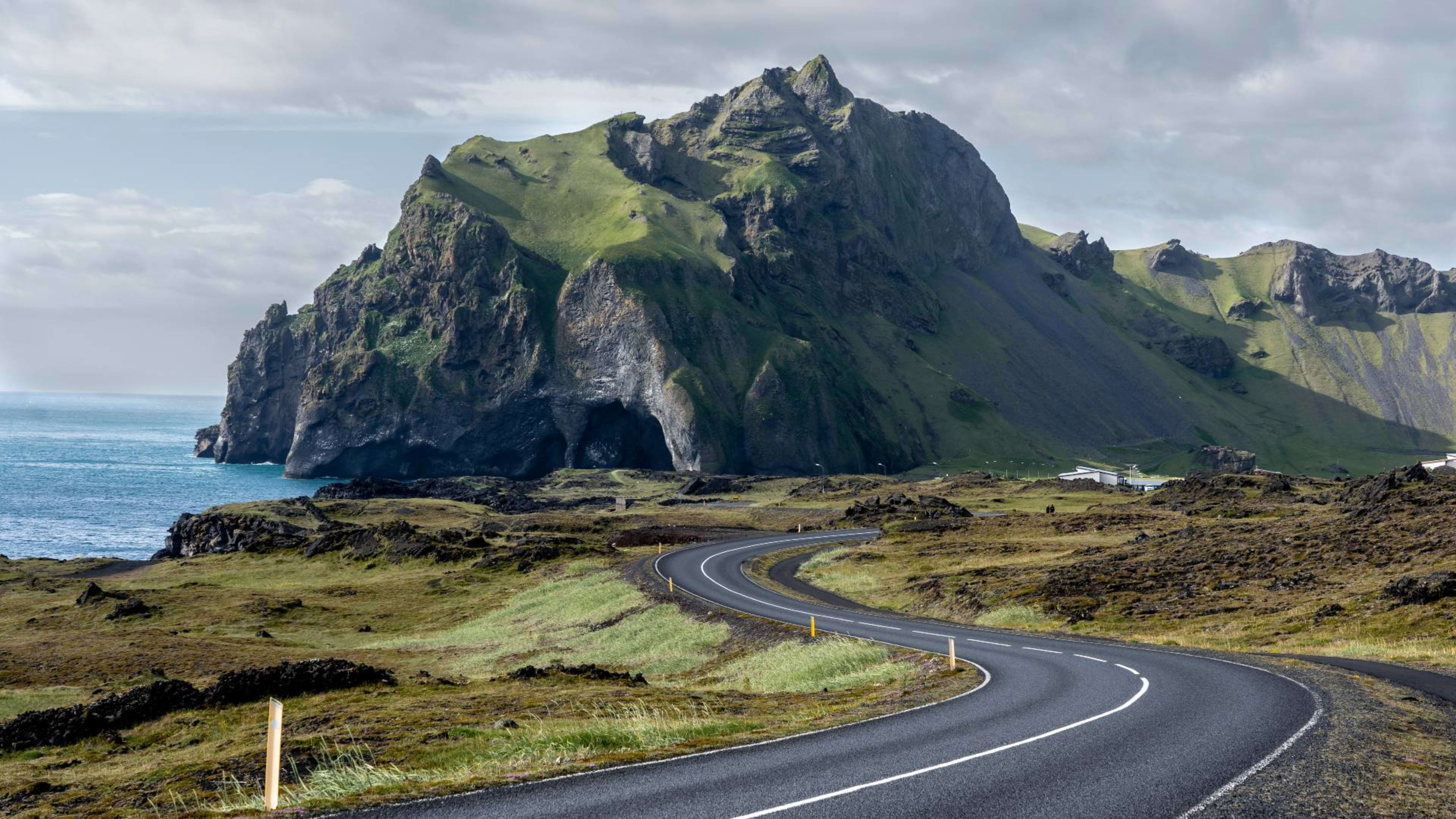
The Westman Islands off the south coast of Iceland are home to the world’s largest puffin colony. They’re hard to miss as you sail into the harbor on the ferry from the mainland.
What do puffins look like?

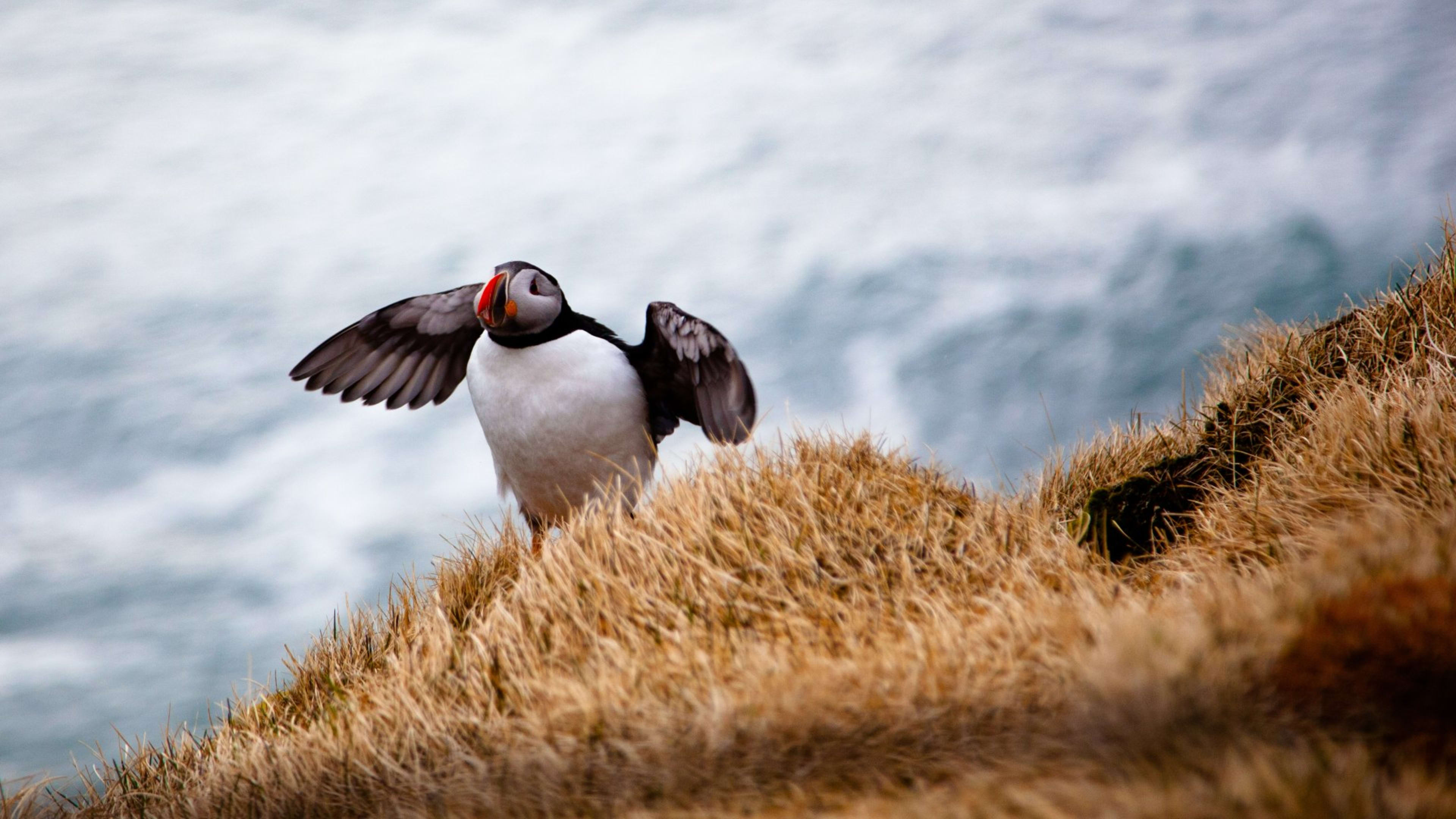
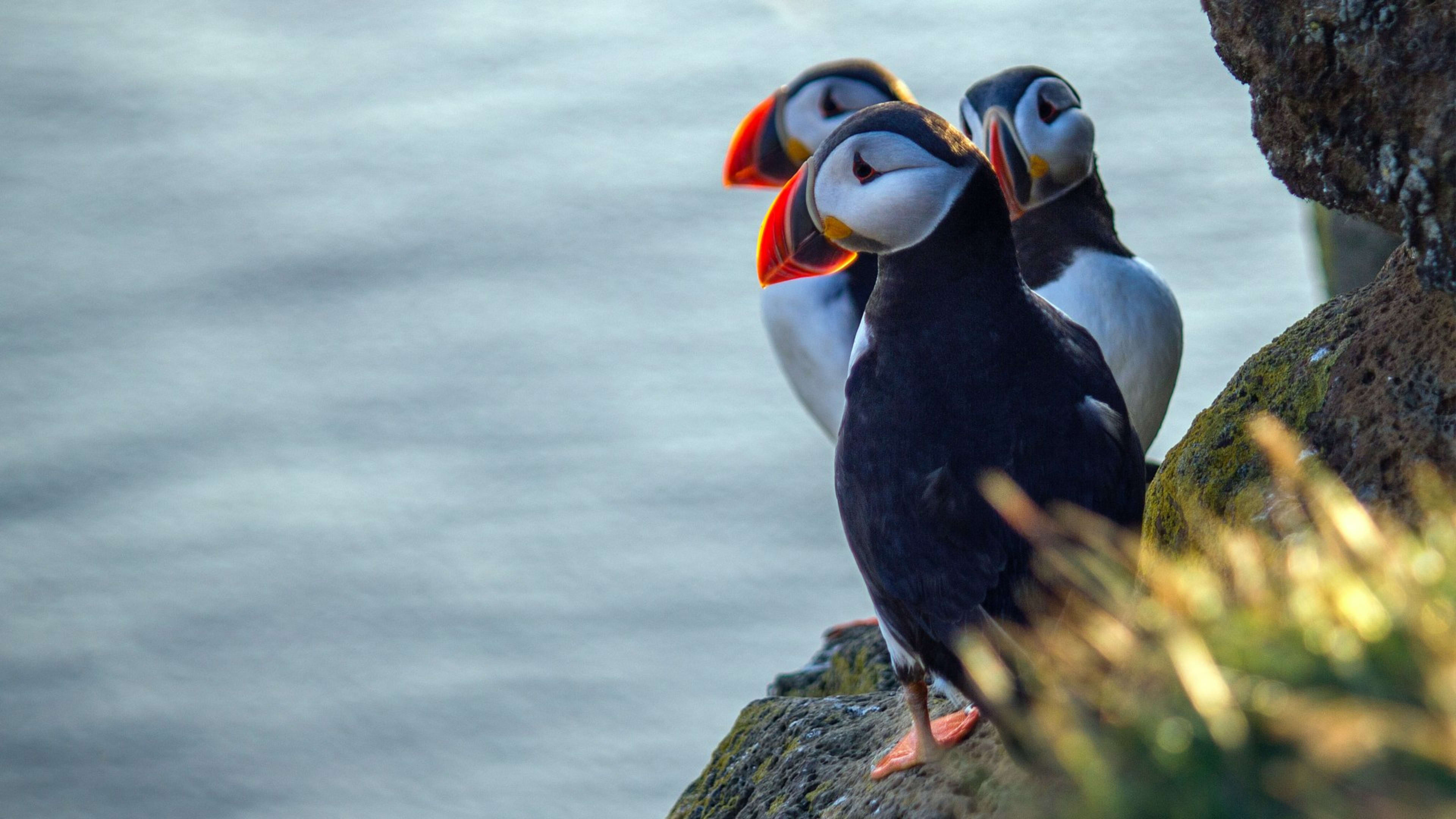
Puffins are straightforward to identify. The Atlantic puffin has a white belly, black back, and a beak coloured orange-red, yellow, and black. The Atlantic puffin has a white belly and black back. The back of its head is also black, but its face is white and they have a bright beak colored orange-red, yellow, and black.
On land, they stand upright on their sunny orange feet. But you’ll also spot them swimming on the surface of the sea, where their posture is more like a duck’s.
Puffins spend a lot of their time at sea hunting for small fish, which is their main source of food. You have the best chance of spotting them in the morning or evening, when they’re likely to be in their nests.
Are puffins an endangered species?
Unfortunately, yes. The species as a whole is considered vulnerable, but the puffin populations in Iceland are critically endangered. This is despite the actual number of puffins around the country being so high.
All that said, they’re plentiful enough to be easy to spot. But make sure you take care not to disturb the birds or their nests. Remember you are in their habitat and that Iceland’s environment can be quite fragile.
- Get more tips on how to travel sustainably and responsibly in Iceland.
Where to see puffins in Iceland
Because puffins are seabirds, they tend to nest in sea cliffs and rocky outcrops along the coast. They mostly feed on small fish that live near the surface of the water, so you’ll see them swimming as well as flying.
Iceland has thousands of kilometers of coastline, but some places are better for puffin spotting than others. The following locations cover the most reliable spots around the country.
1. Látrabjarg cliffs
The remote Látrabjarg cliffs in the Westfjords are perhaps the most famous place to spot puffins in the whole country. This 14-kilometer (8.5-mile) stretch of cliffs forms the westernmost point in Iceland and reaches a height of up to 440 meters (1,450 feet) in places.
Guillemots, razorbills, and gannets also nest here alongside puffins.
Of course, the reason you’re really here is to see puffins. To maximize your chances of seeing them, you’ll want to visit from May to August. In the early summer, puffins lay their eggs in Iceland and are at their most active. That said, they can be seen throughout the whole summer.
To get to Látrabjarg, you’ll need to drive. The cliff can be found at the end of the 612 gravel road, which connects up to the main 62 road that circles around the western part of the Westfjords.
- Related: Your ultimate guide to the Westfjords.
Their remoteness and isolation are part of what makes the cliffs such a great nesting spot for seabirds though. The remoteness is part of what makes the cliffs a productive nesting site.
2. Westman Islands

As we mentioned before, the Westman Islands (or Vestmannaeyjar in Icelandic) are home to the world’s largest puffin colony.
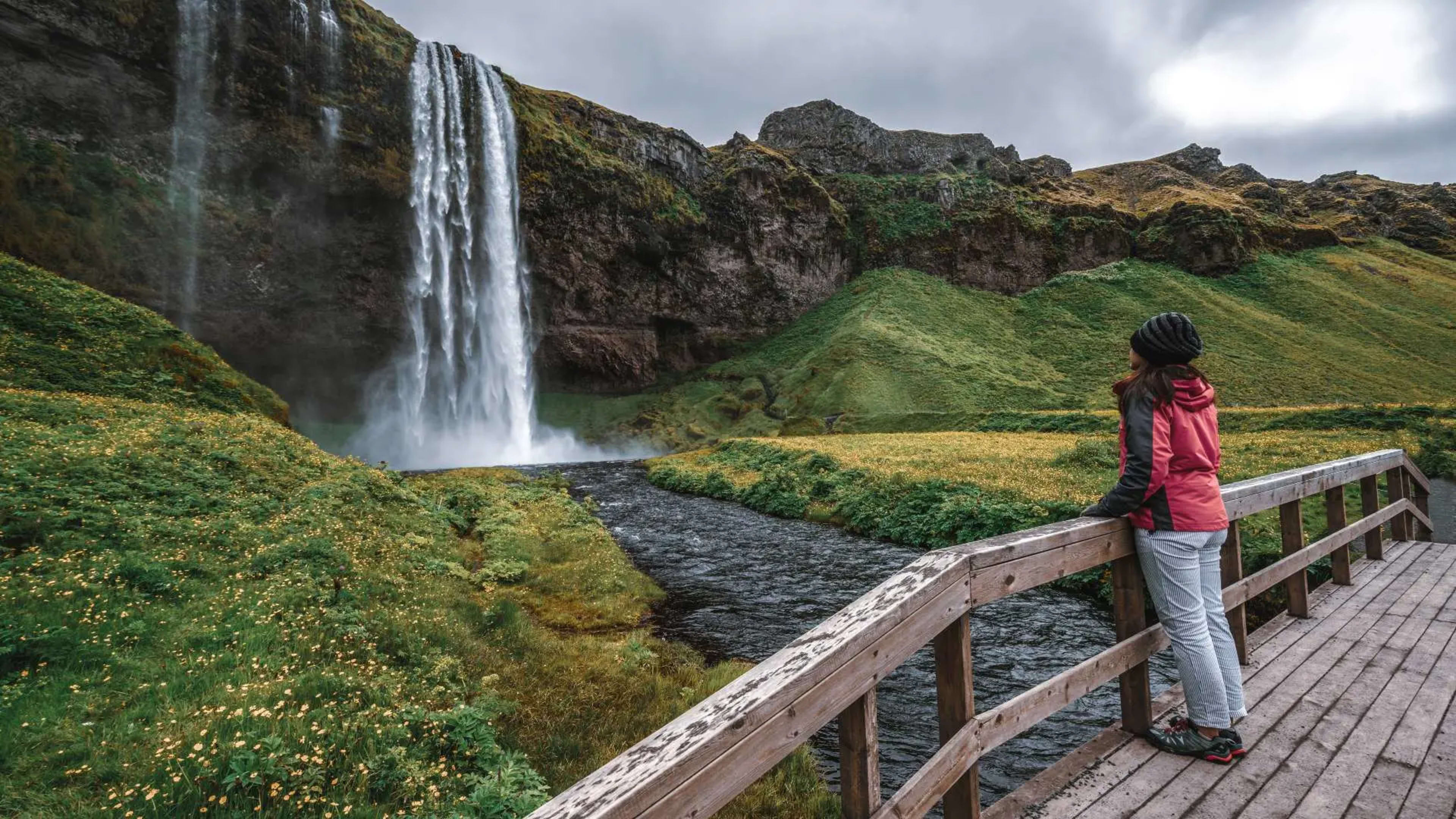
This chain of islands is easy to access from the mainland. Drive south along Route 1 to the Landeyjahöfn ferry terminal, a stone’s throw from the famous Seljalandsfoss waterfall.
- Find out more about Iceland’s waterfalls.
As you sail across to Heimaey, the main island and only inhabited one, you pass a handful of smaller cliff-lined islands where puffins are commonly seen from the ferry.
Once you arrive, you can explore the island’s coastline on foot. There you’ll find more cliffs full of seabirds, including the Atlantic puffin!
Another option is to join a boat tour out of Heimaey harbor. This way you can see the puffins from another angle and maybe even get a bit closer to them than you would otherwise.
The Westman Islands themselves make a great day trip. You can explore the town on Heimaey and visit the Eldheimar museum, which tells the story of the eruption that swallowed half the island in 1973.
3. Breiðafjörður bay
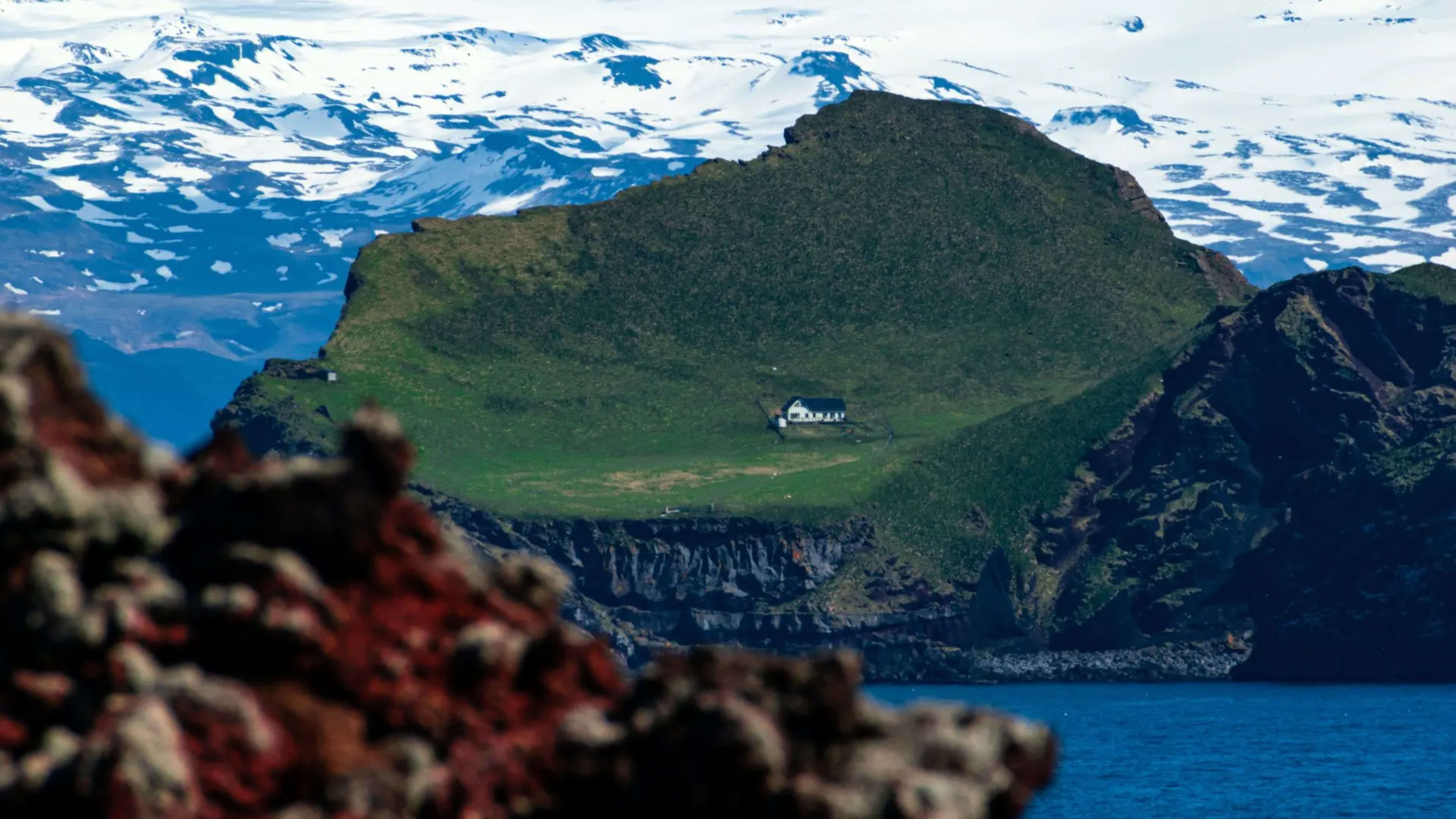
Breiðafjörður is a massive, island-studded bay that separates the Snæfellsnes peninsula from the Westfjords region. The thousands of tiny skerries and rocky outcrops in the area are home to millions of seabirds.
Boat tours of the waters around these islands sail from the harbor at Stykkishólmur, the largest town on the Snæfellsnes peninsula. Join one of these excursions and you may also see seals and dolphins.
The island of Elliðaey is one of the main nesting grounds for puffins in the bay, and most boat rides stop here. This island, whose basalt-column cliffs rise dramatically out of the sea, was abandoned in the 1950s. Nowadays, the seabirds call it home.
If you’re planning to travel to Iceland in the summertime, Breiðafjörður bay is a great addition to your itinerary. The island of Flatey is open at this time of year and is a popular escape for Icelanders and visitors alike. You can get there on the Baldur ferry, which also sails from Stykkishólmur.
4. Tjörnes peninsula

Located in North Iceland, the Tjörnes peninsula is famous for its bird watching spots (as well as its fossils). It’s easily accessible, being just over a 1-hour drive from Akureyri and only 15 minutes from the vibrant village of Húsavík.
Drive to the Tjörnes lighthouse and follow one of the several walking trails in the area. They will lead you along the top of cliffs that tower over black sand beaches, the perfect habitat for puffins.
On the east side of the peninsula, it’s worth stopping at the Hringsbjarg cliff, where an observation deck has been set up. Perfect for hanging out over the sea and trying to spy a red-billed friend.
Tjörnes is also part of the Diamond Circle touring route, which shows you the best of North Iceland. It includes the area around Lake Mývatn, with its lava caves and unusual geological features like hot springs and mud pools.
- Explore North Iceland on a guided group tour.
So the puffins are just the start of it, there’s plenty more to see in this corner of Iceland!
5. Dyrhólaey
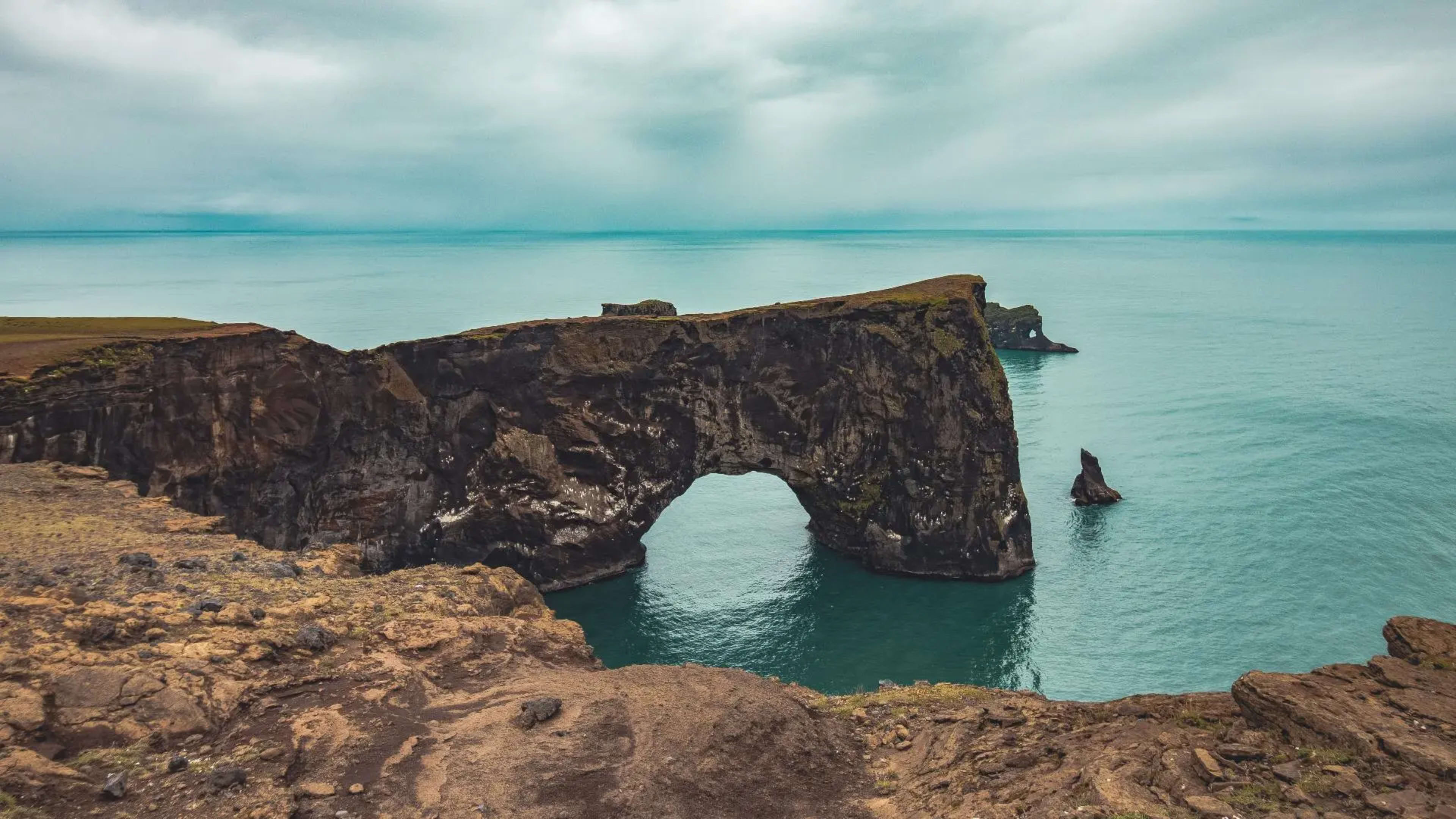
Dyrhólaey is a rocky arch on the south coast of Iceland, next to the famous Reynisfjara black sand beach. The arch is part of a set of cliffs that form a small cove, providing shelter and habitat for plenty of sea birds, including puffins. Note that Dyrhólaey closes annually for the nesting season from 15 May to 23 June. Outside of this closure, the cliff and lighthouse are accessible and puffins can be seen from the viewing areas above.
This tends to be one of the more popular puffin-spotting locations. With that in mind, it’s a good idea to arrive in the early morning or late evening if you want to beat the crowds. The great thing is that puffin season coincides with the longer days of summer, so there will be plenty of daylight.
At the top of the cliff is a lighthouse, worth a visit in itself, which looks out across the North Atlantic Ocean. Dyrhólaey marks the southernmost point in mainland Iceland.
- Explore more of the area with our guide to Reynisfjara black sand beach.
6. Ingólfshöfði
Ingólfshöfði is a tidal headland in southeast Iceland with a lighthouse and one of the more productive puffin colonies on the south coast. It’s a fantastic place to catch sight of a whole bunch of different seabirds, and is a favorite among wildlife photographers.
Because of its location, accessing Ingólfshöfði by yourself isn’t practical or safe. To get there, you need to join a guided expedition from the mainland by tractor. The trip takes a few hours and is suited to more experienced walkers.
Ingólfshöfði falls within the Vatnajökull National Park, a nature reserve covering much of southeast Iceland. In this part of the country, you’ll also find Jökulsárlón glacial lagoon, Fellsfjara (aka Diamond Beach), and the Svartifoss waterfall.
The area also falls within Vatnajökull National Park, so it combines naturally with Jökulsárlón glacier lagoon and Diamond Beach on a longer south coast itinerary.
7. Lundey

Did you know there’s an island right next to Reykjavík literally called ‘Puffin Island’? That’s Lundey! If you’re short on time, you can join a boat tour from the harbor in Reykjavík around the Faxaflói bay, where the island is located.
On the boat ride, you’ll pass Lundey and see where puffins nest. The chances of seeing an actual puffin here are fairly low though. That said, you’ll probably see other Icelandic birds like the Arctic tern, a bright-white bird known for its black head, bold red beak, and distinctive shriek.
Iceland actually has more than one puffin island. There’s also an island called Lundey off the coast of Húsavík in the north of the country. There you can join boat tours where you can spot puffins, harbor porpoises, and even whales!
Now you know the best places to see puffins in Iceland, you’re probably thinking about the best way to get there and when to go.
Visit between late April and August for the best chance of sightings. Many of the most productive puffin locations are remote, so a self-drive itinerary gives you the flexibility to reach them on your own schedule.