Born from Fire in 2010
Magni and Móði stand as two of Iceland's youngest volcanic craters, formed during the dramatic eruption sequence of Eyjafjallajökull volcano in March and April 2010. These twin craters emerged on the Fimmvörðuháls pass between the glaciers of Eyjafjallajökull and Mýrdalsjökull, creating new landmarks that have since become iconic stops on one of Iceland's most famous hiking trails. Their formation was witnessed by thousands of visitors who safely observed what Icelanders affectionately call "the tourist eruption," a spectacular display of nature's raw power.
The eruption began just before midnight on March 20, 2010, when a 500-meter-long fissure opened on the northern part of the pass. Lava fountains roared into the night sky, their fiery orange and red glow casting surreal light across the surrounding mountains and glaciers. Just over a week later, a second 300-meter fissure split the land, and the two craters began taking shape as lava accumulated around the vents. The eruption continued until April 12, streaming lava downhill and creating the new Goðahraun lava field before a brief pause preceded the main Eyjafjallajökull eruption on April 14.
Named After Thor's Sons
The craters received their official names on June 15, 2010, when Iceland's Minister of Education and Culture formally approved calling them Magni and Móði after the sons of Thor in Norse mythology. The names, meaning "strong" and "brave," perfectly suit both the craters themselves and their location near Þórsmörk, the Valley of Thor. In Norse mythology, Magni and Móði are among the few gods destined to survive Ragnarök, the end of the world, inheriting their father's hammer Mjölnir and ushering in a new age. This mythological connection to survival and renewal resonates with the craters' role in transforming the landscape and creating new ground from volcanic fire.
The naming continues Iceland's tradition of drawing from Old Norse mythology and sagas when designating natural features. The connection to Thor feels particularly appropriate given the thunderous noise and displays of raw power that accompanied the craters' formation. Witnesses described the eruption as creating sounds like continuous thunder, with explosive bursts sending lava bombs arcing through the air and lava flows cascading down slopes with tremendous force.
Still Warm After Years
One of the most remarkable aspects of Magni and Móði is that they continue to emanate heat more than a decade after their formation. The cooling process for lava of this thickness takes many years, and the rocks around the crater rims remain noticeably warm to the touch even in cool weather. Snow cannot settle on these rocks, melting almost immediately upon contact with the still-warm volcanic material. On cold days, the craters often appear to be steaming, with wisps of vapor rising from their surfaces as moisture evaporates from the heat below.
For several years after the eruption, the craters glowed red in darkness, their internal heat visible as an eerie luminescence that could be seen from considerable distances. This glowing gradually faded as the surface layers cooled, but the thermal signature of the eruption remains embedded in the bedrock. Hikers climbing to the crater rims can feel this warmth radiating from the rock, creating a tangible connection to the volcanic forces that shaped these features and continue to influence the landscape.
The red and black flanks of the craters display the typical coloration of fresh volcanic cones. The dark scoria and spatter that built up around the vents create jagged, irregular surfaces where sharp edges and precarious slopes demand careful footing. The lack of weathering means the craters still appear raw and new, their features crisp and well-defined rather than softened by erosion as older volcanic features have been.
Walking on Brand New Ground
Hiking to Magni and Móði offers the extraordinary experience of walking on land that did not exist prior to 2010. The Goðahraun lava field, named "lava field of the gods," spreads across terrain that was previously snow and ice, with the fresh volcanic rock creating an otherworldly landscape of black, twisted formations. The lava cooled in various forms, from smooth pahoehoe surfaces to rough, chunky aa lava, creating diverse textures that demonstrate the different cooling rates and flow characteristics that occurred during the eruption.
The trail passes directly through this new lava, allowing hikers to observe volcanic features at close range. Small lava flows, spatter cones, and volcanic bombs lie scattered across the landscape, each telling part of the story of the eruption. The absence of vegetation on most of the lava highlights its youth, though hardy pioneers like moss and lichens have begun colonizing sheltered spots, beginning the slow process of transforming bare rock into soil that can support plant life.
Climbing to the rim of either crater provides spectacular views into their jagged interiors and across the surrounding volcanic terrain. From these vantage points, hikers can see both Eyjafjallajökull and Mýrdalsjökull glaciers, their white ice contrasting dramatically with the black lava. On clear days, the perspective extends across the highlands to the south and toward the distant coast to the north, encompassing a vast sweep of Iceland's diverse landscape.
A Prelude to Greater Eruption
While Magni and Móði captured attention and drew visitors to witness their formation, the Fimmvörðuháls eruption was merely the opening act of a much larger volcanic event. On April 14, 2010, just two days after the Fimmvörðuháls eruption ceased, Eyjafjallajökull began erupting under its ice cap with far greater force. This summit eruption created the massive ash cloud that grounded flights across Europe for weeks and brought worldwide attention to Iceland's volcanic power.
The relationship between the two eruptive phases demonstrates how volcanic systems can produce varied types of activity in quick succession. The Fimmvörðuháls eruption was effusive, producing lava flows with relatively little ash. The summit eruption was explosive, fragmenting magma into fine ash particles as meltwater from the glacier mixed with the rising magma. Both phases were part of the same volcanic event, driven by magma rising through the Eyjafjallajökull system.
Visitors to Magni and Móði can appreciate that they are standing at ground zero for one of the most consequential volcanic eruptions of the 21st century, an event that affected millions of people across Europe and changed how the world thinks about volcanic hazards to aviation.
Accessible Volcanic Wonders
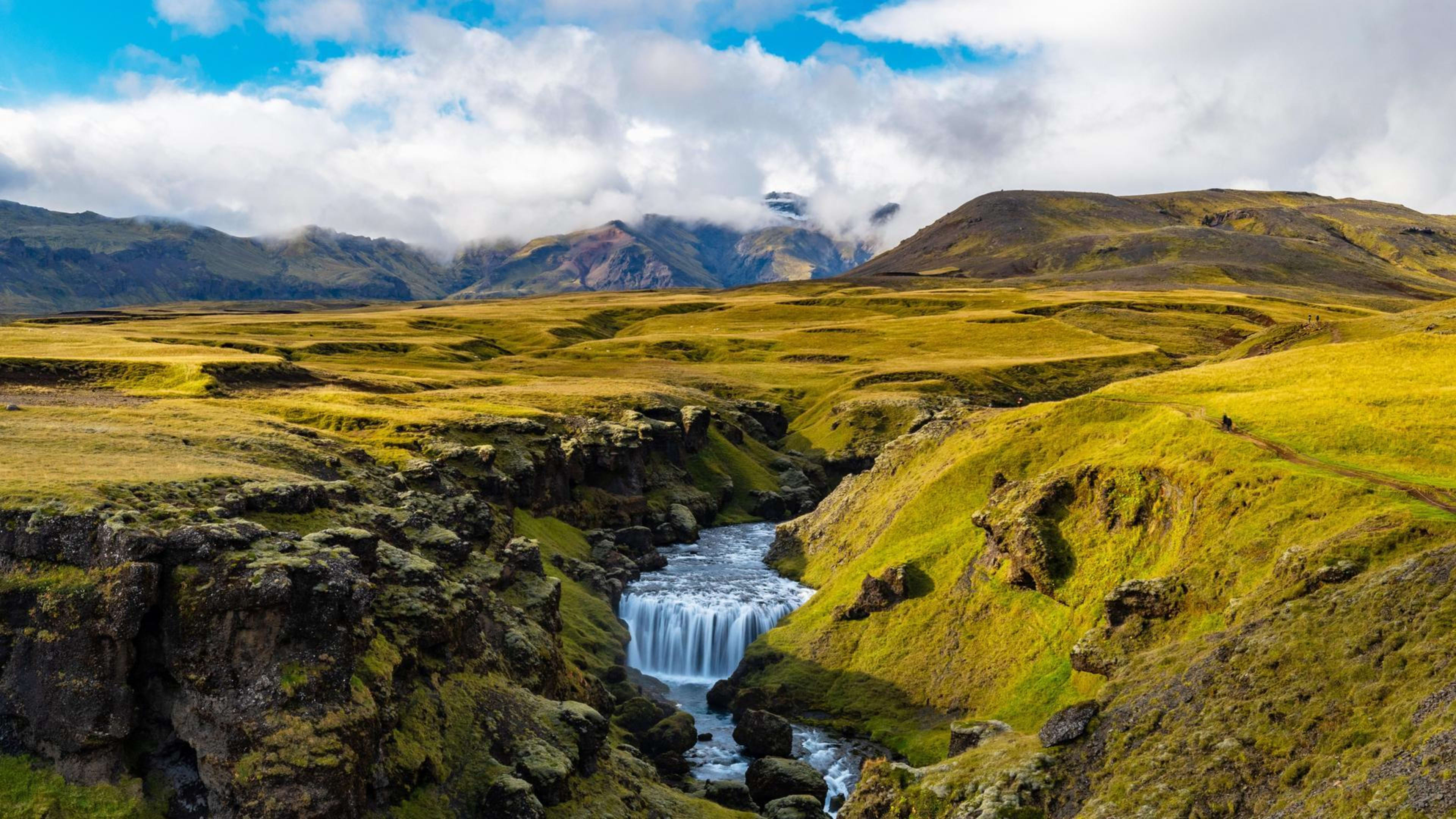
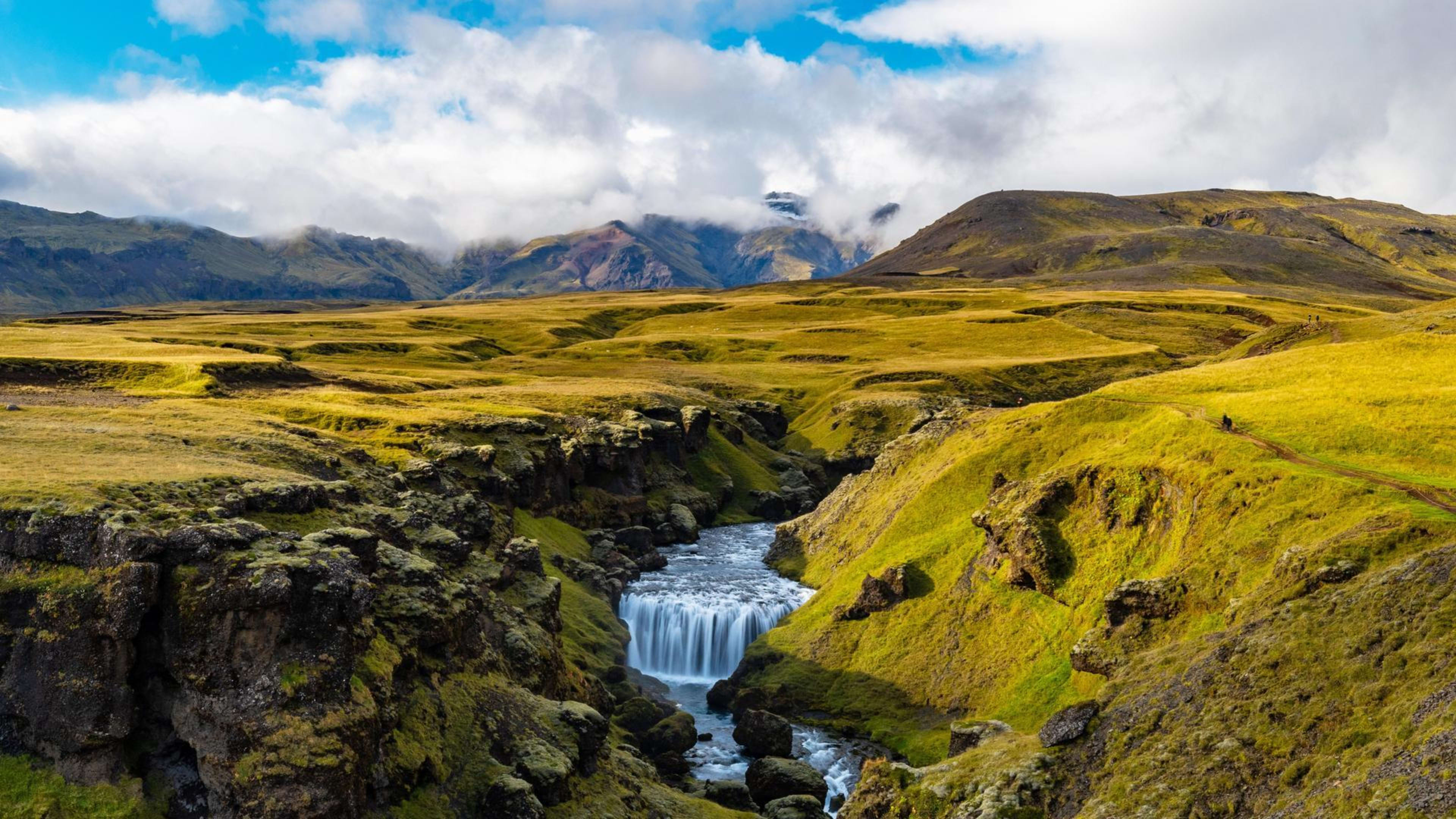
The craters sit directly on the Fimmvörðuháls hiking trail, making them accessible to anyone fit enough to hike the challenging route from either Skógar or Þórsmörk. Most hikers approach from Skógar, climbing past the series of waterfalls before reaching the higher elevations where the craters sit. The approximately 3-kilometer section from Baldvinsskáli hut to the craters crosses the Goðahraun lava field, providing increasingly dramatic views as the craters come into sight.
A short detour from the main trail allows hikers to climb to the crater rims and peer into their interiors. The ascent over loose volcanic rock requires care and sure footing, but the effort rewards visitors with intimate views of volcanic features still in the early stages of their geological existence. The experience of standing on the rim of a crater that was born within living memory, feeling the heat still radiating from the rock, creates a profound connection to the dynamic processes that continue to shape Iceland.
The craters are accessible only during summer when the Fimmvörðuháls trail is open, typically from mid-June through late August. Even during this period, snow can cover parts of the pass, and weather conditions at this elevation can be severe. Hikers should be properly equipped and prepared for challenging conditions, but those who make the effort find Magni and Móði to be among the most memorable volcanic features they encounter in Iceland.