Your Complete Guide to Hellissandur
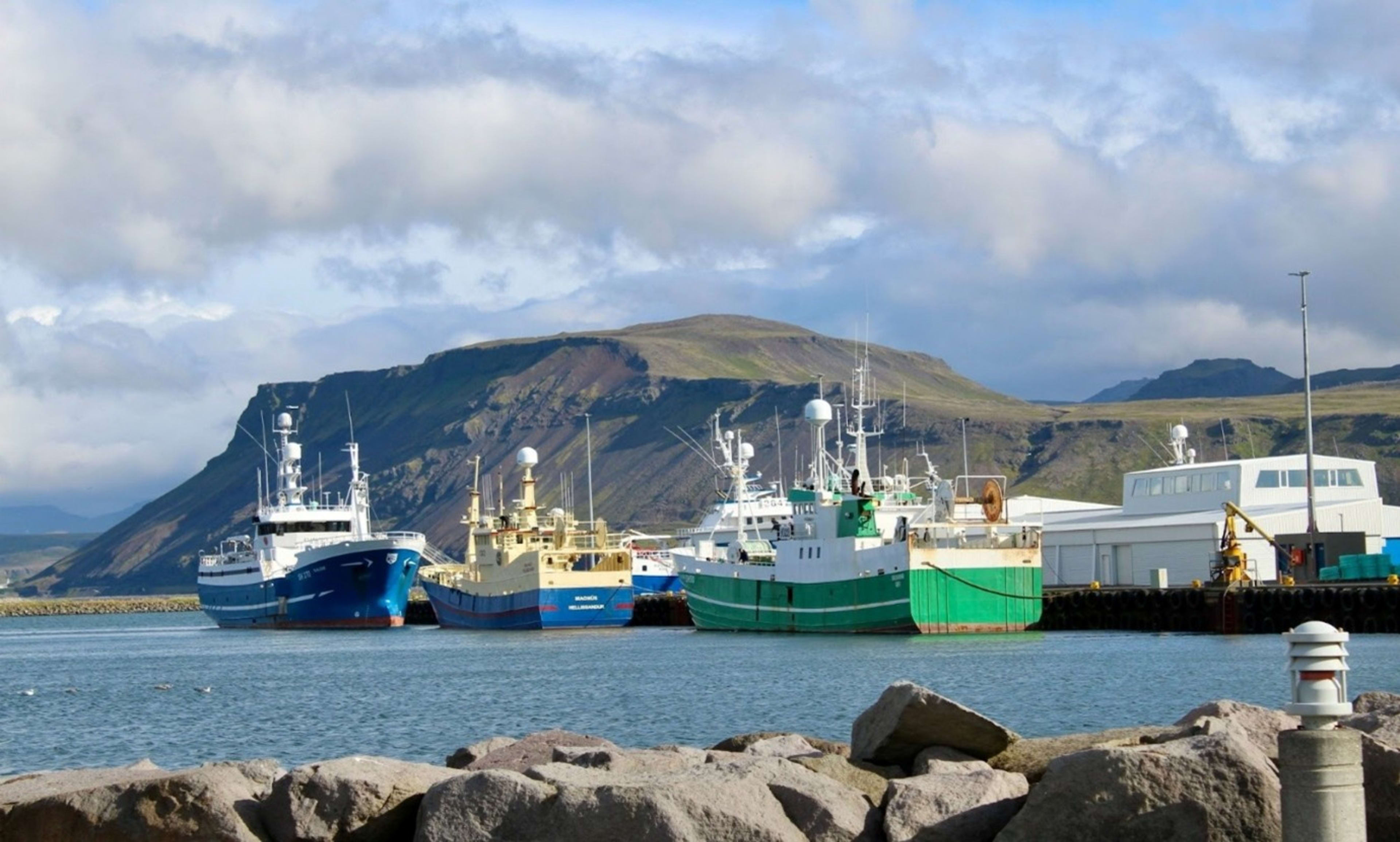
The northwestern tip of the Snæfellsnes peninsula is home to Hellissandur, considered one of Iceland's "original" fishing villages, where fishermen once gathered in great numbers to harvest the Arctic Ocean's bounty.
With flat sandy beaches making it easy to enter Breiðafjörður (Broad Fjord), one of Iceland's richest fishing grounds, sailors have been drawn to this little Snæfellsnes settlement for centuries.
Its rich seafaring heritage is celebrated at its fascinating maritime museum, with artifacts and memorabilia spanning Hellissandur's history, dating back to the 16th century.
Hellissandur also stands at the northern entrance to the Snæfellsjökull National Park, which surrounds the glacier on its western and southern sides, where a 700,000-year-old stratovolcano dominates the skyline.
In recent years, Hellissandur has also become a vibrant cultural center for visual artists and musicians from around the country.
A walk around the village will reveal an impressive display of dozens of murals brightening warehouses and walls wherever you look, making Hellissandur the "street art capital of Iceland"!
Where is Hellissandur?
Hellissandur is around 230 kilometers from Reykjavík. In good conditions, you should reach Hellissandur in about 3 hours, an easy drive on fully paved roads.
Directions:
- Take Route 1 (north) for 75 kilometers to Borgarnes.
- Turn west onto Route 54 and carry on for 100 kilometers.
- Head south onto Route 574, and stay on the coastal road for 55 kilometers.
There is an alternative route: stay on Route 54 as it heads inland, uphill, and alongside Snæfellsjökull, then return to the coastal road (Route 574) about 15 kilometers east of Hellissandur.
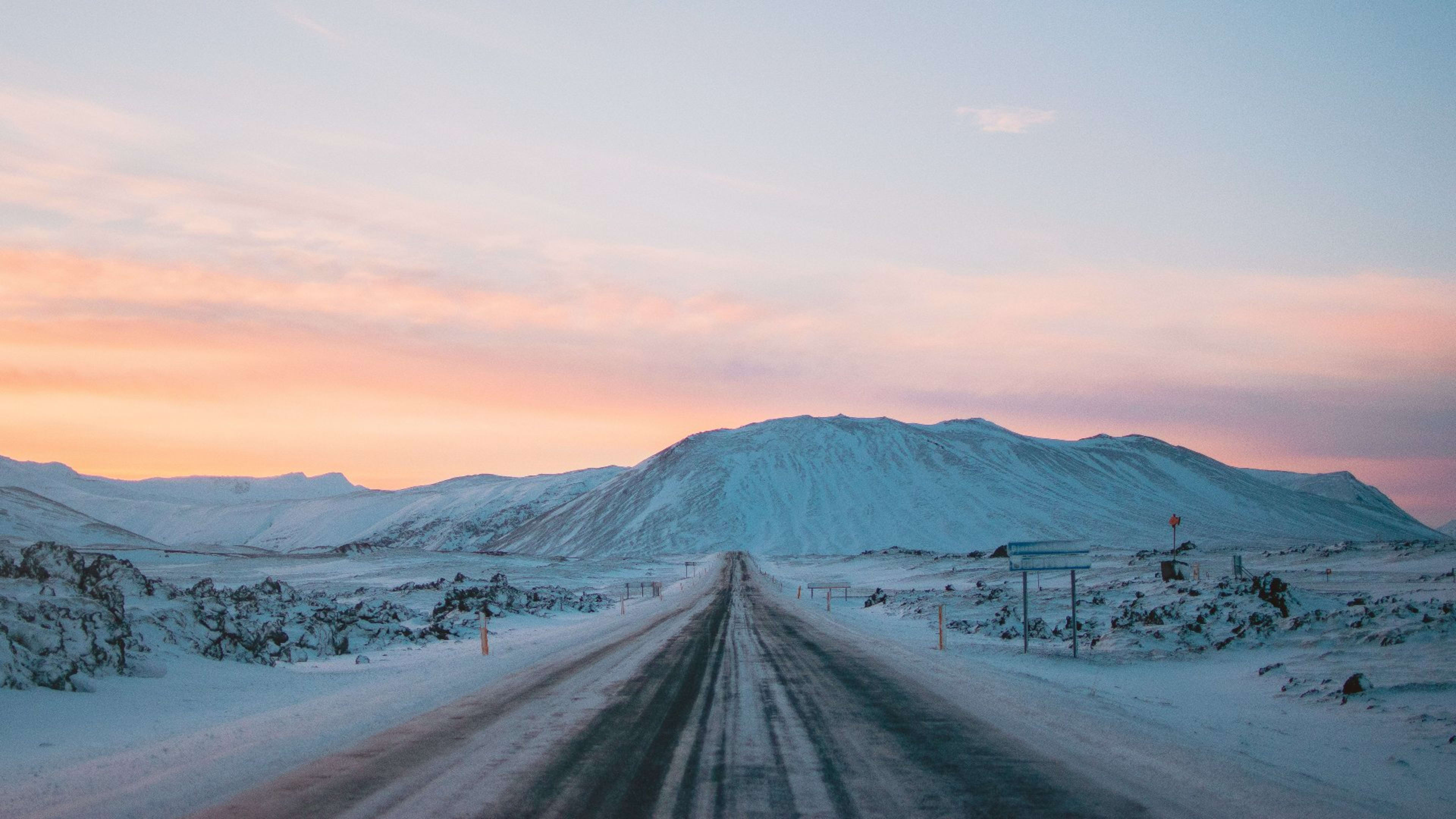
Although this route is 25 kilometers shorter than the coastal route, it can be challenging. It should only be considered when road and weather conditions are absolutely ideal.
Exploring Iceland's "Street Art Capital"
The brainchild of local entrepreneur Kári Viðarsson, the 2019 Street Art Festival put Hellissandur on Iceland's cultural map for the first time.
Fading fish processing factories and other disused buildings provided a blank canvas for a select group of Icelandic and international artists to express themselves on a grand scale.
Hellissandur's "makeover" quickly caught the attention of the artistic community, and more murals have since been added, making it an astonishing open-air gallery.
The transformation has been warmly embraced by Hellissandur's population, with locals providing much of the paint and materials, and hosting the international artists in their homes.
Frequent exhibitions encourage artists from around the world to contribute new works, and there are now more than 30 to be found!
Kári also runs The Freezer Hostel, an innovative mix of comfortable apartments and an energetic artistic hub, the only cultural center on the Snæfellsnes peninsula.
You can enjoy live music gigs by top-notch Icelandic acts and intriguing theater productions, inspired by stories and sagas from West Iceland, and performed in both English and Icelandic.
The street art murals cover a wide range of subjects, including local history, folklore, and culture.
Áxlar-Björn, Iceland's only recorded serial killer, takes center stage, alongside scenes from Jules Verne's Journey to the Center of the Earth and many more unique designs.
Discover Hellissandur's rich maritime heritage
Looking back at Hellissandur's seafaring origins, Sjóminjasafn (The Fishermen's Garden and Maritime Museum) features the eight-oared Bliki amongst its exhibits.
Dating back to 1826 and thought to be the oldest rowing boat in the country, Bliki was still being used by local fishermen in the 1960s.
Hellissandur's flat sandy beaches made it an ideal location for wooden-hulled rowing boats like Bliki to set out to sea on fishing trips, when Icelandic fishermen would risk their lives in search of cod and halibut.
The Maritime Museum has an extensive collection of rowboats, handmade nets, tools, whalebones, and other authentic artifacts that tell their story.
These include Steintök, the "Lifting Stones" that were used to test the strength of anyone who wanted to work at sea, which range from 23 kilograms to more than 150!
Even though Iceland's early economy was largely dependent on fishing, very few Icelanders knew how to swim.
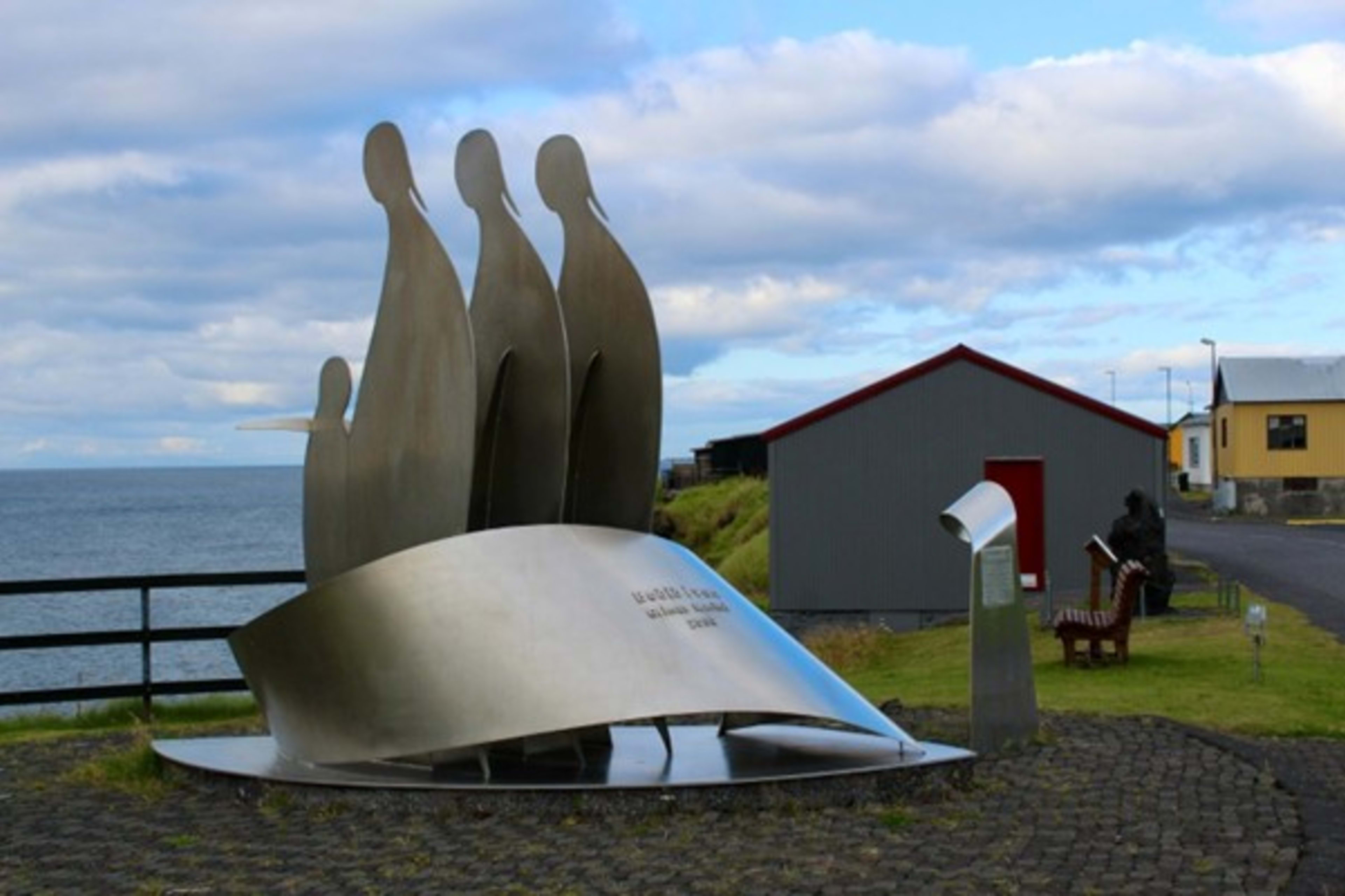
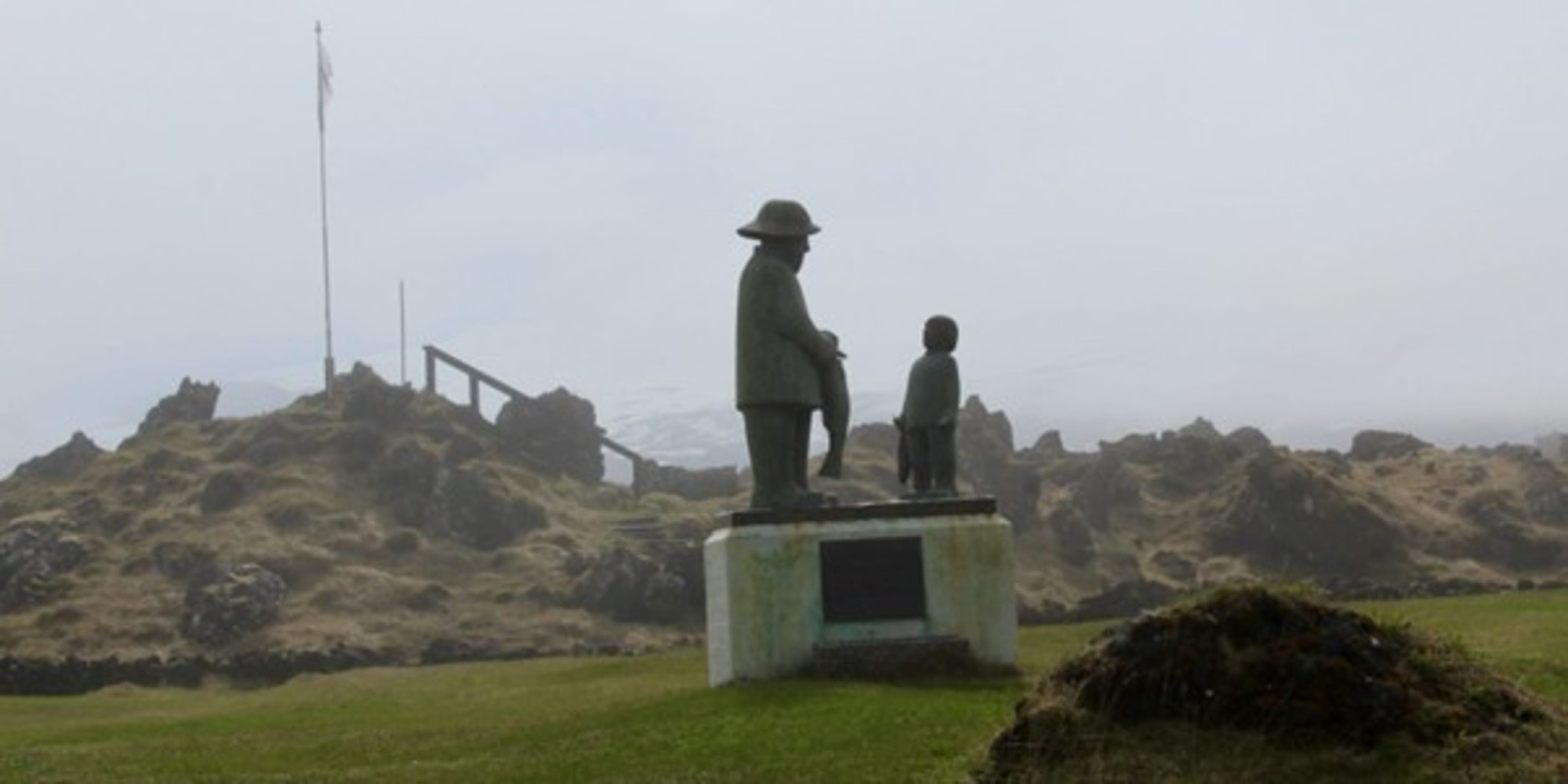
In 1909, nine sailors drowned just meters away from the landing at Hellissandur. The museum's gardens include a memorial statue to those lost at sea over the years.
To put an end to tragedies like this, swimming pools were built across the country, and now even the smallest communities in Iceland have one.
"Bathing culture" is an intrinsic part of the national character, and every Icelander is encouraged to learn to swim from childhood.
The museum also displays a row of turf-roof houses, replicas of the homes where the fishermen would have lived together in communal groups, salting their catches, and preparing their nets.
The turf-roofed buildings currently on display are replicas of Þorvaldarbúð, thought to be the last lived-in turf house of its type in Iceland.
You can walk around the Fishermen's Gardens without charge - there is an entrance fee for the indoor museum spaces.
Hellissandur later developed into a modernized fishing port, with larger trawlers and fish processing facilities for drying, salting, and freezing their catches.
There's a Snæfellsjökull National Park Center located next to the Maritime Museum, where you'll find lots more helpful tips for exploring the area.
When is the best time to visit Hellissandur?
The ideal time to visit Hellissandur is between May and September, when you'll have extended hours of daylight to explore the area.
Nearby Ólafsvík offers fantastic opportunities for whale watching, where you can spot Orcas (killer whales) and Sperm whales in the late winter and spring.
Minke, humpback, and pilot whales are also seen along this stretch of coastline in the summer and autumn months.
Arctic terns also return here every spring to nest and raise their young, with large colonies on the grassy fields between Hellissandur and Rif.
Take care not to get too close to their nests - Arctic terns are fiercely protective and will dive on you from above if you do!
If you do get too close, the terns will aim for your highest point, so holding a stick or an umbrella in the air will help protect your head from potential attack!
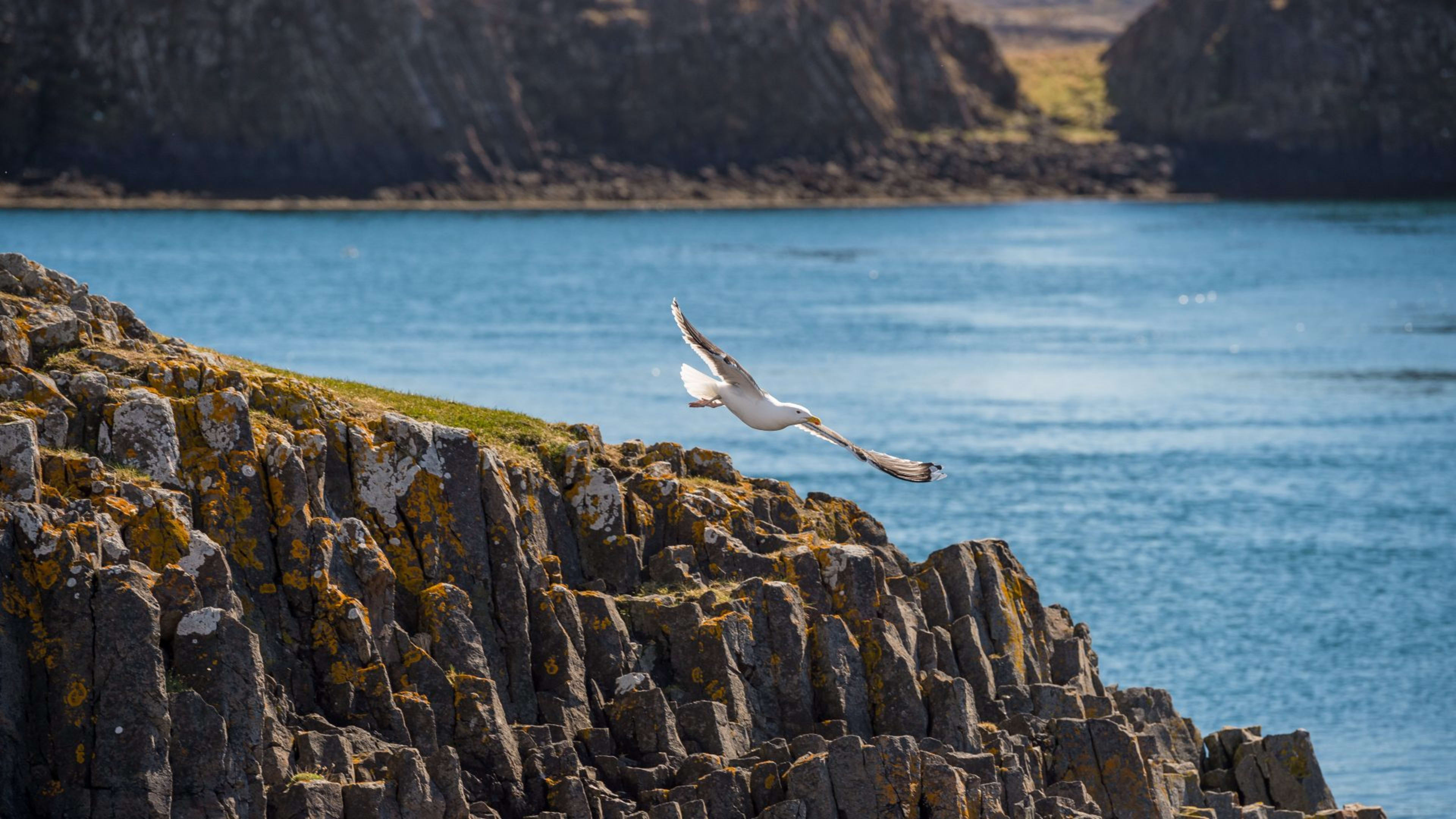
Cliff walks around Hellissandur and Rif offer more birdwatching opportunities, including puffins, fulmars, guillemots, kittiwakes, and gulls.
If the Northern Lights are on your "must-see" list, then visiting in the winter months offers fantastic photo opportunities with the glacier-topped Snæfellsjökull for a backdrop.
Top tips for your visit to Hellissandur
Take some time to wander all of Hellissandur's streets, as you'll find more examples of outdoor art and unique sculptures in some surprising places.
Snæfellsjökull is one of the highest points in Iceland, and near Hellissandur stands one of the tallest human-made structures in Europe - the 412-meter Gufuskálar radio mast.
Iceland's strategic location halfway between Europe and North America has made it a key hub for radio communications between the continents.
Previously the location for traditional fishermen's huts and drying racks, Gufuskálar was chosen as the ideal site for a high-tech transatlantic longwave radio transmitter, the tallest in the world.
It's now a training center for Iceland's search-and-rescue teams.
Where else can you go after your visit to Hellissandur?
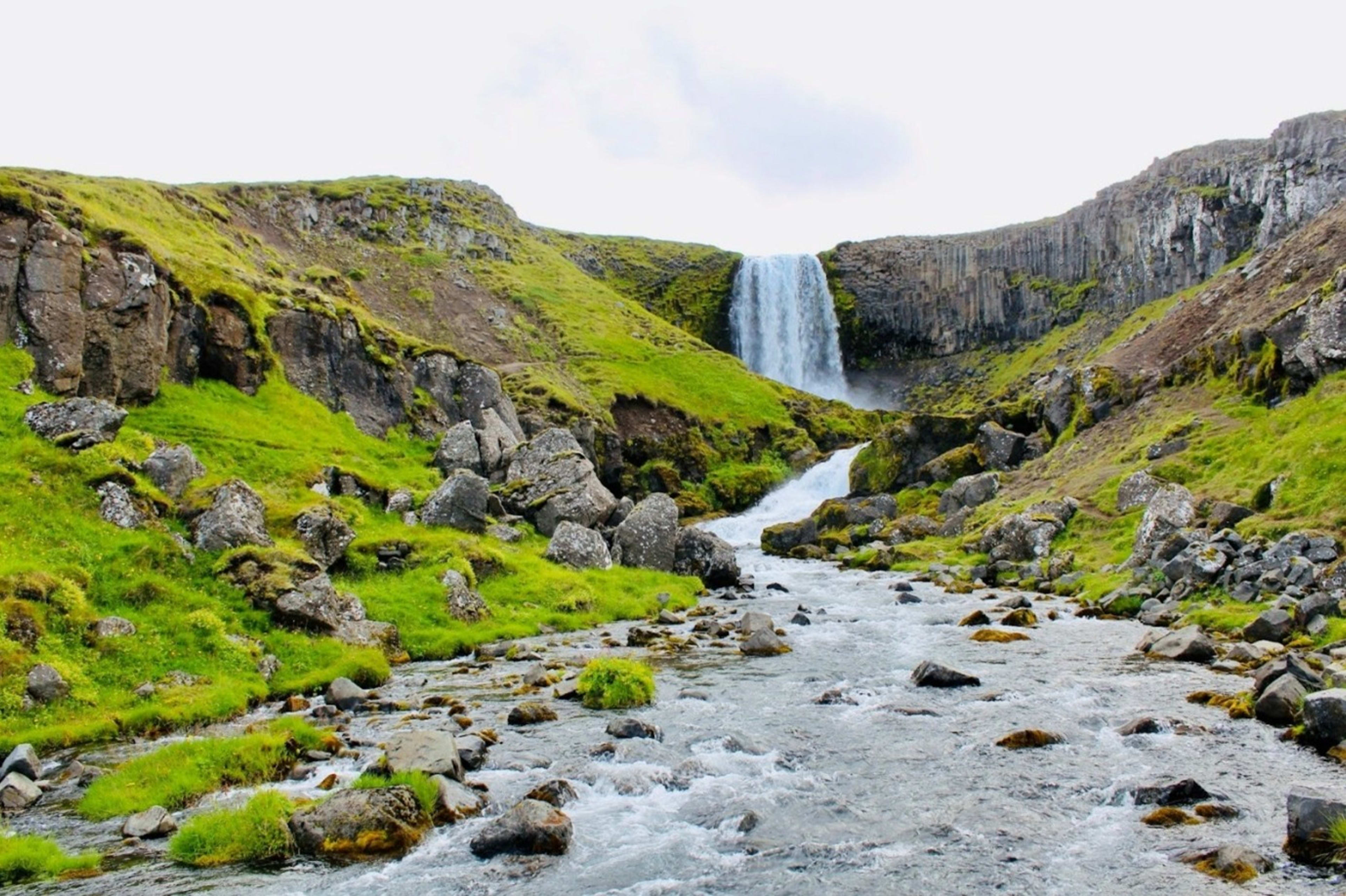
A short distance east of Hellissandur and Rif, an inland road leads to the pretty basalt column-backed waterfall at Svöðufoss.
Reaching the cascade requires a 1.8km drive on an easy gravel track and a short, flat hike from the car park.
Watch out for the Arctic Tern nests if you visit during the nesting season!
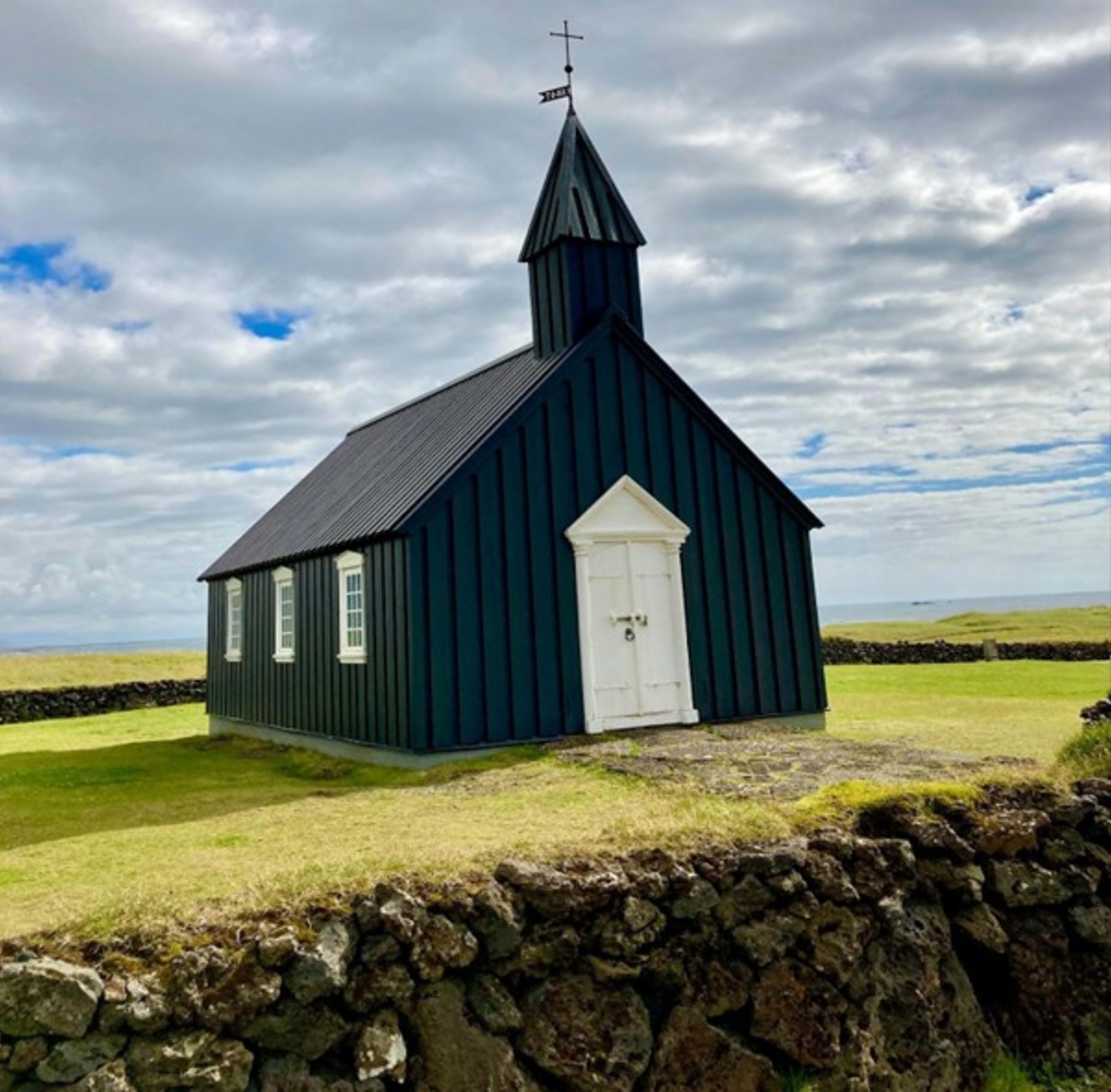
- Ingjaldshólskirkja: a fairytale church perched on a hill (2 kilometers)
- Skarðsvík: a gorgeous golden sand beach, a rarity in Iceland (7 kilometers)
- Saxhóll: an easily accessible volcanic crater (12 kilometers)
- Djúpalónssandur: a dramatic and historical black sand beach (25 kilometers)
- Lóndrangar: two towering bird-filled volcanic pinnacles (28 kilometers)
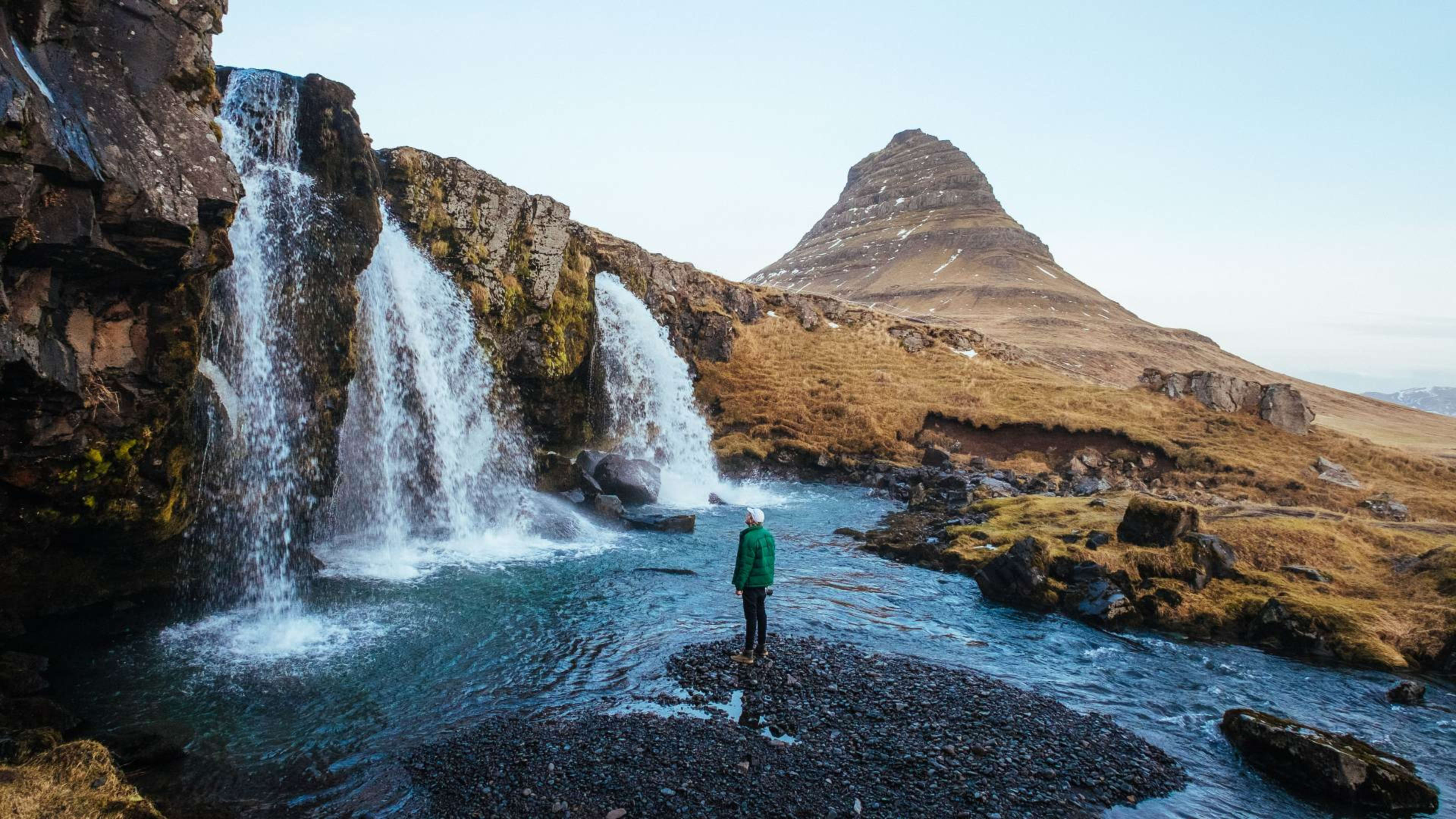
- Kirkjufell: the most photographed peak in the country (33 kilometers)
Where to rest and get refreshments at Hellissandur
- The Freezer Hostel
- The Adventure Hotel Hellissandur
- Hellissandur campsite: open from May to September
- Ólafsvík campsite: open from June to August (11 kilometers)
- Grundarfjörður campsite: open year-round (35 kilometers)
- Arnarstapi campsite: open from May to September (36 kilometers)
Gilbakki Kaffihús (seasonal opening hours)
Gilbakki is a traditional café with a generous selection of cakes, drinks, and snacks, in a cozy setting where you can gaze at the glacier through beautiful lace curtains.
Elja Kaffihús Sandahraun 5, 10:00-16:00 daily
Part of the new National Park Center, Elja is a coffee shop and bistro, serving tasty pastries, cakes, coffee, and other drinks. You'll also find helpful information and exhibits about the area's flora and fauna on display here.
Mural Klettsbúð 9, 18:30-22:00 daily
Located inside Hotel Hellissandur, Mural is a highly recommended restaurant, specializing in Icelandic cuisine with locally sourced ingredients, and is usually open year-round.
Útgerðin - Concept Store & Wine Room Klettsbúð 7, 12:00-18:00 (closed Sun)
Combining an art gallery, coffee shop, wine bar, and a design store, Útgerðin is an excellent place to relax, refresh, and browse locally crafted souvenirs.
Why you should add Hellissandur to your itinerary
Hellissandur may be tiny, but it is one of the most colorful and vibrant communities in West Iceland, and ideally placed at the halfway point on a circuit of the "Snow Mountain Peninsula".
Kirkjufell is only half an hour away from here, traveling east on the northern shores of Snæfellsnes. At the same time, Arnastapi is equally close, heading south.
Standing at the northern gateway to the Snæfellsjökull National Park, a visit here offers fabulous views of the world-famous glacier-topped volcano.
Close to Hellissandur, you'll find ancient lava fields, towering mountains, dramatic cliffs, volcanic craters, beautiful black sand beaches, mossy fields, and rich birdlife.
Decorated by dozens of brightly painted murals and filled with centuries of fascinating maritime heritage, time spent in Hellissandur will live long in the memory!