If there’s one thing that Icelanders love, it’s spending time in their glorious geothermally heated hot pots, swimming pools, and spas outdoors under crisp Arctic skies.
In Iceland, swimming pools are not merely places to take a dip; they are a way of life, a daily social ritual, and an essential part of the country’s public and spiritual health.
Every village and town across the country has a geothermal spa or swimming pool, and these places are often the community's heartbeat, where locals spend time together, just as people in other countries meet in bars or coffee shops.
And you might discover geothermal swimming pools in the middle of nowhere, too!
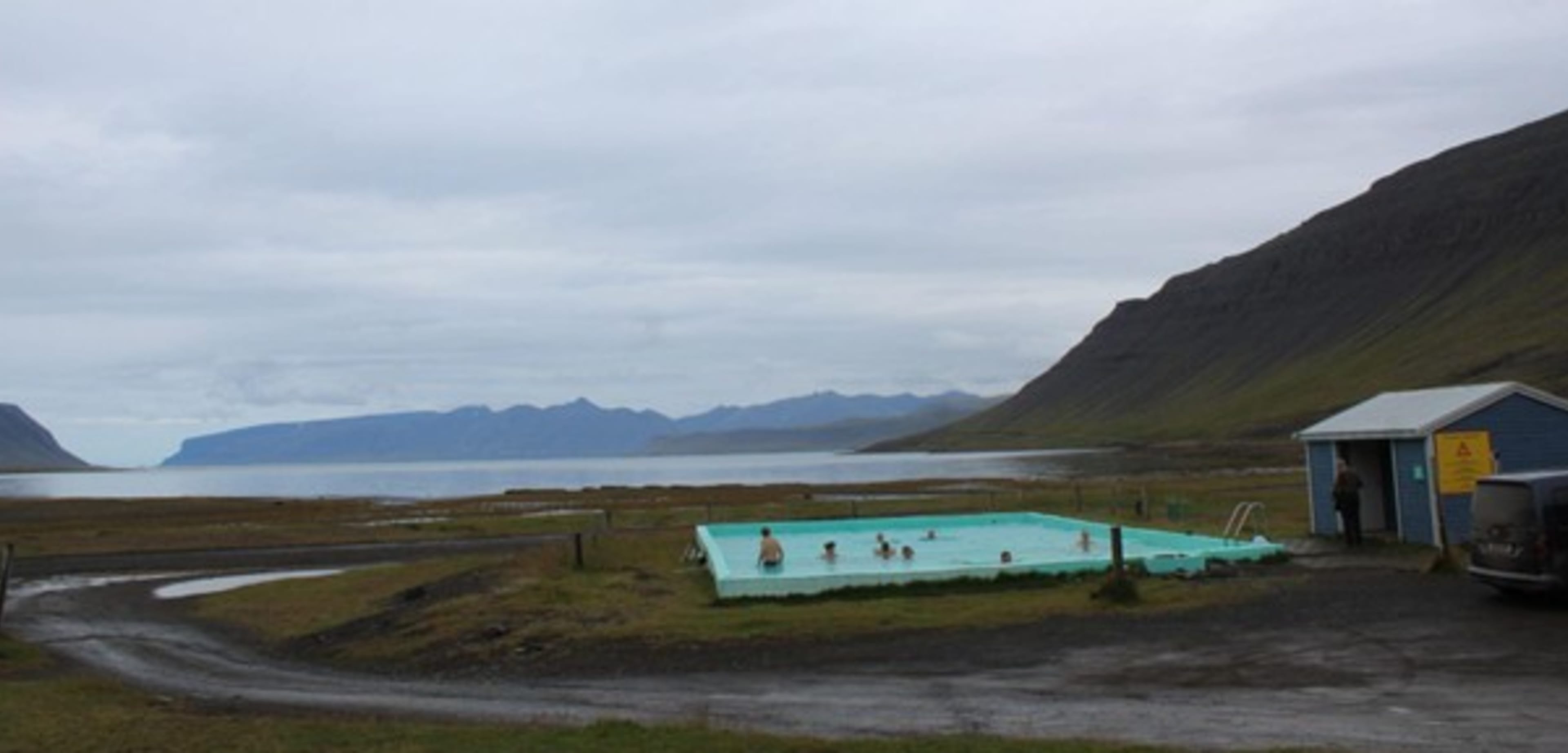
“Swimming pool culture” is so deeply ingrained in Icelandic society that it’s now been added to UNESCO’s list of Intangible Cultural Heritage.
That means heated outdoor pools are now recognized as being just as integral to Icelandic life as the French baguette, the Finnish sauna, Spanish Flamenco dancing, and Swiss yodelling are in their respective countries.
UNESCO, the United Nations' cultural arm, aims to protect and promote unique customs and traditions around the world through this register of Intangible Cultural Heritage.
This is Iceland’s first independent inclusion on the list.
In a land close to the Arctic Circle and more famous for volcanoes and glaciers, it might seem surprising that swimming culture has become such an essential part of daily life in Iceland.
The UNESCO citation recognized Icelandic swimming pools as “unique social arenas” where the community comes together to exchange news and discuss the issues of the day.
Swimming pool culture unites the generations as parents bring their children to the pool, where they learn the rituals of the hot pot and the cold plunge.
All ages exercise, relax, and socialize together, and enjoy the physical, spiritual, and social benefits of their cherished community pools.
Here’s how that tradition came to be!
Warming Waters in a Cold Climate
The first settlers to Iceland were also the first to notice that the country had an ideal solution for keeping warm in winter: bubbling geothermal springs were found throughout the country, providing life-giving hot water, steam, and vapor.
In fact, Ingólfr Arnarson, considered the first permanent Norse settler in Iceland, named the area he chose for his farmstead Reykjavík, which translates as "Smoky Bay”.
The hot springs are powered by Iceland’s constant volcanic activity, with rivers of molten rock channeling upwards from the Earth’s core along the Mid-Atlantic Ridge.
Bathing, cooking, and washing clothes in these hot-pot havens became part of Iceland’s early history and traditions, as Viking settlements sprang up around these geothermal areas.
Laugavegur, the long street that runs through Reykjavík, is “Wash Road” in Icelandic, the route that women once walked to the hot springs in Laugardalur to do the laundry.
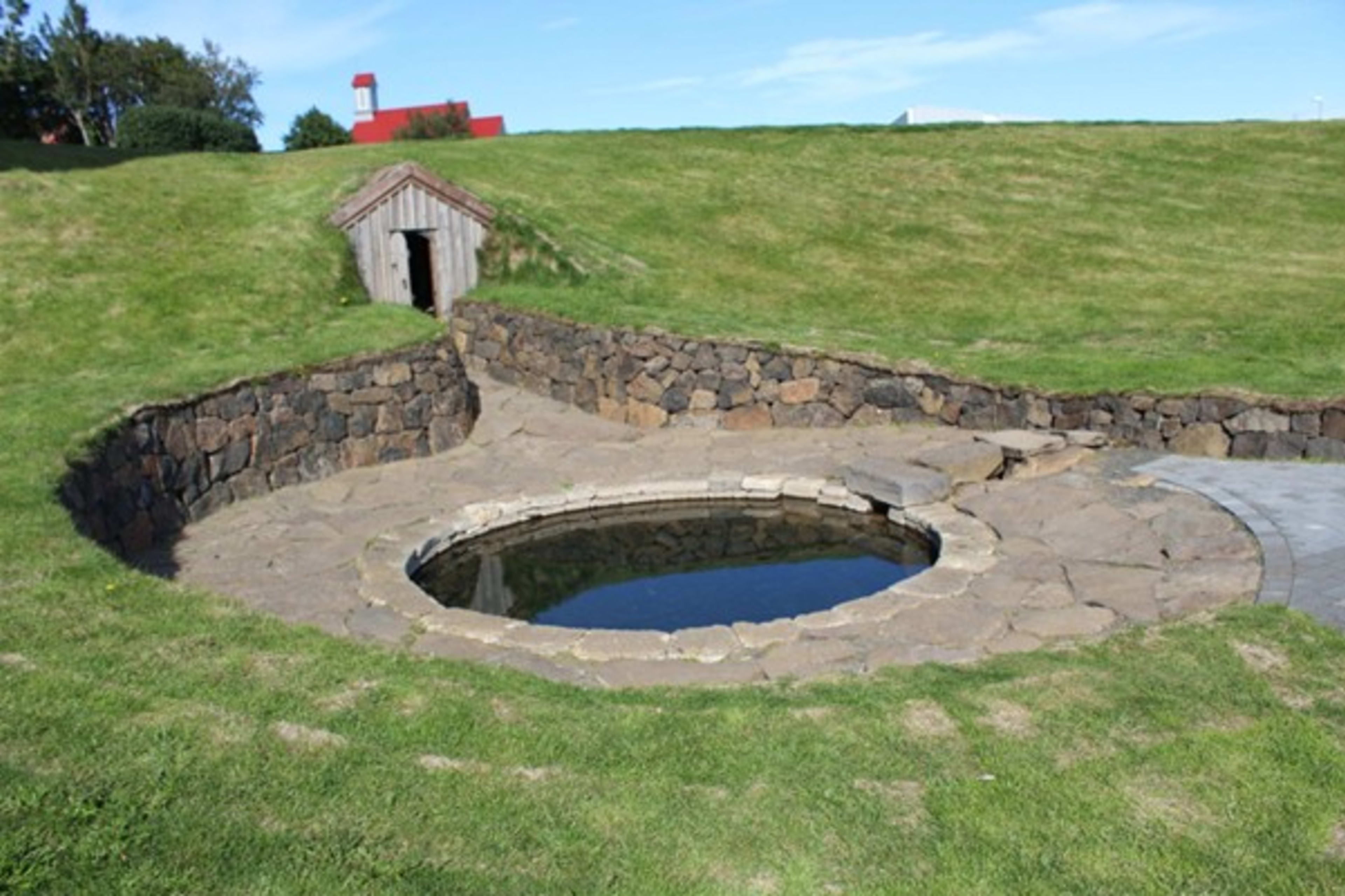
Snorri Sturluson, a warrior chieftain, poet, and historian often referred to as Iceland’s Shakespeare, built his own personal outdoor spa in the West Iceland settlement of Reykholt in the 13th century.
Over the centuries, Icelanders became ever more closely connected to the sea, fishing the rich seas of the North Atlantic and Arctic Circle in unprotected open boats.
But somehow, for a nation surrounded by water, there was no meaningful tradition of Icelanders learning to swim. One historical source suggests that in 1805, only six people in the country knew how to keep their heads above water!
Countless fishermen perished in the waters around Iceland, even in shallow bays just offshore, until it was decided that Icelanders must learn to swim from childhood.
A national effort to build heated swimming pools across the country began in the early 20th century, and now every community in Iceland has a sundlaug to swim in!
Swimming lessons are now mandatory for all schoolchildren, an early life skill as important as riding a bike or crossing the road.
Icelanders rely on their pools for warmth, activity, and social connections, vital for emotional well-being, particularly during the long dark days of winter.
Where are Iceland’s best swimming pools and spas?
If you’re exploring around Iceland, there is an online guide to all the swimming pools where you can join the locals at www.sundlaugar.is/en/
These are treasured community assets, places where people of all ages and from all walks of life are welcome and treated as equals, with simple changing facilities and low-cost entrance fees (around $10-$15).
Complementing these splendid swimming pools are the gleaming modern geothermal spas, offering more luxurious facilities, private changing cubicles, swim-up bars, restaurants, and a variety of wellness treatments, with admission exceeding $50 per person.
Some of these are now world-famous destinations, attracting thousands of visitors each year, including the Blue Lagoon, Sky Lagoon, and Hvammsvík Hot Springs, which are all within easy reach of the capital.
It’s estimated that there are around 45 natural hot springs and over 120 indoor and outdoor swimming pools, all warmed by the country’s fizzing underground geothermal power.
That’s one pool for every 2,000 Icelanders, and you’re welcome to join them!
Here’s a selection of the finest swimming pools and geothermal spas in Iceland, the places that have earned the country its place in the UNESCO global register of Intangible Cultural Heritage.
The Blue Lagoon (Reykjanes Peninsula)
The Blue Lagoon is Iceland’s most famous geothermal spa, located between the airport and the city.
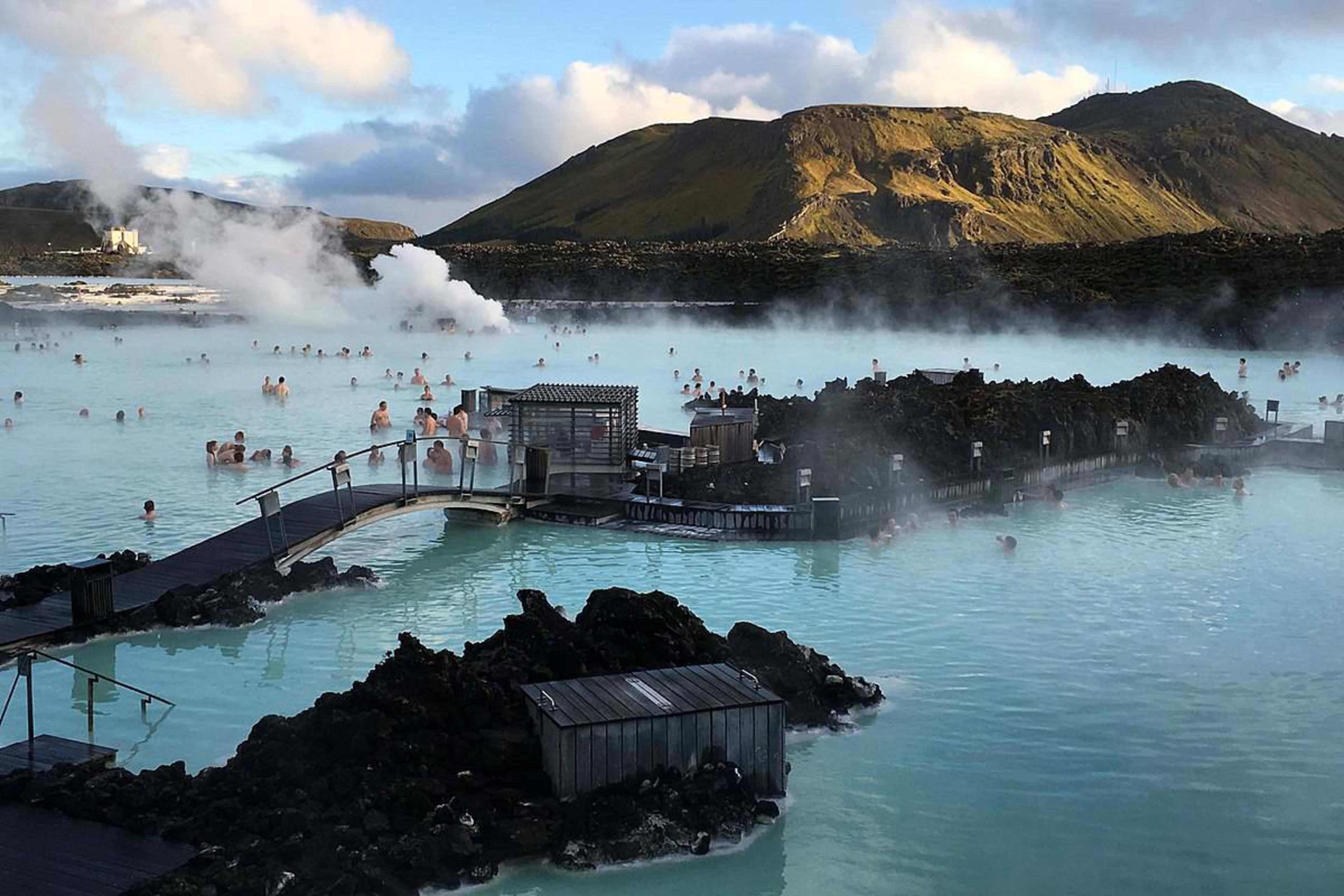
Spectacularly sited in the middle of a stunning lava field, the Blue Lagoon offers a modern visitor complex with comfortable changing areas, steam rooms, saunas, swim-up bars, massage tables, and restaurants.
The Blue Lagoon is a man-made spa, visited by more tourists than Icelanders, but it is undoubtedly one of the grandest geothermal spas in the world.
Sky Lagoon (20 minutes from Reykjavík)
Closer to the capital in Kópavogur, Sky Lagoon is the most convenient geothermal spa to visit when you’re staying in the city.

Sky Lagoon offers unbroken Atlantic views from a 75-meter pool with peaceful rocky coves where you can lie back and relax.
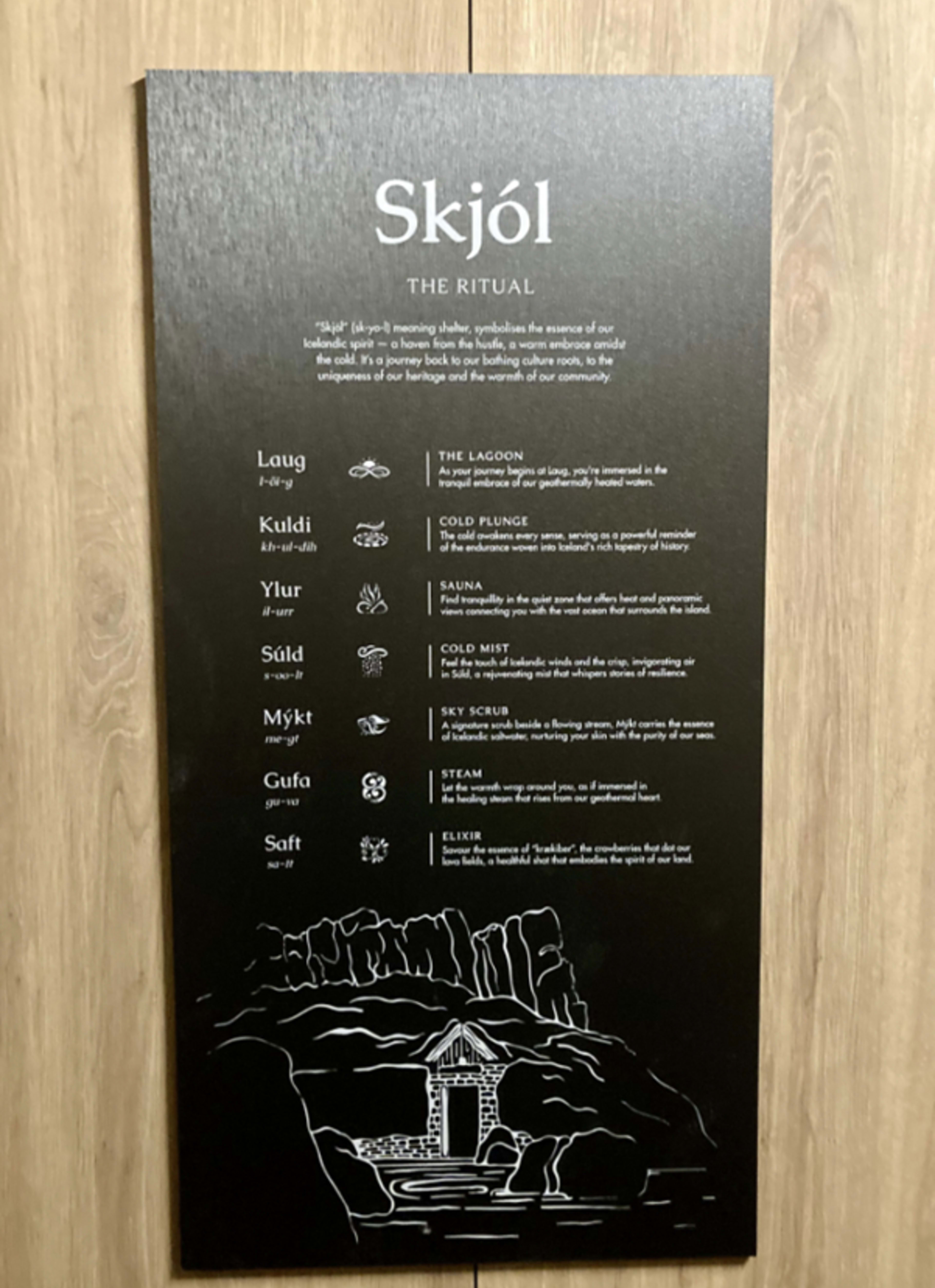
A visit here gives you a multi-sensory experience of authentic Icelandic bathing culture, with its 7-Step Ritual, two stunning sauna rooms, a cold plunge pool, exfoliating scrubs, cold mists, and a steam blanket!
Hvammsvík (45 minutes from Reykjavík)
Just a short drive from the capital on the edge of “Whale Fjord”, Hvammsvík is one of Iceland’s newest spas, and was named as Time Out’s “Number 1 Thing to do in the World” in 2023.
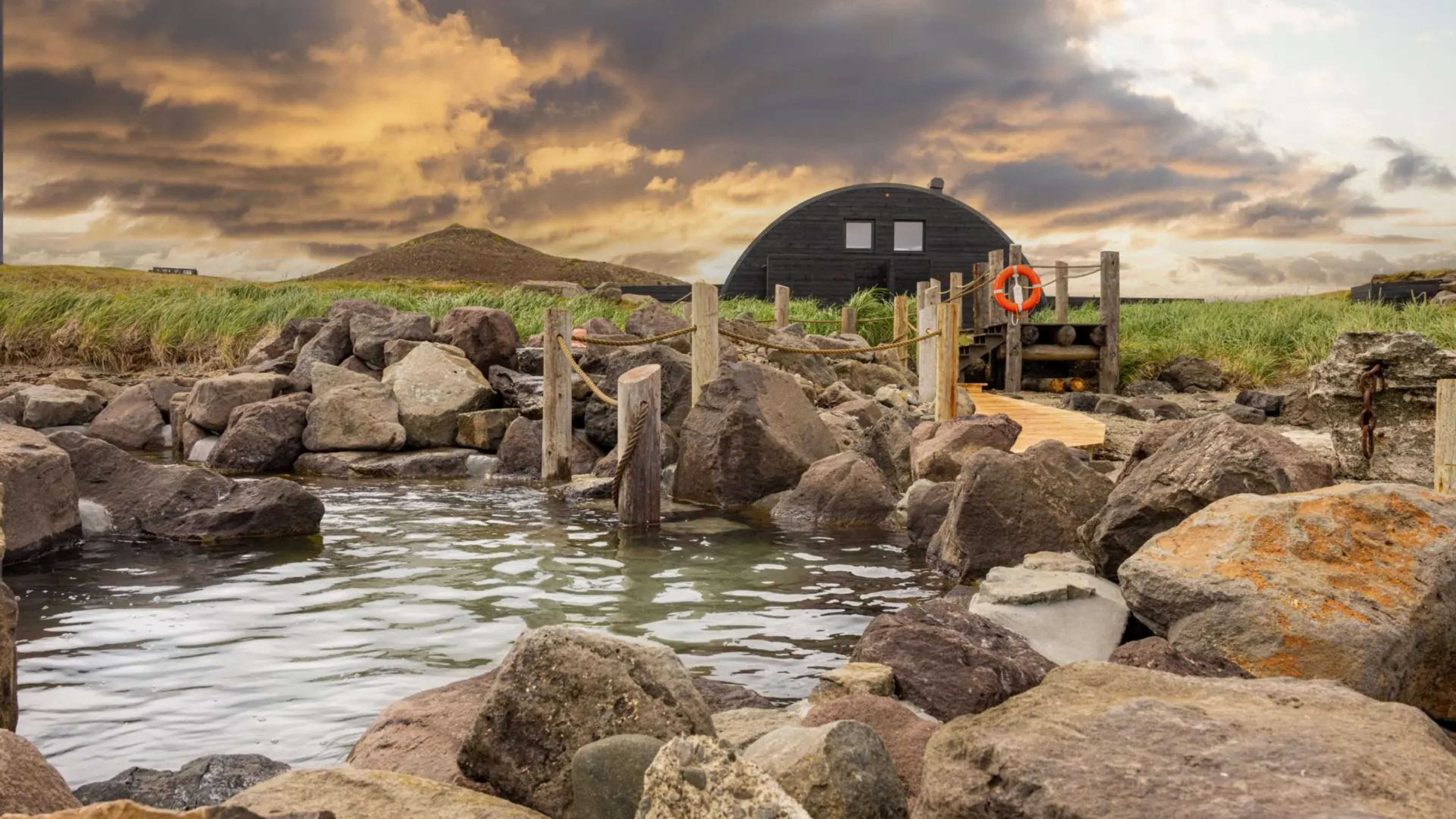
Take a dip in eight stone-walled pools, all warmed by a geothermal spring and mixed with seawater to varying levels, ranging from ocean temperature to 40°C (104°F).
One of the pools is tidal, with a depth and warmth that vary throughout the day, offering a more natural spa experience. No detergents or chemicals are used here.
Laugarvatn Fontana (Golden Circle)
A lakeside spa built over a hot spring, Laugarvatn Fontana has three outdoor mineral pools and three steam rooms in a spectacular location.

After taking a dip, you can take the Bread Tour to taste the rye bread baked underground here!
Laugarás Lagoon (South Iceland)
The newest geothermal spa in Iceland overlooks the Hvítá River on the southern edge of the Golden Circle route, close to the Ring Road in South Iceland.

Laugarás is a spa with two levels joined by a “hot waterfall” with swim-up bars, quiet corners, a cold plunge pool, saunas, a steam room, and a top-class restaurant.
Reykjadalur (South Iceland)
If you’re in the mood for something more natural, take the 3.5 km hike from the South Coast town of Hveragerði to the famous “hot river” at Reykjadalur.
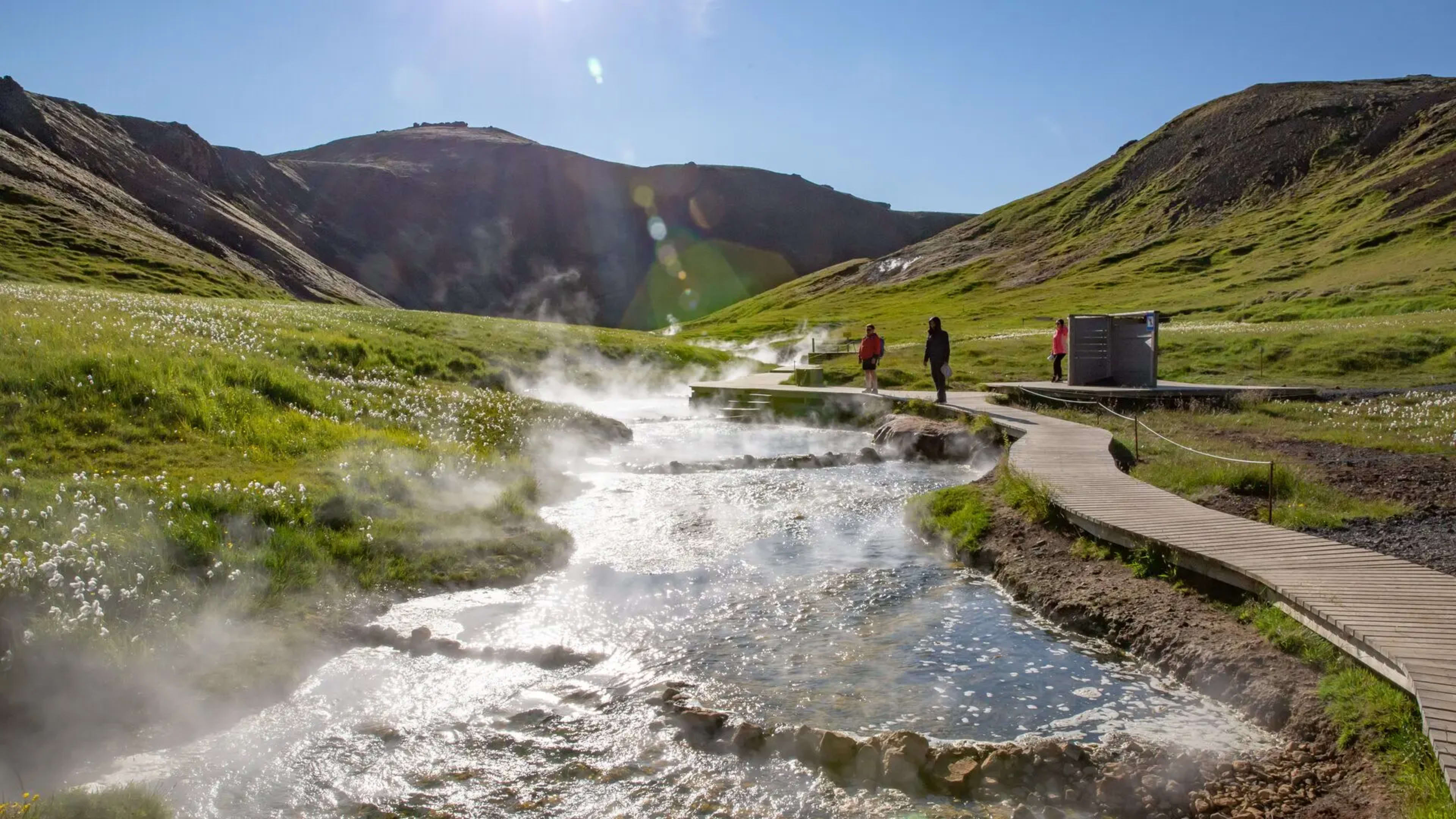
“Steam Valley” is as rustic as it gets, a river where you can bathe outdoors in nature, but with no changing rooms.
The Secret Lagoon (South Iceland)
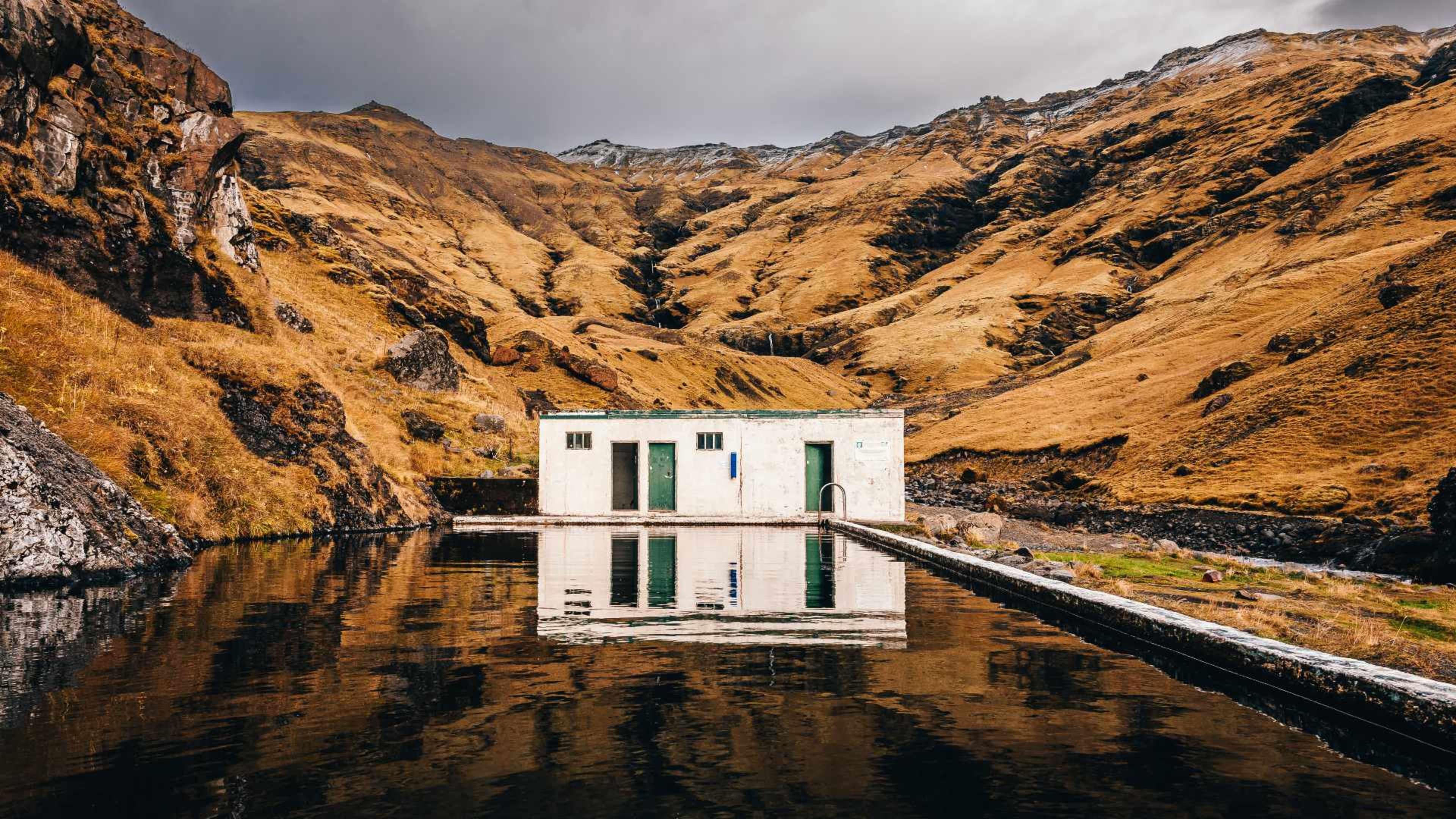
The Secret Lagoon at Flúðir is regarded as Iceland’s oldest swimming pool, dating back to 1891, built around a natural hot spring.
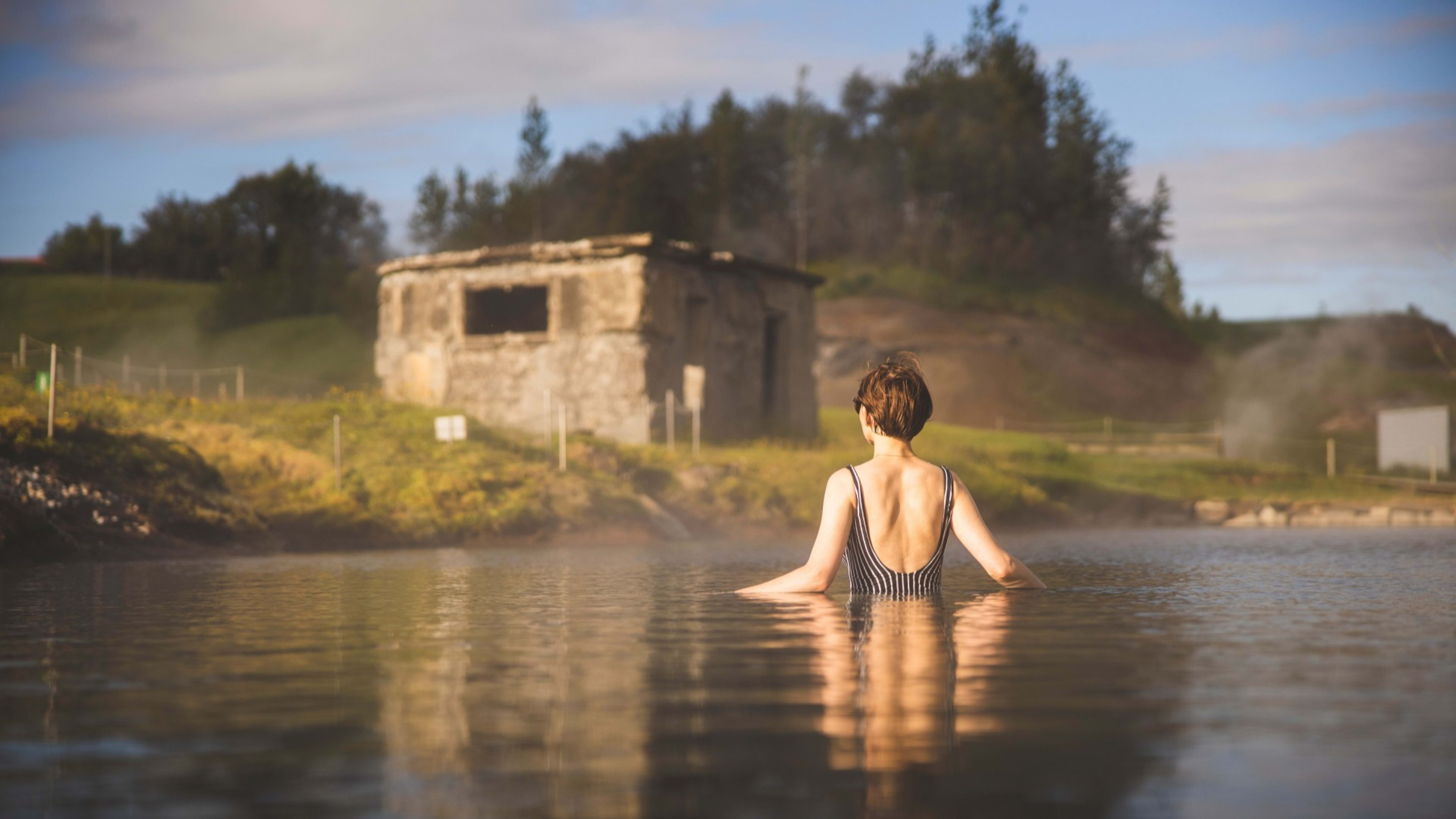
It’s more basic than the modern spas, but Gamla Laugin (Old Pool) offers a more authentic Icelandic experience than most.
Vök Baths (10 minutes from Egilsstaðir, East Iceland)
Just outside Egilsstaðir in East Iceland, you can swim in the fabulous floating pools at Vök Baths, which seem to merge magically into the lake.
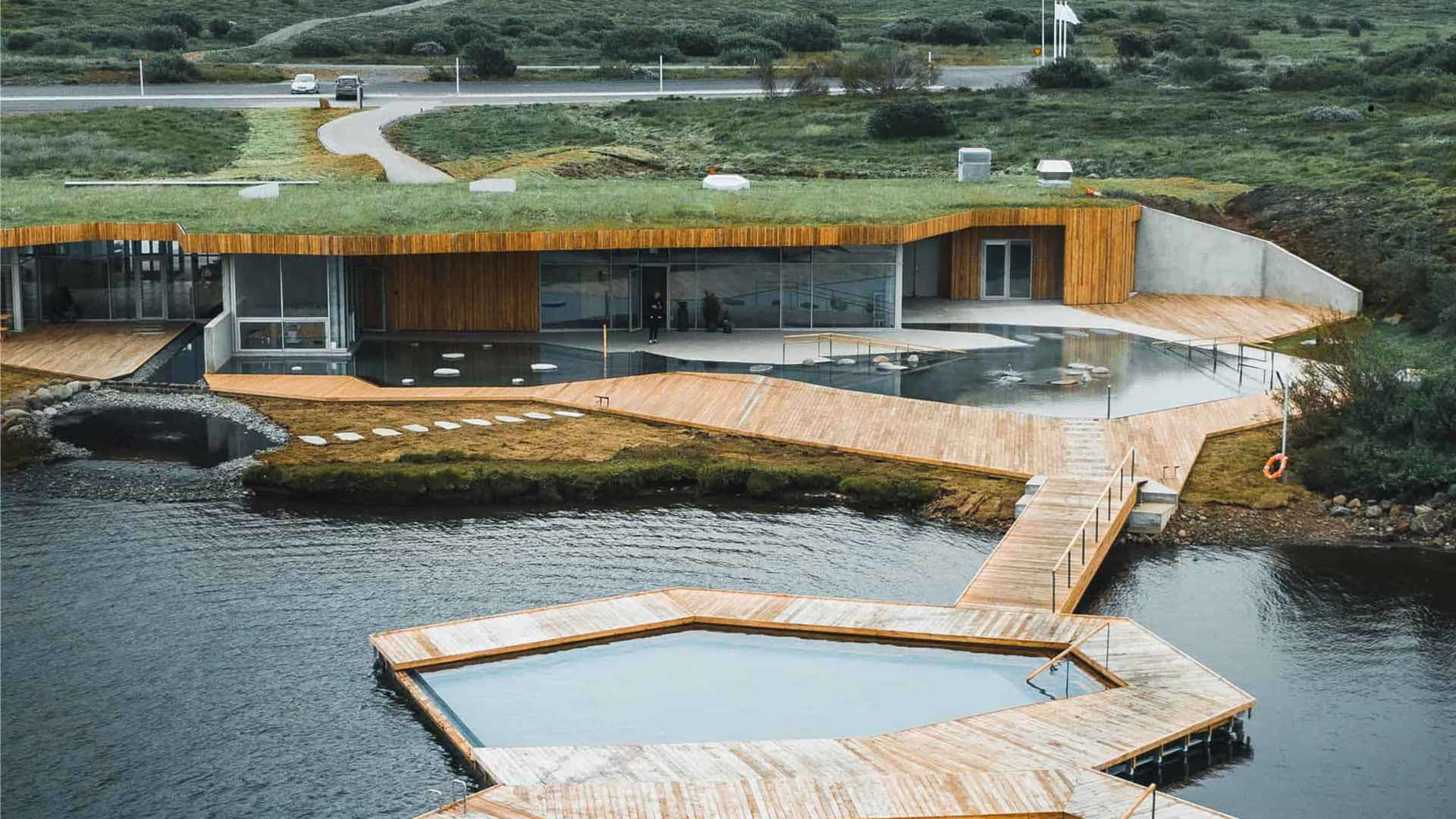
There are three pools to try, set in Lake Urriðavatn, making it easy to take the plunge for a cold-water swim, too!
Earth Lagoon (Lake Mývatn, North Iceland)
Overlooking Lake Mývatn in North Iceland, Earth Lagoon enjoys magnificent panoramic views of the surrounding area.

The warming waters are mixed with a healthy blend of minerals and silica, with no need for artificial disinfectants, making it the perfect way to recharge after a day on the road.
Geosea (Húsavík, North Iceland)
One of Iceland’s most picturesque spas, Geosea enjoys extraordinary panoramic views across Skjálfandi Bay, while combining naturally heated seawater with revitalizing minerals.
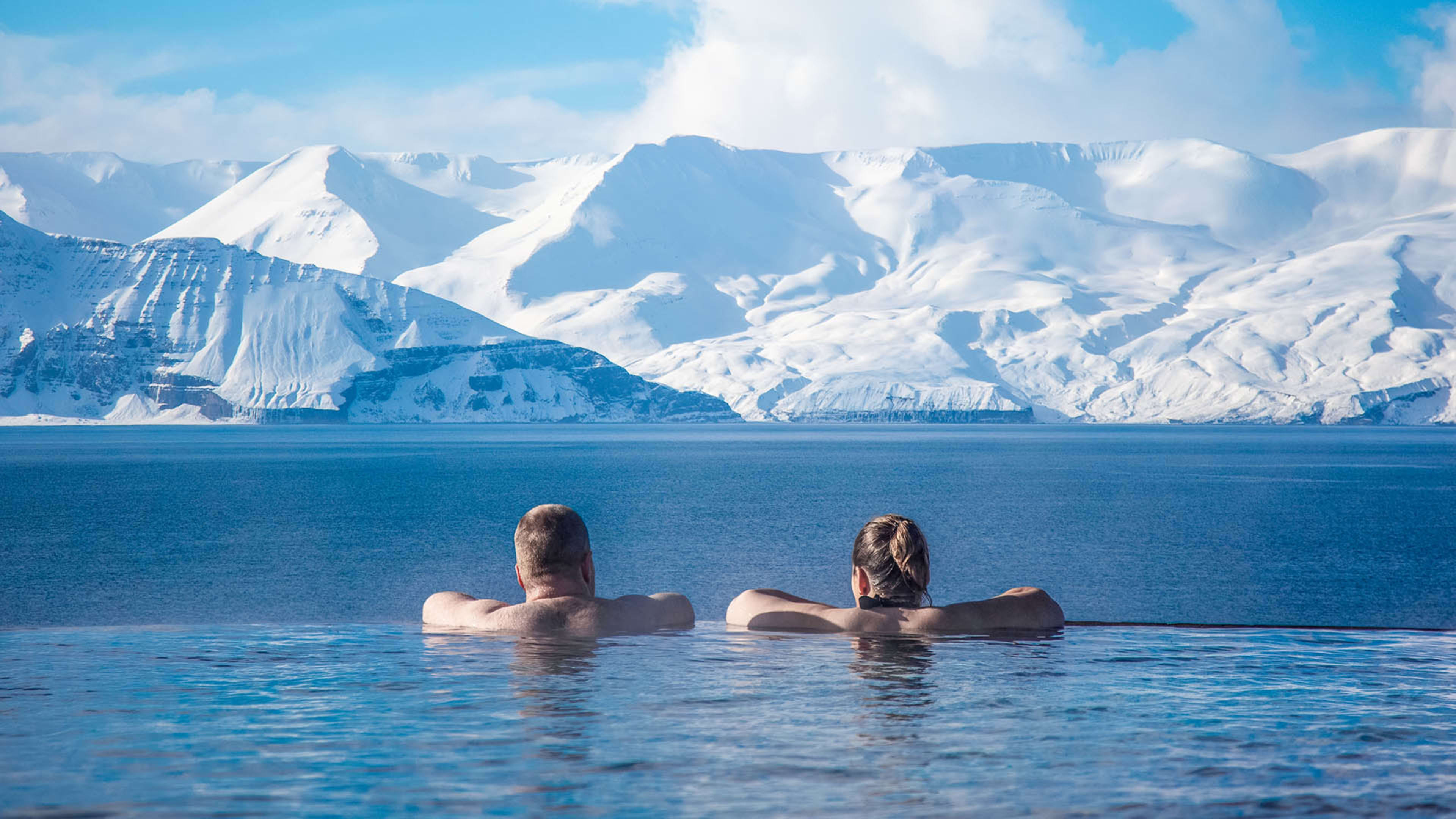
It’s one of the smaller spas in Iceland, so you can be sure of a peaceful experience.
Forest Lagoon (10 minutes from Akureyri)
A few minutes away from Akureyri, Forest Lagoon has marvelous views over Iceland’s second city and its longest fjord, Eyjafjörður, where you can relax in two incredible infinity pools with swim-up bars, a sauna, and a cold plunge pool.
Like most Icelandic geothermal spas, Forest Lagoon's water is free from chemicals, including chlorine. It only adds cold water, which it exchanges a few times a day to keep it free from bacteria.
Hofsós Sundlaug (North Iceland)
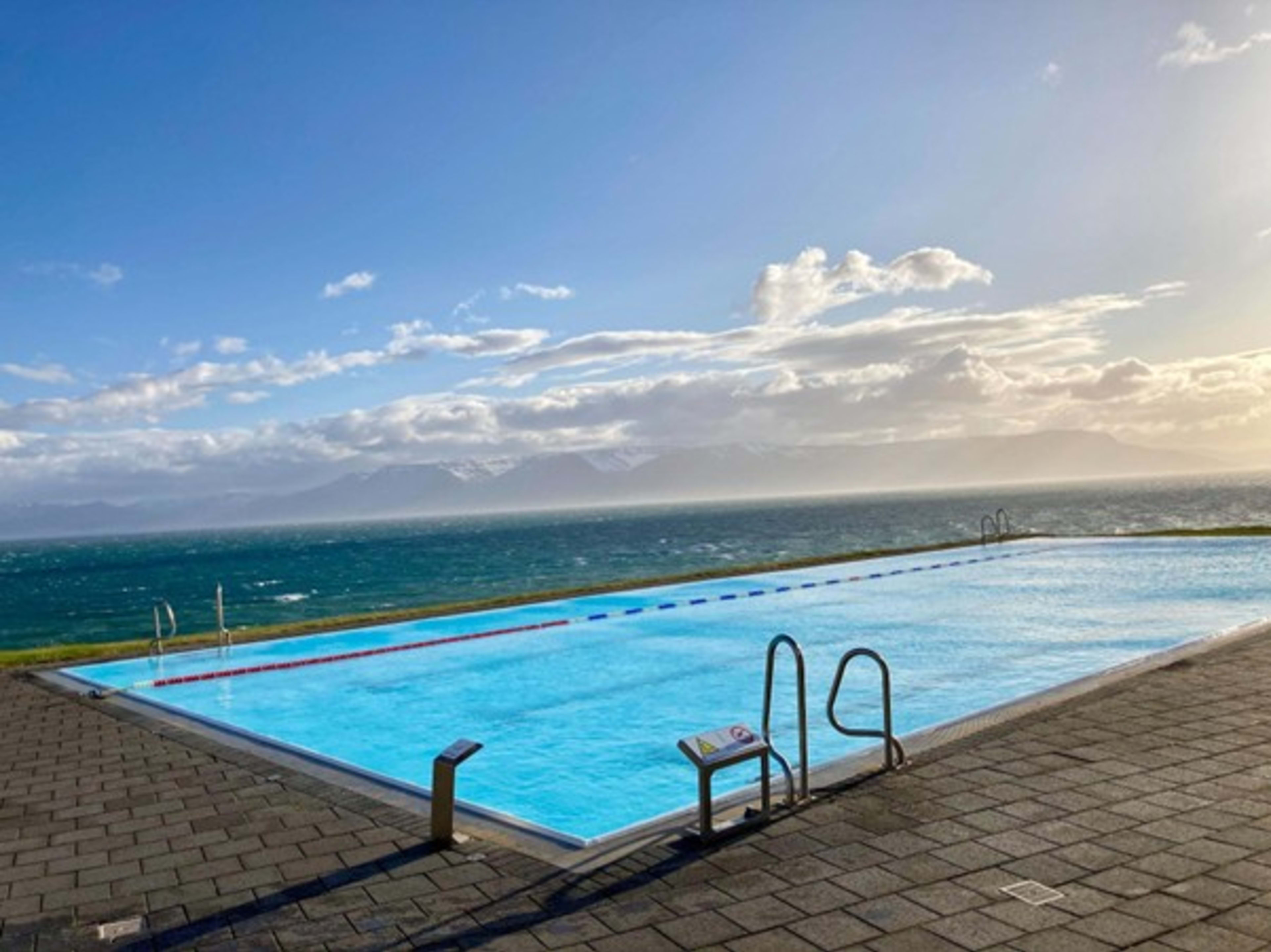
Even though you can enjoy a trip to one of Iceland’s swimming pools at a fraction of the cost of a geothermal spa visit, you’ll often be treated to an astonishing view, like here at Hofsós, in North Iceland.
There may be no better example of a local swimming pool in Iceland than Hofsós Sundlaug. The pool offers fantastic views across Skagafjörður and costs only $12 per person!
Krauma (West Iceland)
Europe’s most powerful hot spring is at Deildartunguhver in West Iceland, where the Krauma geothermal spa is located.
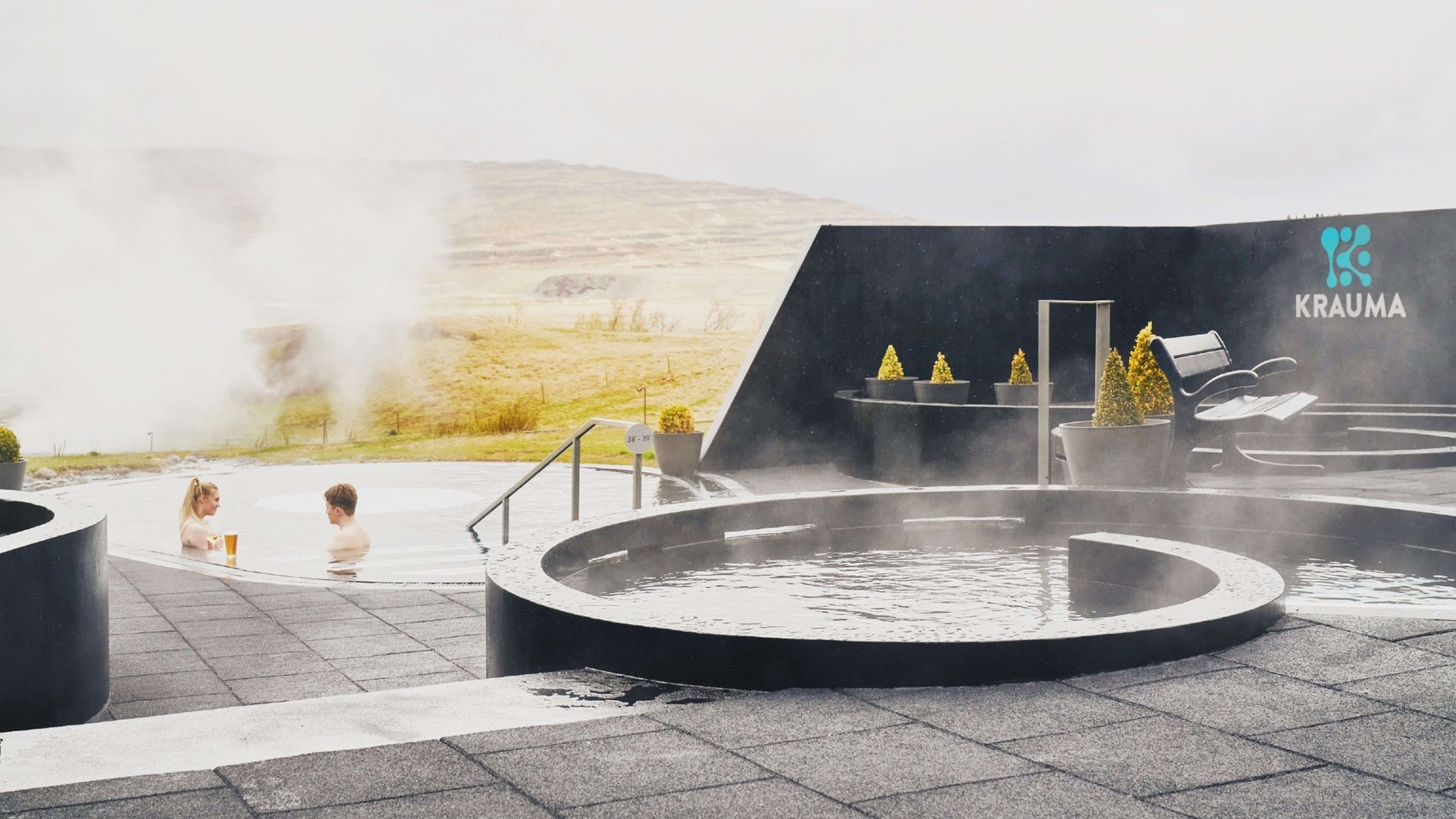
Krauma prides itself on its curative hot waters, sourced directly from Deildartunguhver, with the mineral-rich boiling water mixed with glacial meltwater.
If you’re staying in the capital, you can still enjoy a dip with the locals at several community pools, like Sundhöllin, Vesturbæjarlaug, and Laugardalslaug.
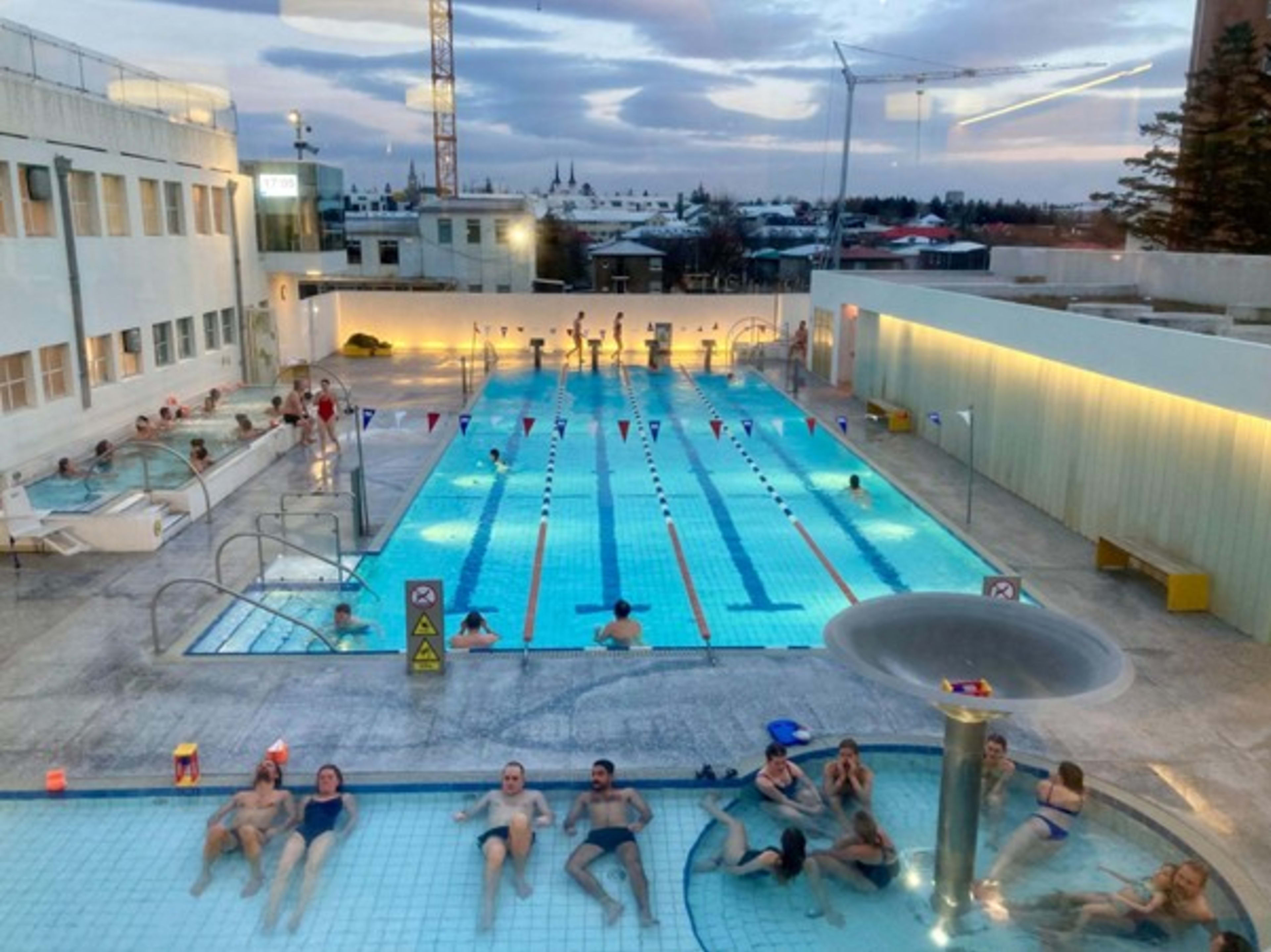
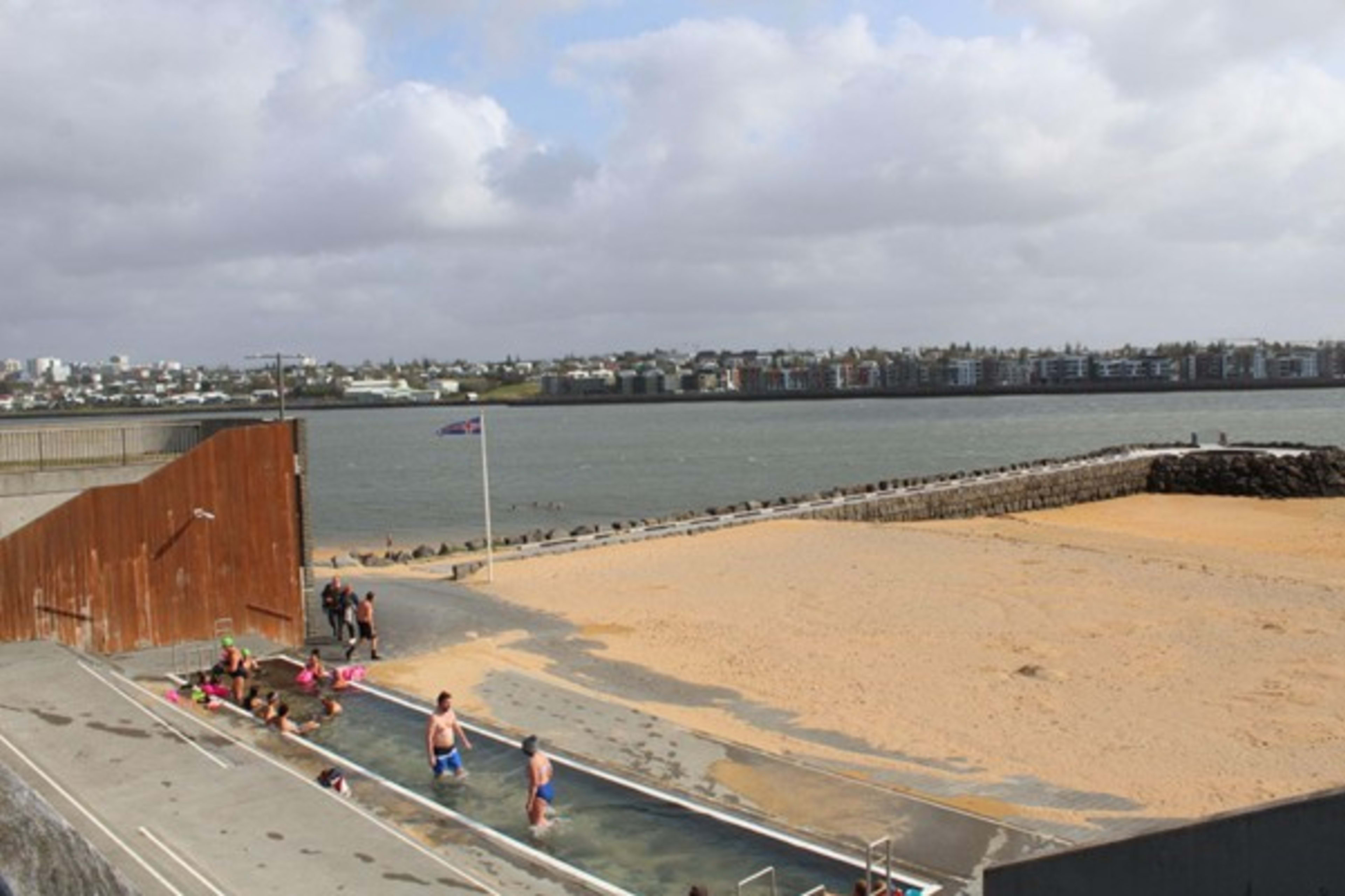
There’s even a geothermally warmed beach at Nauthólsvík where you can switch between the open sea and hot pools in a few seconds.
What do I need?
All you need is a bathing suit, a towel, and your toiletries. Flip-flops or water shoes can make walking between the changing rooms and the water easier at some spas.
If you’ve forgotten anything, you can usually rent a bathing suit and a towel at the geothermal spas and most swimming pools.
If you’re bathing in the natural hot rivers and hot springs, don’t use shower gels or shampoos – that will affect the environment long after you leave.
Remember the rules!
When you visit an Icelandic sundlaug or geothermal spa, you must respect local culture.
That means showering naked and thoroughly cleansing yourself, both before and after your visit to the pool.
This is how Icelanders behave, and the custom should be respected. If you’re shy, you’ll find a cubicle in most places to change in.
It might feel uncomfortable, but rest assured, Icelandic pools are non-judgmental places, and no one will be looking!
Icelanders grow up and grow old in the pool together, and all genders, body types, and shapes are welcome.
You’ll notice that the usual strong chlorine smell is absent at Icelandic swimming pools.
Using fewer chemicals makes a dip in an Icelandic pool a far more enjoyable experience.
● If there’s a shoe rack, take your shoes off before entering the locker room
● Leave your towel in a towel rack in the shower area
● Do not use cell phones or cameras in the locker rooms
Wherever you explore in Iceland, you won’t be far from one of these amazing pools and spas, which are open every day, whatever the weather.
Here’s your chance to dive in and feel a part of the country’s UNESCO-recognized swimming pool culture!