


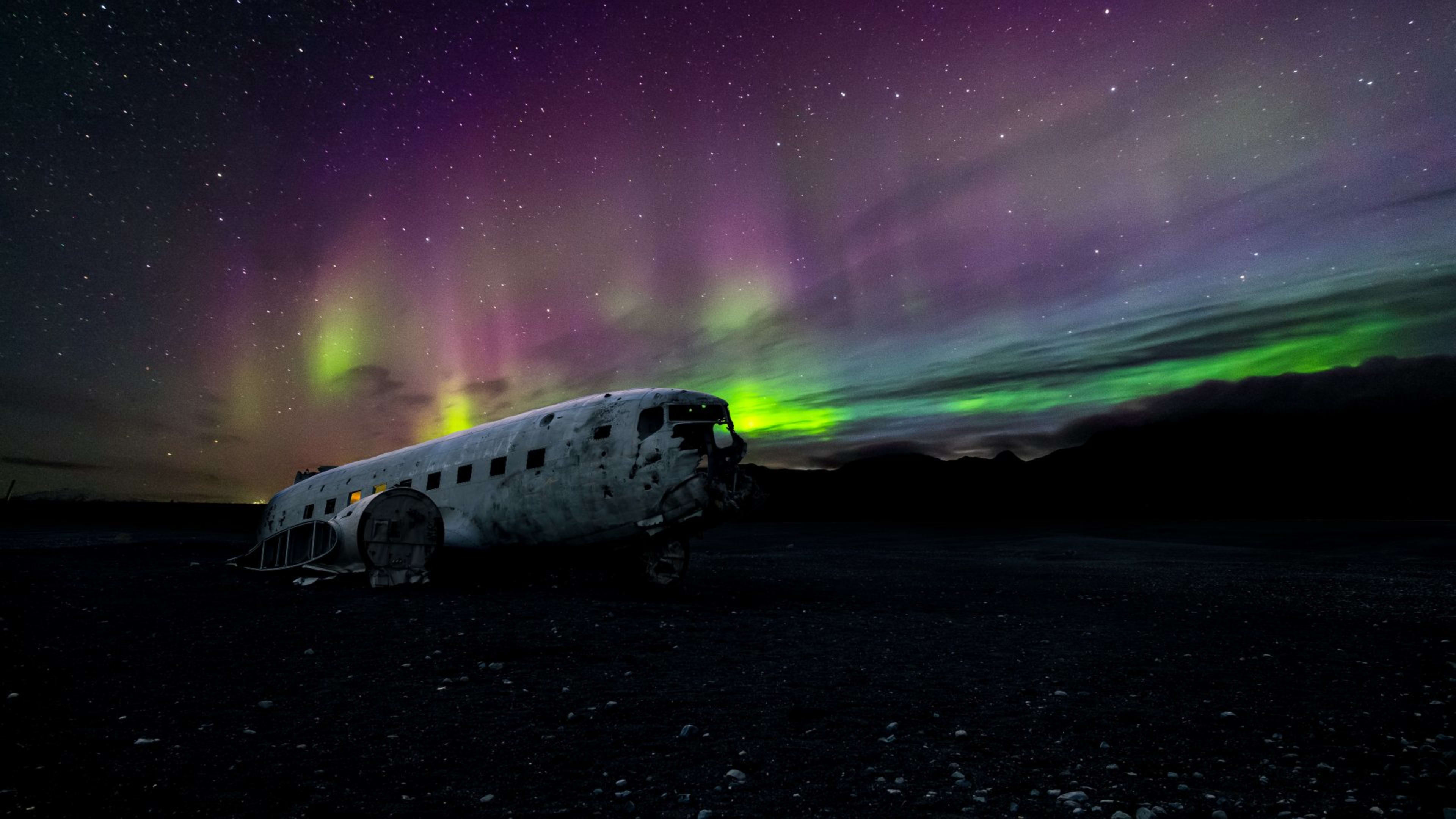
In the darker regions of Iceland, winter skies come alive with one of nature’s most captivating displays: the Northern Lights.
With its northern location and sparsely populated landscapes, the country is an excellent destination to experience the magic of the aurora borealis. For the best chances, a small-group Northern Lights tour in Iceland is often the smartest way to plan it.
After all, there is never any guarantee of seeing the Northern Lights. Witnessing the ethereal green and purple lights requires careful timing, favorable conditions, expert guidance, and a little luck. While a single-evening excursion provides one opportunity for a sighting, a multi-day itinerary offers several nights of potential aurora viewing.
- Explore our complete selection of Northern Lights tours to start planning your getaway.
Why Choose a Multi-Day Northern Lights Tour?
Treating the aurora borealis as a multi-day adventure rather than a one-off evening activity stacks the odds in your favor. Here is why a longer itinerary can make such a difference:
- More nights, better odds: Multiple evenings provide more opportunities to find the Northern Lights. If clouds obscure the sky one night, conditions may improve later in the trip or be clearer in another area.
- Local expertise on your side: An experienced local guide and trusted tour operator monitor aurora forecasts, cloud cover, and weather conditions. When conditions allow, guided tours can travel to promising viewing spots away from artificial light.
- Stress-free winter travel: Joining a guided tour removes the pressure of navigating icy roads, dark highways, and rapidly changing winter weather.
- Incredible daytime sightseeing: Between evenings of aurora hunting, you can discover iconic landscapes such as the Golden Circle, glaciers, lava caves, and the black sand beaches near Vík.
- A comfortable, social atmosphere: A small-group Northern Lights tour in Iceland offers a more personal experience. It also gives solo travelers, couples, and friends opportunities to meet like-minded visitors.
No tour guide can promise a sighting. However, a well-planned multi-day itinerary improves your chance to see the Northern Lights while providing a varied and hassle-free vacation.
- Related: Multi-Day Tours in Iceland: A Complete Guide
Which Multi-Day Northern Lights Itinerary Is Best for You?
The ideal multi-day tour depends on how much time in Iceland you have, your travel pace, and the experiences you want. You should also consider whether you would rather stay in one hotel or travel across the countryside, changing accommodations.
3–4 Days: A Quick Winter Escape
Even if you have limited time, a few days can deliver a concentrated dose of winter adventure. A Reykjavík-based package, such as this four-day Northern Lights getaway, is a convenient option. During the day, you can explore the highlights of the Golden Circle and venture inside a striking ice cave. At night, join an aurora hunt that takes you away from the city’s artificial light.
A short getaway requires realistic expectations, as poor weather can have a greater impact on a brief stay. However, a three- to four-day Reykjavík package still allows you to sample some of Iceland’s best-known experiences.
- Experience aurora light hunting right from the capital with our selection of multi-day tours from Reykjavík.
5–6 Days: A Balanced First Trip
A 5–6-day itinerary offers a well-rounded introduction to Iceland without the pace of a full Ring Road journey. It is a strong choice for first-time visitors who want to combine famous landscapes, winter activities, and the Northern Lights.
With more time available, small-group tours can travel beyond Reykjavík and explore different parts of South or West Iceland. For instance, this six-day small-group adventure includes the Golden Circle, South Coast waterfalls, Jökulsárlón Glacier Lagoon, and the Blue Lagoon. In the evenings, travelers head into the countryside to search for the aurora borealis beneath dark winter skies.
This duration allows for a more varied itinerary while keeping travel days manageable. Staying in accommodations along the route also places travelers closer to dark-sky locations, without returning to the capital each evening.
- Discover more of the island without stressing over the logistics with guided group tours across Iceland.
7–8 Days: The Most Complete Winter Adventure
A seven- to eight-day journey is an ideal bucket-list trip taking travelers deeper into the Icelandic countryside. Depending on the itinerary, you might travel along the Ring Road or explore South and West Iceland in greater depth. On this eight-day winter guided tour, the route extends into the Lake Mývatn area and the Eastfjords.
Countryside accommodation can make aurora viewing convenient, as you may be able to step outside and check the night sky without traveling far.
Reykjavík-Based, Small-Group, or Self-Drive Tour?
Multi-day Northern Lights tours in Iceland generally follow one of three formats.
A Reykjavík-based package allows you to stay in one hotel and join organized excursions from the capital. This format removes the need to repack each day while keeping you close to Reykjavík’s restaurants, museums, shops, and cafés. It is a convenient option for travelers who want guided sightseeing during the day but more freedom in the evenings.
Meanwhile, a small-group Northern Lights tour in Iceland travels through several regions with the same guide and group. Guests typically stay in countryside hotels along the route and travel by small bus or minibus. This format offers greater regional immersion and easier access to rural locations with less artificial light.
A self-drive tour offers the greatest independence. Accommodation and the suggested route are arranged in advance. However, you travel in your own rental car and decide how long to spend at each stop. This can work well for confident drivers who value privacy and flexibility. That said, winter roads, limited daylight, and rapidly changing weather call for careful preparation.
What Will You See Beyond the Northern Lights?
Even though it may sit on top of every traveler’s bucket list, the aurora borealis is only one part of an Icelandic winter vacation. During the daylight hours, travelers can discover waterfalls, glaciers, volcanic coastlines, geothermal waters, and Reykjavík’s cozy seasonal culture.
Golden Circle in Winter
Iceland’s most famous sightseeing route undergoes a snowy transformation in winter. Admire the frost-covered landscapes of Þingvellir National Park, watch steamy Strokkur erupt, and see the ice formations surrounding Gullfoss waterfall.
South Coast Waterfalls and Black Sand Beaches
Visit Seljalandsfoss and Skógafoss framed by snow and ice before exploring the volcanic shoreline of Reynisfjara black sand beach near Vík.
Glaciers, Ice Caves, and Volcanic Landscapes
Depending on the itinerary, you might enter a seasonal blue ice cave or join a guided glacier walk. Longer tours may continue east to Jökulsárlón Glacier Lagoon and Diamond Beach. Here, large gem-like icebergs drift across the water and wash ashore on the black sand.
Geothermal Pools and Winter Wellness
Unwind in warm geothermal water while the cold air surrounds you. Depending on the package, you may visit some of Iceland's top hot springs and pools, including the Blue Lagoon and Sky Lagoon.
Reykjavík’s Cozy Winter Culture
During the holiday season, Reykjavík’s streets glow with festive lights. Browse local bookshops, discover the atmosphere surrounding Jólabókaflóð, relax in warm cafés, or take an evening walk along the waterfront.
- Immerse yourself in the icy magic of Reykjavík and beyond by joining Iceland Tours’ winter adventures.
When Is the Best Time to Go?
The Northern Lights season generally runs from late September through March, when Iceland’s nights are dark enough for aurora viewing. If seeing the aurora is a priority, the midwinter months provide the longest nightly viewing windows. However, when choosing a small-group Northern Lights tour in Iceland, remember that clear skies and solar activity matter as much as darkness.
- September and October: Enjoy milder conditions, generous daylight for sightseeing, and increasingly dark evenings for aurora viewing.
- November to January: Experience the longest nights, a festive winter atmosphere, and more hours of darkness in which the Northern Lights may appear. Daylight is limited, so sightseeing schedules tend to be more compact.
- February and March: Benefit from increasing daylight for daytime activities while retaining long, dark evenings for aurora viewing. Snowy and wintry landscapes are also common, although conditions vary.
What to Expect on a Northern Lights Hunt
A Northern Lights tour is an outdoor adventure shaped by natural conditions. Tour guides first monitor weather forecasts, cloud cover, and aurora activity before choosing a promising viewing spot away from excessive light. You may spend time waiting outside for the display to appear. Sometimes, the show begins as a faint arc or glow before growing brighter and more active.
Essential Packing List
- Thermal base layers made from wool or synthetic fabric
- Insulated, waterproof jacket and pants
- Sturdy waterproof winter boots
- Warm hat, scarf, and insulated gloves
- Camera with manual settings and a sturdy tripod
- Extra device batteries, as cold temperatures can drain them quickly
Many guides offer basic photography advice, while some tours provide hot chocolate or another warm drink as travelers scan the night sky. Check the individual tour description to see what is included.
Find Your Best Northern Lights Tour in Iceland
Whether you choose a three-day escape, a six-day itinerary, or an eight-day Ring Road adventure, the best option depends on your travel preferences. A well-planned small-group Northern Lights tour in Iceland combines memorable daytime discoveries with dark evenings spent watching the sky.
Even if the aurora appears only once—or remains elusive altogether—a vacation on the island is not wasted. Iceland’s glaciers, waterfalls, geothermal waters, volcanic landscapes, and cozy winter atmosphere can make the journey spectacular.
Explore our full range of Northern Lights packages and find the itinerary that fits your trip.
FAQs about Multi-Day Northern Lights Tours in Iceland
A multi-day Northern Lights tour gives you several evenings of potential aurora viewing, making you less dependent on one night’s weather. It also combines the search with daytime sightseeing, so the vacation remains rewarding even if the lights do not appear.
Five to six days offer a balanced mix of sightseeing and aurora hunting for many first-time visitors. If you have limited time, three to four days can work well, while seven to eight days lets you explore more regions.
Yes, strong displays can sometimes be seen from darker areas of Reykjavík. However, traveling into the countryside reduces artificial light and can provide better viewing conditions when the skies are clear.
Northern Lights sightings can never be guaranteed, but some excursions may offer another attempt, depending on the operator’s policy. Either way, a multi-day itinerary ensures you can still enjoy Iceland’s waterfalls, glaciers, geothermal areas, and other winter experiences.
December offers long nights, festive surroundings, and extended windows for aurora viewing. Weather can be unpredictable, and daylight hours are limited, but the month is particularly appealing to travelers who enjoy snowy scenery.
A small-group tour suits solo travelers, couples, and friends who prefer a more personal experience with regular guide support. Smaller groups can also make it easier to communicate with the guide, move between stops efficiently, and enjoy a sociable atmosphere.
Many multi-day winter tours welcome families, but minimum ages vary, particularly for activities such as glacier hiking, snowmobiling, and ice caving. Reykjavík-based packages may offer a more manageable pace for families with younger children.