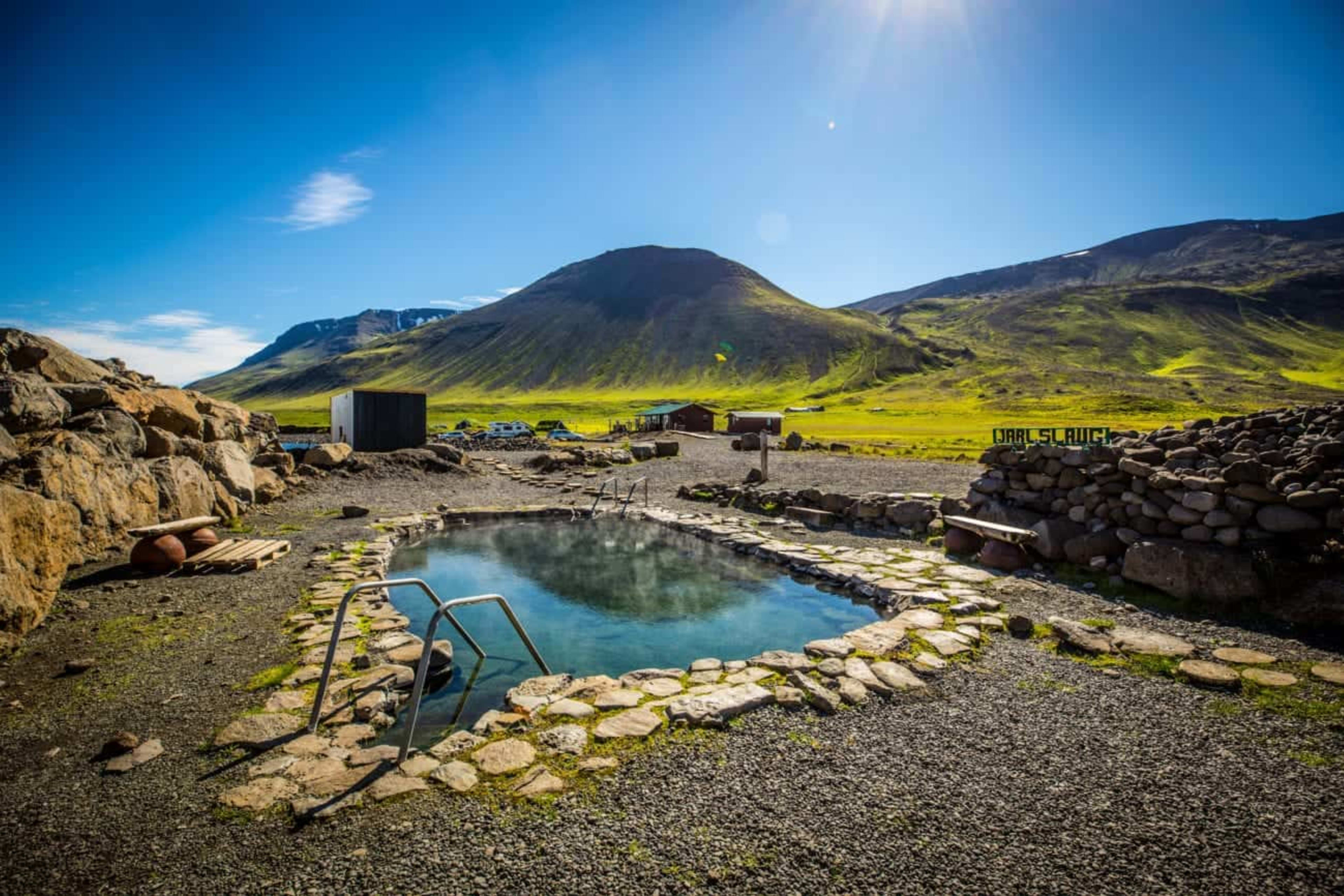
Hvítserkur

Hvítserkur is a 15-metre basalt sea stack on the eastern shore of the Vatnsnes peninsula in northwest Iceland, free to visit year-round from a viewpoint reached by a short walk from the car park.

North Iceland
Best time to visit
All year
Open
Every day
Parking
Free
Charging station
No

About Hvítserkur

Hvítserkur stands on the shore of Húnafjörður, the bay that separates the Vatnsnes peninsula from the Skagafjörður region to the east. The stack is formed from basalt and takes its name from the Icelandic for "white shirt," a reference to the bird droppings that coat the rock. It stands roughly 15 metres tall and is one of the more photographed natural formations in northwest Iceland, known for the silhouette it makes against the bay, particularly at low tide when it is possible to walk closer to the base.

The shape of the stack is the subject of some debate. From certain angles it resembles a rhinoceros drinking from the water, from others an elephant or a dinosaur. The rock has been reinforced with concrete at its base to slow the erosion caused by wave action.

Folklore describes Hvítserkur as a troll that was turned to stone by sunlight while attempting to destroy the bells of a monastery. The story follows a pattern common to several basalt formations around Iceland, where distinctive shapes are explained through troll mythology.

Getting to Hvítserkur

Hvítserkur is located on the eastern side of the Vatnsnes peninsula, reached via a gravel road that branches off Route 711. The detour from the Ring Road takes around 30 minutes each way. A small car park sits at the top of the cliff, with a path leading down to the viewpoint above the stack. At low tide it is possible to descend further to the shore level, though the path is steep in places.

The nearest town is Hvammstangi, around 25 kilometres south on the peninsula, which has accommodation, a petrol station, and the Icelandic Seal Center. Hvítserkur is roughly two and a half hours north of Reykjavík and about an hour and a half west of Akureyri along the Ring Road.

Wildlife

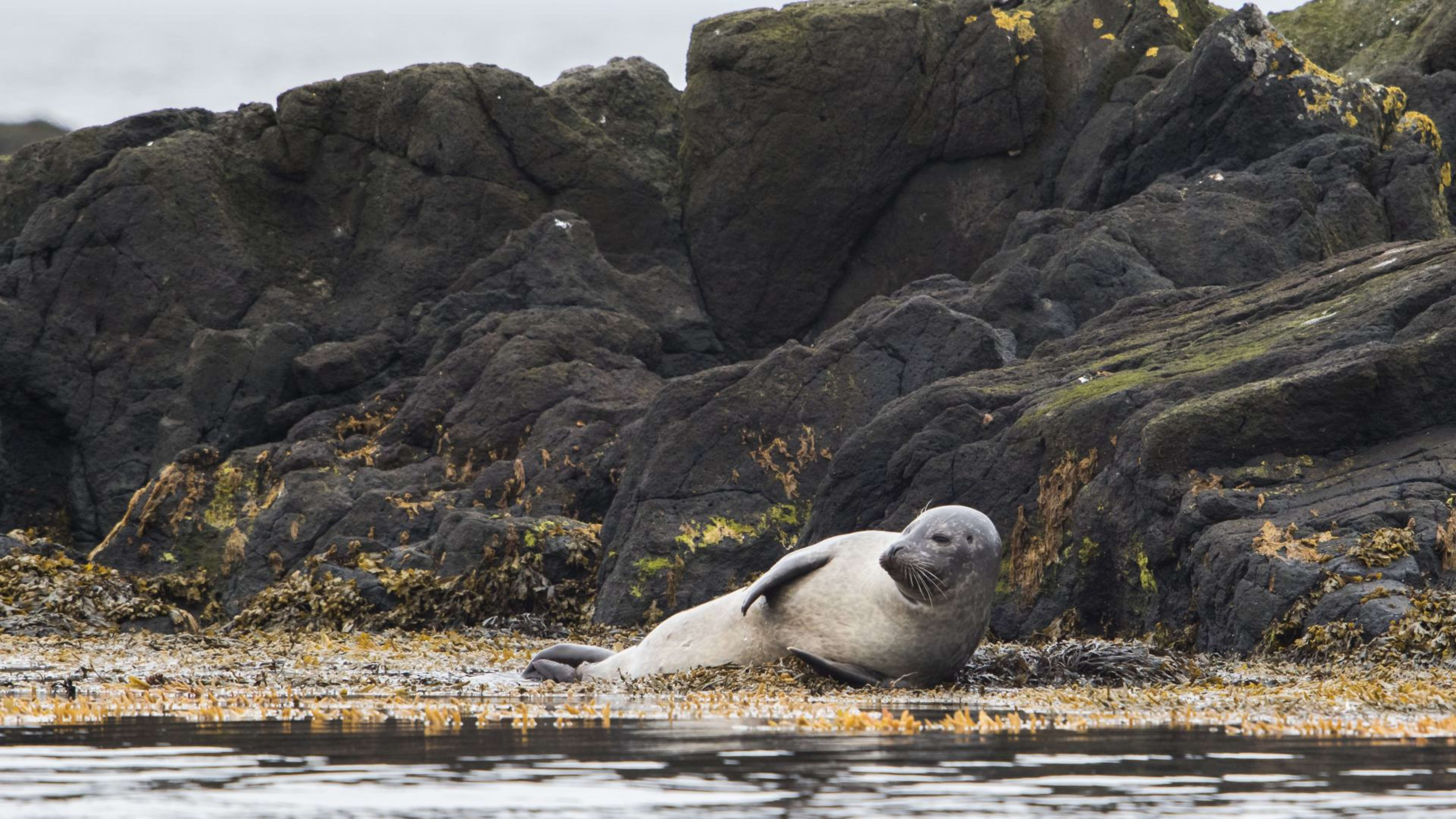
The shoreline around Hvítserkur and along the Vatnsnes peninsula is one of the more reliable places in Iceland to see harbour seals. They are present year-round and are often visible from the viewpoint above the stack, resting on the rocks below or swimming in the bay. The peninsula as a whole has a well-established seal-watching reputation and the Icelandic Seal Center in Hvammstangi provides information on the local population and viewing spots.
Other attractions near Hvítserkur

A seal lying on the shore in Hvammstangi, Vatnsnes peninsula

Hvammstangi

Hvammstangi is a small town of around 580 people on the Vatnsnes peninsula in northwest Iceland, situated roughly halfway between Reykjavík and Akureyri on the Ring Road. It is known primarily for seal watching along the peninsula's coastline, the Icelandic Seal Center, and as the western starting point of the Arctic Coast Way scenic route. The town has a working harbour, a wool factory, and the practical services that make it a useful overnight stop on the Ring Road.

42 km (26 mi)

View
A row of houses at the Glaumbær turf farm

Glaumbær turf farm

Glaumbær is a preserved turf farmhouse complex in the Skagafjörður area of North Iceland, operated today as a folk museum by the Skagafjörður Heritage Museum. The site is open to visitors from late May through September.

119 km (74 mi)

View
Skagafjörður hot pool

Grettislaug

Soak up views of the Skagafjörður fjord from this iconic geothermal pool.

121 km (75 mi)

View
Siglufjordur village in Trollaskagi Peninsula

Tröllaskagi peninsula

Get up close to Icelandic myth and legend on the Troll peninsula.

193 km (120 mi)

View

FAQs about Hvítserkur

Hvítserkur is a basalt sea stack on the Vatnsnes peninsula in northwest Iceland. These questions cover what to expect on a visit.

Hvítserkur is located on the eastern shore of the Vatnsnes peninsula in northwest Iceland, off Route 711. It is around 30 minutes from the Ring Road by gravel road, roughly two and a half hours north of Reykjavík and an hour and a half west of Akureyri.

From certain angles the stack resembles a rhinoceros leaning down to drink from the water. The name is informal and not the official Icelandic name, which is Hvítserkur, meaning "white shirt" in Icelandic, a reference to the bird droppings that cover the rock.

The stack stands approximately 15 metres tall. It is made of basalt and has been reinforced with concrete at its base to slow erosion from wave action.

According to local folklore, Hvítserkur was a troll attempting to destroy the bells of a nearby monastery who was caught by sunrise and turned to stone. This type of explanation is common for distinctive rock formations around Iceland.

Yes. The shoreline around the stack and along the Vatnsnes peninsula is home to a resident harbour seal colony. Seals can often be seen from the viewpoint above the stack, resting on rocks or swimming in the bay. They are present year-round.

Yes. The car park and viewpoint are free to access. The gravel road leading to the site is open year-round, though conditions can be more challenging in winter.

#icelandmyway

See what travelers like you have been up to lately on Instagram.