An Ancient Green Sentinel
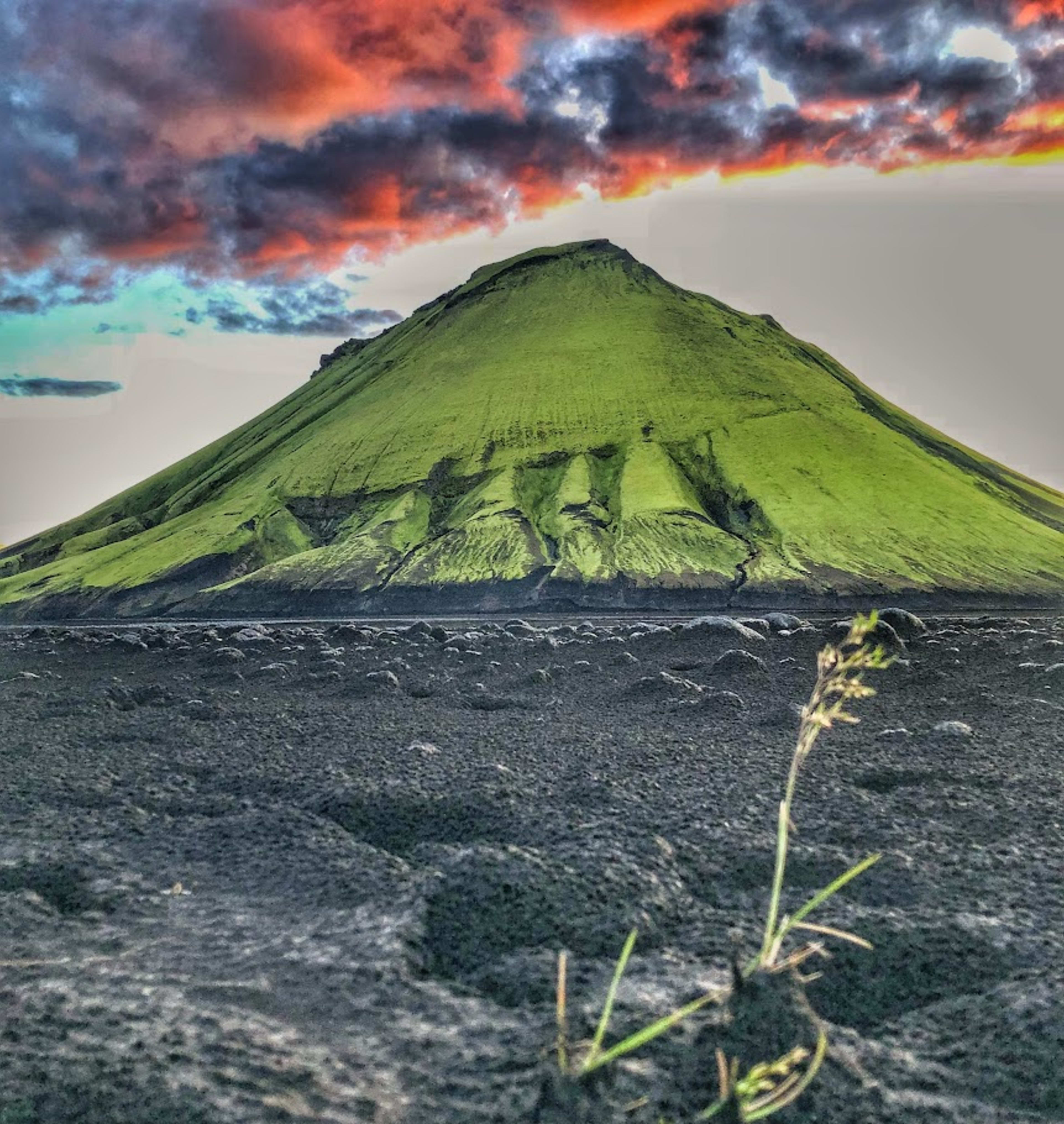
Hattfell rises from the black volcanic sands of southern Iceland as a verdant landmark, its moss-covered slopes creating a dramatic contrast with the dark desert terrain that surrounds it. This ancient volcano stands near the Emstrur region along the famous Laugavegur Trail, serving as a visual beacon for hikers who have crossed the barren landscapes of Mælifellssandur and are approaching the final sections of their highland journey.
The name Hattfell, which can be translated as "hat mountain," likely references the volcano's rounded, cap-like appearance when viewed from certain angles. Like its northern counterpart Stórasúla, Hattfell has been inactive for thousands of years, allowing time for moss and vegetation to completely cover its slopes and transform what was once bare volcanic rock into a green oasis amid the black sand desert.
A Landmark in the Emstrur Region
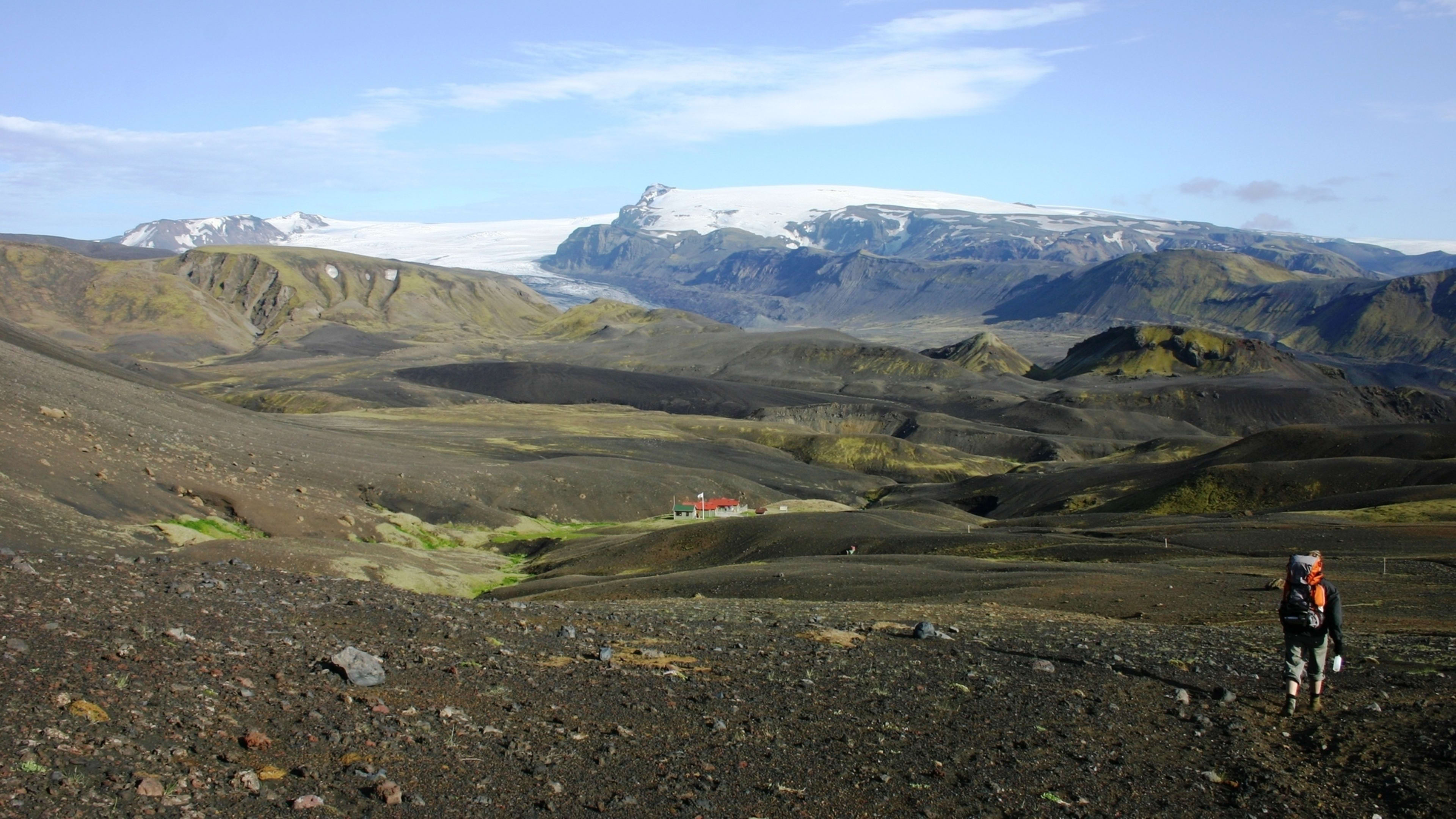
Hattfell marks the entry into the Emstrur region, a historic area of the highlands that farmers once used for summer sheep grazing. The volcano's presence provided orientation for shepherds navigating this remote landscape, and it continues to serve as a crucial landmark for modern hikers on the Laugavegur Trail. The green mountain signals that the most exposed sections of the black sand desert are behind them and that shelter at the Botnar huts is approaching.
The volcano sits in a transitional zone where the stark volcanic deserts begin giving way to areas with slightly more vegetation and shelter. While still remote and challenging, the Emstrur region offers more protection from wind than the open expanses of Mælifellssandur to the north. Hattfell's slopes, covered in moss and hardy highland plants, demonstrate that even in this harsh environment, life can establish itself given sufficient time and the right conditions.
South of Hattfell, the landscape continues to evolve, with the massive Mýrdalsjökull glacier looming ever closer and the terrain beginning its gradual descent toward the lush valleys of Þórsmörk. The volcano represents a midpoint in this transformation, standing between the desolate highlands and the more hospitable lowlands that await hikers near the trail's end.
The Markarfljót Canyon Connection
One of the most spectacular features near Hattfell is the Markarfljót canyon, which cuts nearly 200 meters down into the rocks immediately south of the volcano. This dramatic gorge, carved by glacial meltwater over thousands of years, provides one of the trail's most impressive geological displays. The canyon's depth and the power evident in its formation showcase the erosive force of water flowing from Iceland's glaciers.
Hikers approaching the Botnar huts often take a detour to view the canyon, a worthwhile side trip that requires only a short walk from the main trail. The viewing points offer breathtaking perspectives of the gorge where the Markarfljót and Syðri-Emstruá rivers meet, their waters combining before continuing their journey toward the sea. The sound of rushing water echoes through the canyon, a reminder of the constant geological processes shaping Iceland's landscape.
The Markarfljót canyon represents one of the lesser-visited highlights along the Laugavegur Trail, as many hikers bypass it in their eagerness to reach the shelter of the huts. Those who take the time to visit often consider it one of the trail's most impressive sights, with its sheer walls and the violence of its formation contrasting with Hattfell's gentle green slopes nearby.
Vegetation and Geological Time
Hattfell's complete vegetation cover provides insight into the timescales of Icelandic geological processes. The volcano has been inactive long enough for weathering to break down its original rock into soil, and for mosses, grasses, and other hardy plants to colonize its entire surface. This transformation takes thousands of years in Iceland's harsh climate, making Hattfell considerably older than many of the lava fields and volcanic features visible along the trail.
The green color comes primarily from moss, which thrives in Iceland's cool, moist climate. These primitive plants can survive on minimal nutrients and extreme conditions, making them often the first colonizers of new volcanic terrain. On Hattfell, the moss has had millennia to establish itself, creating a thick carpet that gives the mountain its distinctive appearance.
The contrast between Hattfell's verdant slopes and the black sand surrounding it illustrates the different stages of Iceland's volcanic landscape. Fresh volcanic material appears black and barren, but given time, weathering, and the right conditions, even the harshest terrain can support life. Hattfell serves as a preview of what the current black sand deserts might look like in thousands of years.
Historic Summer Grazing Lands
The Emstrur region around Hattfell holds historical significance as one of Iceland's traditional summer grazing areas. For centuries, farmers brought their sheep to these highlands during the warmer months, taking advantage of the vegetation that grows here during summer. The practice of summering sheep in the highlands was crucial to Iceland's agricultural economy, making use of land that would otherwise sit empty.
Shepherds built stone shelters and enclosures throughout the region, some of which still stand as ruins today. These structures testify to the hardy nature of Iceland's farming traditions and the importance of utilizing every available resource in a challenging environment. The sheep themselves helped shape the landscape, their grazing preventing certain plants from dominating while encouraging others more resistant to grazing pressure.
This historical connection adds depth to the experience of hiking through Emstrur. The landscape that modern hikers traverse on their multi-day adventure was once the workplace of shepherds who spent weeks or months here tending their flocks. The old grazing lands have now become part of one of the world's most famous hiking trails, connecting past and present uses of Iceland's highlands.
A Reassuring Presence
For hikers on the Laugavegur Trail, Hattfell often provides psychological relief as much as visual interest. After the exposure and challenge of crossing Mælifellssandur, the sight of the green volcano signals progress toward shelter and a change in terrain. The mountain's gentle slopes and vegetation create a sense that the environment is becoming slightly less harsh, even though significant challenges still lie ahead.
The approach to Hattfell marks the approximate midpoint of the day's hike from Hvangil to Emstrur, one of the longer sections of the trail. Seeing the volcano rise ahead helps hikers gauge their progress and provides motivation to continue. Its distinctive appearance makes it easy to spot from various points along the trail, serving as a reliable landmark for navigation.
The Botnar huts lie not far beyond Hattfell, tucked into a small valley that provides shelter from the prevailing winds. After hours of exposure crossing the black sand desert, the promise of rest and protection that Hattfell signals is welcome indeed. Many hikers report feeling their spirits lift upon seeing the green mountain, knowing that their day's destination is approaching.