
About Dettifoss
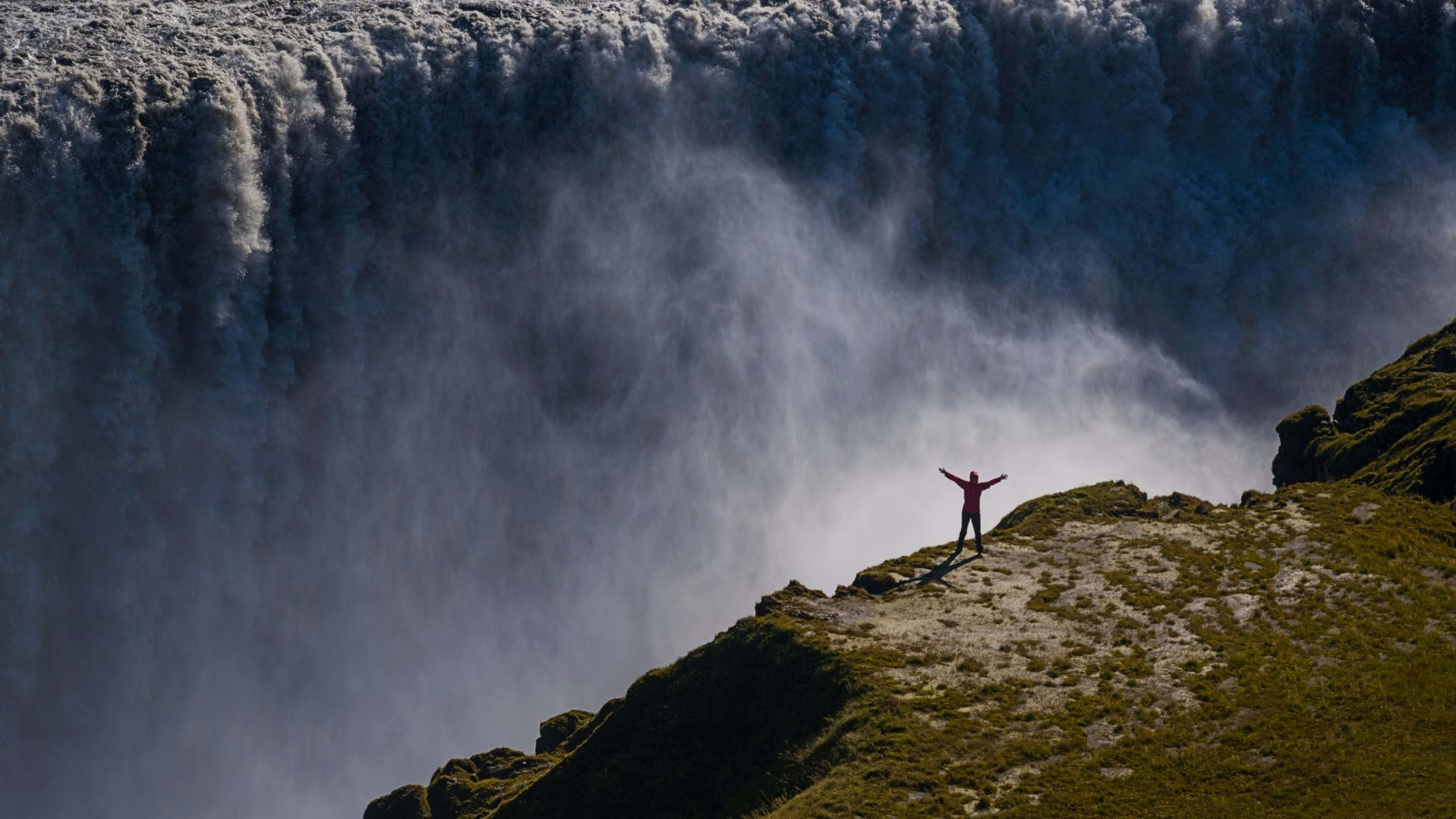
Dettifoss is a waterfall on the Jökulsá á Fjöllum river in northeast Iceland, within Vatnajökull National Park. It drops 44 metres over a width of around 100 metres, with a water flow of 193 cubic metres per second -- making it the second most powerful waterfall in Europe by volume. The river is fed by meltwater from Vatnajökull glacier, about 110 km to the south, and carries a heavy load of glacial sediment that gives the water its grey-brown colour.
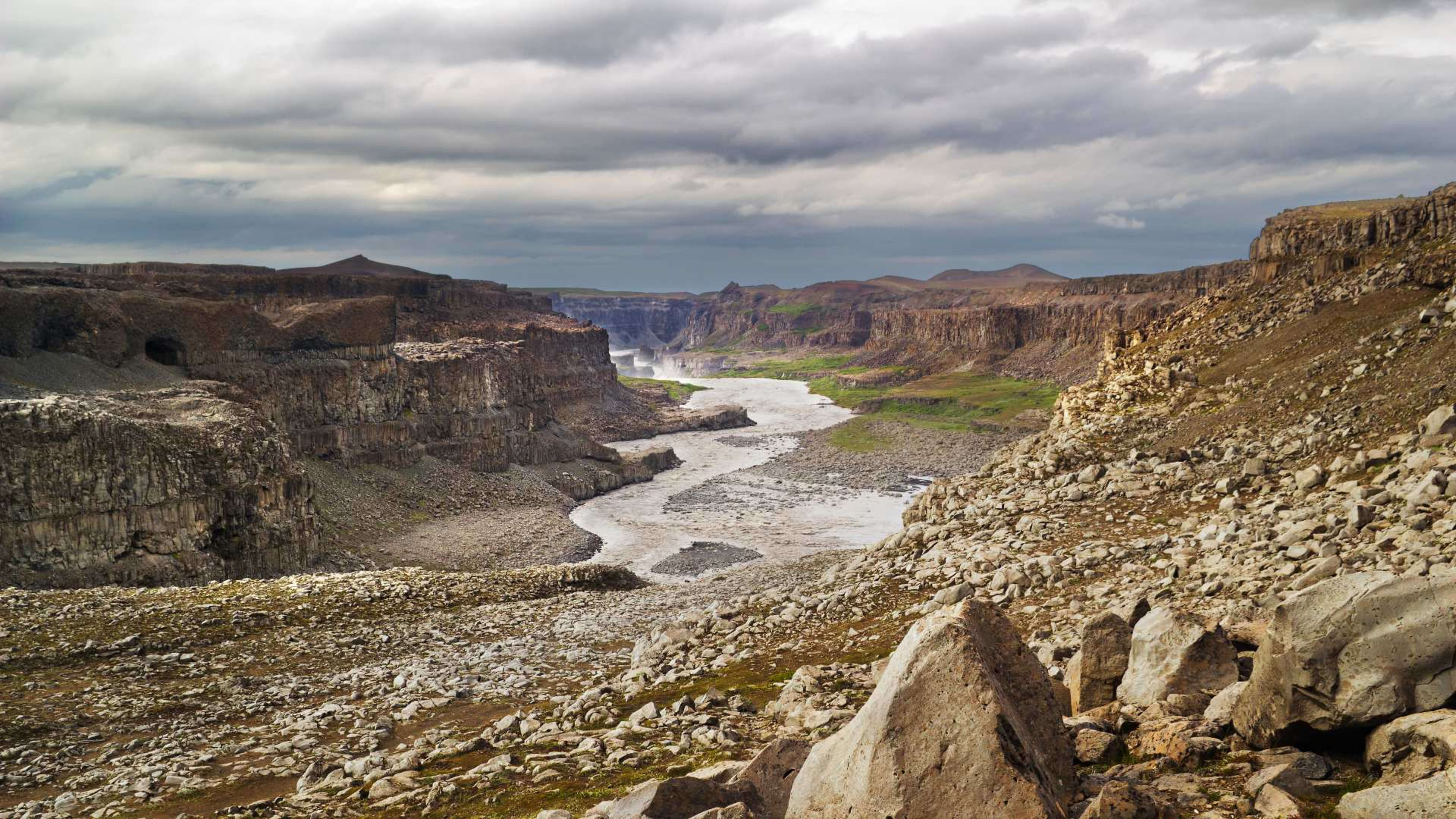
The waterfall sits in the Jökulsárgljúfur canyon, a dramatic gorge carved by glacial floods over thousands of years. The force and scale of Dettifoss make it unlike most waterfalls in Iceland -- where many are notable for their height or elegance, Dettifoss is notable for sheer volume and noise. The roar carries well before you reach the edge.
East side or west side
Dettifoss is accessible from both banks of the river, and the two approaches give different experiences.
The west side via Route 862 is on a paved road open year-round. It has more parking, a viewing platform, and several walking trails. This is the easier and more reliably accessible option in all seasons.
The east side via Route 864 is a seasonal gravel road, generally accessible in summer but often closed in winter. From the east bank you can also reach Selfoss, a broader multi-tiered waterfall about 1 km upstream, and Hafragilsfoss downstream. The east side road connects to several other waterfalls in the canyon system -- Réttarfoss, Urriðafossar, and Hólmárfossar -- making it worth the rougher drive if conditions allow.
Both sides are about 1.5 hours east of Akureyri via Route 1.
What to see nearby
A short walk upstream from Dettifoss brings you to Selfoss, which is 11 metres high and around 70 metres wide -- lower than Dettifoss but spread across a broad series of rocky ledges. The contrast between the two is worth the 20-minute walk.
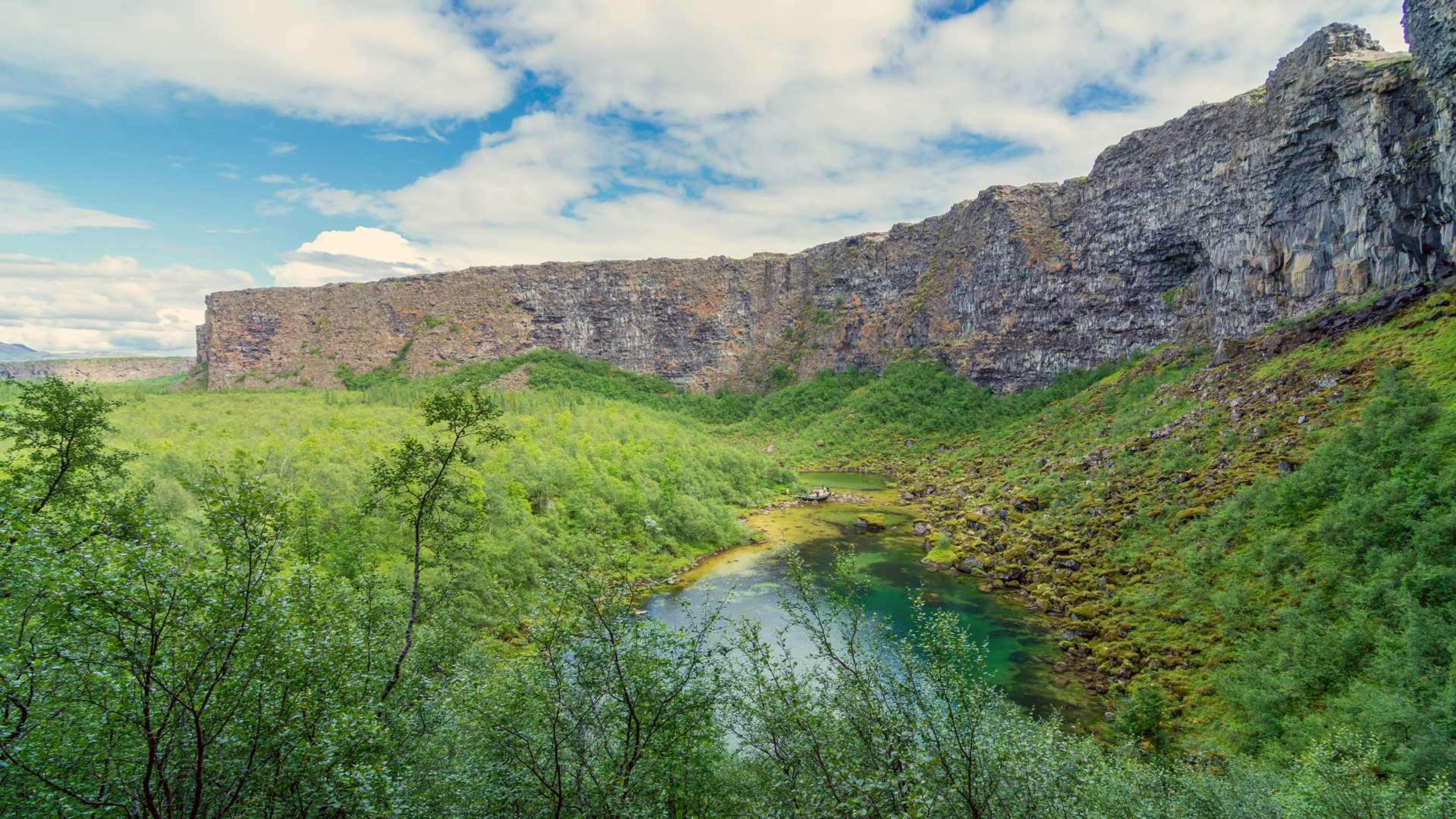
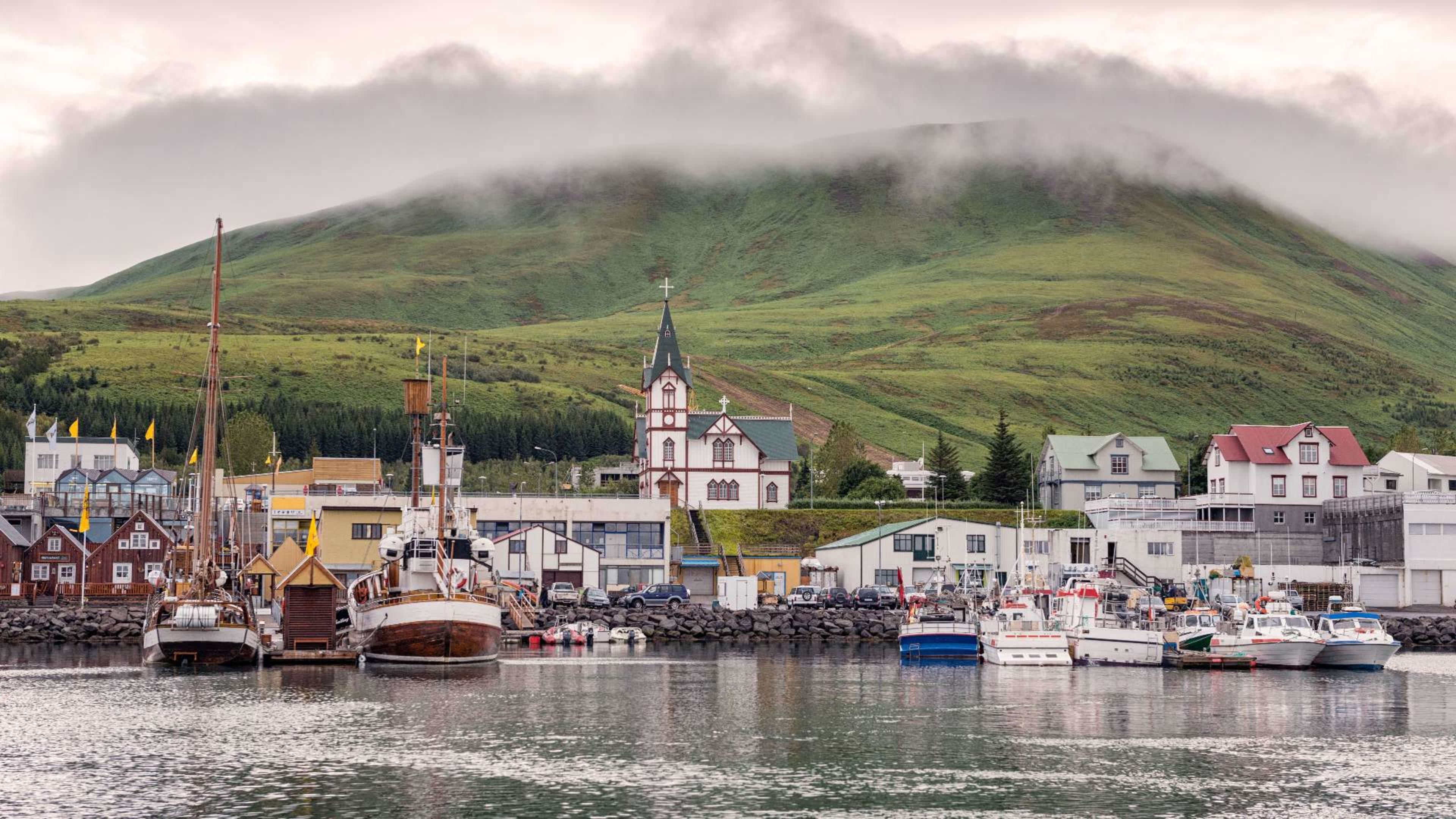
Dettifoss is part of the Diamond Circle route in north Iceland, which also takes in Lake Mývatn, Ásbyrgi canyon, and the whale watching town of Húsavík. Most visitors combine Dettifoss with at least one or two of these on a multi-day north Iceland itinerary.
Getting there
From Reykjavík, Dettifoss is about 6 hours via the Ring Road -- it is best visited as part of a Ring Road self-drive rather than a day trip from the capital. From Akureyri it is around 1.5 hours. The west side road (Route 862) is the more reliable year-round route. Check road conditions on road.is before travelling, particularly for Route 864 outside of summer.