Stuðlagil canyon

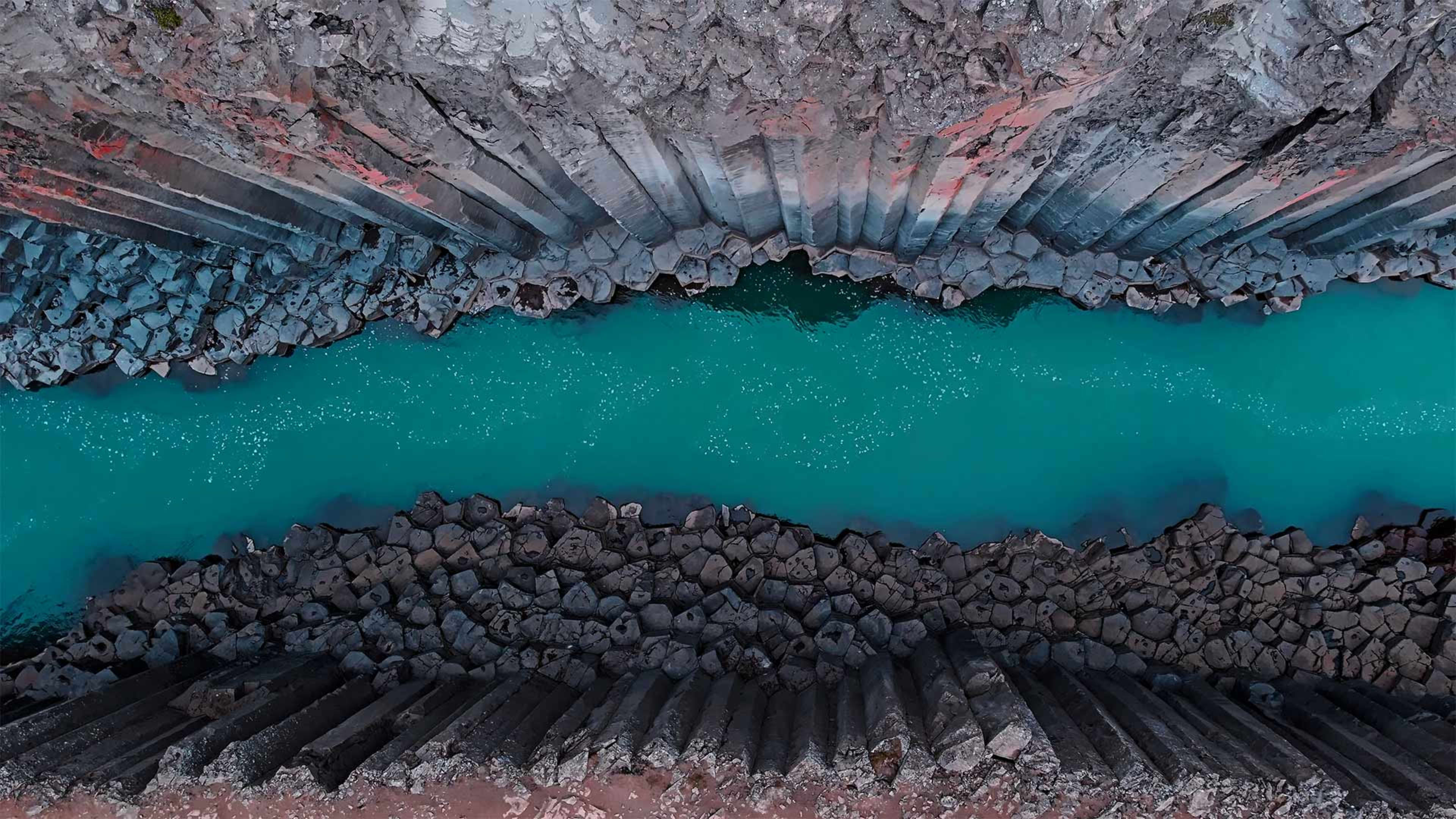
Stuðlagil is a canyon in the Jökuldalur valley in east Iceland, formed by the glacial river Jökla cutting through a dense concentration of columnar basalt. The canyon's columns were largely submerged until 2009, when the construction of the Kárahnjúkar hydroelectric dam reduced the river's volume and exposed the rock formations. The result is one of the most dense and visually striking concentrations of basalt columns in Iceland, with the river running turquoise between the dark walls of the gorge.

East Iceland
Best time to visit
Summer
Parking
Paid
Charging station
No

The Basalt Columns

Columnar basalt forms when lava cools slowly and contracts, fracturing into regular polygonal columns, typically five or six-sided. The columns at Stuðlagil are tightly packed and rise in vertical rows from the canyon floor to the rim, forming continuous walls along both sides of the river. The river water, fed by glacial melt, runs a characteristic blue-green colour that contrasts with the dark grey of the basalt, particularly in summer when flow is more stable and visibility is clearest.

The canyon became known internationally after photographs taken following the dam's completion circulated widely. It is now one of the most photographed locations in east Iceland and attracts visitors specifically for landscape photography.

The Two Sides of the Canyon

Stuðlagil can be approached from the east bank or the west bank of the Jökla river, and the two sides offer different experiences.

The east bank gives access to the canyon floor via a hiking trail that descends to the river level. From here visitors can stand directly among the columns and look along the gorge from within it. The trail is uneven and rocky in places and takes around 45 minutes to an hour return depending on how far along the canyon floor you walk. Sturdy footwear is essential. The hike involves some elevation change and the path can be muddy after rain.

The west bank has a marked car park and viewpoint platform that gives an elevated view down into the canyon from above. This is the quicker option and accessible without a significant hike, making it practical for those with limited time or mobility. The west bank viewpoint is well signposted from the valley road.

Getting to Stuðlagil

Stuðlagil is in the Jökuldalur valley, reached by turning off Route 1 north of Egilsstaðir onto Route 923. The drive from Egilsstaðir takes around 20 minutes. The valley road leads into Jökuldalur and the canyon is signposted from there. The west bank car park and the east bank trailhead are both signposted within the valley. The roads are unsealed and can be rough, particularly the track to the east bank, but are generally manageable by standard vehicles in dry conditions. Check road conditions before visiting in spring when snowmelt can make tracks muddy or impassable.

From Reykjavík, Stuðlagil is approximately 650 kilometres along the Ring Road, around six and a half hours. It fits naturally into a Ring Road itinerary as a stop near Egilsstaðir.

When to Visit

Summer is the most practical time to visit. The river runs at a lower, more stable level, the turquoise colouring is most pronounced, and the east bank trail is in its best condition. The canyon is accessible in other seasons but the track to the east bank can be affected by snow and mud from late autumn through spring, and shorter daylight hours in winter limit the time available for the hike.

Other attractions in the area

The Vök Baths at sunset

Vök Baths

Slip into Iceland’s only floating pools at Vök Baths and unwind in warm geothermal waters.

67 km (42 mi)

View
Scenic view of the Lögurinn lake southern area from the west side

Sightseeing

Lake Lagarfljót

Discover the beauty and folklore of this legendary lake.

72 km (45 mi)

View
View over the Fellabær neighborhood of Egilsstaðir

Sightseeing

Egilsstaðir

Charge your batteries in the self-styled capital of Iceland’s Eastfjords.

71 km (44 mi)

View
View of the seven tiered Klifbrekkufossar waterfall

Sightseeing

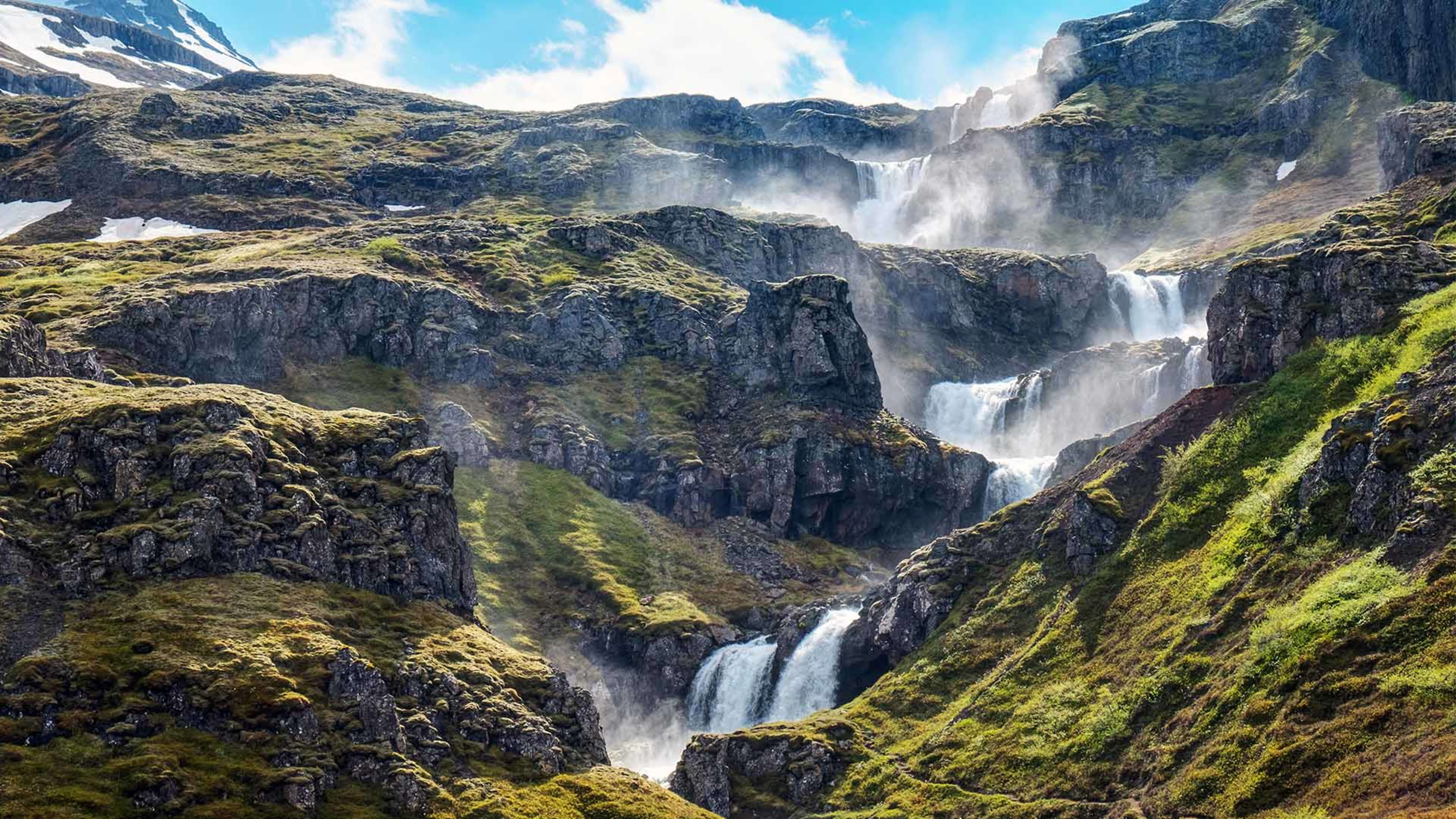
Klifbrekkufossar

Marvel at this 7-tiered waterfall in the Eastfjords.

97 km (60 mi)

View

FAQs about Stuðlagil Canyon

Stuðlagil is a basalt canyon in the Jökuldalur valley in east Iceland, carved by the glacial river Jökla. It is known for its walls of columnar basalt and the turquoise colour of the river running between them. The columns were largely hidden underwater until 2009, when the Kárahnjúkar Dam reduced the river's volume and exposed them.

Columnar basalt forms when lava cools slowly and contracts, fracturing into regular polygonal columns. At Stuðlagil, these columns are densely packed along both walls of the canyon. The glacial river Jökla carved through the basalt over time, creating the gorge visible today.

The columns were exposed in 2009 following the completion of the Kárahnjúkar hydroelectric dam, which significantly reduced the volume of water flowing through the Jökla river. Before that, much of the canyon floor and lower column formations were submerged.

It depends on what you want. The east bank trail descends to the canyon floor and gives direct access to the columns and river, offering the most immersive views. The west bank has a car park and elevated viewpoint accessible without a significant hike. If time and fitness allow, the east bank gives a more complete experience.

The east bank trail to the canyon floor and back takes around 45 minutes to an hour return at a moderate pace. The path is uneven and rocky in places. Sturdy footwear is recommended.

Stuðlagil is approximately 20 minutes from Egilsstaðir by car, turning off Route 1 onto Route 923 into the Jökuldalur valley.

Summer is the best time. The river runs at a stable level with the most vivid turquoise colouring, and the east bank trail is in its best condition. The canyon can be visited in other seasons but the access track to the east bank may be affected by mud or snow outside of summer.

#icelandmyway

See what travelers like you have been up to lately on Instagram.