Gullfoss

Explore the pathways and history leading to one of Iceland’s greatest waterfalls.

South Iceland

About Gullfoss

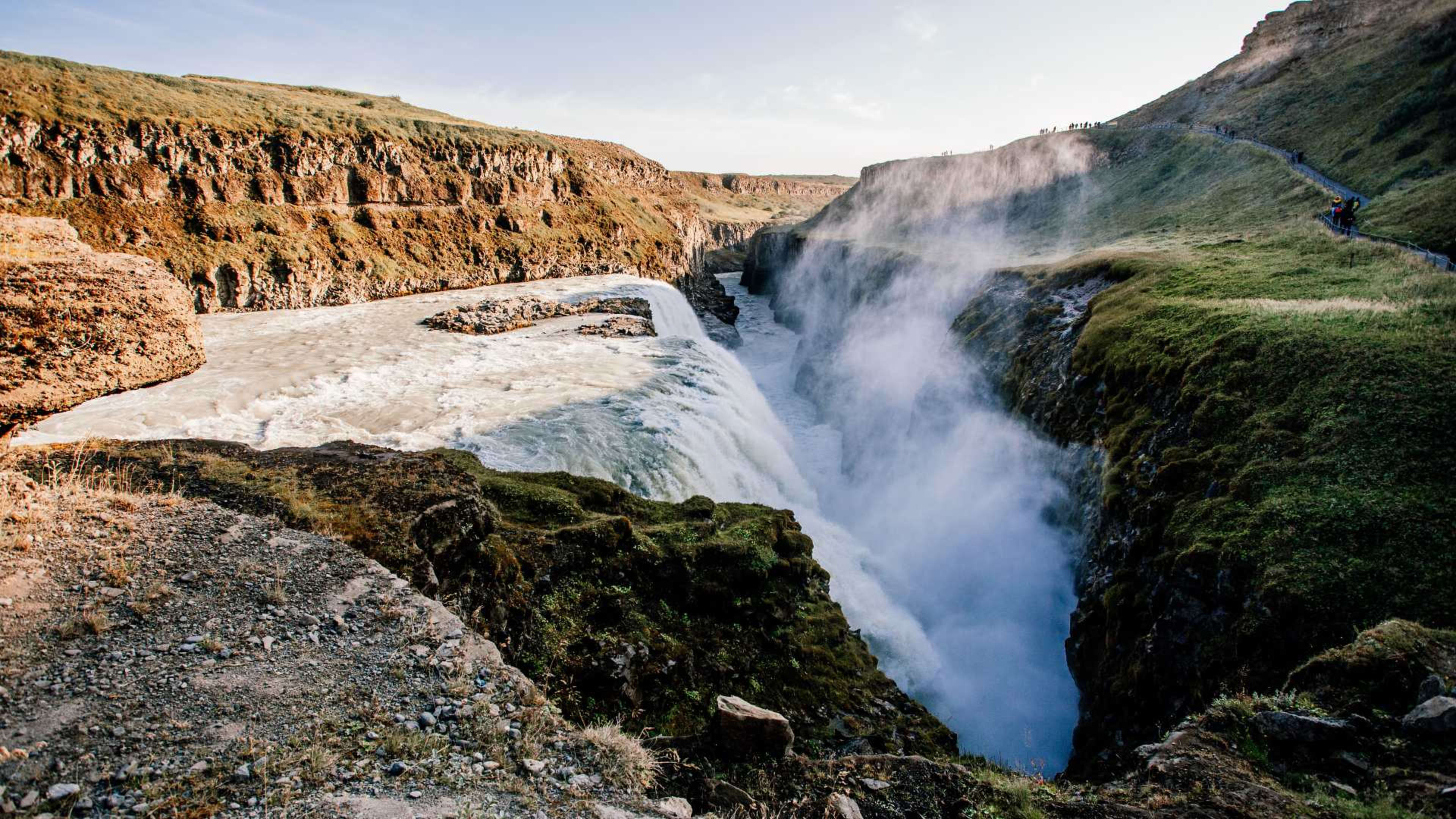
Gullfoss is a two-tiered waterfall on the Hvítá river in the Haukadalur valley, about 116 km northeast of Reykjavík. The name means "Golden Falls," a reference to the golden hue the water takes on when sunlight catches the glacial sediment suspended in the river. The Hvítá drains from Langjökull glacier, which gives the water its characteristic milky colour.

The waterfall drops in two stages: an upper cascade of around 11 metres followed by a steeper 21-metre plunge into the narrow Gullfossgjúfur canyon, giving a total drop of 32 metres. What makes the setting particularly dramatic is the canyon's sharp bend, which forces the river to change direction almost at a right angle as it descends. The combination of the stepped drop and the turn creates substantial spray, and on sunny days rainbows are common at the canyon edge.

Gullfoss sits on the Golden Circle route, making it one of the most visited sites in Iceland. Geysir geothermal area is about 10 minutes away, and Þingvellir National Park is roughly an hour to the southwest.

The conservation story

Gullfoss is free to visit, and that is partly due to the efforts of Sigríður Tómasdóttir, daughter of the farmer Tómas Tómasson who owned the land in the early 20th century. When foreign investors sought to lease the falls for hydroelectric development, Tómas refused to sell outright, famously saying he would not sell his friend. A lease was eventually arranged, but Sigríður challenged it persistently -- she walked to Reykjavík multiple times to petition lawyers and officials, and threatened to throw herself into the falls if the contract was not withdrawn. The project was eventually abandoned, the lease lapsed, and the land was later purchased by the Icelandic state. A statue and plaque near the visitor centre honour Sigríður's role in protecting the site.

Visiting Gullfoss

There is a visitor centre at the site with a café, toilets, and information on the waterfall's geology and history. Parking is free. Several marked paths lead from the car park to different viewpoints, including an upper platform with a clear view of both tiers and a lower path that brings you close to the canyon edge. The lower paths are closed in winter when ice makes them unsafe, so summer is the best time to get closest to the falls.

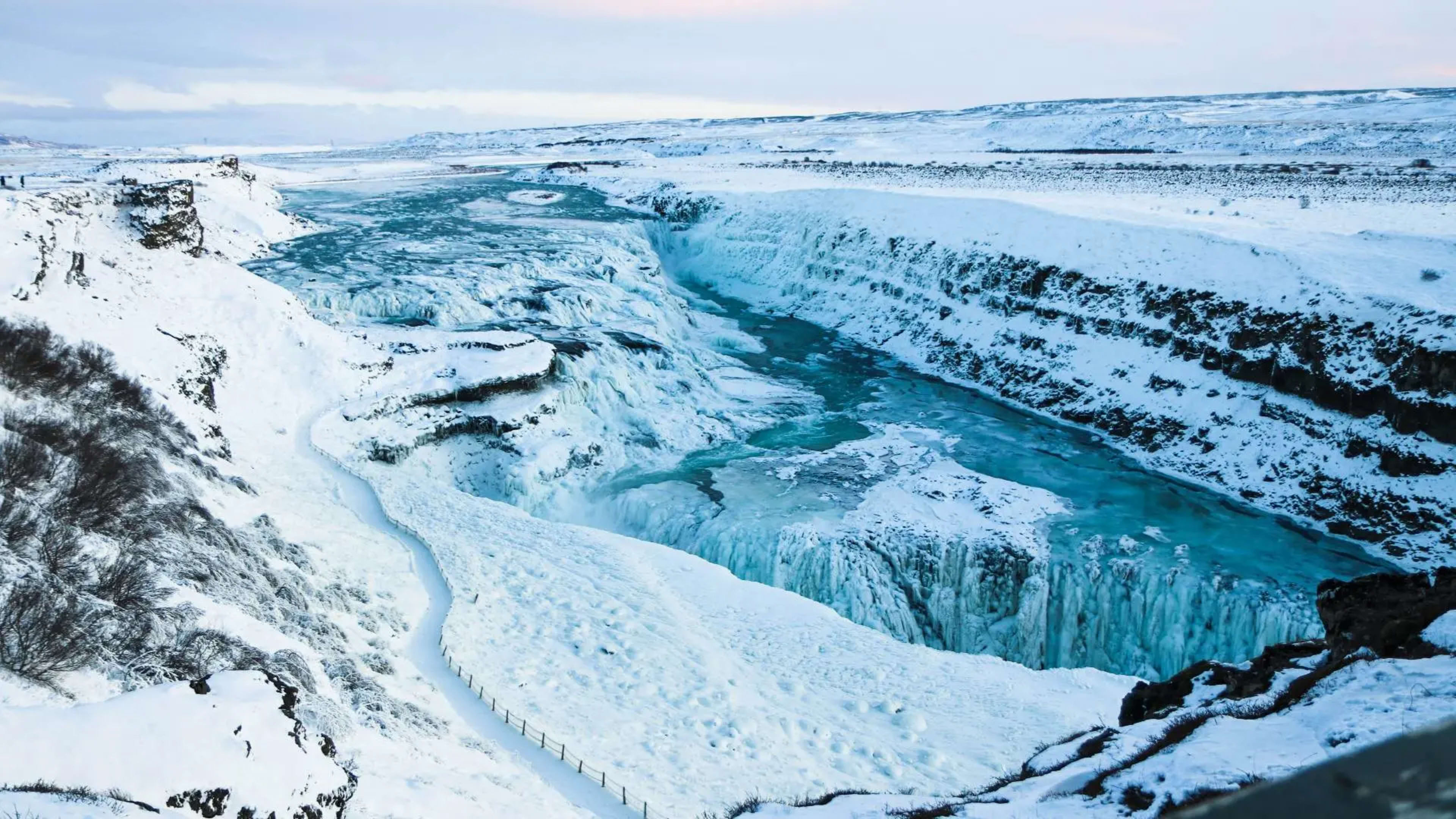
An hour is a reasonable amount of time for most visitors. In summer, when the lower paths are open and the water is at full volume from glacier melt, you may want longer. In winter the falls take on a different character -- ice formations build up on the surrounding rocks, the spray freezes, and the landscape around the canyon becomes heavily frosted. It is worth visiting in either season, but come prepared for cold and icy underfoot conditions if you visit between November and March.

Getting there

Gullfoss is about 116 km from Reykjavík -- roughly 1 hour 40 minutes by car. The route follows Route 1 east toward Selfoss, then north on Route 35 through the Haukadalur valley. The road is well signposted throughout. Gullfoss is a standard stop on Golden Circle self-drive tours and is also included on many guided group tours from Reykjavík.

Other attractions near Gullfoss

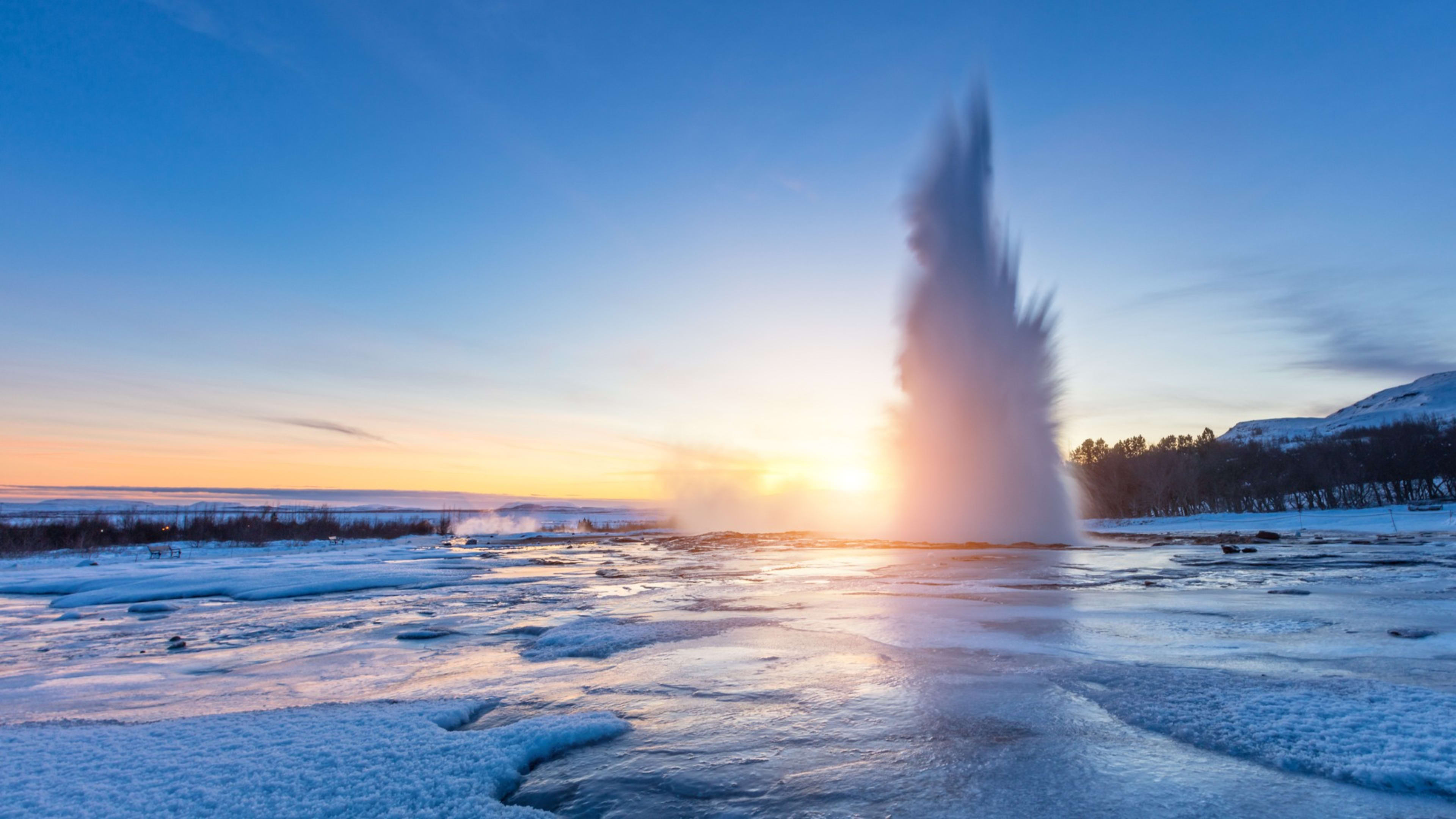
The Strokkur geyser erupting in winter against a sunset

Geysir and Strokkur

Experience the power of nature first-hand when you visit the geothermal areas of Geysir and Strokkur.

10 km (6 mi)

View
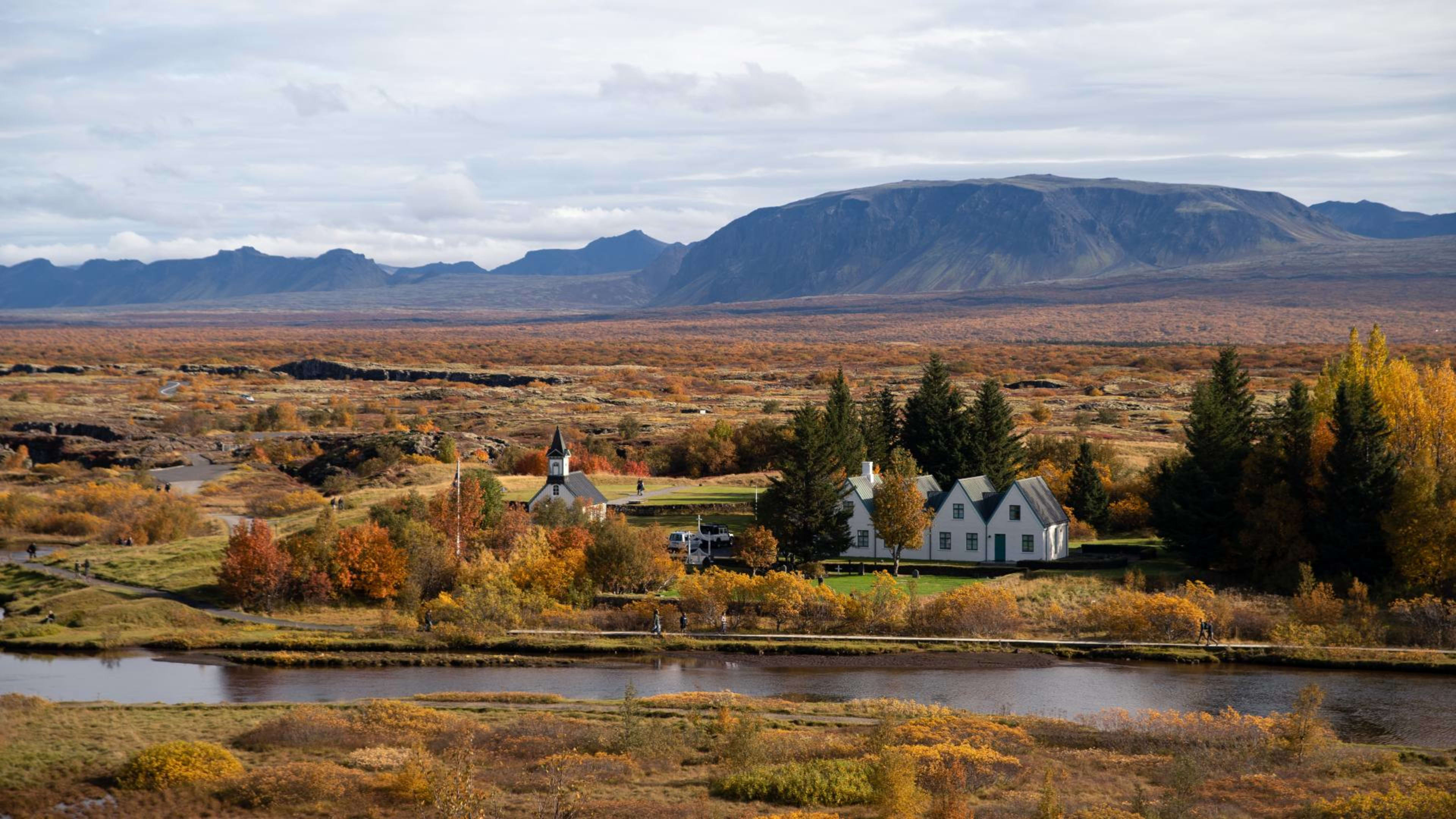
Þingvellir National Park, Iceland, in autumn colors

Þingvellir National Park

Step back in time and see Iceland’s natural and cultural history up close at this major historic site.

70 km (43 mi)

View
The Tjörnin pond in Reykjavík in summer

Downtown Reykjavík

Immerse yourself in culture, cuisine, and heritage at the beating heart of the Icelandic capital.

116 km (72 mi)

View
The town of Akranes with mountains in the distance

Akranes

Visit the outdoor folk museum and a historic lighthouse in this cute coastal town.

130 km (81 mi)

View

FAQs about Gullfoss

Gullfoss is one of the largest and most famous waterfalls in Iceland. It stands out from others in Iceland with its 2 stepped drops, and a 90 degree turn as the water descends into the valley below.

The name means ‘Golden Falls. The name comes from how light shines down the canyon, with the water spray looking golden on a sunny day.

Gullfoss waterfall can be found in the Haukadalur valley, on the Hvítá river.

The waterfall has a visitor center with a café and toilet facilities. You’ll also find clearly marked paths leading to the falls. Some paths are closed in the winter months, so visit in summer if you want to get really up close to the falls.

Like many of Iceland’s waterfalls, Gullfoss and the valley were formed (at least in part) by glaciers and glacial flooding during the last ice age.

When you see how the Haukadalur valley carves its way through the landscape, it’s hard to imagine the sheer volume of water and ice needed to create it!

Gullfoss is split into 2 tiers. The first is a shorter cascade around 11 m (36 ft) tall, and the second part a much steeper 21 m (69 ft), giving Gullfoss a total drop of 32 m (105 ft). The two parts of the waterfall are what give it the distinctive stepped appearance you can see when visiting.

Gullfoss is impressive, and you could easily think it’s the largest waterfall in Iceland. However, the title for that goes to Dettifoss in North Iceland. Dettifoss is the most powerful waterfall in Europe and the widest in Iceland, at 100 m (almost 330 ft).

The tallest falls in Iceland are Morsárfoss, standing at 228 m (750 ft) high! However, you can’t reach it easily, and the waterfall has only existed since 2007.

Gullfoss is very well known though, making it Iceland’s most popular waterfall by far.

It is completely free for you to visit Gullfoss! The waterfall is a national landmark and Icelanders are very proud of it. In fact, the falls were fought over to ensure they remained in Icelandic hands and were free for people to see and enjoy.

In the early 20th century, foreign investors wanted to buy the falls from the owner at the time, Tómas Tómasson. He refused, saying ‘I will not sell my friend!’, but did go on to lease the land.

However, a loophole in the lease was exploited. Luckily, Sigríður Tómasdóttir, Tómas’s daughter, realized this, and worked tirelessly to preserve Gullfoss. She even threatened to throw herself into the falls if the contract was not withdrawn.

Her efforts are commemorated with a statue and plaque, and with the free access to the falls for Gullfoss visitors. Make sure you thank Sigríður when you visit Gullfoss!

A good amount of time to spend at Gullfoss is around 1 hour. Depending on the time of year when you visit, you can explore more of the paths around the falls, so you might want to factor in more time.

In the summer you can walk right to the top of Gullfoss and see the two drops and the river rapids too. A visit to Gullfoss in winter brings its own beauty, although you will need to be equipped with snow boots and thermals for safety and comfort.

There’s also a visitor center with more information on how Gullfoss was formed. Here you can learn more about the local history and folklore of the site.

If you’re staying in the capital Reykjavík and want to visit Gullfoss waterfall, you’re in luck! Gullfoss is only around 1 hour, 40 minute drive from Reykjavík. This equates to 116 kilometers, or about 72 miles.

The best way for you to get to Gullfoss from Reykjavík is by road. You can either opt to rent a car or join one of the many guided group or private tours available. Once you park up at Gullfoss, you can walk up one of the marked paths to explore the falls.

#icelandmyway

See what travelers like you have been up to lately on Instagram.