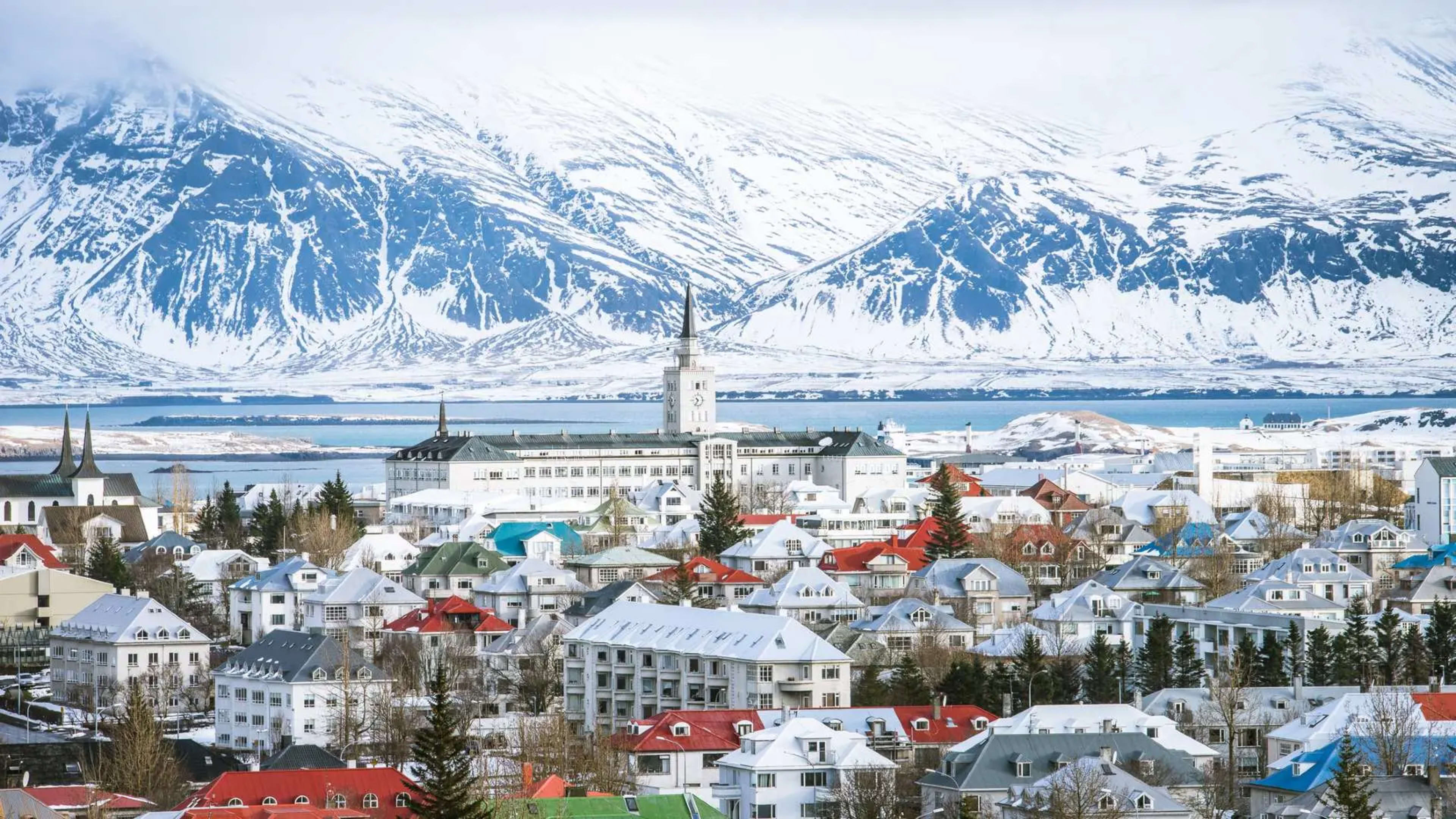
Christmas is an excellent time to visit Iceland, offering spectacular snow-lined scenery to explore, cheerful Christmas markets to browse, the Northern Lights to hunt for, and uniquely Icelandic seasonal dishes to taste.
And if your visit extends into New Year’s Eve, you’re guaranteed one of the most incredible fireworks displays you’ll ever see, as Reykjavík marks the end of the year in dazzling style.
In Iceland, Christmas has a different name
Jól is the Icelandic word for Yule and Christmas, and you’ll see Jól as a prefix for beers, cakes, restaurant meals, and cultural events all around the city in December.
Iceland’s origins as a Nordic nation saw its early settlers maintain their pagan rituals for a long time before incorporating Christian festive traditions, creating a fascinating cultural blend that lasts to this day.
The long dark winter nights encouraged communal storytelling and feasting, and the Winter Solstice was seen as a significant cause for celebration, with brighter days beginning to return.
Amongst the traditional tales that warmed the hearts of Icelanders down the ages, the Yule Lads and the Yule Cat are perhaps the most famous characters.
The Yule Lads were first mentioned in the 17th-century poem Grýla, which inspired the Icelandic author Jón Árnason to include them in his 1862 collection of local folk stories, the Icelandic equivalent of Grimm’s Fairy Tales.
Who are The Yule Lads?
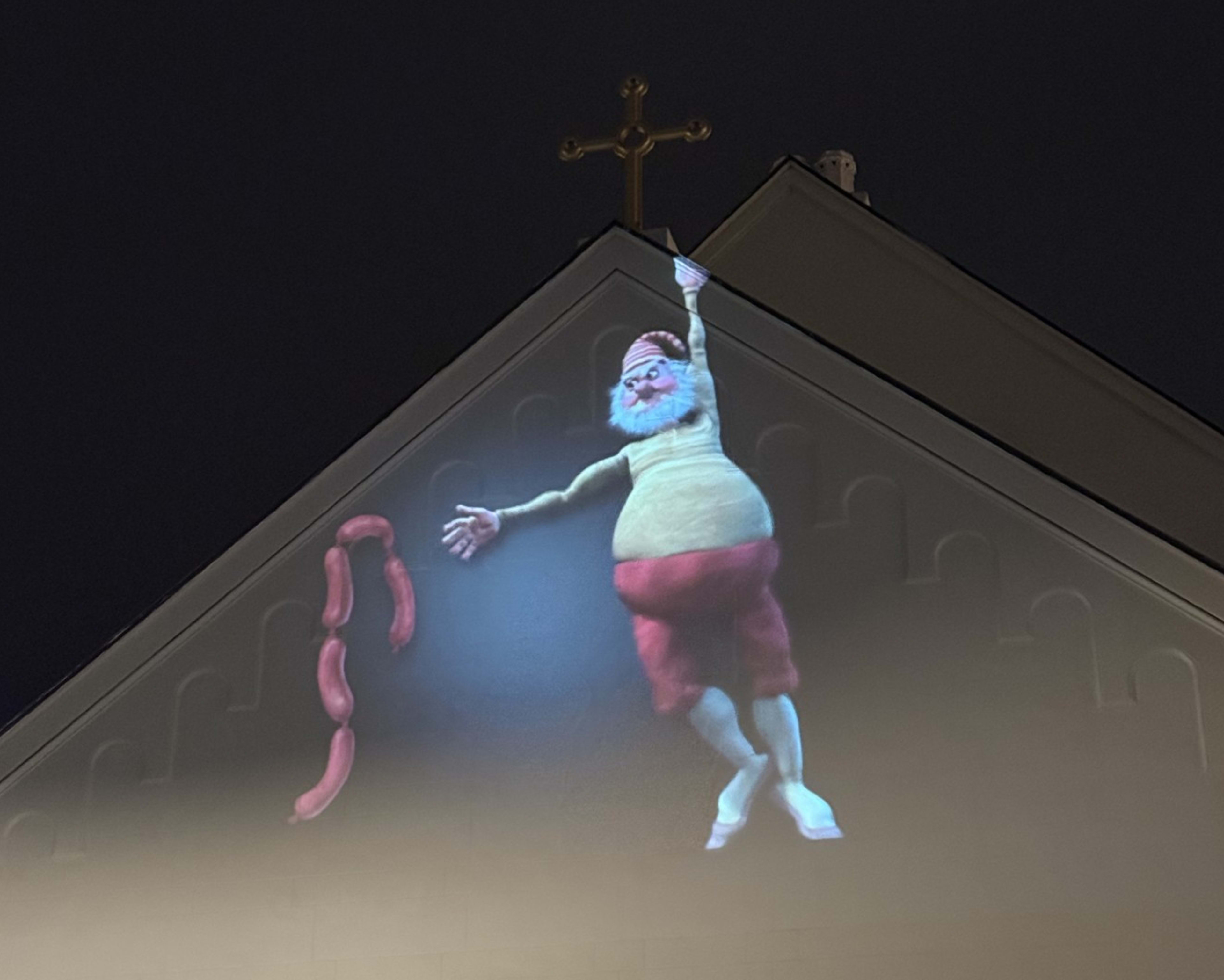
Icelanders don’t have just one “Santa” bringing them presents every year - they have at least thirteen Yuletide gift-givers to welcome throughout December!
The Yule Lads (Jólasveinar) are a motley gang of trolls from the mountains around Mývatn in North Iceland, who spend a couple of weeks around Jól amongst Iceland’s human population.
The sons of a terrifying child-catching troll mother called Grýla, the Yule Lads were once considered scary creatures who stole precious food and caused trouble wherever they went.
Over time, their arrival has become a cheerful sign of the festive period ahead, and generations of Icelandic children have learned to behave to earn a treat from each Yule Lad in turn in the days leading up to Jól.
From December 11th onward, the Yule Lads will arrive, one after another, at their chosen locations for thirteen nights before leaving, one by one, by January 6th.
Each of the Jólasveinar has their own character and a different way to cause trouble!
December 12th: Stekkjarstaur (Stiff Legs or Sheep-Cote Clod)
Stekkjarstaur has long, stiff legs and tries to steal milk from sheep on farms, but it’s a bit tricky because of those legs!
December 13th: Giljagaur (Gully Gawk)
Giljagaur hides out in gullies and creeks around town, taking his chance to steal milk from cowsheds whenever the farmers aren’t looking.
December 14th: Stúfur (Stubby)
Stúfur is small and short, sneaking around to grab unwatched pots and pans for the crusty leftovers.
December 15th: Þvörusleikir (Spoon Licker)
Þvörusleikir is also a food thief, looking for unwashed wooden stirring spoons to lick clean, possibly without much success, as he’s pretty thin.
December 16th: Pottaskefill (Pot Scraper)
Pottaskefill is a door-knocker who distracts his victims at their front doors before stealing their cooking pots and food scraps.
December 17th: Askasleikir (Bowl Licker)
Askasleikir looks under beds for any bowls with scraps left for household pets, which he licks clean himself.
December 18th: Hurðaskellir (Door Slammer)
Hurðaskellir isn’t as interested in food as his brothers, preferring to slam doors and wake up everyone in the house instead.
December 19th: Skyrgámur (Skyr Gobbler)
Skyrgámur is a fan of skyr, the traditional Icelandic yogurt, stealing it whenever he finds a pot unattended.
December 20th: Bjúgnakrækir (Sausage Swiper)
Bjúgnakrækir is another specialist thief who climbs up into the rafters to steal sausages hung there for smoking.
December 21st: Gluggagægir (Window Peeper)
Gluggagægir is a lurker who peeks through open windows looking for things to steal.
December 22nd: Gáttaþefur (Door Sniffer)
Gáttaþefur is a big-nosed thief who sniffs out wherever people are baking and making off with any unguarded cakes and cookies.
December 23rd: Ketkrókur (Meat Hook)
As his name suggests, Ketkrókur makes use of a long hook to steal any meat that’s hanging up.
December 24th: Kertasníkir (Candle Stealer)
Kertasníkir steals candles wherever he can find them, as they were once valuable items in Iceland.
The Yule Lads all return to their mountain home in Dimmuborgir (Dark Castles) in North Iceland from Christmas Day onwards.
Just like setting out a Halloween pumpkin or hoping for a visit from the Tooth Fairy, Icelandic children put an empty shoe in their window, wishing for a little present from each Yule Lad over these thirteen nights. Naughty children can expect a rotten potato instead!
What about the Yule Cat?
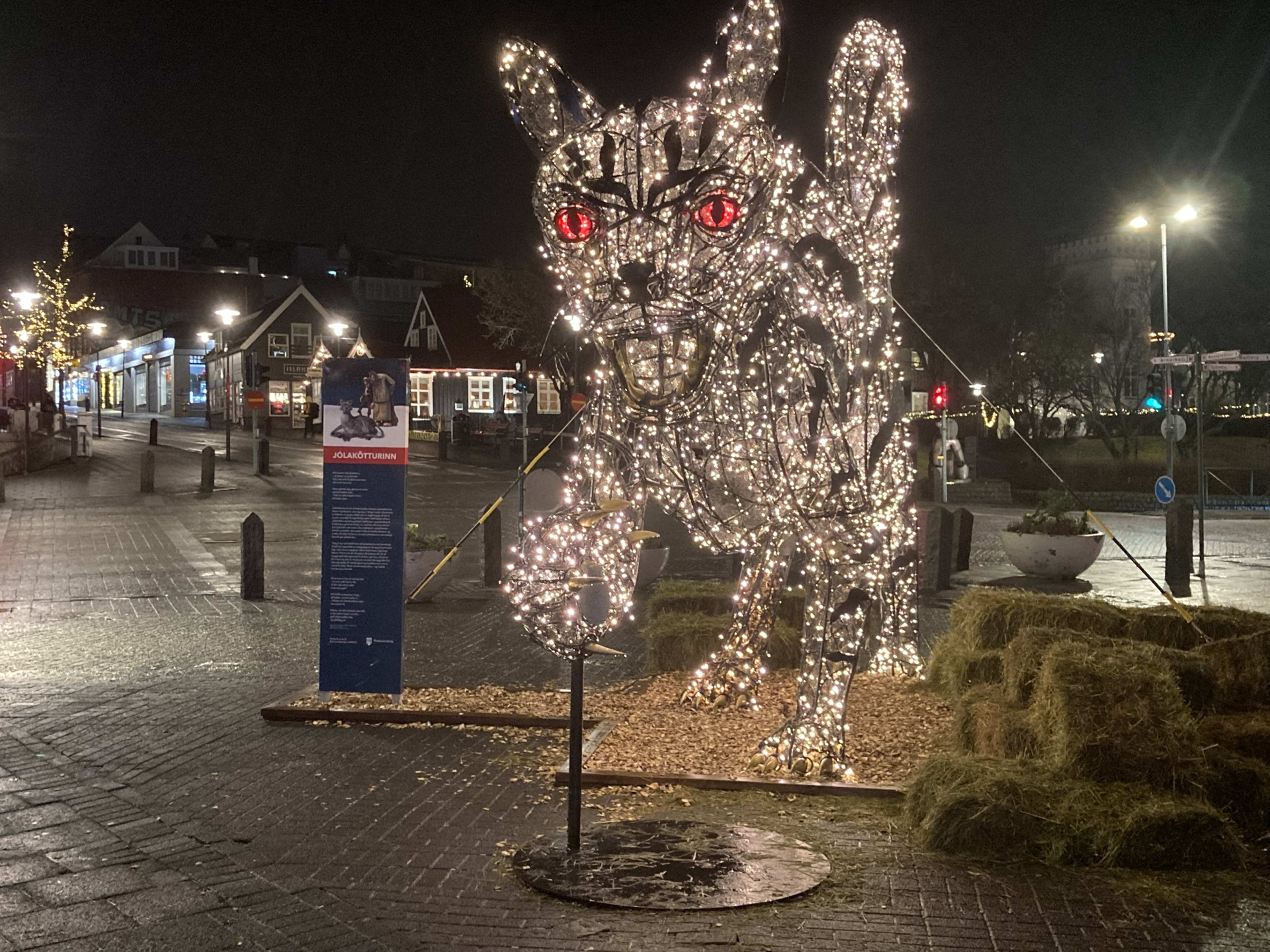
While the Yule Lads have become friendlier fellows over the years, there’s still a fearsome feline to watch out for when you’re in Iceland in December.
Jólakötturinn (the Yule Cat), a yellow-eyed monster, searches the streets for anyone not wearing new clothes on Christmas Eve.
The fear of being caught by the Yule Cat in old clothes was meant to encourage people to work hard before Christmas, earning enough money to buy something new for the holidays.
Jólin koma (Christmas is Coming), a best-selling 20th-century illustrated book by Jóhannes úr Kötlum, made the Yule Cat just as famous as the Yule Lads.
What’s on the menu at Jól?
For centuries in Iceland’s early history, winter was a tough time, when people had to make the most of their stored meat, fruits, and vegetables by pickling, fermenting, salting, and smoking.
That culinary tradition is still strong today, and one of the most popular December dishes is Hangikjöt (hung meat), usually lamb.
It can be served raw as an appetizer on rúgbrauð (rye bread), in sandwiches, or cooked to perfection with kartöflur í jafningi (potatoes in béchamel sauce), with peas, beetroot, and pickled red cabbage.
You might find Rjúpa (Rock Ptarmigan) on the menu too, an Icelandic substitute for turkey or chicken, served with caramelized potatoes and root vegetables.
Pescatarians can opt for Sild (pickled herring) or Graflax (cured salmon), usually served on rye bread with butter or potato salad.
And on December 23rd, Icelandic homes will be filled with the pungent smell of Skata (fermented skate). This truly challenging dish will live long in the memory if you encounter it!
Another tasty treat is Laufabrauð (leaf bread). These are thin slices of doughy bread, delicately decorated like a doily by the family around the table, fried in lamb fat for a few seconds, and topped off with cream and jam, or hangikjöt and salmon.
There’s a special test of the dough’s thinness - you should be able to read the Bible through the slice before it is fried!
For many Icelanders, the smell of piparkökur (ginger biscuits) baking in the oven is the first sign of Jól, a reminder of a childhood ritual of cutting the biscuits into shapes, like stars or snowflakes.
Jólakaka (Christmas cake) tops off any festive feast, sweetly flavored with cardamom and densely packed with raisins, while Risalamande (rice pudding with almonds) is another Yuletime favorite in Iceland.
To wash all this fabulous food down, Icelanders will opt for limited-edition Jólabjór (Christmas beers), Jólaglögg (mulled wine), Malt & Appelsín, a hugely popular non-alcoholic combination of malt and orange soda, liqueurs, or hot chocolate.
If you want to try any of these Icelandic festive dishes, you’ll find that many restaurants and cafes around Reykjavík remain open over Christmas - reservations are recommended to guarantee your table.
The Christmas “Book Flood”
Iceland has a tremendously strong literary tradition, born of centuries of storytelling around the fire on long winter nights, and culminating in the epic Saga tales.
Icelanders buy more books per capita than any other country, and it’s said that one in ten Icelanders will write a book themselves.
This literature-loving culture peaks in December each year with the Jólabókaflóð (Christmas Book Flood), when families exchange fresh new books on Christmas Eve.
The Christmas tradition is to read one of your new books on Christmas Eve in bed and eat lots of chocolates.
This annual literary treat began after World War II, when books were much easier to buy than other gifts from abroad.
The Christmas Markets
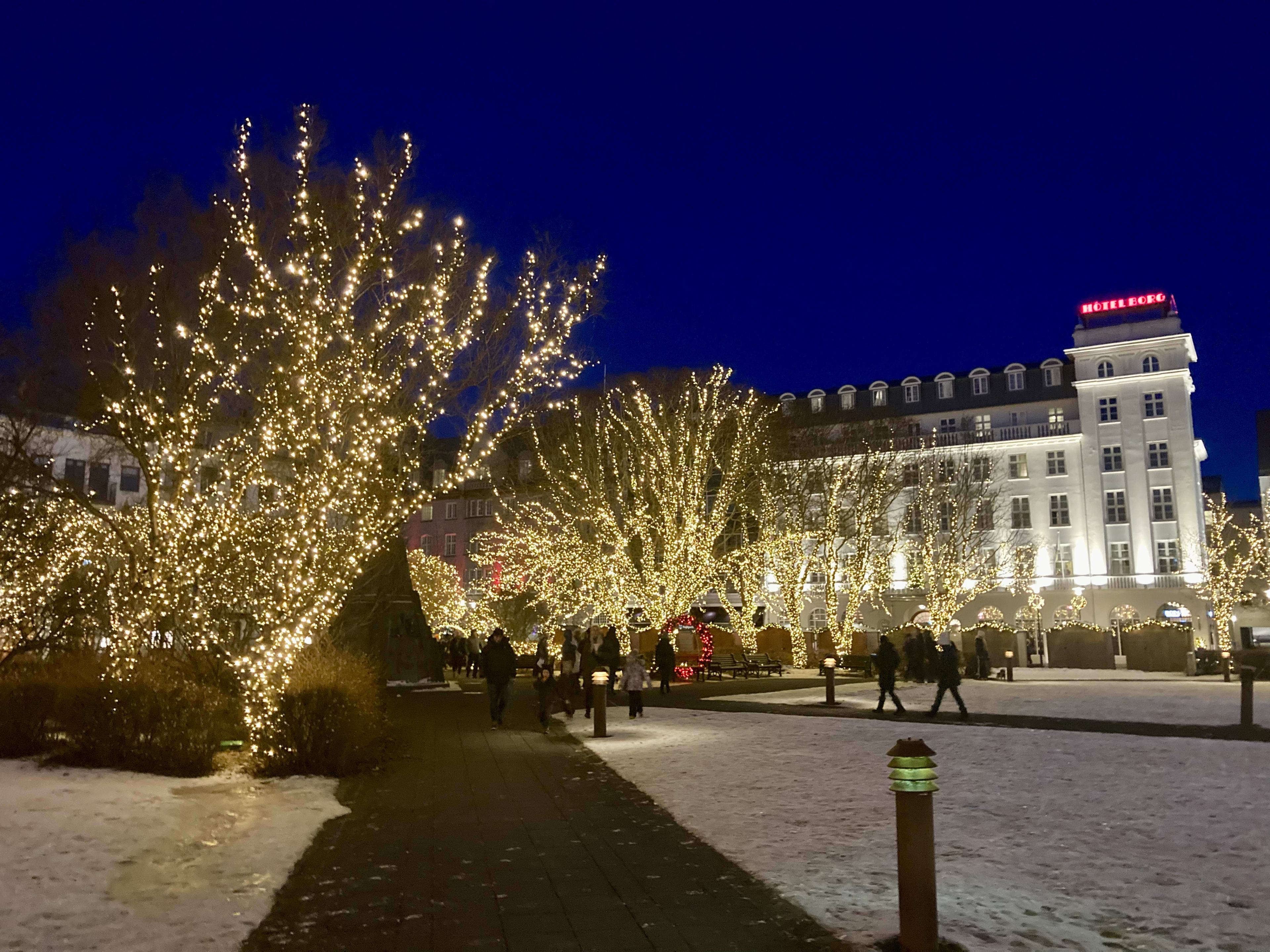
Christmas isn’t complete without browsing a Christmas Market for gifts, snacks, and souvenirs.
There are several Christmas markets in the city center (Austurvöllur, Ingólfstorg Square, Laugavegur, and Skólavörðustígur) and around the capital area, including Hafnarfjörður, Heiðmörk, and Selfoss.
There’s a pop-up skating rink in Ingólfstorg Square from the end of November to New Year’s Day, and Christmas concerts will be held around the city, particularly at Harpa and Hallgrímskirkja.
New Year’s Eve and “The Thirteenth”
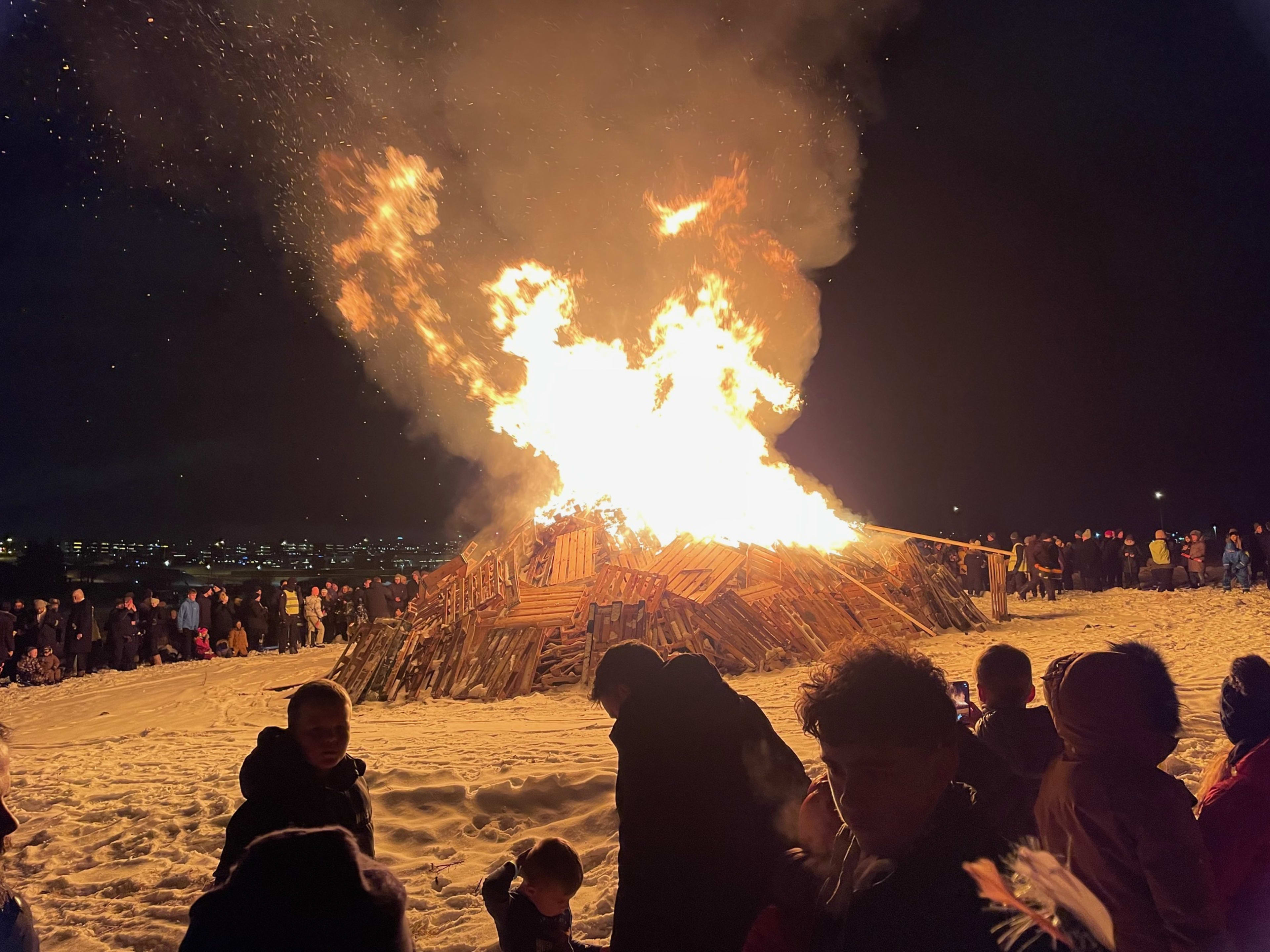
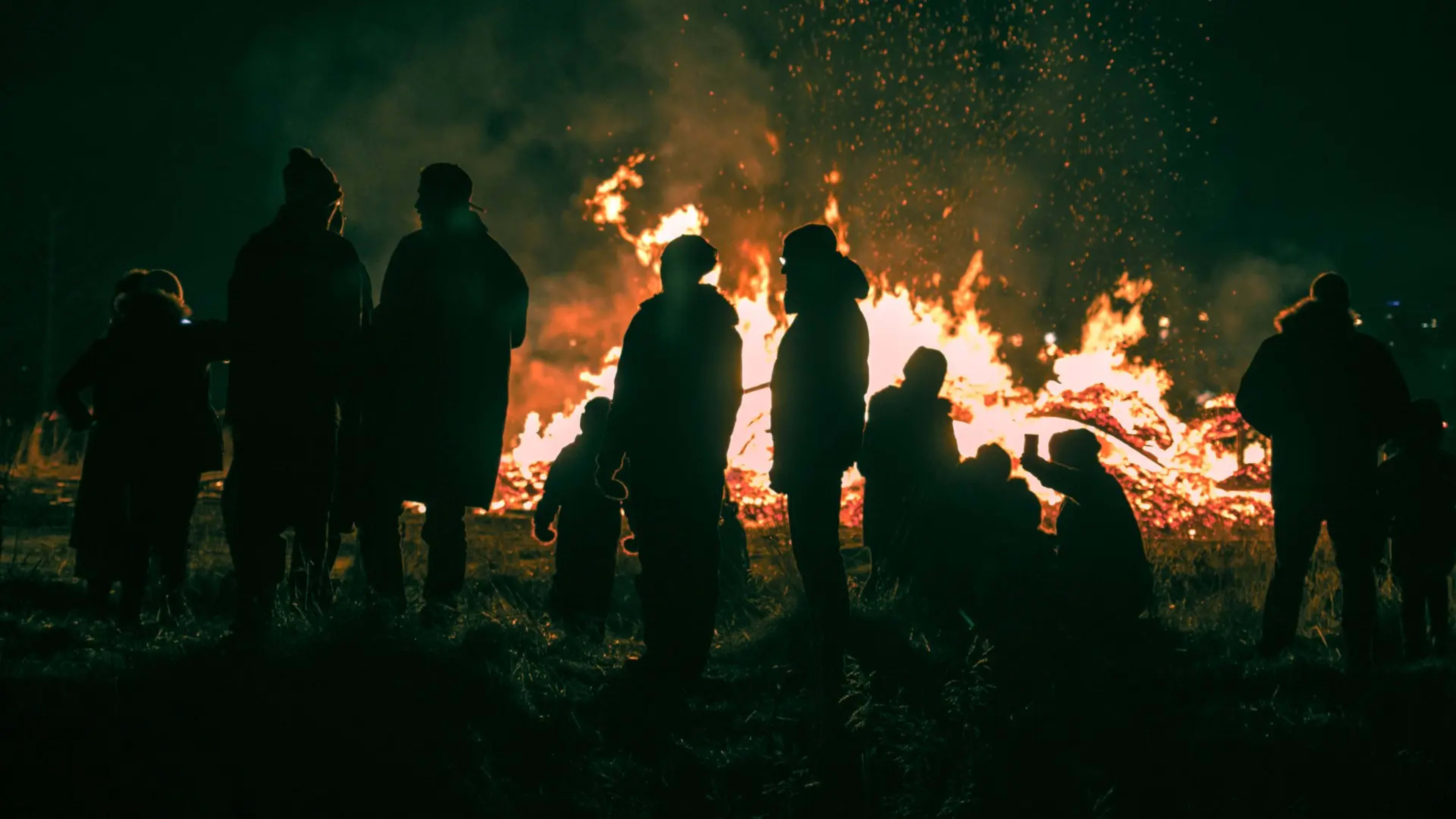
The Christmas celebrations in Iceland reach a crescendo in gigantic fireworks displays, centered on blazing bonfires in communities across the country, which start around 9 pm on New Year’s Eve.
Pausing only for a popular satirical TV programme that almost everyone in the country watches, the firework displays will light up the skies long into Nýársdagur (New Year’s Day).
The spectacular displays attract thousands of visitors and are streamed live worldwide on YouTube.
And the revenues from firework sales help to fund the Icelandic search-and-rescue teams that keep everyone safe when they’re exploring.
When you visit Iceland during Jól, you’ll find a nation that enjoys the festive period for as long as it can, extending the Yuletide festivities (Jólin) until Þrettándinn (the Thirteenth) on January 6th.
Þrettándinn is Iceland’s “Second New Year’s Eve”, the last night when fireworks can be set off, or Christmas beers can be bought, so you can expect to find a few parties going on that night!