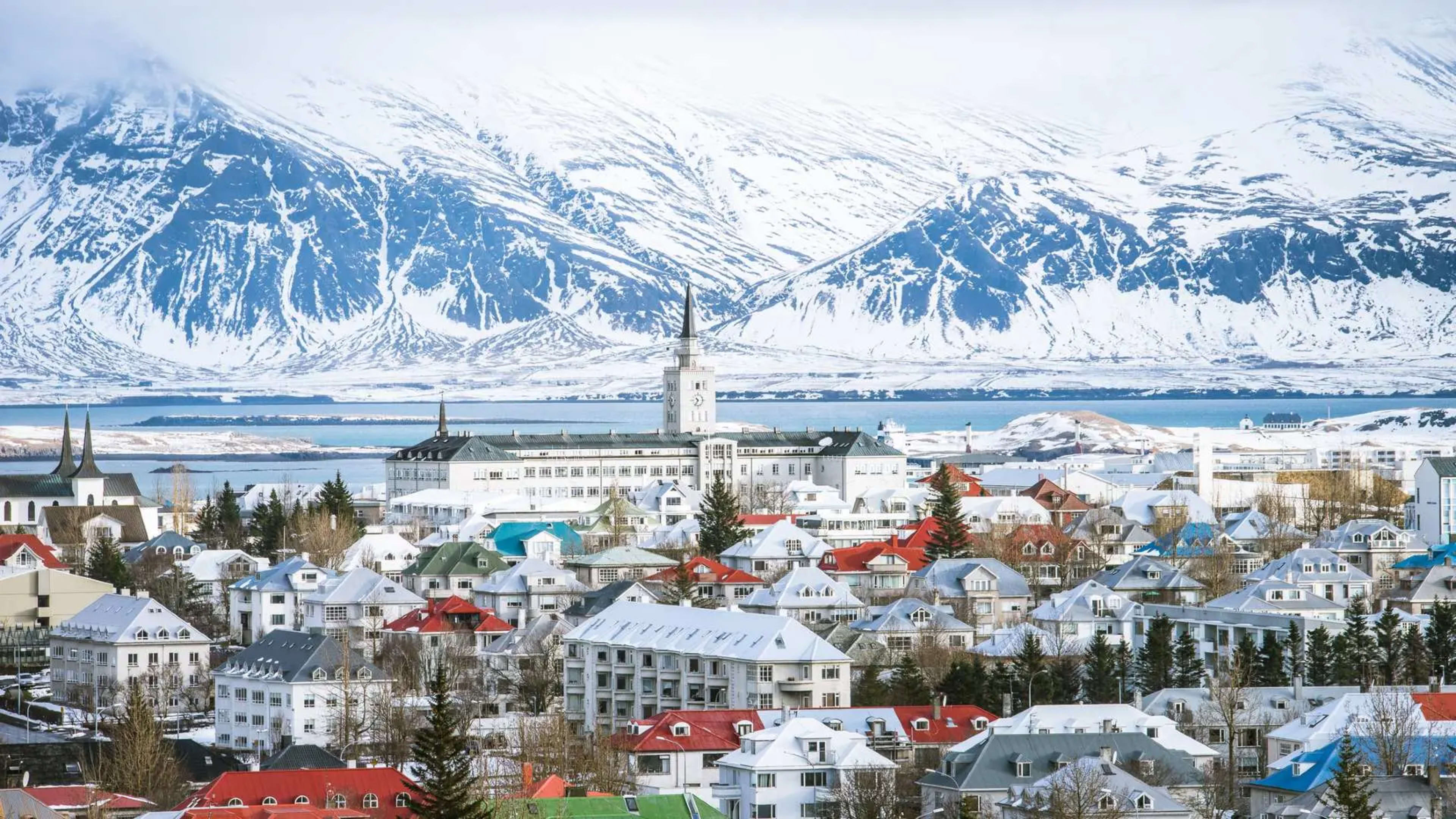
Iceland offers a fabulous festive treat for travelers at Christmastime, with a snow-capped winter wonderland to explore and a packed calendar of festivals, events, and Christmas markets to enjoy.
If you’re lucky, you could even witness the Northern Lights dancing across the skies - the best Christmas decorations you can imagine!
Whatever the weather, you can be sure of a warm welcome in Iceland, with the city streets lit up with glittering displays that brighten the long winter nights.
Christmas is called Jól in Iceland, a reflection of the country’s Nordic origins, and you’ll find reminders of ancient folklore and Yuletide traditions wherever you go.
Jól is a midwinter festival of feasting and merrymaking, celebrating the Norse god Thor, and marking the return of longer days after the winter solstice on December 21st.
Even though the days in Iceland in December have just four or five hours of daylight, you’re guaranteed to feel thoroughly festive while you’re here, with celebrations and illuminations starting in early December and lasting until January 6th!
Here’s what you can expect to discover on a December trip to the Land of Fire and Ice!

The Advent
The Christmas calendar in Iceland starts with Advent (the fourth Sunday before Christmas) and peaks on Christmas Eve, the most important date of all for Icelanders.
The “Oslo Christmas Tree” is lit in Austurvöllur Square on the first Sunday of Advent, in a tradition that dates back to 1951, when the City of Oslo first gifted Reykjavík a Christmas tree as a symbol of the two cities’ friendship and shared traditions.
These days, the tree is sourced locally from the nature reserve at Heiðmörk. Instead of a tree, the Oslo authorities donate books to Reykjavík primary schools.
Preparations for Jól include lit multi-branched Advent candleholders in every home’s front window, tree-raising, house decorating, and baking festive treats for the feasts to come.
And there’s an ice rink and a Christmas Market to be enjoyed in Ingólfstorg Square, in the center of the capital, open from the end of November.
If it’s frozen over, you can also shuffle across Tjörnin, the city’s large pond. Don’t worry - the waters are very shallow!
The Christmas Markets
Christmas isn’t complete without mulled wine, seasonal delicacies, and browsing gifts and souvenirs among the stalls of a traditional Christmas Market, which start in early December in Iceland.
In Reykjavík, the Austurvöllur Christmas Market is the most popular, offering a splendid selection of unique gifts and Christmas delicacies such as smoked lamb and cinnamon buns.
Outside the capital, there’s plenty of choice, including Jólaþorpið (The Christmas Village) in Hafnarfjörður, open each weekend in December, where you can stroll between countless little timber huts filled with handmade treasures.
Heiðmörk, a nature reserve on the outskirts of Reykjavík, hosts a Christmas market in beautiful woodland surroundings, with horse-drawn carriage rides and artisanal gifts and foods.
The Árbær Open Air Museum also joins in the fun with festive-themed weekend events in December, where you’ll enjoy Iceland’s history being told with a twist by the Yule Lads!
If you’re in search of a last-minute present while you’re visiting Reykjavík, there’s an excellent selection of gift and design stores all along Laugavegur and Skólavörðustígur, with most shops staying open until 10 pm from December 15th onwards.
There are also two larger shopping centers, Kringlan and Smáralind, offering a wider range of options if you can brave the crowds!
The Yule Lads Arrive!
The next significant date in the Christmas calendar is December 11th, when the Yule Lads start to arrive.
Part of Iceland’s folklore for centuries, the Yule Lads are a thirteen-strong gang of “bad Santas”, trouble-making trolls who come down from the mountains in the north to lurk around town in December.
Once considered part of a fearsome family of trolls, including their parents Grýla and Leppalúði, and the terrifying Yule Cat (Jólakötturinn), the Yule Lads have softened their image in recent years and are now a treasured part of the Christmas calendar.
Each Yule Lad has a character of his own, always looking for something to eat or mischief to cause, but also leaving little presents for well-behaved Icelandic children.
There are thirteen Yule Lads, and each will stay in their chosen spots around the city for thirteen nights, starting on December 11th, and begin leaving again after Christmas.
Modern-day Icelandic children know to leave shoes on their windowsills if they want a little present from the Yule Lads, just like other children leave a stocking out for Santa Claus.
The Yule Lads are just one story in Iceland’s festive folklore, and you can look for 14 Christmas Creatures on a treasure hunt around Reykjavík, at locations like the Art Museum, City Hall, and elsewhere.
December 23rd (Þorláksmessa)
If you’re visiting Iceland on December 23rd, you might need to hold your nose while you’re walking the streets of Reykjavík!
That’s because December 23rd is Saint Þorlákur’s Day, when the locals choose to eat putrefied skate to mark the end of the Christmas fast, when fish dishes were traditionally eaten instead of meat.
Þorlákur Þórhallsson was a 12th-century priest and is now Iceland’s patron saint, and his feast day, late in December, has become a key date in the Christmas calendar.
But eating fermented skate on this date is a relatively recent food tradition – a rite of passage where Icelanders feel they are earning the tasty treats to come later.
It’s very chewy and smells strongly of ammonia, so don’t feel obliged to try skata yourself. You might prefer a nice warm bowl of soup on a cold December day instead!
Christmas Eve
Christmas Eve (Aðfangadagur) is the most significant evening of Jól, even more than Christmas Day itself, and is spent with close family and friends.
It’s marked by church bells ringing across the country at 6 pm, just after the most listened-to radio program of the year – a minute’s silence!
Friends and families all over Iceland pause together at this moment, knowing that Christmas begins as soon as that silence is broken by the sound of the church bells from the Dómkirkja cathedral in central Reykjavík.
This is known as “Að hringja inn jólin” (ringing in the Yule), and it’s when you’ll wish everyone else “Gleðileg jól”, the Icelandic phrase meaning “Merry Christmas.”
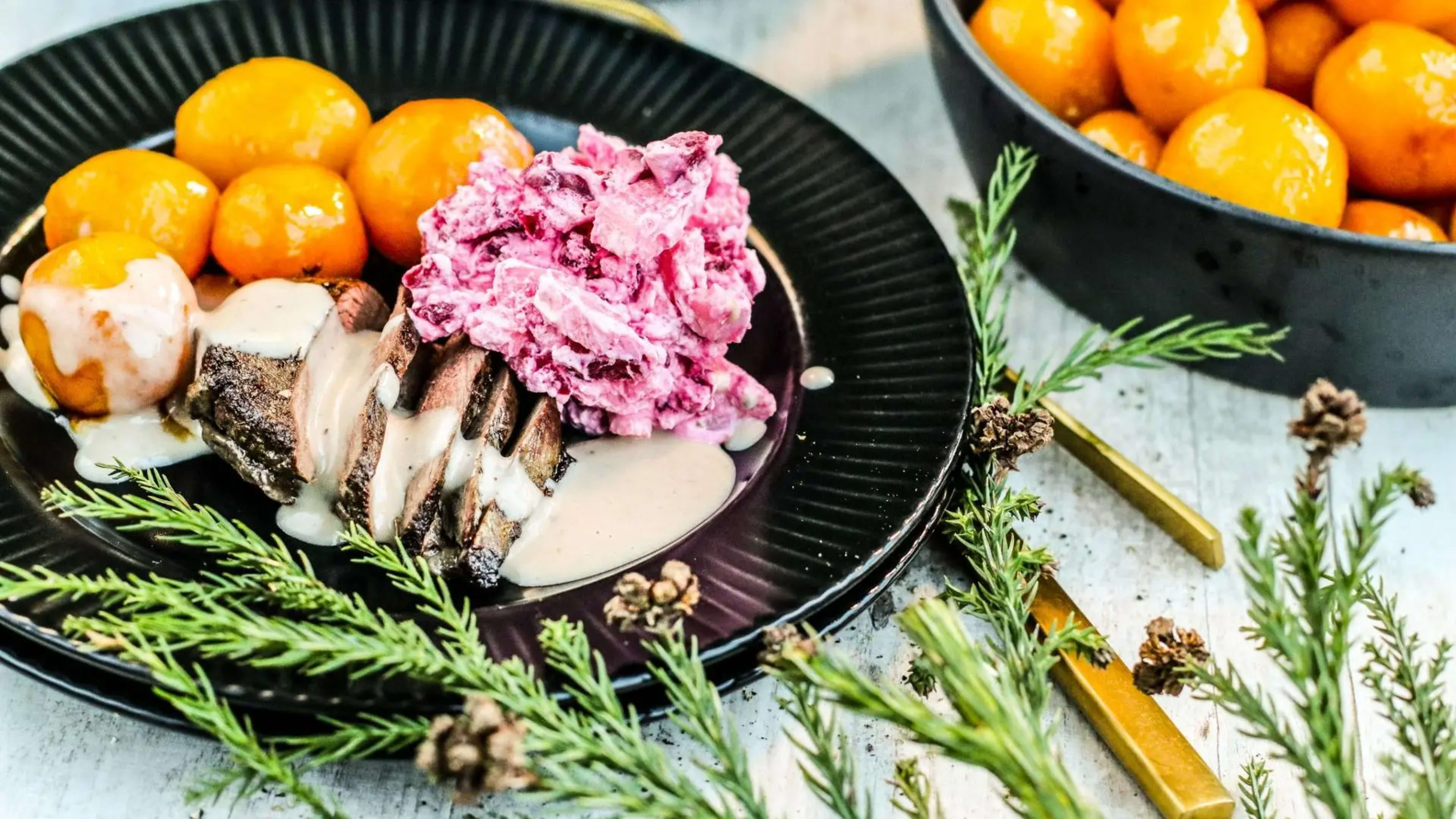
Many will go to church before meeting up for family dinners, enjoying smoked lamb, ptarmigan, ham, red cabbage, and potatoes, washed down with a Malt & Appelsín, a popular non-alcoholic ale and orange soda drink.
If there’s any room left, the feast will be topped off by Jólakaka (Christmas cake) or a box of chocolates.
Christmas Day
On Christmas Day (Jóladagur), the Yuletide social gatherings continue, extending into Annar í jólum on December 26th, when even more smoked lamb (hangikjöt) and other favorite dishes will be consumed.
New Year’s Eve
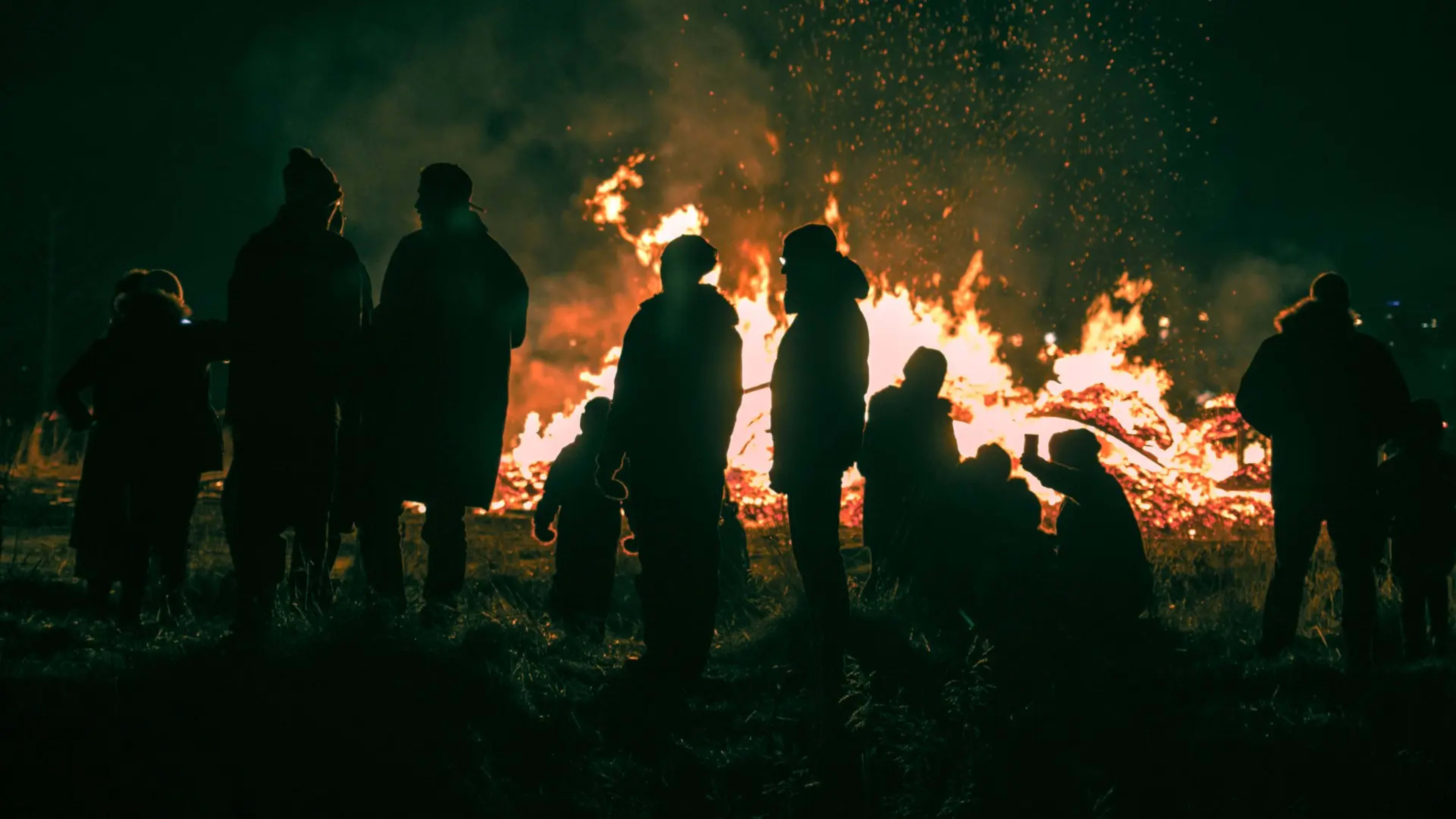
The last night of the year (Gamlárskvöld) sees an explosion of noise around Iceland, with blazing bonfires (Brenna) and dazzling firework displays that last long into the night.
That’s because Iceland’s search-and-rescue teams are funded by the revenues from firework sales, which encourages everyone to get involved and buy as many as possible!
New Year’s Eve celebrations begin with family dinners at home or in restaurants, followed by watching Áramótaskaupið, a satirical review of the year that’s passed, which is always the most-watched TV program of the year.
It’s also broadcast with English subtitles, so you might still get some of the jokes!
As soon as that’s finished, the skies will erupt with color and sound as every neighborhood in the country lights its bonfires and sends countless fireworks up in the night.
It’s a free-for-all with everyone in the community involved, and the displays can last for hours, attracting thousands of visitors and a worldwide YouTube audience.
New Year’s Day (Nýársdagur) is as quiet in Iceland as anywhere else. Still, Icelanders like to make the most of the festive season, which means there’s at least one more party to enjoy before it’s all over.
Þrettándinn (the Thirteenth) falls on January 6th each year, marking the official end of Jól, the 13th day of festivities since Christmas Eve, when people prepare to return to work or school.
It’s the last night when it’s legal to buy Christmas beers (Jólabjór) and to set fireworks off, so it often ends up as a “Second New Year’s Eve”!
Þrettándinn is also known as “Old Christmas” among some Icelanders, because Christmas was celebrated on January 6th before the change from the Julian to the Gregorian calendar.
It’s a special night for the superstitious, as fairies and elves are said to be very active on this date, and the last of the thirteen Yule Lads will return to the mountains.
Even if you’re in Iceland at other times of the year, you can still enjoy a taste of an Icelandic Christmas with a visit to Litla Jólabúðin at Laugavegur 8.
The Little Christmas Store offers a great selection of traditional Christmas decorations and festive treats year-round.
Iceland is an ideal place to enjoy the festive season, warming yourself in one of the capital’s countless cozy cafés with a coffee or hot chocolate, or browsing its many bookshops and intriguing design stores to pick up a perfect present for friends and family back home.