A Volcanic Moonscape in the Highlands
Mælifellssandur stretches across the southern highlands of Iceland as a vast expanse of black volcanic sand, creating one of the most otherworldly and exposed sections of the famous Laugavegur Trail. This sparse desert lies between the Mýrdalsjökull and Torfajökull glacial systems, forming a stark landscape that hikers often describe as resembling another planet. The black sand, derived from volcanic eruptions over countless years, spreads across the terrain dotted with pumice boulders and almost entirely devoid of vegetation.
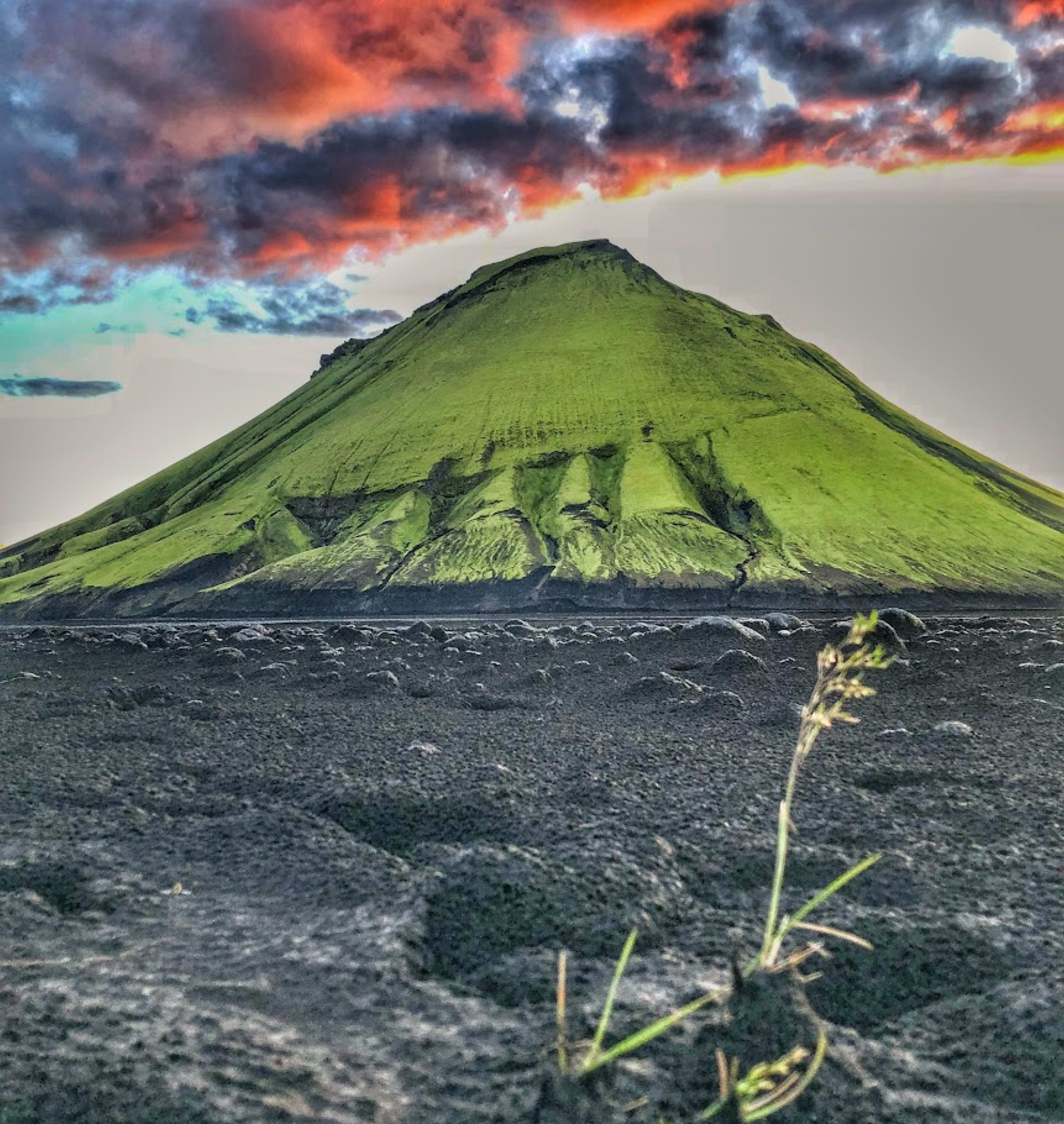
The name Mælifellssandur refers to both the desert itself and its association with Mælifell, a distinctive pyramid-shaped mountain that rises from the black sand. Covered in brilliant green moss that contrasts dramatically with the dark volcanic terrain at its base, Mælifell serves as a landmark visible from various points along the trail, though it sits somewhat distant from the main hiking route.
The Starkest Transition on the Trail
For hikers on the Laugavegur Trail, Mælifellssandur represents one of the most dramatic landscape transitions they will encounter. Leaving the sheltered green valley of Hvangil, where grass and wildflowers thrive at the base of Stórasúla volcano, hikers soon find themselves in an entirely different world. The vegetation fades away within a short distance, replaced by seemingly endless black sand that stretches toward the horizon.
This transformation happens quickly, providing little time to adjust to the changed environment. What was a protected valley with flowing water and verdant slopes becomes an exposed desert where wind whips freely across the open terrain. The psychological impact of this shift can be profound, as the comforting greenery and shelter give way to a landscape that feels harsh and unforgiving.
Walking across Mælifellssandur typically takes about an hour, though the experience can feel much longer. The exposed nature of the terrain means hikers face the full force of whatever weather the highlands deliver. On windy days, which are common, sand gets picked up and driven across the desert, stinging exposed skin and making progress more challenging. Rain offers no relief, as there is nowhere to shelter, and the black sand quickly becomes saturated, creating muddy conditions underfoot.
A Challenge Without Shelter
One of the defining characteristics of Mælifellssandur is the complete lack of shelter from the elements. Unlike other sections of the Laugavegur Trail where valleys, hills, or rock formations provide at least some protection from wind and weather, the black sand desert offers nothing. Hikers are fully exposed to sun, wind, rain, or whatever combination of conditions Iceland's weather decides to provide.
This exposure makes proper preparation essential. Sun can be surprisingly intense at this elevation, especially when reflected off the black sand, requiring sunglasses and sun protection even on partially cloudy days. Wind is perhaps the greater challenge, often blowing strongly across the open terrain and sapping energy from hikers who must lean into it to make progress. The wind also has a cooling effect that can quickly lead to hypothermia if hikers are not properly layered.
The landscape provides few visual reference points for judging distance or progress. The relatively flat terrain and uniform black color create an optical effect where destinations seem simultaneously close and impossibly far away. The Emstrur huts, which mark the end of this desert section, remain invisible until hikers are quite close, hidden in a small valley that provides welcome relief from the exposed conditions.
Green Volcanoes Against Black Sand
Despite its barren nature, Mælifellssandur is far from featureless. Two distinctive green cone volcanoes, Stórasúla to the north and Hattfell to the south, rise from the black sand, their moss-covered slopes creating stunning visual contrasts. These ancient volcanic features, covered in vegetation over thousands of years, stand as reminders that even in Iceland's harshest environments, life eventually finds a way to establish itself.
On clear days, the massive glaciers of Eyjafjallajökull and Mýrdalsjökull dominate the southern horizon, their ice-covered peaks visible from across the desert. These glaciers, covering active volcanic systems, add to the sense that Mælifellssandur sits in the midst of powerful geological forces. The knowledge that Katla, one of Iceland's most dangerous volcanoes, lies hidden beneath Mýrdalsjökull's ice adds an element of geological drama to the landscape.
The black sand itself tells the story of volcanic eruptions that have shaped this region over millennia. The fine particles come from volcanic glass and rock that has been ground down through repeated freeze-thaw cycles and wind erosion. Pumice boulders scattered across the desert, light enough to sometimes float on water, arrived here through explosive volcanic eruptions that hurled them into the air before they landed on the cooling lava fields.
Rivers Through the Desert
Despite its desert appearance, Mælifellssandur is traversed by several glacial rivers that meander across the black sand. These braided streams, fed by meltwater from the surrounding glaciers, shift their courses regularly, creating patterns in the sand that change from season to season. The water is crystal clear but extremely cold, flowing directly from ice that may be centuries old.
Hikers must cross several of these streams, with the Bláfjallakvísl being one of the larger crossings. These fords require proper technique and preparation, as the combination of cold water, uneven footing, and strong currents can make them challenging, especially after periods of heavy rain or during warm weather when glacial melt increases. The streams create ribbons of silver across the black landscape, adding visual interest and serving as vital water sources in an otherwise dry environment.
Reaching Emstrur
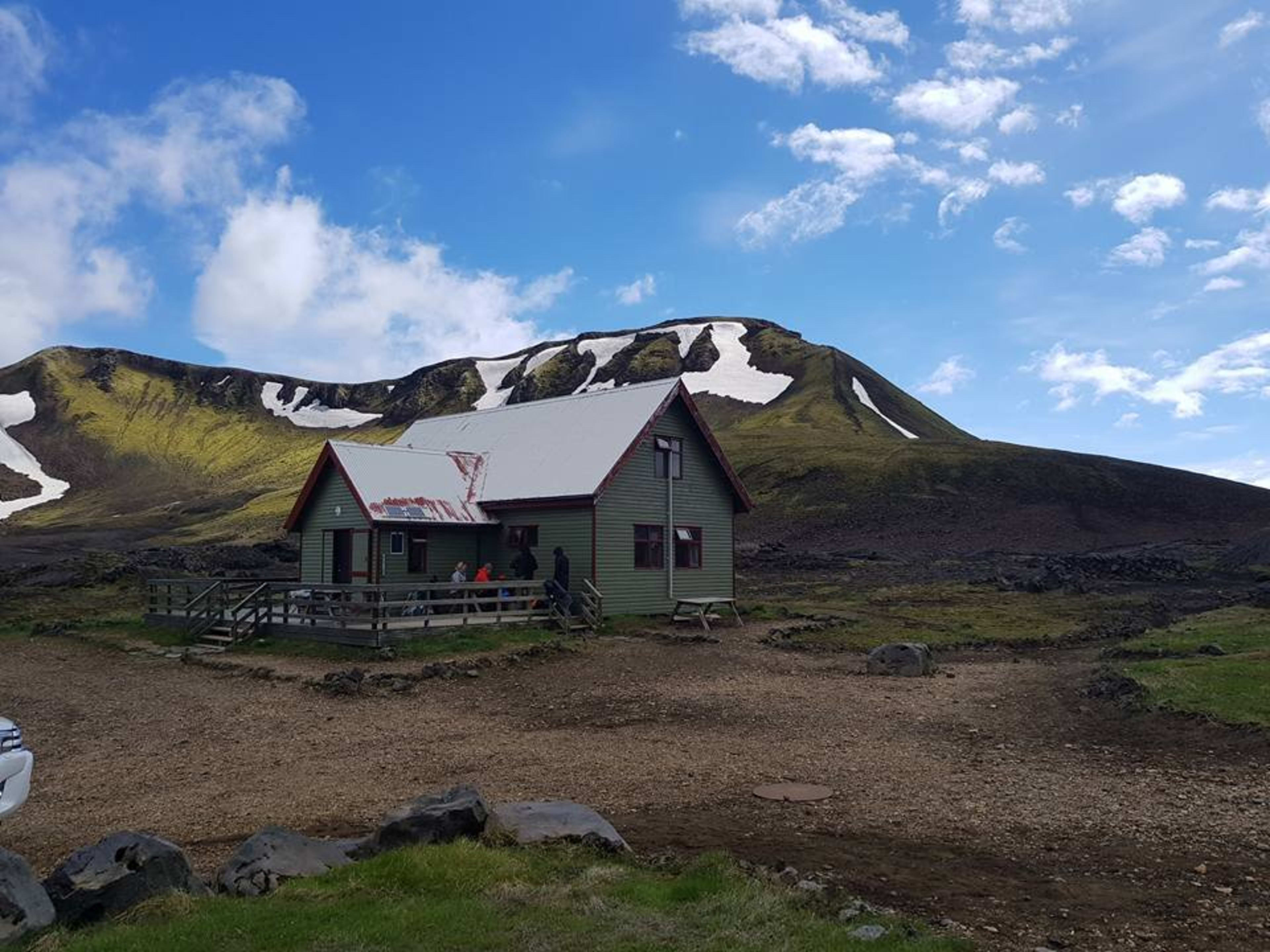
After crossing Mælifellssandur, hikers gradually descend into a small valley where the Emstrur huts appear, offering the first real shelter since leaving Hvangil. This arrival marks a significant achievement, as hikers have successfully navigated one of the trail's most exposed and psychologically challenging sections. The Emstrur area, while still surrounded by volcanic terrain, provides some protection from wind and access to water, making it a welcome stop.
The transition from the open desert to the valley containing Emstrur happens relatively quickly, with the huts remaining hidden until hikers are quite close. This final approach provides relief not just physically but mentally, as the presence of human structures and the promise of shelter lifts spirits after the exposure of the black sand crossing.