The Obsidian Skerry of Iceland's Highlands
Hrafntinnusker rises 1,128 meters (3,700 feet) above sea level in the remote Icelandic highlands, its name translating to "Obsidian Skerry" in English. This otherworldly mountain sits within the Torfajökull volcanic system, one of Iceland's most active geothermal zones, creating a landscape where fire and ice exist in remarkable harmony.
The mountain takes its distinctive name from the chunks of black obsidian scattered across its pale rhyolite slopes. This volcanic glass forms when highly acidic magma cools extremely rapidly during an eruption, creating a material so sharp that early Icelanders once fashioned it into tools and cutting implements. In the early 20th century, obsidian from the nearby Hrafntinnuhraun lava field was quarried to decorate buildings in Reykjavík, including the National Theatre.
A Landscape of Extremes
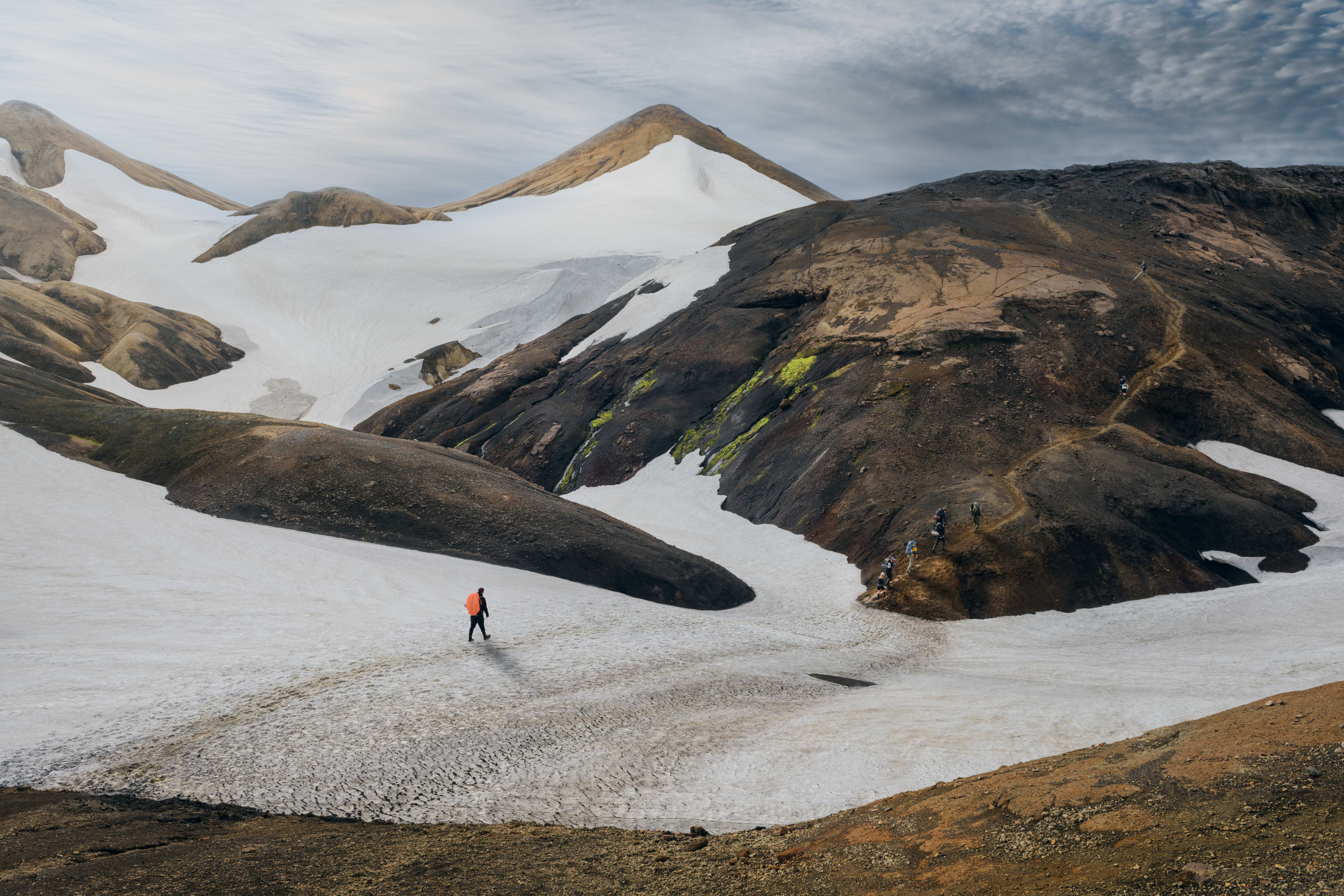
Hrafntinnusker presents one of Iceland's most dramatic examples of geological contrasts. A small glacier or permanent snowfield clings to the summit, fed by seasonal snowfall yet constantly threatened by geothermal heat rising from below. This creates an environment where steam vents and snow patches exist side by side, and ice caves form where hot steam melts the glacier from underneath.
The area west of the mountain contains an extensive active geothermal zone filled with fumaroles, clay-rich hot springs, and steaming vents. The ground is alive with geothermal activity, producing a mineral-rich landscape painted in vibrant yellows, reds, and oranges. Mud pools bubble and hiss, while steam rises from countless vents, creating an atmosphere that feels both primordial and alien.
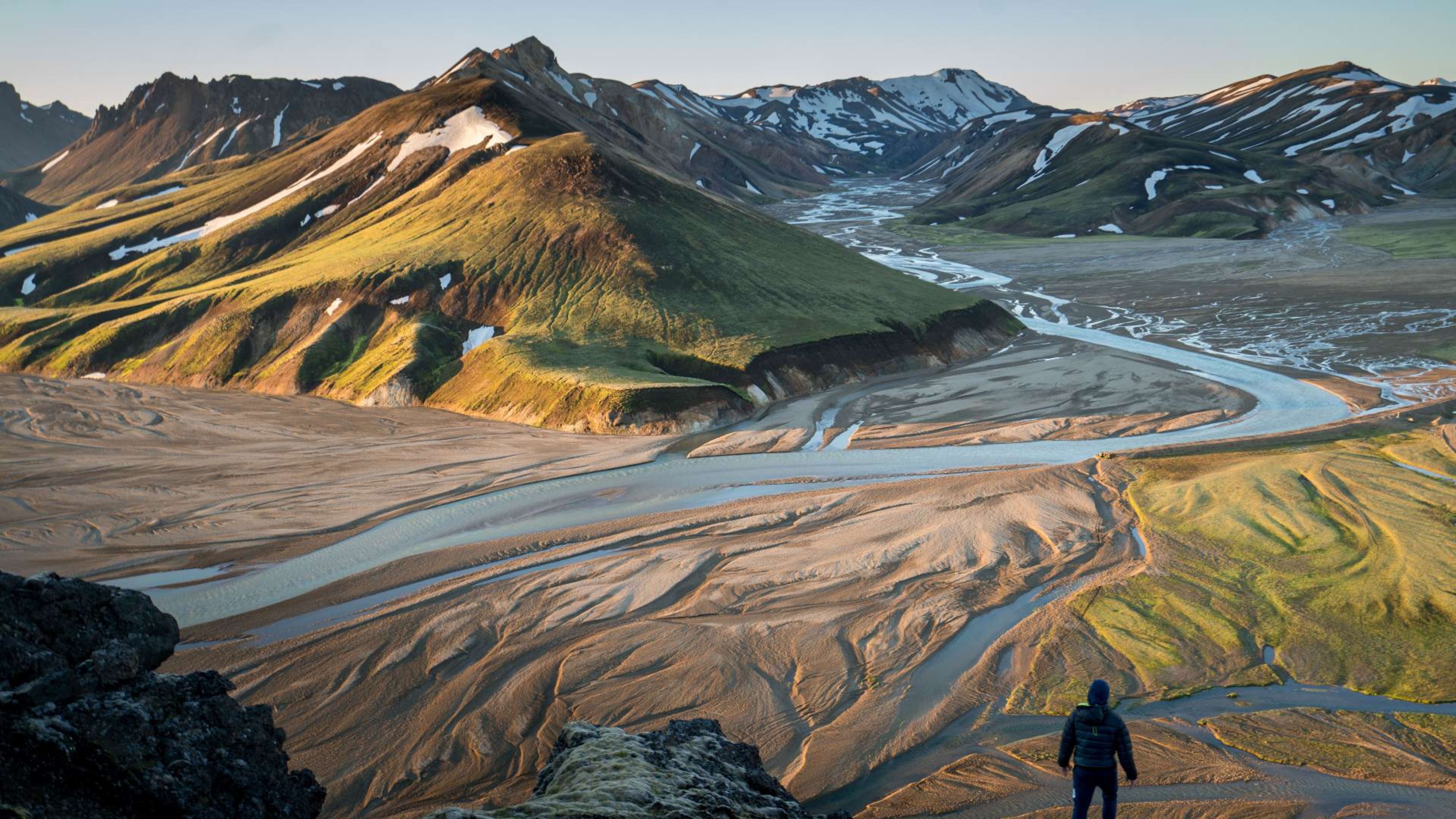
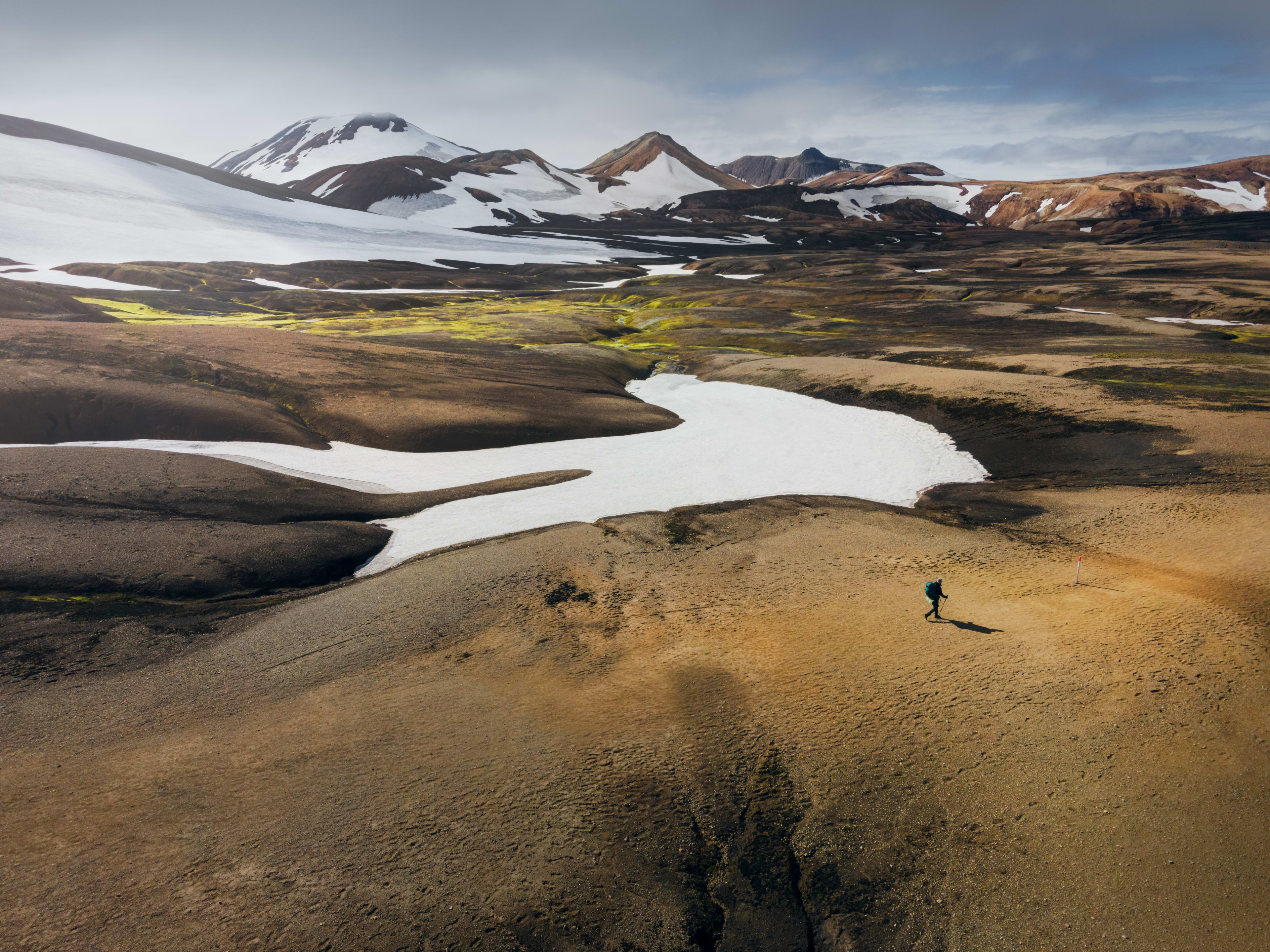
The surrounding terrain showcases layers of pale rhyolite, black obsidian, and colorful mineral deposits, giving the landscape an unusually varied texture and appearance. Despite the harsh conditions, the high elevation and complete isolation from civilization create a sense of raw, untouched wilderness that few places on Earth can match.
First Stop on the Laugavegur Trail
For most hikers tackling Iceland's famous Laugavegur Trail, Hrafntinnusker represents the first overnight stop after departing Landmannalaugar. The journey covers 12 kilometers and typically takes 4 to 5 hours, with an ascent of 470 meters. The trail climbs steadily through small gorges, past steaming hot springs, and along striking yellow mountain ridges before reaching the mountain hut in the late afternoon.
The Höskuldsskáli mountain hut, built in 1977 and operated by the Icelandic Touring Association, provides shelter for up to 52 people. Due to its remote location and extreme conditions, facilities are basic but adequate. The hut offers dormitory-style sleeping quarters with mattresses, a communal kitchen with cooking equipment and cold running water, and outdoor latrines. Unlike other huts along the Laugavegur Trail, Hrafntinnusker has no showers, reflecting the challenging nature of maintaining infrastructure at this elevation.
The campsite at Hrafntinnusker is considered one of Iceland's most extraordinary camping locations. Surrounded by obsidian fields, steaming vents, and snow-covered peaks, it offers an experience that few other places can provide. However, the high altitude and exposure to elements mean that weather conditions can change rapidly, with strong winds and sudden temperature drops being common even in summer.
Exploring the Area
Beyond serving as a waypoint on the Laugavegur Trail, Hrafntinnusker offers several rewarding short hikes for those with extra time and energy. The summit provides exceptional views across the Fjallabak Nature Reserve on clear days, though the weather at this elevation can be notoriously unpredictable. The exposed location means that strong winds are frequent, making even short explorations challenging when conditions deteriorate.
The geothermal areas surrounding the mountain provide fascinating exploration opportunities. Visitors can observe the powerful forces that shape Iceland's landscape up close, though extreme caution is necessary around hot springs and steam vents. The ice caves formed by geothermal activity beneath the glacier are intriguing but dangerous, as cave ceilings can collapse without warning. Entry is strongly discouraged.
Visiting Hrafntinnusker
Access to Hrafntinnusker is primarily via the Laugavegur Trail, either as part of a multi-day hiking trek or as a day hike from Landmannalaugar. The area can also be reached by 4x4 vehicle in summer months, though the rough highland roads require experience and appropriate vehicles. Winter access is possible only by super jeep with experienced guides.
The hiking season typically runs from late June through early September, when the mountain hut is staffed and the trail is most accessible. Even during summer, hikers should be prepared for winter-like conditions, including snow, strong winds, and freezing temperatures. Proper equipment, including waterproof layers and warm clothing, is essential for any visit to this exposed highland location.