Hellnar, a village shaped by the sea
Hellnar sits on the southern edge of the Snæfellsnes peninsula, a short drive from Snæfellsjökull National Park. Once one of the busiest fishing stations on the peninsula, the village is now home to around ten permanent residents and a coastline that draws visitors for its sea cave, cliff formations and the 2.5 km walking trail to the neighbouring hamlet of Arnarstapi.
Settlement at Hellnar dates to the 11th century, and for much of its history the village functioned as one of the most active fishing stations on the southern Snæfellsnes coast. The shift of fishing activity toward larger settlements like Ólafsvík and Grundarfjörður, combined with Danish authorities favouring the nearby village of Arnarstapi, gradually drew people away. By the 20th century the population had fallen to a handful of residents, where it has remained.
Today the village preserves that quiet character. The old fishermen's cottages still stand, a small dock remnant marks the former landing point, and the Hellnar Church offers a simple landmark at the centre of the settlement. The guesthouse for Snæfellsjökull National Park is based here and includes an exhibition on the park's geology, wildlife and the economic history of the area.
The coastline and Baðstofa sea cave
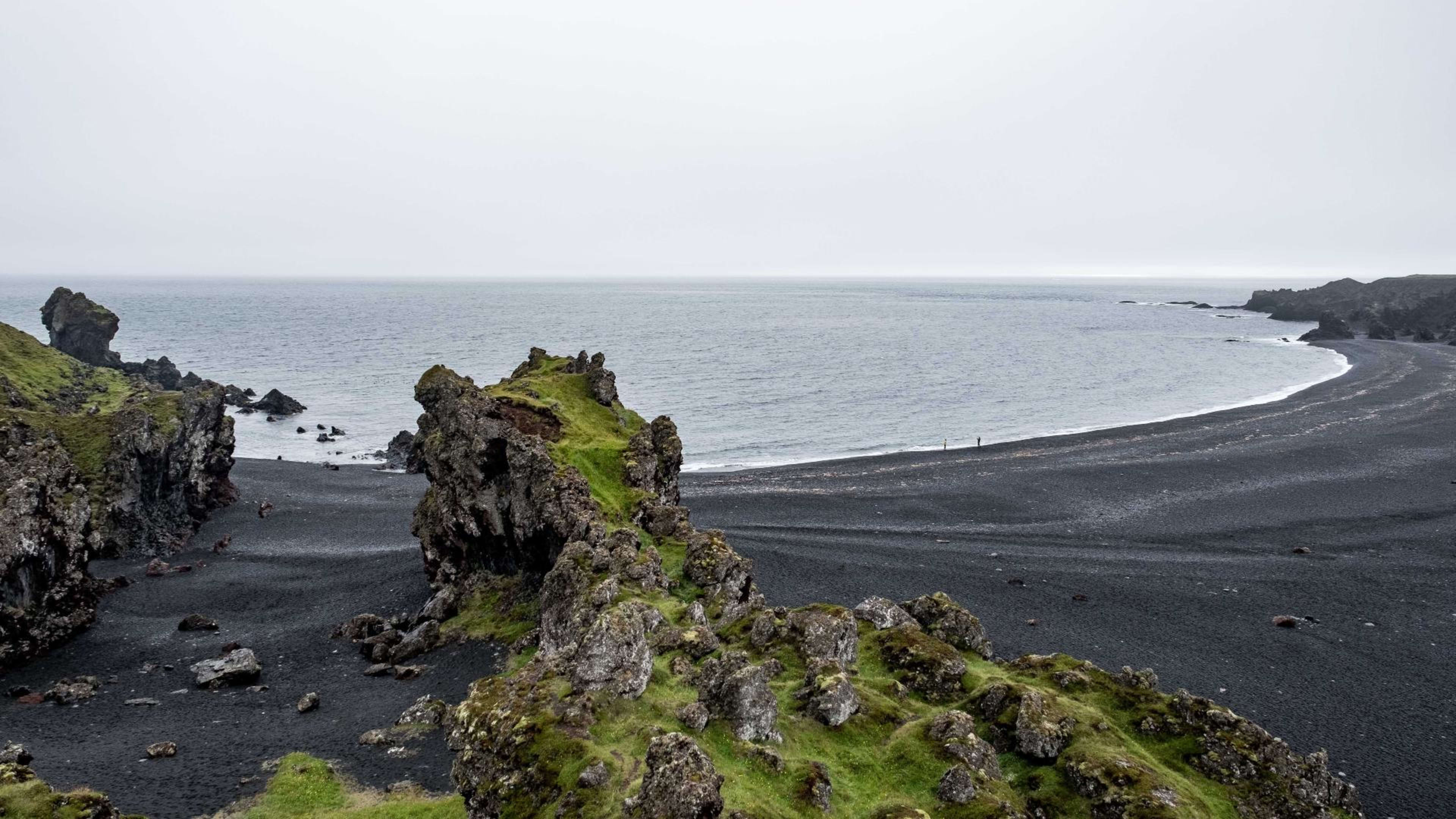
The main draw at Hellnar is the coastline itself. Steep cliffs, strong currents and dark rock formations line the shore below the village, and the sea has carved a cove into the headland called Baðstofa, found beneath the cliff known as Valasnös. The cave fills with reflected light from the water and changes colour through the day, ranging from green to deep blue depending on the angle of the sun. Two freshwater wells, known as Gvendarbrunnur and Ásgrímsbrunnur, are visible near the shoreline, the latter carved directly into the cliff by a local priest in the 18th century.
From June to August the cliffs between Hellnar and Arnarstapi host kittiwakes, fulmars and Arctic terns. The area does not have a puffin colony; visitors looking for puffins on the peninsula should head to Ytri Tunga beach to the east.
The coastal trail to Arnarstapi
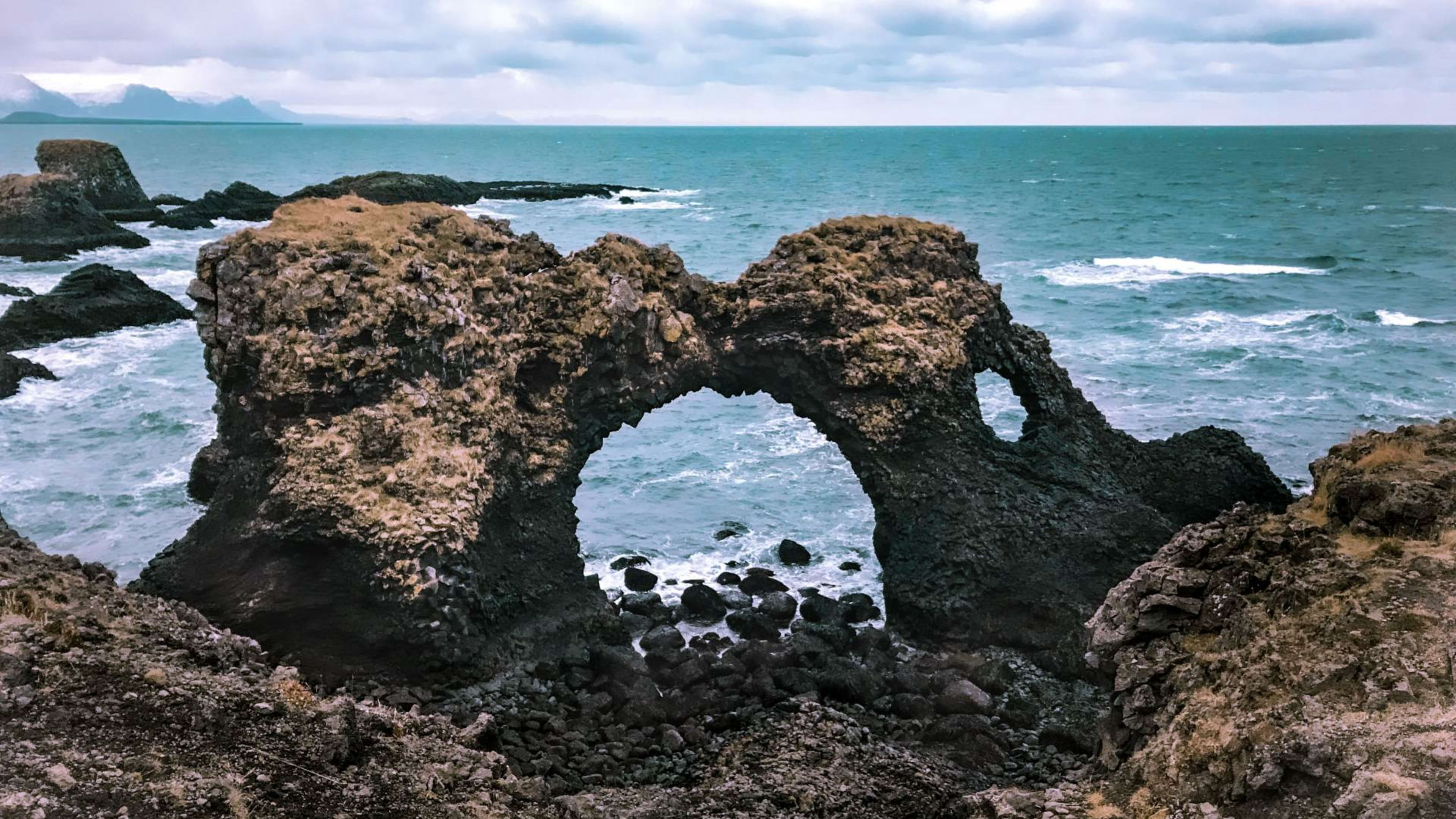
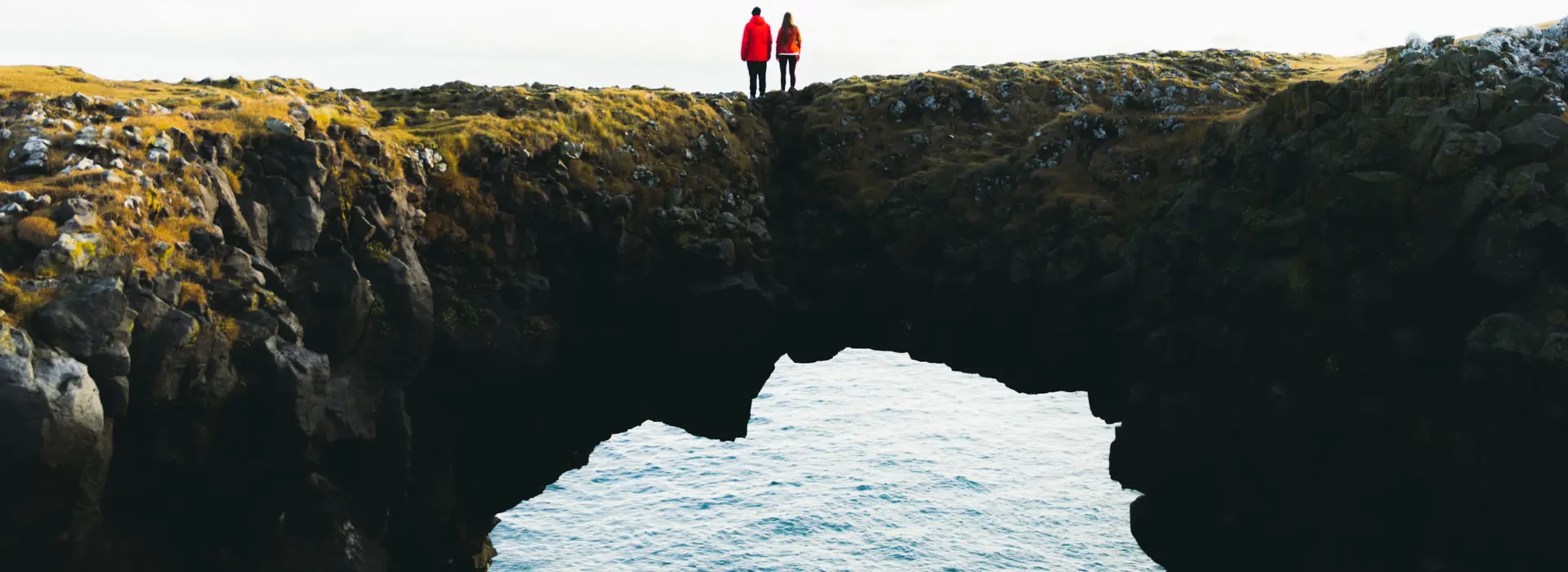
The 2.5 km path between Hellnar and Arnarstapi follows the cliff edge across lava field and shoreline and is one of the more rewarding short walks on the peninsula. The route passes basalt columns, sea stacks, rock arches and several viewpoints over the ocean. Most walkers complete it in 45 minutes to an hour. The trail is well-maintained but the terrain is uneven in places, and sturdy footwear is recommended. The path is open year-round, though coastal conditions can make sections exposed in winter.
Fjöruhúsið café
Fjöruhúsið café sits at the cliff edge above the cove and is one of the most visited stops on any Snæfellsnes loop. The café serves homemade food and drinks and offers direct views over the coastal rock formations and the ocean. It is open during the main visitor season and closes or reduces hours outside summer.