Iceland's Most Famous Stratovolcano
Hekla stands as one of Iceland's most iconic and active volcanoes, rising 1,491 meters (4,892 feet) above the southern highlands. Known throughout the Middle Ages as "The Gateway to Hell," this powerful stratovolcano has shaped both Iceland's landscape and its place in European imagination for over a millennium.
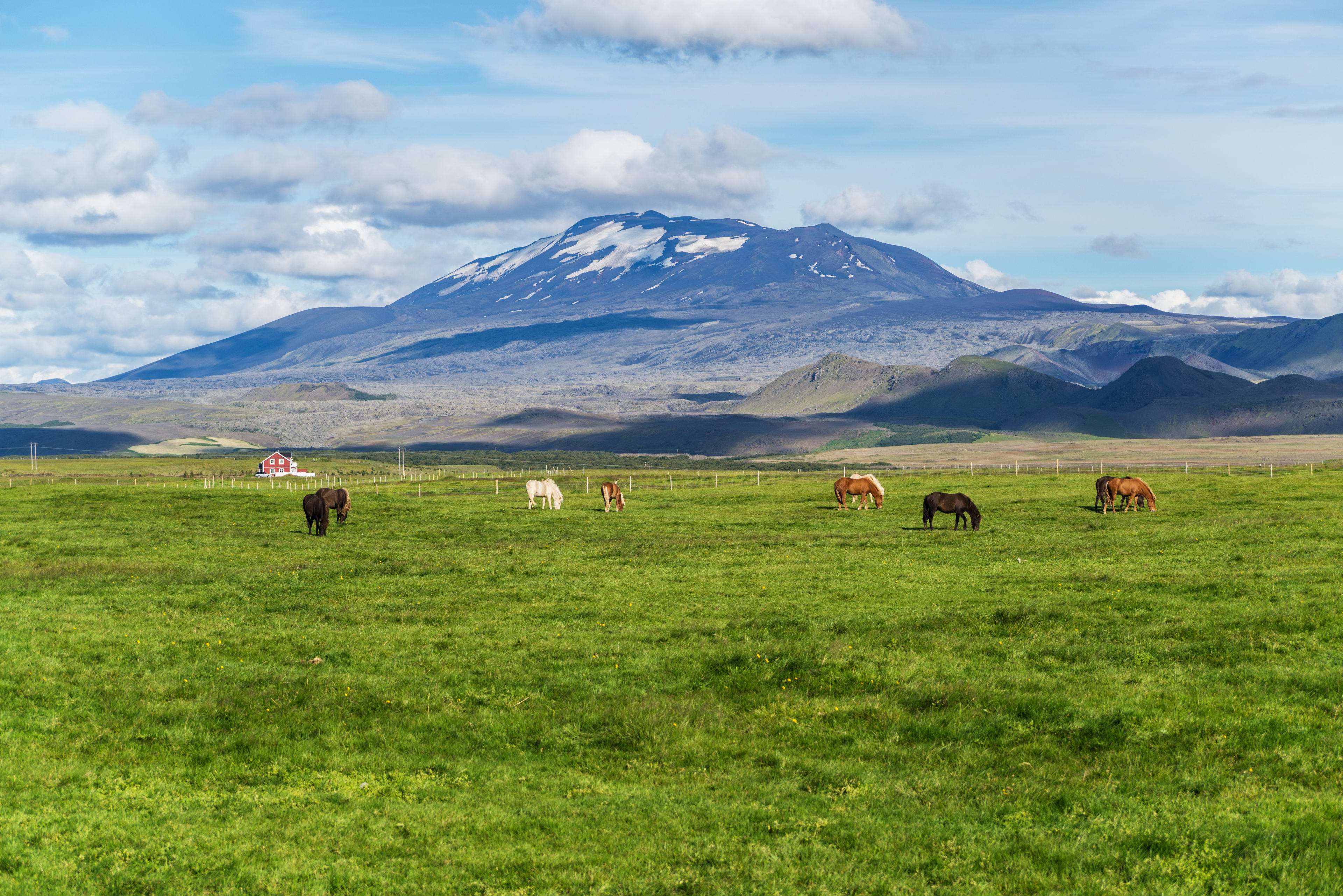
The volcano takes its name from the Icelandic word for a short hooded cloak, likely referring to the clouds that frequently shroud its summit. Unlike the typical cone-shaped stratovolcanoes found elsewhere in the world, Hekla forms an elongated ridge stretching along a 5.5-kilometer fissure called Heklugjá. This unusual shape places it among a rare group of volcanoes worldwide, with only a handful sharing this distinctive form.
A Violent and Unpredictable History
Hekla's first recorded eruption occurred in 1104, and it proved catastrophic. This massive VEI-5 eruption covered over half of Iceland with volcanic ash, forcing the abandonment of farms up to 70 kilometers away in Þjórsárdalur Valley. The eruption drew attention across medieval Europe, cementing Hekla's fearsome reputation. European scholars believed that condemned souls passed through Hekla's crater on their way to Hell, and some thought witches met with the devil at its summit.
Since settlement in the 9th century, Hekla has erupted between 20 and 30 times, making it one of Iceland's most frequently active volcanoes. Major eruptions occurred in 1947, 1970, 1980, 1991, and most recently in 2000. The 1947 eruption was particularly dramatic, with lava bombs thrown as far as 32 kilometers and ash clouds reaching Helsinki, Finland. The eruption continued for 13 months before finally settling.
Scientists have observed a concerning pattern with Hekla. The longer the volcano remains dormant, the larger and more explosive its next eruption tends to be. Volcanologists closely monitor the volcano today, noting that pressure measurements in the magma chambers have exceeded levels recorded before previous eruptions. While the volcano has been considered ready to erupt since 2006, predicting the exact timing remains difficult, with warning periods often as short as 30 to 80 minutes.
Shaping Iceland's Landscape
Hekla has produced one of the largest volumes of lava of any volcano in the world over the past millennium. Approximately 10 percent of Iceland's landmass was created by lava flows from Hekla. The volcano's eruptions produce tephra high in fluorine, which can be toxic to livestock and vegetation but also creates fertile soil once weathered.
The surrounding landscape bears witness to Hekla's power. Black lava fields stretch for kilometers around the mountain, creating a stark and otherworldly terrain. The Vatnafjöll system, a 40-kilometer-long group of volcanic fissures and craters southeast of Hekla, forms part of the broader Hekla volcanic system. These features have provided valuable information about Iceland's geological history, with ash layers from Hekla eruptions used to date other volcanic events across the country.
Visiting Hekla Today
Hekla sits about 110 kilometers (69 miles) east of Reykjavík, roughly a two-hour drive via Route 1 and Route 26. The Hekla Center near Leirubakki Farm serves as an excellent starting point for learning about the volcano's history and current status. On clear days, Hekla's distinctive profile can be seen for miles around, dominating the southern highland skyline.
While hiking to Hekla's summit is currently not recommended due to volcanic activity and safety concerns, the area around the volcano offers numerous hiking opportunities. Trails wind through lava fields and valleys, providing spectacular views of the mountain from safe distances. The nearby Þjórsárdalur Valley features stunning waterfalls including Háifoss, Iceland's second-highest waterfall at 122 meters, and the unique twin falls of Hjálparfoss.
Visitors should always check current volcanic activity status with the Icelandic Meteorological Office before traveling to Hekla. The volcano is continuously monitored for seismic activity, and access may be restricted if warning signs increase. Super jeep tours offer a safe way to explore the volcano's slopes and surrounding lava plains with experienced guides who understand the terrain and volcanic hazards.