The Geysir Geothermal Area
The Geysir geothermal area sits in the Haukadalur valley in southwest Iceland, about 1.5 hours from Reykjavík and right in the middle of the Golden Circle route. It is one of the most visited natural sites in the country, and for good reason. The combination of boiling pools, steam vents, mineral-coloured springs, and the reliably explosive Strokkur geyser makes it a place where it is genuinely hard to stand still.
The area also gives the English language one of its more unusual loanwords. The name "geyser" comes directly from Geysir, the great hot spring that has erupted here on and off for centuries. Most visitors today come for Strokkur, but the wider geothermal field is worth exploring in its own right.
Strokkur
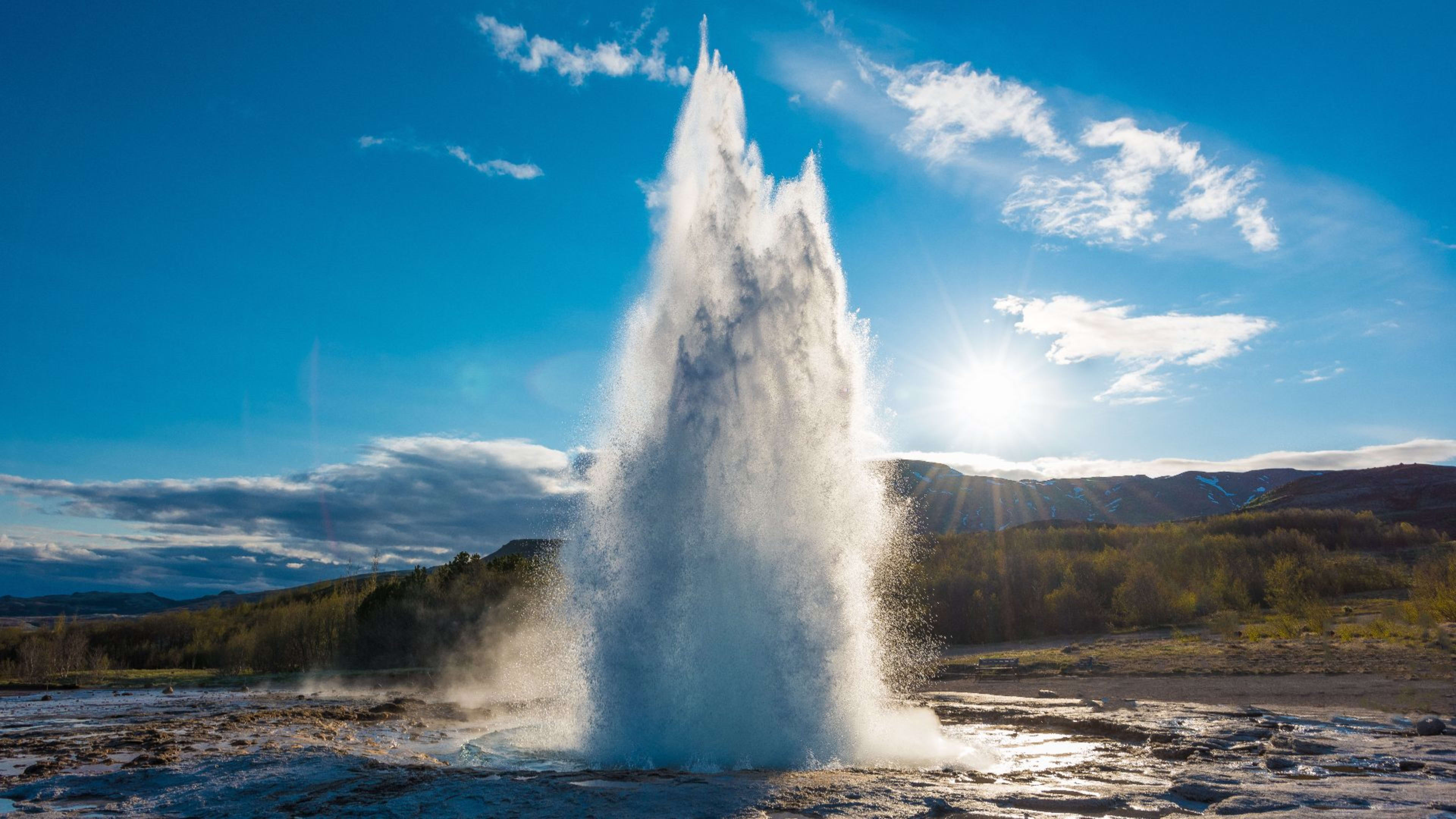
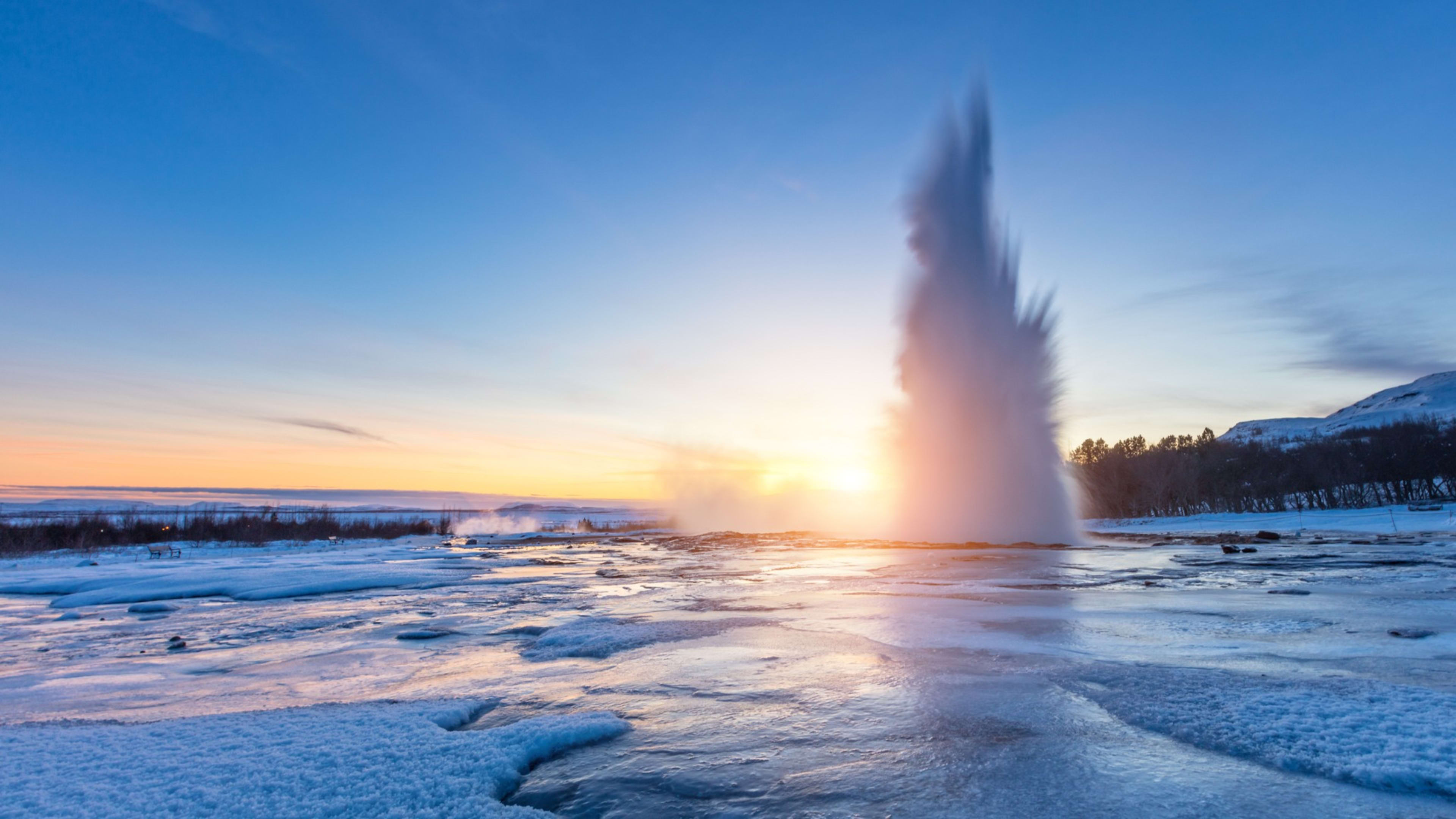
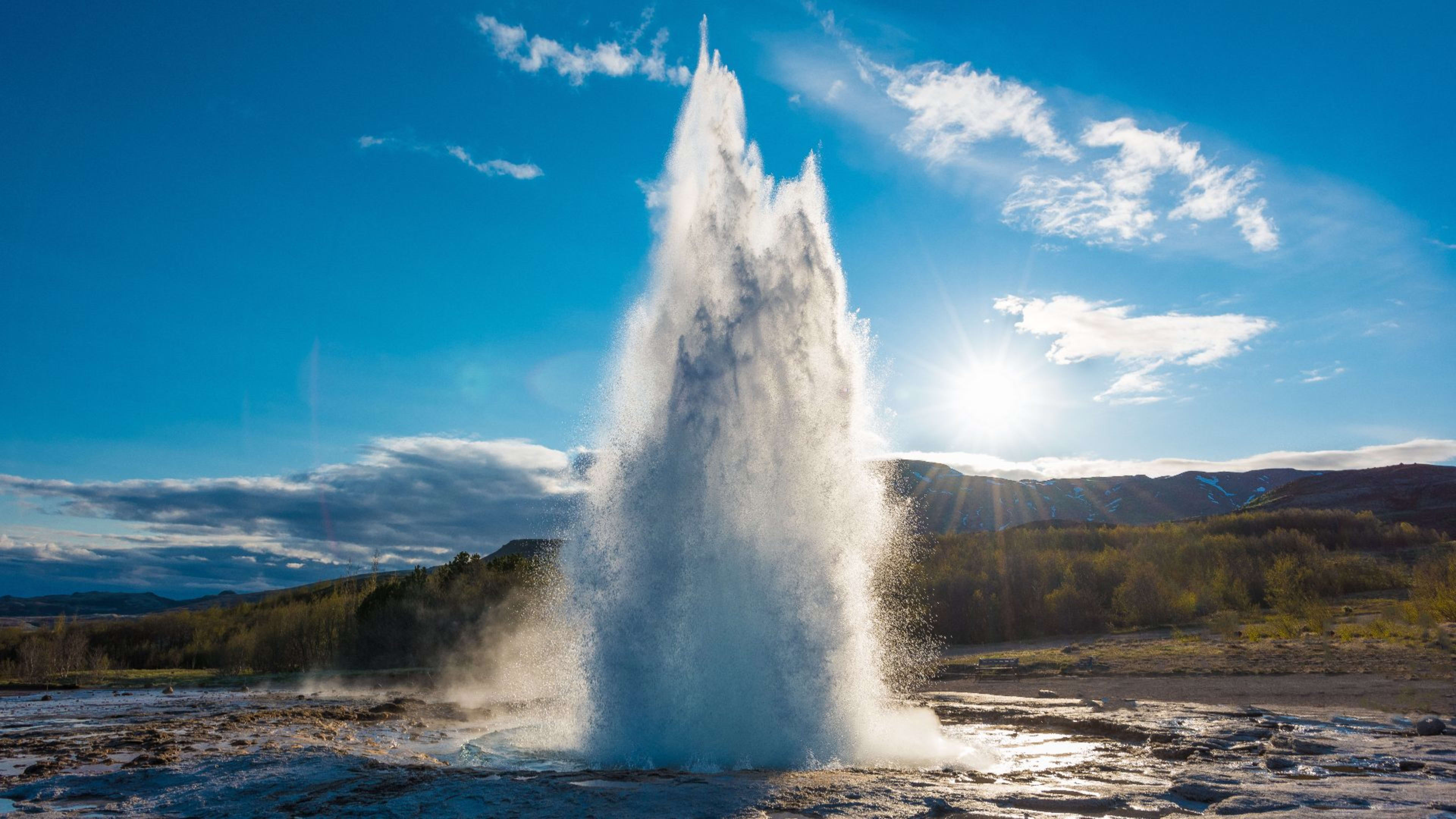
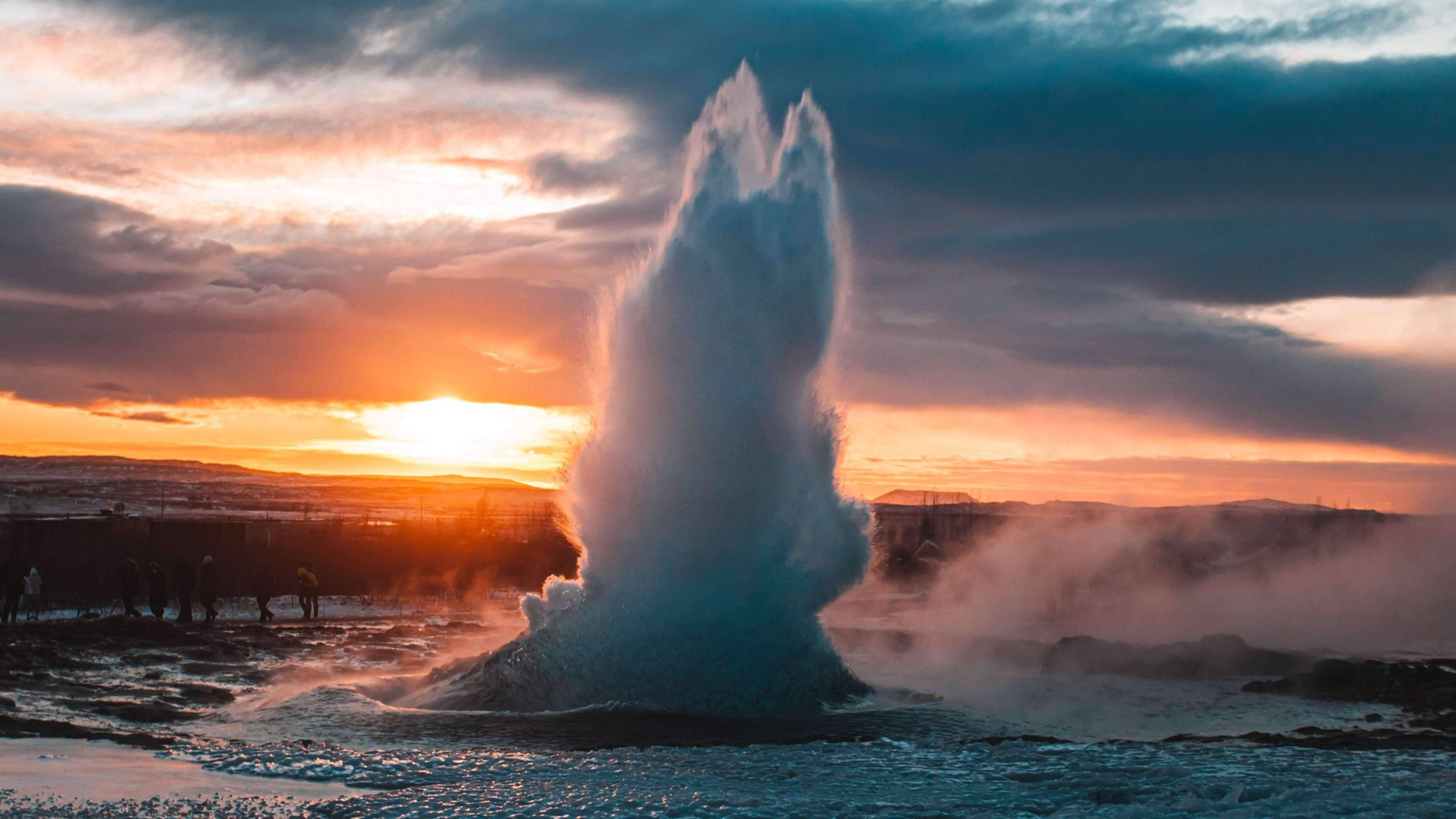
Strokkur is Iceland's most active geyser and the main event at the site. It erupts roughly every 6 to 10 minutes, shooting water and steam between 20 and 40 metres into the air before settling back down and beginning the process again. Each eruption lasts only a second or two, which is part of what makes it so captivating to watch. You can stand at the edge of the pool, see the water dome and bulge just before it breaks, and then it is over almost before you have time to react.
The eruptions are powered by geothermal heat from deep below the surface. Water seeps down through the earth, is superheated by volcanic activity, and the resulting pressure eventually forces it skyward through the narrow channel of the geyser. The cycle then starts again.
There is no admission fee to visit the geothermal area. Parking is free, and the site is open at all times.
The Great Geysir
The original Geysir, sometimes called the Great Geysir, has been documented in Icelandic records since 1294, making it one of the oldest known geysers in the world. At its peak it could send water up to 70 metres into the air, and its reputation spread across Europe long before Iceland became an accessible travel destination. The word it gave to English reflects just how remarkable early visitors found it.
Geysir last erupted in 2003 and has been dormant since then. It tends to reactivate during periods of seismic activity in the area, and its behaviour has changed considerably over the centuries, so whether it erupts again is genuinely uncertain. The large pool is still there and still bubbling gently, and it is worth a look even without an eruption.
The Rest of the Geothermal Area
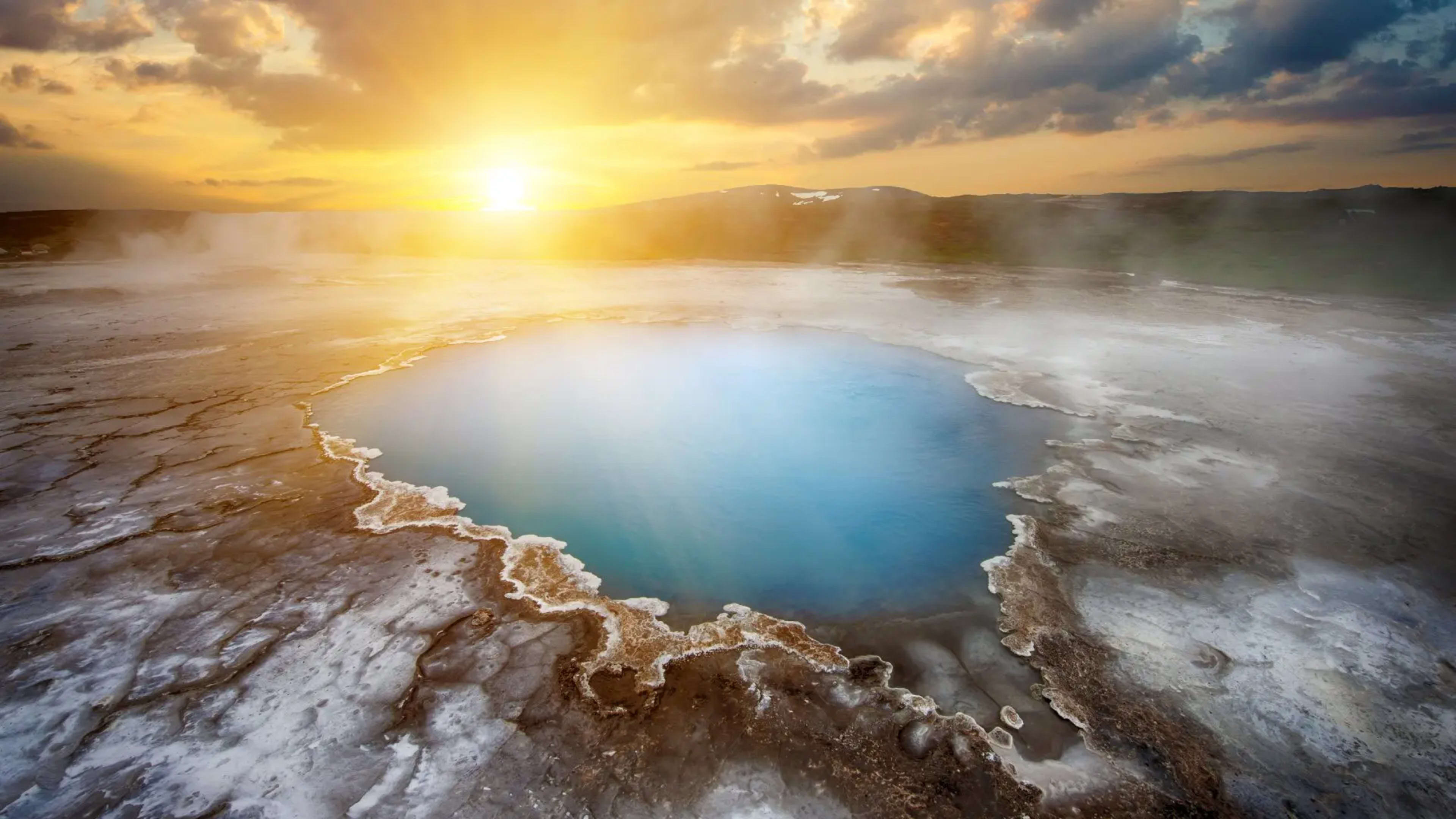
The walking paths around the site take about an hour to cover properly and are well worth the time. Beyond Strokkur and the Geysir pool, the area contains a number of other features, including Blesi, a pair of connected pools with notably different appearances. One is a clear, deep blue; the other is a milky turquoise from silica deposits. The temperature difference between them accounts for the difference in colour. Konungshver, known as the King's Spring, is another large pool that reaches close to boiling point and has a vivid blue hue that is easy to mistake for something artificial.
Walking to the top of the small hill above the main pools gives you a view down over the whole field and makes the scale of the geothermal activity clearer. From up there you can pick out the different colours of the mineral deposits in the water: blues, copper greens, and pale yellows from the sulphur and silica.
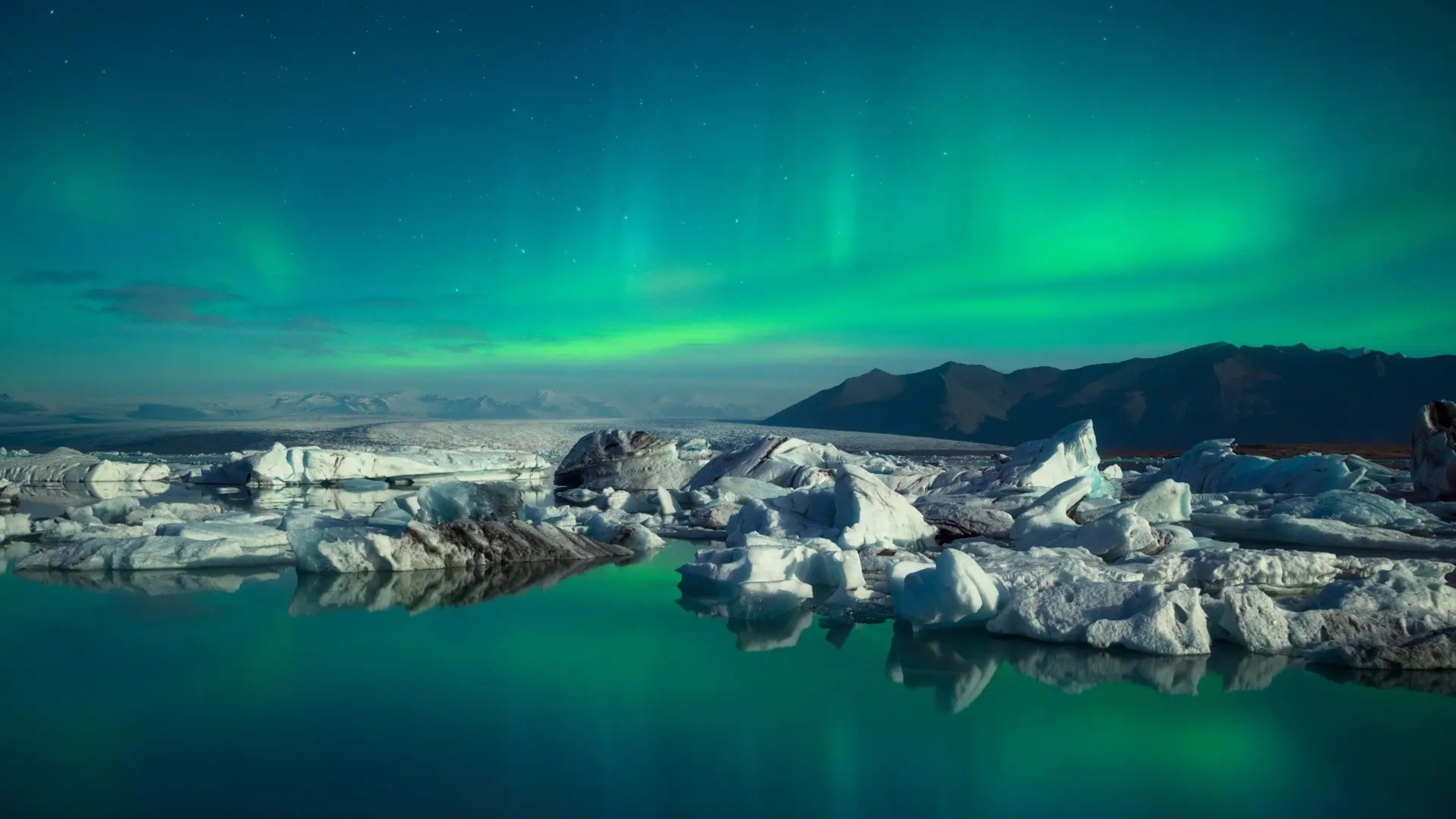
In winter, there is a chance of seeing the Northern Lights while you are standing at the edge of a steaming pool in the dark. It does not happen every visit, but when it does it is hard to forget.
What to Know Before You Visit
Plan to spend around an hour at the geothermal area, or longer if you want to explore all the pools and climb the hill. The Geysir Center next to the car park has a restaurant, toilets, and a gift shop. Stick to the marked paths throughout the site. The water in the pools and vents is genuinely boiling and the ground around them can be fragile. Children should be supervised closely.
The area is open year-round and accessible in all seasons. Winter visits require appropriate footwear as the paths can be icy. In summer, particularly in July and August, the site can be busy in the middle of the day, so arriving early in the morning or later in the afternoon tends to give you a quieter experience.
Getting There and Getting Around
From Reykjavík, the most direct route takes you out along Road 36 through Þingvellir and Þingvallavatn, picking up Road 365 and then Road 37 before turning north on Road 35 to the site. The drive takes around 1.5 hours. You can also approach via Road 1 to Selfoss and then north on Road 35, which takes closer to 1 hour 45 minutes.
Geysir and Strokkur are a standard stop on the Golden Circle, which also takes in Þingvellir National Park and Gullfoss waterfall. Most of our Golden Circle tours include time at the geothermal area, and it also features in many of our multi-day packages and self-drive itineraries.