
History and Character
Flatey's name simply means flat island in Icelandic, an accurate description of its low-lying profile in the middle of the bay. Despite its modest size, the island has a long and significant history. A monastery was founded here in 1172, making Flatey one of the earliest centres of Icelandic scholarship and culture. For several centuries afterwards the island was a hub of literary and religious activity, and the Flateyjarbók, one of the most important medieval Icelandic manuscripts, takes its name from the island where it was kept before being sent to Denmark in the 17th century.
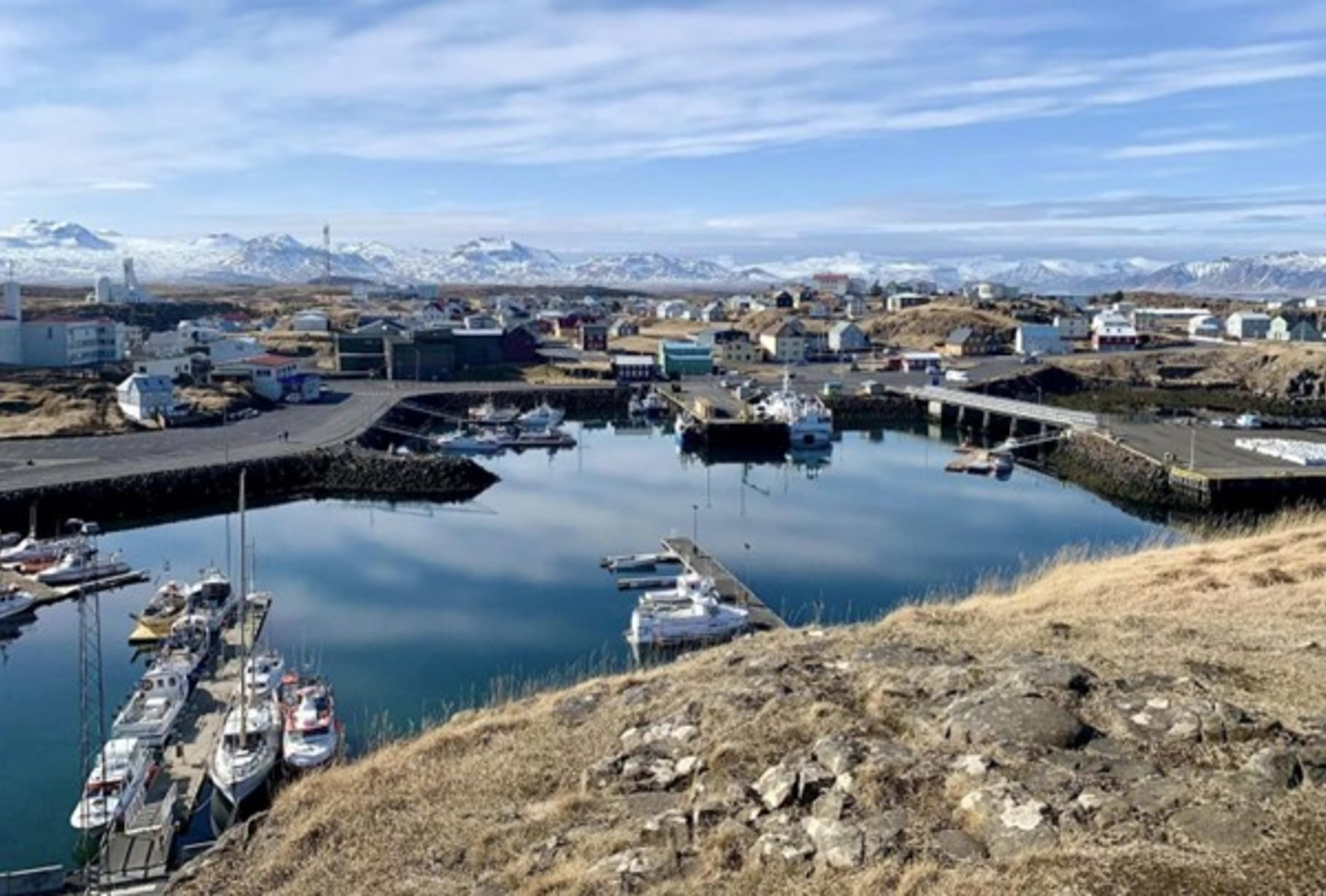
By the 19th century Flatey had become a prosperous trading post, and the timber buildings that survive from that period give the island its distinctive character today. The main road runs from the small ferry dock through to the village, where the buildings are clustered along a single lane. The church, built in 1926, contains interior murals painted by the Spanish artist Baltasar Samper depicting scenes of island life. Together the architecture and the absence of vehicles create an atmosphere unlike anywhere else in Iceland.
Wildlife and Nature
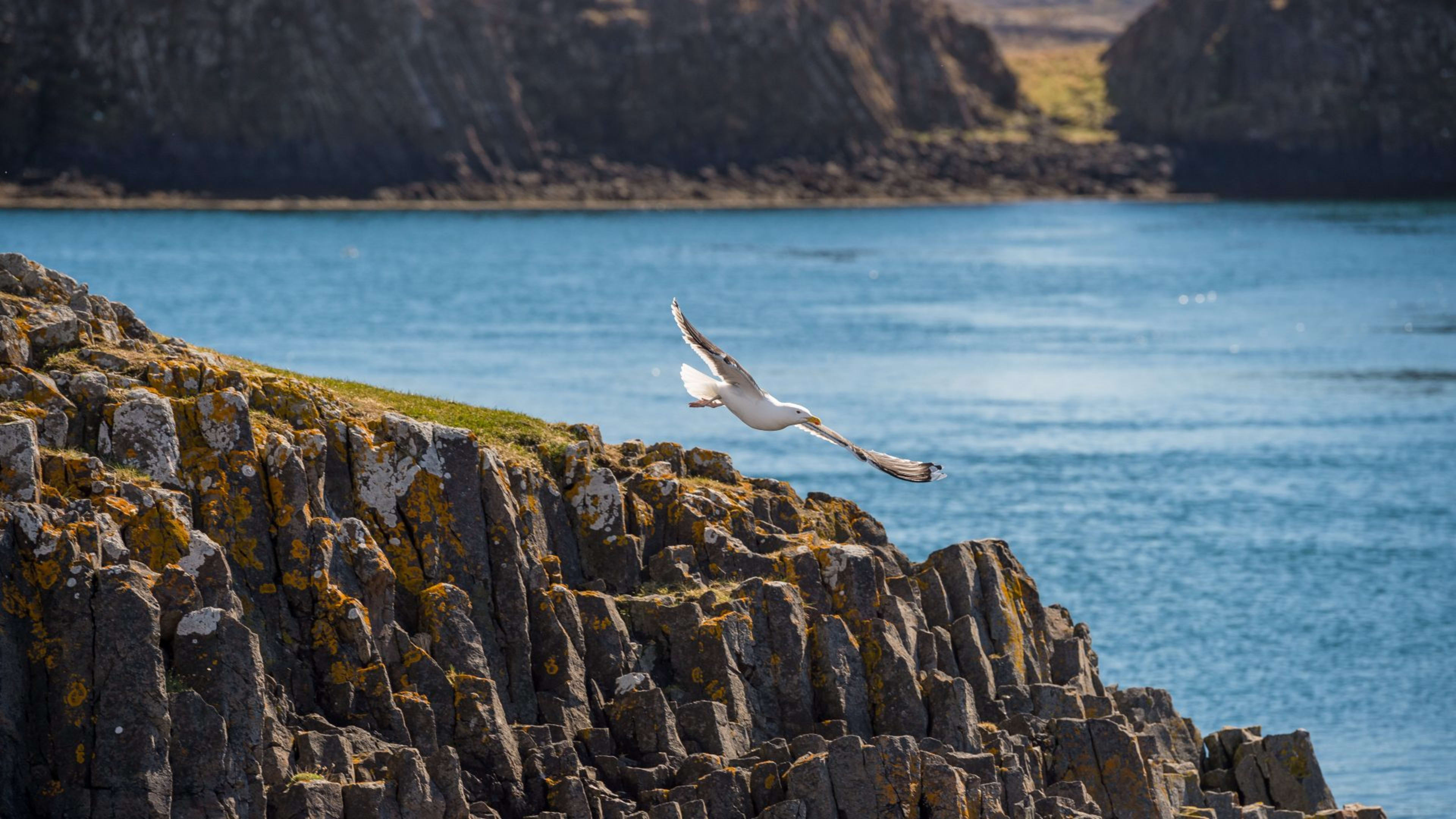
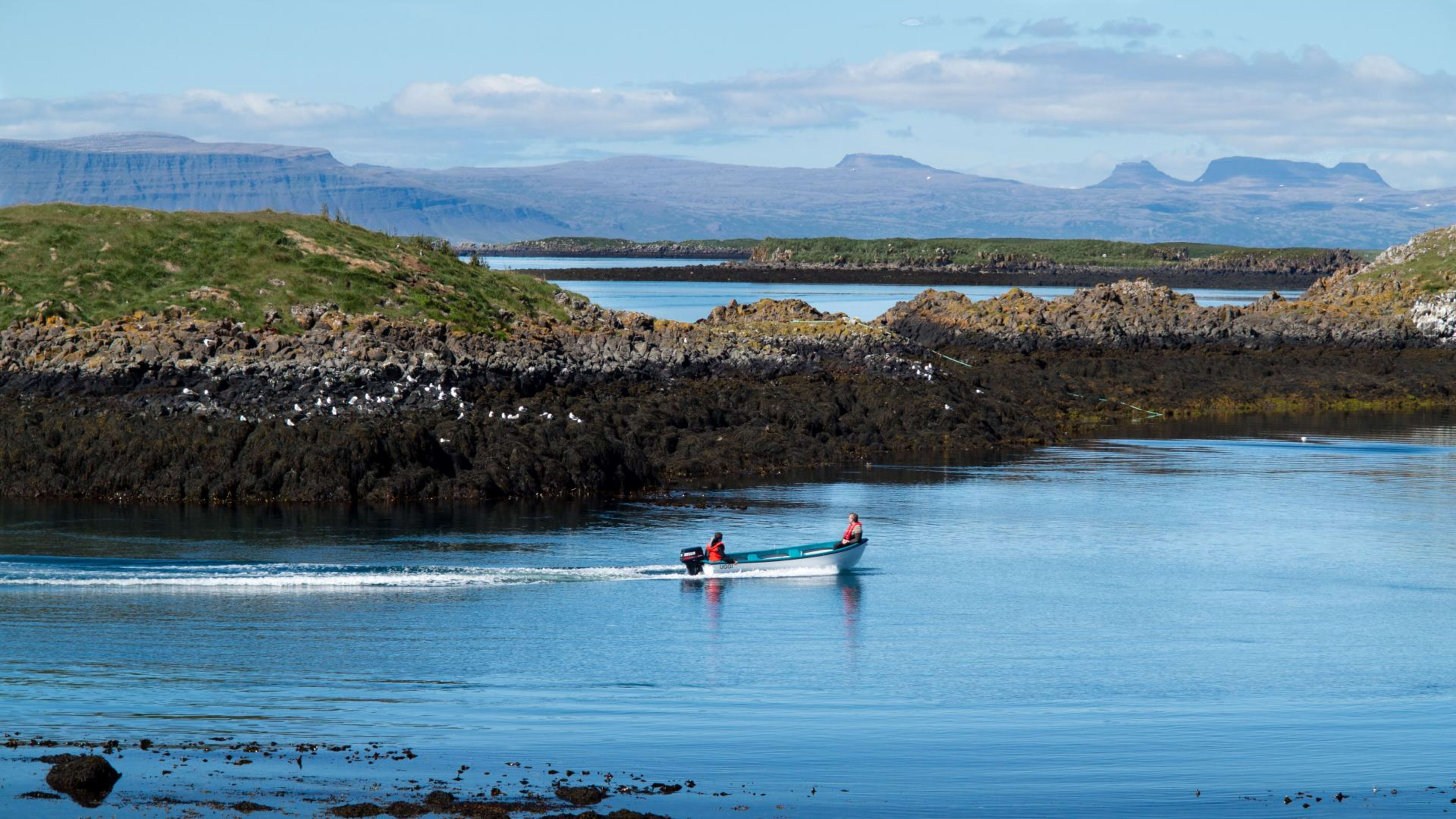
Breiðafjörður bay is one of Iceland's richest marine environments, and Flatey sits in the heart of it. The island and the small uninhabited islands surrounding it provide nesting habitat for dozens of seabird species. Arctic terns nest on the lower ground, puffins burrow into the grassy clifftops, and eider ducks are common around the shoreline. The bay itself supports large populations of seals and a variety of fish, and white-tailed eagles, one of Iceland's most impressive birds of prey, are regularly seen over the water.
The island is small enough to walk in its entirety in a couple of hours, and the absence of traffic and the low human population mean wildlife encounters at close range are common.
Getting to Flatey
The only way to reach Flatey is by the ferry Baldur, which operates from Stykkishólmur on the Snæfellsnes peninsula. The ferry stops at Flatey en route to Brjánslækur on the Westfjords side of the bay, making it possible to visit Flatey as a stop on a crossing between west Iceland and the Westfjords, or as a return day trip from Stykkishólmur.
Sailings operate year-round in principle, but winter departures are frequently cancelled due to weather and low demand. The island's restaurants and café are closed from 1 September to 31 May, and with only five permanent residents, services outside summer are minimal. Summer, from June to August, is strongly the recommended time to visit. Stykkishólmur is around two hours by car from Reykjavík via Route 1 and Route 54.
Staying on Flatey
A small hotel operates on the island in summer, occupying one of the historic timber buildings in the village. Staying overnight allows time to experience the island in the early morning and evening, when day visitors have left and the seabird activity is at its most intense. Accommodation books up well in advance for the summer season.
What to Expect on a Visit
Flatey rewards slow exploration. The village is compact and walkable, and most visitors cover the island on foot within a few hours. There are no cars, no shops open outside summer, and limited phone signal. The pace is deliberately unhurried. Day trippers arriving on the Baldur typically have two to three hours on the island before the return sailing, which is enough time to walk the village, visit the church, and explore the coastal path around the island's perimeter.