
The Laki Eruption
Eldhraun was produced by one of the largest volcanic eruptions in recorded history. The Laki eruption began on 8 June 1783 and continued for eight months, with lava flowing from a series of fissures in the Lakagígar crater row in the highlands of south Iceland. The volume of lava was so great that it diverted the course of the Skaftá river and spread across the lowlands to the south through a network of lava tubes, which allowed the molten rock to travel far from the source while remaining fluid. The total area covered by the eruption reached around 565 square kilometres.
Alongside the lava, the eruption released enormous quantities of sulphur dioxide and fluorine into the atmosphere. The gases caused widespread crop failure across Iceland, leading to the death of around half the country's livestock and a subsequent famine known as the Móðuharðindin, or Mist Hardships, which killed roughly a quarter of Iceland's population. The toxic haze spread across Europe and beyond, affecting harvests across the Northern Hemisphere. The disruption to food production in France during the following years is considered one of the contributing factors to the social conditions that preceded the French Revolution of 1789.
The Moss Cover
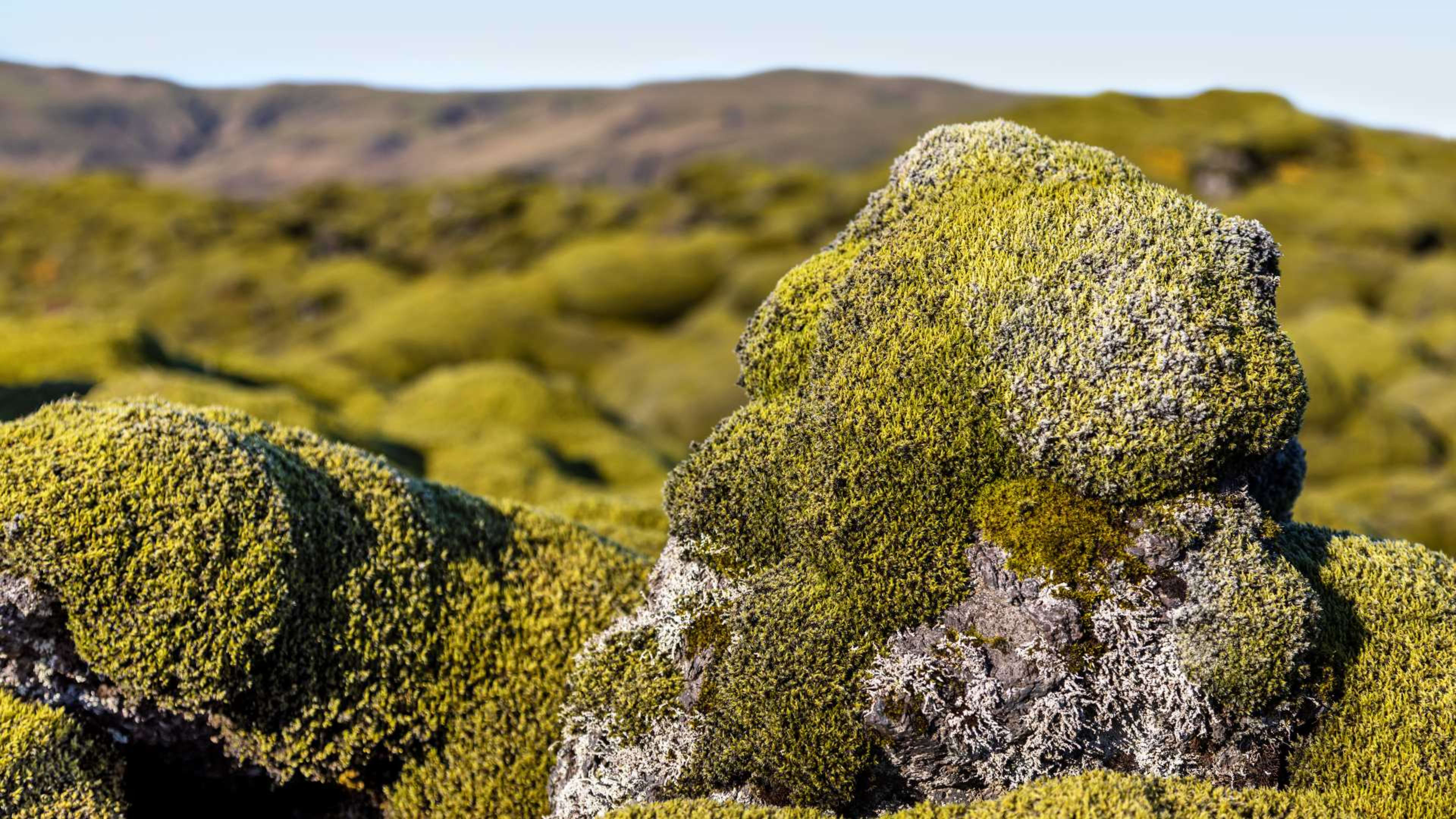
The lava surface at Eldhraun is almost entirely covered in wooly fringe moss, a species that colonises old lava fields across Iceland over centuries. The moss forms a continuous soft layer across the uneven lava, cushioning the sharp edges of the rock and giving the field its distinctive appearance. The cover is estimated to be several centuries old in places and is extremely fragile. Walking on the moss compresses and kills it, and recovery takes around a century. For this reason, walking on the lava field itself is not permitted. Visitors should stay on the marked paths and the road verges.
The moss cover makes Eldhraun visually distinct from younger lava fields, where bare black rock is still dominant. The combination of the moss colour, the irregular surface, and the scale of the field gives it a character unlike most other landscapes in Iceland.
The NASA Connection
In the 1960s, NASA used Eldhraun and other lava fields on the Reykjanes peninsula as training sites for Apollo astronauts preparing for the Moon landings. The volcanic terrain provided conditions similar enough to the lunar surface that it was considered practical preparation for navigating and working in that environment. Apollo 11 astronauts Neil Armstrong and Buzz Aldrin were among those who trained in Iceland prior to the 1969 mission.
Visiting Eldhraun
Eldhraun runs alongside Route 1 between Vík and Kirkjubæjarklaustur and is visible from the road as you drive through. A dedicated parking area off the Ring Road gives direct access to the edge of the field and is the standard stopping point for visitors. From the car park, the scale and texture of the moss-covered lava is immediately apparent at close range.
Walking on the lava field is not permitted. The surface is both fragile and uneven, with the moss concealing irregular and sometimes unstable rock underneath. The parking area and the road verge provide enough proximity to appreciate the field without needing to enter it.
The site is free to visit and the parking area is free. There are no facilities at the site, so bring water and any supplies you need before arriving. The nearest services are in Vík to the west and Kirkjubæjarklaustur to the east.